All Products

.svg)




88% of customers say experience matters as much as product, according to Salesforce. Poor routing alone can raise average handle time and transfers by 20–30%, based on industry research. At the same time, up to 78% of outbound calls reach voicemail, which wastes agent time and lowers campaign returns.
Those numbers show a clear pattern. Call center performance depends on workflow design, not just agent performance. Workflow determines where calls go, how fast customers reach the right person, how data gets captured, and how teams follow compliance rules.
A well-designed workflow works as three systems at once. It acts as revenue architecture by increasing conversions and first contact resolution. It works as a compliance backbone by controlling recording, authentication, and audit trails. It also functions as an agent productivity system by reducing transfers, manual work, and decision time.
This guide explains how to design a call center workflow that supports growth, control, and measurable performance.
Key Takeaways
- Workflow is more than routing: It controls entry, qualification, escalation, data capture, compliance, and follow-up.
- Good workflows improve revenue: Faster routing, fewer transfers, and voicemail filtering protect selling time and conversions.
- Automation reduces wasted work: IVR deflection, CRM logging, SMS follow-ups, and ticket creation cut manual tasks.
- AI adds control at scale: Speech analytics, sentiment detection, summaries, and topic tracking help managers find issues faster.
- Omnichannel needs shared context: Voice, chat, WhatsApp, SMS, and social channels should follow one connected logic.
- Industry workflows differ: Fintech, BPO, microlending, travel, and D2C teams need different routing and escalation rules.
- Success needs the right metrics: Track FCR, AHT, transfers, live contact rate, cost per contact, sentiment, and escalation trends.
- Common failures are avoidable: Deep IVRs, org-chart routing, disconnected CRMs, and no review cycle quietly damage performance.
- Bottom Line: Treat workflow as a business system, not a setup task, to improve control, scalability, and measurable performance.
What Is a Call Center Workflow and What It’s Not
Before building or improving anything, you need a clear definition. Many teams confuse workflows with IVR menus or queue settings. They’re only small parts of a much larger system. A call center workflow controls the entire interaction lifecycle, from the moment a customer enters the system to the final data entry and follow-up.
Technical Definition
A call center workflow is structured logic that defines how interactions move through your contact center. It controls decisions, actions, and data at every stage of the interaction.
A complete workflow typically defines:
| Workflow Component | What It Controls |
| Entry | How customers enter the system (call, chat, WhatsApp, etc.) |
| Qualification | Identification, authentication, intent detection |
| Routing | Which queue, agent, or team receives the interaction |
| Escalation | When and how interactions move to higher tiers |
| Resolution | How the issue gets handled and closed |
| Data capture | What information gets logged in the CRM |
| Post-interaction automation | SMS, surveys, case updates, follow-ups |
That structure shows an important point. A workflow doesn’t only route calls. It controls decisions, data flow, call center automation, and compliance steps.
Now clarify what a workflow is not, because confusion here causes poor system design.
| Often Confused With Workflow | What It Actually Is |
| Call flow | The IVR menu tree callers navigate |
| Queue configuration | How calls wait and distribute within a queue |
| CRM automation | What happens inside the CRM after or during a call |
| Omnichannel orchestration | How different channels connect and hand off conversations |
Each one plays a role, but none of them alone forms a workflow. The workflow sits above them and connects them into one logical system.
Workflow Layers (NEW – High Value)
One of the most useful ways to design workflows is to break them into layers. This helps teams design logic, routing, and automation without missing critical steps.
| Layer | Description | Example |
| Access Layer | Entry channels where customers start interaction | IVR, WhatsApp, Webchat |
| Decision Layer | Routing logic and decision rules | Skills-based routing, intent detection |
| Execution Layer | How agents handle the interaction | Scripts, CRM data, call controls |
| Intelligence Layer | Analytics, monitoring, and quality control | Speech analytics, sentiment scoring |
Thinking in layers prevents a common mistake. Many companies design routing first and ignore data, QA, or automation. Layered workflow design ensures every interaction follows the same logic, gets measured, and feeds data back into the system for improvement.
The Business Case for Workflow Engineering
Good workflow design changes commercial outcomes. It shapes who gets reached, how quickly issues get solved, and how safely teams handle regulated conversations. That makes it a business decision, not a setup task.
Revenue Impact
Revenue rises when teams remove friction from the path to resolution or sale. A cleaner workflow helps agents reach the right person faster, respond with context, and avoid dead-end transfers.
Higher first contact resolution often lowers churn. Customers rarely stay patient after repeated handoffs or repeat explanations. When routing logic matches intent early, teams close more issues in one interaction.
Speed matters even more in sales-heavy environments. Fintech firms and BPOs often depend on fast lead response. A delayed callback can turn a warm lead into a missed deal.
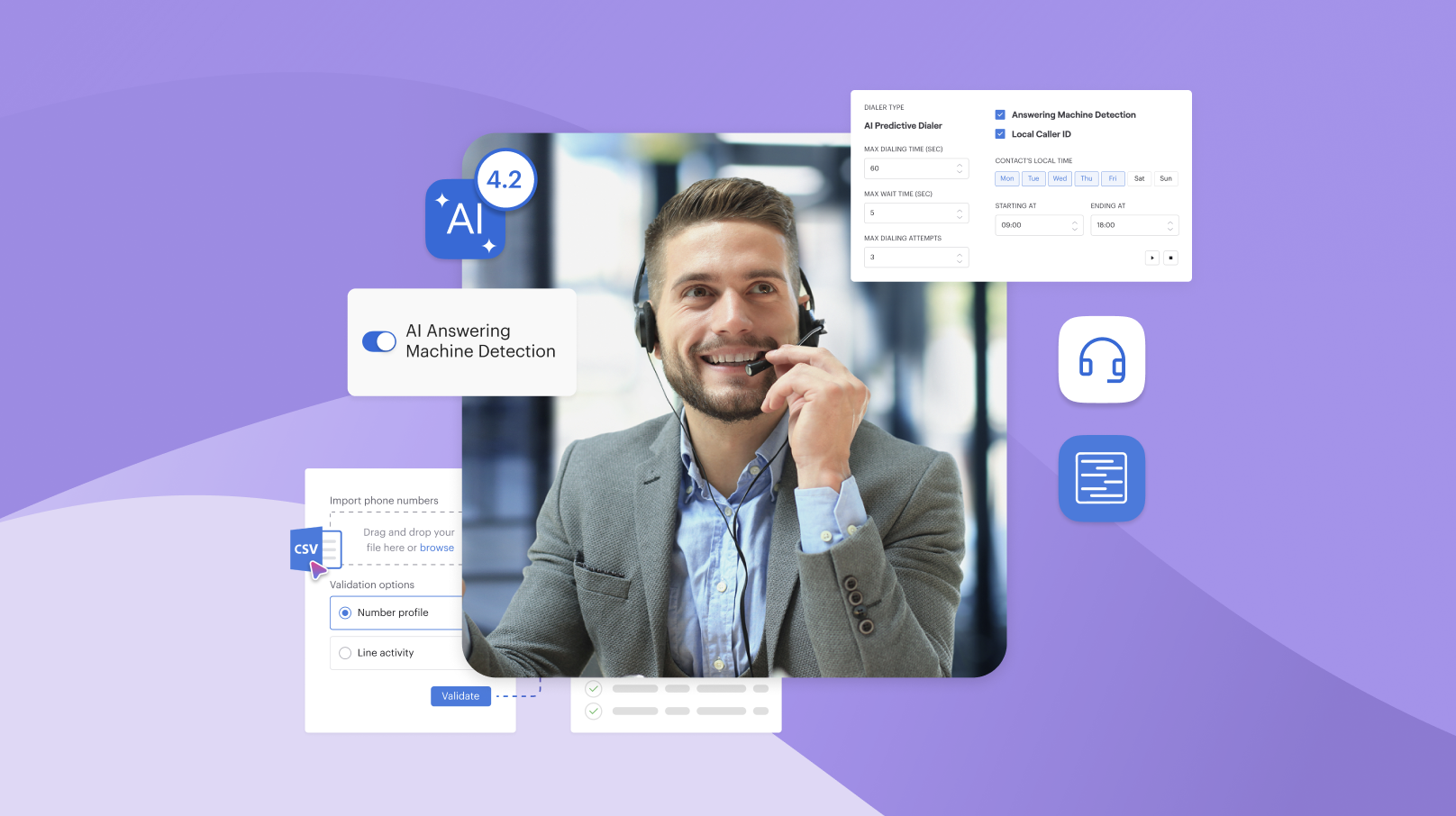
Outbound teams face another revenue leak: voicemail. Voiso reports that up to 78% of outbound campaign calls are answered by voicemail, while 25% of agent call time gets lost on machine-answered calls. Its AMD material also reports a 3.5x increase in talk time and 35% faster list processing when agents focus on live answers only.
That changes the math quickly. Better workflow logic doesn’t just route contacts. It protects selling time.
Cost Impact
Costs usually fall when workflows remove avoidable work. Fewer misrouted calls mean shorter handle times, fewer transfers, and less queue congestion.
Automation also absorbs simple tasks before they reach an agent. Voiso’s Flow Builder supports self-service logic, cross-channel deflection, and data lookups through HTTP requests, which helps teams answer common requests without live handling.
Structured logic also shortens ramp-up time. New hires work faster when each interaction follows clear steps. They spend less time guessing and more time executing.
A simple view makes the cost case easier to see:
| Cost driver | Workflow issue | Business effect |
| Average handle time | Weak qualification or routing | Longer agent occupancy |
| Transfer volume | Wrong queue assignment | More repeat work |
| Low-value live contacts | No voicemail filtering | Paid time with no sales value |
| High training load | Unclear handling logic | Longer onboarding period |
| Repetitive inquiries | No automation or deflection | More avoidable agent workload |
Risk & Compliance Impact
For regulated teams, workflow design protects more than margins. It protects audit readiness and operational control.
Financial services teams often need strict handling rules for payment or identity data. Voiso’s Flow Builder supports recording pauses when callers share sensitive information, which helps teams align with PCI DSS and GDPR requirements.
Audit work also gets easier when every call leaves a searchable record. Voiso’s AI Speech Analytics can transcribe a five-minute call in 15 seconds, highlight custom keywords, and label topics and sentiment for faster review.
That matters for fintech and microlenders. They often need proof of what was said, when escalation happened, and whether scripts were followed. A strong workflow creates that trail through recording controls, AI transcripts, SLA logic, and documented escalations.
In practical terms, workflow engineering supports three outcomes at once:
- More live selling time
- Lower operating drag
- Stronger control over regulated interactions
The next section breaks down the core components that make a high-performance workflow work in practice.
Everything your team needs in one platform
Core Components of a High-Performance Call Center Workflow
A strong workflow follows a clear structure from entry to resolution, then feeds data back into improvement loops. Each component below plays a specific role in handling interactions, routing them correctly, and capturing useful data.
1. Entry & Intent Capture
Every interaction starts with entry and intent detection. If intent gets identified early, routing becomes faster and more accurate.
IVR remains a primary entry point for voice. Good IVR design keeps menus shallow and routes based on intent, not department names. Many contact centers now deflect simple requests to messaging channels where resolution takes less time and fewer resources. Voiso’s Flow Builder supports IVR deflection to channels like WhatsApp, allowing customers to continue the interaction without waiting in a voice queue.
Intent capture can include keyword detection, menu selection, or CRM data lookup. Financial services teams often add authentication at this stage to verify identity before routing the interaction.
Entry and intent capture typically include:
| Function | Purpose |
| IVR menu | Capture reason for contact |
| Messaging deflection | Move simple requests to chat or WhatsApp |
| Keyword detection | Identify intent from speech or text |
| Authentication | Verify customer identity |
| CRM lookup | Identify VIP status or account type |
When intent is captured correctly, routing decisions become easier and more accurate.
2. Intelligent Routing Logic
Routing determines whether the interaction reaches the right agent on the first attempt. High-performance workflows use multiple routing rules at the same time.
Common routing logic includes:
| Routing Type | How It Works | Example |
| Skills-based routing | Routes based on agent expertise | Technical issue → tech support |
| Language routing | Matches customer language | Spanish caller → Spanish queue |
| VIP routing | Prioritizes high-value customers | VIP → priority queue |
| Time-based routing | Routes based on business hours | After hours → voicemail or offshore team |
| Predictive routing | Uses past performance data | Route to agent with highest success rate |
| AMD (outbound) | Filters voicemail calls | Connect only when human answers |
Queue prioritization often follows a scoring formula. Teams assign scores based on customer value, wait time, and issue type.
Example prioritization formula:
Priority Score = (Customer Value × 0.5) + (Wait Time × 0.3) + (Issue Urgency × 0.2)
Interactions with higher scores move ahead in the queue. That approach prevents high-value customers from waiting behind low-priority contacts.
3. Escalation Architecture
Not every interaction should stay with the first agent. Escalation logic defines when and how interactions move to another team.
Escalation can be triggered by several conditions:
| Escalation Trigger | Action |
| Issue complexity | Transfer to Tier 2 |
| Negative sentiment | Supervisor intervention |
| Compliance keywords | Route to risk or compliance team |
| VIP customer | Immediate priority escalation |
| SLA breach risk | Move to priority queue |
AI speech analytics can detect sentiment or specific keywords during a call and trigger escalation automatically. That helps supervisors intervene before a complaint becomes a cancellation or compliance issue.
4. Resolution & Documentation
Resolutions should always include documentation and follow-up actions. Without documentation, the interaction has no long-term value to the business.
Resolution workflows usually include:
| Step | Outcome |
| CRM logging | Interaction history stored |
| Wrap-up codes | Interaction categorized |
| SMS follow-up | Send links, confirmations, or summaries |
| Case update | Ticket status updated automatically |
SMS follow-ups work well for confirmations, payment links, or instructions. SMS messages have open rates as high as 98%, which makes them useful for post-call communication.
5. Feedback & Optimization Loop
The final component closes the loop. Workflow performance should feed into analytics and quality monitoring so teams can improve routing, scripts, and automation.
Key optimization inputs include:
| Data Source | What It Shows |
| QA scoring | Agent performance |
| Conversation score | Interaction quality |
| Topic clustering | Common call reasons |
| SLA dashboards | Service level performance |
Speech analytics helps identify trends across thousands of calls, including common complaints, repeated transfer reasons, and script adherence. That data helps teams adjust routing logic and training based on real interaction patterns, not assumptions.
Together, these five components form a complete workflow system. In the next section, we’ll move from components to execution and explain the step-by-step framework for designing a workflow from scratch.
The 7-Step Framework to Design Your Workflow
A workflow performs well when every decision has a purpose. The seven steps below give you a practical way to design, test, and refine that logic without guesswork.
Step 1: Audit the Current State
Start with the system you already have. Most workflow issues hide in handoffs, queue rules, and undocumented exceptions.
Review four areas first:
- Call flow diagrams
Map every entry point, menu path, transfer branch, and fallback route. - Queue analysis
Check wait times, abandonment, transfer volume, and repeat contact patterns by queue. - Transfer heatmaps
Find where customers get passed between teams most often. - Voicemail percentage
For outbound teams, measure how much dialing time ends in voicemail.
That audit should end with one deliverable: a workflow gap report. It should show broken paths, weak routing rules, missing automations, and compliance risks.
Step 2: Define KPI-Driven Objectives
Once the gaps are clear, set targets that match your business model. A BPO won’t measure success the same way as a microlender.
Use a simple model like this:
| Business Model | Primary KPI |
| BPO | Talk time % |
| Fintech | Conversion rate |
| Microlender | Collection success |
| OTA | SLA adherence |
| D2C | CSAT + repeat purchase |
Keep the list tight. Too many KPIs blur decision-making. A workflow should serve a few priorities well, not ten priorities badly.
Step 3: Map the Ideal Customer Journey
Next, design the path you want customers to follow. Focus on intent, risk, and continuity.
Map the journey around:
- Intent branches
- Channel switching paths
- Authentication nodes
- High-risk nodes
A simple decision tree helps. A billing question may go to self-service first. A fraud concern should skip standard support and move straight to a specialist queue.
For cross-channel journeys, define the handoff clearly. Voiso’s Flow Builder supports movement from IVR to messaging channels, which helps teams continue the same interaction in another channel.
Step 4: Build Logic Using If/Then Architecture
Now turn the journey into rules. If/then logic keeps workflow design precise and measurable.
A few examples:
| If | Then |
| Keyword = “fraud” | Route to risk team |
| Sentiment = negative + high score | Notify supervisor |
| Customer tier = VIP | Send to priority queue |
| Outbound call = voicemail | Remove agent from live handling |
| Authentication failed | Route to verification flow |
This step matters because vague logic creates inconsistent handling. Clear rules reduce agent guesswork and keep decisions consistent across teams.
Step 5: Integrate Systems
A workflow breaks down when data lives in separate places. Agents need context inside the interaction, not after it.
System design should cover:
- CRM integrations
- Helpdesk integrations
- Webhooks
- Data synchronization
- API rules
- Screen pops
- Click-to-call
- Automatic logging
Voiso supports native integrations with Salesforce, Zoho, and Freshdesk. Those integrations include click-to-call, screen pops, and automatic call logging inside the workspace.
Flow Builder also supports HTTP requests for external data lookups. That gives routing logic access to customer status, account details, or VIP flags before the call reaches an agent.
Step 6: Train for Execution
Even strong workflow logic can fail in live use if agents don’t understand it. Training should cover decisions, exceptions, and escalation rules.
Focus on four areas:
| Training Area | What Agents Need |
| Workflow literacy | Understand the path and the logic behind it |
| Exception handling | Know what to do when the standard path fails |
| Escalation clarity | Recognize when to transfer or involve a supervisor |
| Scenario practice | Rehearse real cases across channels |
Use real scenarios, not generic role-play. Fraud alerts, missed payments, travel changes, and angry callers all test different parts of the workflow.
Step 7: Deploy, Monitor, Iterate
Don’t roll out a new workflow everywhere at once. Start with a controlled pilot, then adjust based on real performance.
A practical rollout usually includes:
- A 2–4 week pilot
- Speech analytics review
- KPI delta measurement
- Routing updates based on findings
Voiso’s AI Speech Analytics can support that review with call summaries, topic labels, sentiment tracking, and conversation scores. That makes it easier to spot recurring failure points after launch.
The goal isn’t a perfect first version. The goal is a stable version that gets sharper with each review cycle.
In the next section, we’ll look at how automation and AI fit into workflow design at different levels of maturity.
Automation and AI in Modern Workflow Design
Automation matters most when it follows clear operational needs. Not every team needs advanced AI on day one. Most contact centers move through stages, starting with basic workflow control and adding intelligence as volume, complexity, and risk increase.
Level 1: Basic Automation
The first level covers repetitive tasks that don’t need human judgment. The goal here is consistency, faster handling, and less manual admin.
At this stage, three elements usually matter most:
| Capability | What it does | Workflow value |
| IVR | Directs callers through menu logic | Reduces misroutes at entry |
| Auto-ticket creation | Creates a case after a call | Removes manual after-call work |
| Queue distribution | Sends contacts to the next available queue or agent | Keeps handling structured |
Voiso supports IVR design through Flow Builder, including drag-and-drop logic and pre-set routing paths. It also supports automatic ticket creation inside Freshdesk, which helps teams document calls without extra steps.
Basic automation works best for high-volume, repeatable tasks. Order updates, appointment requests, and standard support queries often belong here.
Level 2: Intelligent Automation
Once the basics are stable, the next step adds context. Instead of following fixed rules only, the workflow starts responding to customer intent, sentiment, and interaction history.
This level often includes:
| Capability | How it supports workflow |
| Predictive routing | Sends contacts to the best-fit agent based on performance or context |
| Sentiment analysis | Flags frustration or risk during the interaction |
| Conversation scoring | Measures call quality at scale |
| SMS templates | Speeds up post-call communication |
| Call summaries | Reduces review time for supervisors and agents |
Voiso’s AI Speech Analytics includes sentiment analysis, conversation scoring, topic detection, transcripts, and AI-generated summaries. It can transcribe a five-minute call in 15 seconds, which shortens review cycles for QA and compliance teams.
SMS templates also belong in this layer. They help agents send follow-up messages quickly during or after a call. That matters for payment links, booking details, and support instructions. Voiso’s SMS material also notes that 98% of SMS messages are opened and 90% are read within three minutes.
Level 2 works well for teams that need faster supervision, stronger QA, and cleaner post-call follow-up.
Level 3: Revenue Optimization AI
The third level focuses on commercial performance and coaching quality. Here, AI doesn’t just support operations. It helps teams protect selling time, improve list performance, and coach agents at scale.
This layer usually includes:
| Capability | Commercial impact |
| AMD | Removes voicemail waste from outbound dialing |
| Auto-dialer logic | Increases live contact attempts without manual pacing |
| AI-powered quality monitoring | Reviews more calls than manual QA can cover |
| Topic clustering | Finds patterns for coaching and script updates |
For outbound teams, AMD can change results quickly. Voiso reports that up to 78% of campaign calls hit voicemail, while AI AMD can increase talk time by 3.5x and improve list processing by 35%.
Topic clustering and quality monitoring matter for coaching. Managers no longer need to sample calls blindly. They can review calls by issue type, sentiment trend, or score pattern, then update scripts and routing rules based on what actually happened.
A simple maturity view helps frame the progression:
| Maturity Level | Main focus | Typical outcome |
| Level 1 | Task automation | Less manual work |
| Level 2 | Context-aware handling | Better routing and review |
| Level 3 | Revenue and coaching logic | More live selling time and sharper performance control |
The right level depends on your operation. A smaller support team may only need Level 1 and part of Level 2. A fintech sales floor or collections team will often need all three.
In the next section, we’ll look at how workflow design changes when interactions move across voice, chat, WhatsApp, and social channels.
Omnichannel Workflow Design
Omnichannel workflow design matters when customers move between channels without warning. A good system keeps context, routing logic, and ownership intact across every handoff.
Unified Queue Model
A unified queue model treats voice, chat, WhatsApp, and Instagram as parts of one operating system. Teams stop managing channels in isolation and start managing customer intent across all of them.
Voiso supports voice, SMS, WhatsApp, Viber, webchat, Facebook, Instagram, Telegram, and more in one environment. Its omnichannel workspace also supports handovers between channels with trackable interaction history.
That structure changes queue design. Instead of building one queue for calls and another for chat, teams can group interactions by skill, urgency, language, or account type.
A unified model usually follows this logic:
| Queue basis | Example |
| Intent | Billing, sales, support, collections |
| Skill | Technical support, compliance, upsell |
| Language | English, Spanish, Arabic |
| Priority | VIP, SLA risk, standard |
| Channel capacity | Voice-only, blended, messaging-heavy |
This model helps managers balance load more carefully. Voiso’s omnichannel workspace also lets teams cap simultaneous interactions by agent skill and workload.
Cross-Channel Context Preservation
A handoff only works when the next agent sees the full history. Without context, customers repeat themselves and handle time rises.
Cross-channel continuity depends on three elements:
| Element | Why it matters |
| CRM sync | Keeps customer records current across channels |
| Interaction history | Shows past calls, chats, and messages |
| Agent workspace | Gives agents one place to manage active conversations |
Voiso’s integrations with Salesforce, Zoho, and Freshdesk support screen pops, click-to-call, and automatic logging. That helps agents work with live context instead of searching across tabs.
Its omnichannel workspace also gives agents a single view for active conversations and past exchanges. That matters when a customer starts on webchat, moves to WhatsApp, then ends on a phone call.
Channel-Specific Nuances
Each channel follows different rules. Omnichannel design works best when the workflow stays unified, but the handling logic changes by format.
Inbound Voice
Voice still handles urgent, emotional, and high-risk interactions best. Calls need fast qualification, clear routing, and strong escalation logic.
Voice workflows should prioritize:
- Low IVR depth
- Fast authentication
- Skills-based routing
- Clear escalation paths
Voice also carries the highest pressure when wait times rise. That makes queue design and fallback logic especially important.
Outbound Campaigns
Outbound workflows depend on connection rates, agent timing, and list quality. Voicemail waste can ruin the economics of a campaign.
Voiso’s AMD material reports that up to 78% of outbound calls reach voicemail. It also reports 35% faster list processing when AMD filters machine answers.
Outbound logic should account for:
- AMD filtering
- Local caller ID
- Retry timing
- CRM status updates
- Follow-up sequencing
That structure matters for fintech, BPO, and collections teams where speed-to-lead and agent talk time drive results.
Messaging & Rich Media
Messaging workflows need shorter responses, better queue concurrency, and stronger template control. They also support files, links, images, and other rich media.
Voiso’s omnichannel platform supports message templates, file sharing, and rich media across channels like WhatsApp and webchat.
Messaging works well for:
- Order updates
- Payment reminders
- Appointment details
- Support instructions
- Document sharing
It also works well after calls. Voiso’s SMS follow-up material notes 98% open rates and delivery within 20 seconds.
Social Commerce
Social channels require faster first responses and tighter brand control. Customers often expect quick answers before they ever visit a site or speak to sales.
Voiso’s omnichannel deck highlights Instagram commerce use cases, including payment links and quick responses. It also cites Facebook reporting that 50% of Instagram users make in-app purchases every week.
Social commerce workflows should define:
- Response time targets
- Sales qualification rules
- Handoff to voice or chat
- Ownership after the first reply
That keeps social conversations from becoming orphaned leads.
Omnichannel design works when every channel shares the same logic core, but each one gets its own handling rules. In the next section, we’ll look at how that logic changes across fintech, microlending, BPO, travel, and D2C models.
Industry-Specific Workflow Architectures
A workflow should reflect the business model behind it. Sales-heavy teams, collections operations, and service desks don’t need the same logic. The strongest designs match routing, automation, and escalation rules to the economics and risks of each industry.
Fintech Workflow Model
Fintech teams often run high-volume outbound sales, inbound support, and strict compliance controls at the same time. Voiso’s ICP brief highlights low conversion, high training costs, and strict recording requirements as core pain points for this segment.
A fintech workflow usually includes:
| Workflow element | Why it matters |
| Lead qualification | Separates high-intent prospects from low-value records |
| AMD outbound | Keeps agents focused on live conversations |
| Compliance recording | Preserves audit trails and script control |
| AI transcript audits | Speeds up review for regulated calls |
| Cross-sell triggers | Identifies expansion moments after account updates or support calls |
AMD matters here because outbound calling drives revenue. Voiso’s AMD deck reports that up to 78% of outbound calls hit voicemail.
Microlender Workflow Model
Microlenders need tighter control over risk, collections, and brand exposure. Voiso’s ICP brief points to compliance, reputation management, and multi-touch communication as central concerns.
Their workflow usually needs a narrower structure than fintech sales teams.
A common model looks like this:
- Route delinquent accounts into collections queues by balance, risk score, or promise-to-pay status.
- Trigger escalation when sentiment worsens or script deviations appear.
- Send follow-up SMS after missed calls or payment conversations.
- Log every call, message, and wrap-up result for audit review.
That structure supports both recovery and control. It also reduces the risk of inconsistent language across agents.
BPO Workflow Model
BPO teams need flexibility first. They often manage multiple campaigns, shifting volumes, and different client rules within one operation. Voiso’s ICP deck highlights talk time, local presence, and performance visibility as major needs in this segment.
A BPO workflow should usually center on:
| Workflow element | Operational role |
| Campaign-based routing | Keeps agents tied to the right client program |
| Local caller ID logic | Supports answer rates in target markets |
| Performance dashboards | Gives supervisors live campaign visibility |
| Talk-time optimization | Reduces idle time and protects margin |
This model works best when each campaign has its own routing rules, dialer logic, and QA thresholds. Shared queues usually create reporting noise and weaker accountability.
Travel / OTA Model
Travel and OTA teams deal with urgency, rebooking pressure, and premium service expectations. Voiso’s ICP brief notes complex journeys, tight margins, and heavy use of phone plus messaging for high-value bookings.
A strong workflow here often includes:
- SLA tiers for different customer segments
- WhatsApp and voice handoffs for itinerary changes
- Priority routing for high-value travelers
- Real-time monitoring during disruption spikes
This model depends on fast escalation. A missed connection or hotel issue can’t sit in a general queue for long. Priority logic should reflect booking value, departure time, and issue severity.
D2C Model
D2C brands usually focus on retention, delivery support, and repeat purchase. Voiso’s ICP deck points to rising acquisition costs and the need for repeat buyers as key pressures.
That changes workflow priorities. The goal isn’t just ticket closure. It’s protecting future revenue.
A practical D2C workflow often includes:
| Workflow element | Business outcome |
| Cart abandonment callbacks | Recover high-intent shoppers |
| Delivery issue routing | Resolve post-purchase friction quickly |
| Repeat buyer recognition | Route loyal customers with more context |
| Omnichannel retention | Continue conversations across voice and messaging |
This model benefits from CRM sync and post-contact follow-up. When agents can see order history and prior contacts, they can resolve issues faster and spot repeat purchase signals earlier.
Industry workflow design works best when the operating logic follows the commercial model. In the next section, we’ll look at the metrics that prove whether that logic is actually working.
Metrics That Actually Prove Workflow Success
A workflow only matters if performance improves after deployment. The right metrics show whether routing, automation, and escalation logic are working or just adding complexity.
Operational Metrics
Operational metrics show how well the workflow handles demand. They reveal friction, misrouting, and capacity issues before they appear in revenue reports.
| Metric | What it tells you | Why it matters |
| FCR | How often issues get solved in one interaction | Shows whether routing and agent context are working |
| AHT | Total handling time per interaction | Exposes slow processes, repeat explanations, and weak qualification |
| Transfer rate | How often contacts move between teams | Highlights routing gaps and poor ownership |
| Queue time | How long customers wait before handling starts | Shows whether staffing and queue logic match demand |
| Occupancy | How much time agents spend handling work | Helps balance workload without pushing burnout |
Read them together, not in isolation. AHT may drop for the wrong reason if agents rush calls and FCR falls. Transfer rate may improve while queue time rises because one team became a bottleneck.
Financial Metrics
Financial metrics connect workflow design to commercial outcomes. They matter most when leadership wants proof beyond service levels.
| Metric | What it shows | Typical workflow link |
| Revenue per contact | Commercial value from each handled interaction | Better qualification and routing |
| Cost per contact | Total handling cost by interaction | Automation, lower transfers, shorter handle time |
| Conversion rate | Share of contacts that turn into sales or target actions | Faster lead response and stronger outbound logic |
For outbound teams, one extra measure deserves attention: live contact rate. Voiso’s AMD material reports that up to 78% of outbound calls hit voicemail, which can drain selling time fast.
That makes the conversion rate incomplete on its own. If connection quality is poor, the workflow may fail before the sales conversation even starts.
Intelligence Metrics
Intelligence metrics show what happens inside conversations. They help managers understand quality, risk, and recurring friction at scale.
Voiso’s AI Speech Analytics supports conversation scores, sentiment analysis, topic labels, summaries, and searchable transcripts.
Those capabilities make four metrics especially useful:
| Metric | What it reveals | Management use |
| Conversation score | Overall call quality based on tone and language | Coaching and QA prioritization |
| Sentiment trend | Whether customer tone improves or worsens over time | Escalation review and script changes |
| Topic frequency | Which issues appear most often | Workflow redesign and staffing changes |
| Escalation rate | How often calls move to higher support or risk tiers | Measures routing precision and issue complexity |
A rise in topic frequency around one issue may signal a broken process upstream. A growing escalation rate may point to weak Tier 1 training. Falling conversation scores may suggest a script problem, not an agent problem.
A practical reporting stack often looks like this:
- Use operational metrics for daily control.
- Use financial metrics for monthly business review.
- Use intelligence metrics for coaching and workflow refinement.
That mix gives you a fuller view of workflow health. In the next section, we’ll cover the common failures that quietly damage performance even when dashboards look fine.
Common Workflow Failures
Even well-planned workflows fail when logic follows internal structure instead of customer behavior. The issues below appear often and quietly damage performance.
| Failure | What happens | Result |
| Routing based on org chart | Calls routed by department instead of intent | High transfers and longer handle time |
| IVR depth over 3 levels | Customers get lost in menus | Higher abandonment and repeat calls |
| No voicemail filtering | Agents spend time on machine answers | Lower outbound productivity |
| Disconnected CRM | Agents work without customer history | Longer calls and repeated questions |
| No post-call automation | Agents handle admin manually | Lower talk time and inconsistent records |
| No review cycle | Workflow never updated | Problems repeat and scale |
Routing should follow customer intent, not company structure. When a billing issue goes through three departments, the workflow failed before the agent answered.
IVR depth also creates friction quickly. Each extra layer increases abandonment risk and misrouting. Most high-performing workflows keep IVR paths short and route using intent and data instead of long menus.
Outbound teams often overlook voicemail filtering. If a large share of calls reach voicemail, agent time disappears into unproductive dialing.
Disconnected systems create another common failure. When CRM data, call logs, and messages sit in different systems, agents lose context and calls take longer.
Post-call work also slows operations. Logging calls, sending follow-ups, and updating cases should happen automatically where possible.
Finally, many teams build a workflow once and never review it again. Business rules change, products change, and call reasons change. Without a review cycle, routing logic becomes outdated within months.
The next section explains how to design workflows that stay flexible as technology, channels, and customer behavior change.
Future-Proofing Your Call Center Workflow
Technology, channels, and customer expectations will keep changing. A workflow should handle new volume, new channels, and new automation without a full redesign every year.
AI Evolution
AI will keep moving from analytics into real-time decisioning. Many teams already use AI for transcripts and sentiment. The next step involves live guidance and automated decisions during interactions.
Gartner expects that by 2026, conversational AI will reduce contact center agent labor costs by $80 billion globally. That shift will change how workflows get built and managed.
Future-ready workflows should prepare for:
- Real-time transcription
- Live sentiment alerts
- Automatic summaries
- AI routing decisions
- Quality monitoring across 100% of interactions
Workflows should allow AI to trigger routing, escalation, or supervisor alerts automatically.
Predictive Engagement
Most workflows react after a customer contacts support. Predictive engagement changes the model by acting before a contact happens.
Examples include:
- Cart abandonment callbacks
- Payment reminders before due dates
- Renewal reminders
- Fraud alerts
- Delivery notifications with support links
McKinsey reports that companies using predictive engagement strategies can increase conversion rates by 10–15%.
That requires workflows that connect CRM data, triggers, and outbound automation.
Real-Time Coaching
Supervisors cannot listen to every call live. Real-time coaching tools help agents during conversations instead of after them.
Real-time workflow support can include:
| Trigger | Action |
| Negative sentiment detected | Notify supervisor |
| Compliance phrase missing | Show script reminder |
| Long silence detected | Show guidance prompt |
| VIP customer identified | Display account notes |
This structure reduces compliance risk and improves agent performance without adding manual monitoring.
Remote and Mobile Agents
Remote work changed how contact centers hire and manage teams. Workflows now need to support distributed teams, mobile supervisors, and flexible staffing.
Future-ready workflow design should include:
| Requirement | Why it matters |
| Web-based access | Agents can work from any location |
| Mobile supervisor tools | Managers can monitor queues remotely |
| Cloud call routing | No dependency on physical infrastructure |
| Skill-based routing | Easier staffing across locations and time zones |
Voiso’s cloud architecture and mobile access support distributed teams and remote monitoring. That allows supervisors to track performance and queues without being on-site.
Scalability Through Cloud Architecture
A workflow should handle growth without major redesign. Cloud-based routing, automation, and integrations make scaling easier because capacity and channels can expand without infrastructure changes.
Scalable workflow design usually includes:
- API-based integrations
- Modular routing logic
- Channel expansion without new systems
- Queue logic that supports volume spikes
- Reporting that scales across teams and regions
Future-proofing a workflow means building flexible logic, not complex logic. Simple routing rules, clear escalation paths, and strong integrations will last longer than complicated decision trees.
The final section will summarize how workflow design supports control, scalability, and measurable business performance.
Conclusion
A call center workflow defines how work moves, how decisions get made, and how performance gets measured. When routing, automation, and escalation follow clear logic, teams gain control over daily operations.
That control leads to scalability. New channels, new teams, and higher volumes can be added without rebuilding the entire operation. The workflow becomes a structure that supports growth instead of slowing it down.
It also creates measurable growth. When routing improves, transfers drop. When automation handles admin, agents spend more time on valuable conversations. When analytics highlight problems, managers can fix them before performance drops.
Workflow design affects revenue, cost, compliance, and customer experience at the same time. That’s why it should be built deliberately, reviewed regularly, and improved continuously.
If you’re building or redesigning your workflow, the next step should be practical:
- Create a workflow design template
- Schedule a workflow consultation
- Explore Voiso’s Flow Builder to map and automate your logic
The teams that treat workflow as a system, not a setup task, usually see the biggest operational and commercial gains.