


VoIP has brought costs down and made it easier to get phone numbers in other countries. But price isn’t the whole story. Call routing quality, local caller ID availability, regulatory requirements, CRM integrations, and how support actually works all affect whether the system performs once you’re relying on it.
Picking an international VoIP provider is an infrastructure decision, and most teams don’t treat it like one until something breaks. This guide covers what to evaluate before you commit.
Define your needs before comparing providers
Most VoIP comparisons start with pricing tables and feature lists. That skips the more important question: what role does international calling actually play in your operation?
A sales team and a support team might use the same platform, but what they need from the infrastructure is different. Before you look at vendors, figure out whether your primary goal is revenue generation, service delivery, or both.
Revenue-generating vs. support-driven international calling
Your international voice setup should match the metric your team is measured on, whether that’s connected conversations, first-call resolution, or SLA adherence.
Revenue teams (sales/collections)
- Local caller ID can improve answer rates in many markets
- Answering Machine Detection (AMD) can improve agent efficiency by reducing time spent on voicemail greetings
- Dialer efficiency impacts list penetration
- CRM workflows like click-to-call and automatic activity logging can support follow-ups and tracking
Support teams
- Routing logic is critical for fast resolution
- Documented reliability terms and a clear support response process help protect service levels.
- Queue visibility helps reduce wait times
- Ticketing integrations can help maintain case context and continuity
Why outbound-heavy teams need dialing control
For outbound sales and collections teams, productivity is measured by live conversations. Dial count alone tells you very little.
Local caller ID can improve pickup rates because prospects are more likely to answer a familiar country code. AMD can cut the time agents spend listening to voicemail greetings. And good dialer controls let teams work through call lists steadily without manual redialing.
These can affect:
- Agent talk time
- Cost per connected call
- Campaign pacing
- Data accuracy in CRM systems
Without dialing control and detection tools, international outreach gets unpredictable and expensive fast.
Why support-heavy teams need routing precision
Support ops are measured differently. Performance depends on response time, resolution speed, and visibility into what’s happening.
Structured, rule-based routing logic can direct calls to the right queue based on language, geography, and other structured inputs like IVR selections (and, where available, CRM-fed attributes). Clear reliability targets and a defined incident response process can reduce service disruption across time zones. Ticketing integration can log call details and notes to support cases so context is easier to retain, but matching to the “right” case depends on your identifiers and configuration.
For support teams, the risk isn’t low answer rates. It’s:
- Long wait times
- Misrouted calls
- Fragmented customer history
- Limited reporting visibility
Good routing and clear reporting protect service consistency as you scale.
Call volume structure and traffic predictability
Some teams have stable monthly volumes. Others see sharp spikes during campaigns, seasonal demand, or collections cycles. That difference matters for how your VoIP infrastructure should be set up.
Predictable vs. fluctuating traffic
If your call numbers don’t change much, a monthly plan keeps costs stable and makes it easier to set the right capacity.
If volume swings, flexibility matters more than fixed pricing. Pay-as-you-go plans can save money in slow periods, but you should check how the system handles busy peaks.
Traffic patterns affect:
- Billing structure, whether fixed bundles or usage-based pricing work better
- Channel provisioning, meaning how many simultaneous calls your system supports
- Infrastructure scaling, specifically whether capacity adjusts smoothly during spikes
- Concurrent call limits, and what happens when you hit them
If your outbound team runs time-sensitive campaigns, hitting concurrent call limits can slow down how quickly you work through contact lists.
For high-volume outbound teams, the per-minute rate isn’t everything. Dialer capacity, peak-traffic performance, and answer rate tools often have a bigger impact on your real cost per connected call.
Destination country mix and regulatory sensitivity
International VoIP pricing and performance vary a lot by geography. A provider that works well in Western Europe may route calls very differently in Latin America or Southeast Asia.
Rate volatility by geography
Per-minute rates can swing widely depending on the destination country, whether you’re calling mobile or landline, and local carrier agreements. Some regions see frequent pricing shifts when telecom regulations change or carriers renegotiate.
If you operate in multiple regions, calculate costs based on the countries you actually call, not global average rates.
Telecom regulations and local number restrictions
Telecom rules differ across regions. In some countries, getting local numbers requires registration and documentation. In others, virtual number use is more restricted.
In certain jurisdictions, local number availability is limited or subject to compliance requirements. That affects both your inbound strategy and outbound caller identification.
Carrier routing quality variations
Not all providers route traffic through the same carrier relationships. Routing paths affect:
- Post-dial delay
- Audio consistency
- Call completion rates
If a provider relies on third-party routing in certain regions, call quality can vary based on the local carriers involved.
Evaluate call quality and reliability
Price differences between international VoIP providers often come down to infrastructure.
Call quality is more than the app interface. It depends on how calls are routed, where traffic is processed, and how failures are handled.
Network infrastructure and data centers
Calls don’t go straight from your system to the person you’re calling. They pass through data centers and carrier networks along the way. Where those data centers sit affects how stable and fast the connection feels.
Servers closer to your operating regions usually mean less delay and fewer audio issues. Infrastructure that’s far from your main markets can introduce lag or sound problems, especially when things get busy.
Carrier relationships matter too. Providers with direct connections to major carriers tend to offer more consistent routing. When calls pass through multiple intermediaries, quality can vary depending on who handles the traffic. That can affect:
- Post-dial delay
- Audio clarity
- Call completion consistency
You don’t need deep telecom expertise to evaluate this. Ask providers:
- Where are your data centers located?
- How do you handle routing for my main destinations?
- What redundancy do you have if a route degrades?
Solid infrastructure can mean fewer dropped calls, less uneven audio, and more predictable connection times.
Local caller ID and routing
Local caller ID lets outbound teams display a number that matches the recipient’s country. In many markets, people are more likely to pick up when they see a familiar country code instead of a foreign or unknown number.
For support teams, local numbers can build trust when returning missed calls or handling callbacks.
Routing can also affect number reputation. If numbers get overused or poorly managed, they may be flagged by carriers or mobile networks. Ask providers how they handle number assignment and usage policies, and what options exist for managing outbound caller IDs.
Local presence doesn’t guarantee higher answer rates, but it removes one common barrier to engagement in international outreach.
SLAs, uptime claims, and operational response
Service Level Agreements (SLAs) define what reliability means in practice, but the word “SLA” can refer to different things depending on who’s saying it.
A good provider should clearly state what’s covered in writing, such as:
- Uptime targets (if offered) and how they’re measured
- Support response times by severity or priority
- Escalation paths for service disruption
- Maintenance communication policies
Uptime matters. Even short outages can disrupt sales cycles or overload support queues across time zones.
If a provider talks about “Quality of Service,” ask what they actually monitor and what evidence you can review. For example, you can ask whether they track metrics like packet loss, latency, jitter, and call completion rates, and how those metrics are reported.
When you’re evaluating providers, don’t take marketing claims about “crystal-clear audio” at face value. Review written reliability terms, redundancy models, and support processes. Reliability should be measurable and transparent.
Compare pricing models transparently
International VoIP pricing can look simple on the surface. Total cost, though, depends on how your traffic behaves, how capacity is provisioned, and how additional services are billed. That gap between the listed rate and the actual invoice catches people off guard.
Before comparing rates, estimate how many calls you’ll actually make. Ask for pricing based on the countries you call and the number of simultaneous calls you need.
Per-minute rates vs. subscription plans
Most international VoIP providers offer one of two billing models: usage-based pricing or flat-rate subscriptions.
Usage-based (per-minute) pricing
Pros:
- Flexible for fluctuating traffic
- Lower financial commitment
- You only pay for what you use
Cons:
- Costs can spike during campaigns
- Harder to forecast monthly spend
- Rate differences by country can complicate budgeting
This model tends to work well for teams with irregular outbound activity or seasonal demand.
Subscription or flat-rate plans
Pros:
- Predictable monthly billing
- Easier budget planning
- Good fit for stable, ongoing call volumes
Cons:
- Risk of paying for unused minutes
- Often limited to specific destinations
- May include fair usage thresholds
Flat-rate models are a better fit for support teams with consistent inbound traffic or businesses calling a defined set of countries.
Hidden fees to watch for
The advertised per-minute rate rarely reflects the full cost of international calling.
Common charges that show up later include:
- Channel or concurrency fees (cost per simultaneous call)
- Number rental fees (monthly charges per local or toll-free number)
- Setup or onboarding fees
- Porting fees for transferring existing numbers
- International surcharges for specific destinations
- Call recording storage costs
- SMS add-on pricing if messaging is enabled
Ask for a sample invoice based on your expected usage. That often reveals cost drivers that pricing pages don’t mention.
Pay-as-you-go vs. bundled minutes
Some providers offer prepaid credit systems (pay-as-you-go), while others bundle minutes into packages.
Pay-as-you-go works well when:
- Traffic fluctuates a lot
- Campaign activity varies month to month
- You want maximum flexibility
Bundled minute plans are often cheaper when:
- Volume is stable and predictable
- You operate in a limited number of countries
- You can forecast demand reliably
For high-volume outbound teams, cost per connected call may matter more than cost per minute. Dialer efficiency, answer rates, and list quality can influence total campaign cost more than small differences in per-minute pricing.
When comparing providers, look at the full commercial model, not the advertised rate alone.
Features that actually make a difference
The right features should cut manual work, protect service levels, and make international calling easier to manage as you grow.
Multi-device and mobile app access
International teams rarely work from one location. Sales reps travel, support agents work remotely, and managers need visibility outside the office.
Your VoIP system should let agents:
- Make and receive calls from a desktop app
- Access the provider’s primary agent workspace
- Use calls through a mobile app
That flexibility keeps operations running even with distributed teams. It also supports business continuity if agents need to switch devices on short notice.
International number provisioning
Some VoIP providers let you provision local or toll-free numbers in different countries. That supports:
- Inbound sales
- Regional support lines
- Local callbacks
- Market expansion without physical offices
Before choosing a provider, confirm:
- Which countries have local numbers available
- What documentation is required
- How long provisioning takes
Access to international numbers gives you flexibility when entering new markets or supporting customers globally.
Advanced features for businesses
Basic calling keeps you connected. The right tools help you work smarter once the call starts.
Call routing and IVR: Rule-based routing can direct calls by language, region, department, or IVR selections. IVR menus structure inbound traffic before it reaches an agent.
CRM integrations and click-to-call: Integration with systems like Salesforce, Zoho, or Freshdesk can let agents click-to-call from contact records. Calls can be logged automatically as activities, which reduces manual updates and helps keep conversation history accessible inside the CRM or helpdesk.
Call logging: In supported integrations, missed calls and call history should be visible without constant tab switching.
SMS follow-up: Sending SMS during or after a call can help share links, confirmations, or key details without asking customers to write things down.
Auto-dialers and dialing controls: For outbound teams, dialer tools and features like AMD can help agents focus on live conversations instead of voicemail greetings.
These features shouldn’t feel complicated. They should remove friction from daily work and give managers clearer visibility into activity.
Consider integrations with your existing tools
If calls sit outside your CRM or helpdesk, your team ends up switching tabs, copying notes, and losing context. Most teams underestimate how much time that actually costs.
Before choosing a provider, look at how well it connects with the systems your team already uses.
CRM and helpdesk integrations
For sales and support teams, integration reduces manual work and improves visibility.
With CRM integrations like Salesforce or Zoho, agents can:
- Click-to-call directly from a contact record
- Automatically log calls as activities
- See customer details through screen pop when a call comes in
That keeps conversation history in one place and reduces the chance of missed follow-ups.
For support teams using platforms like Freshdesk, integration can:
- Create tickets automatically (where supported)
- Attach call notes to the related ticket
- Maintain a clearer timeline of interactions
When you’re evaluating providers, confirm what’s actually synced (such as call logs and notes) versus what’s accessed through links or references, and whether setup requires technical support.
Analytics and reporting
Voice activity should be measurable.
Real-time dashboards can help supervisors monitor:
- Active calls
- Queue levels
- Agent availability
- Service-level performance indicators
Historical reports let managers review trends in call volume, duration, and outcomes.
Detailed call logs (CDR) can give you searchable records of each interaction. That supports performance reviews, compliance checks, and operational analysis.
Speech analytics tools can add another layer of visibility by generating transcripts, identifying keywords, and grouping call topics. This helps supervisors review conversations more efficiently and spot patterns over time. Keep expectations clear: these insights are typically generated post-call, not used for live coaching or real-time intervention.
Assess support and onboarding options
International calling is part of your daily operations. When something breaks, delays cost money. That’s why the support structure matters as much as the feature list.
Before choosing a provider, understand how they handle issues, onboarding, and ongoing help.
Support availability by region and time zone
If you operate across multiple countries, support hours should match your operating hours.
Look for clarity on:
- Whether support is available 24/7 or only during business hours
- Whether critical issues are handled differently from minor ones
- Whether there is a clear escalation path for urgent problems
- Whether response times are defined in writing by priority
The question is straightforward: if your system goes down during peak hours, how fast can you reach someone who can act?
Onboarding and migration support
Switching VoIP providers involves more than activating an account.
You may need help with:
- Number provisioning and assignment
- Porting existing phone numbers
- Setting up routing logic and IVR
- Configuring user accounts and permissions
- Integrating with CRM or helpdesk tools
Providers that offer guided onboarding can reduce setup errors and speed up deployment. Some include assisted configuration or provisioning support as part of the service.
If you’re migrating from another system, ask how the transition works and what prep is needed on your end.
Knowledge base and self-service tools
For issues that don’t need direct support, a solid knowledge base, setup guides, and troubleshooting docs let your team handle simple problems quickly.
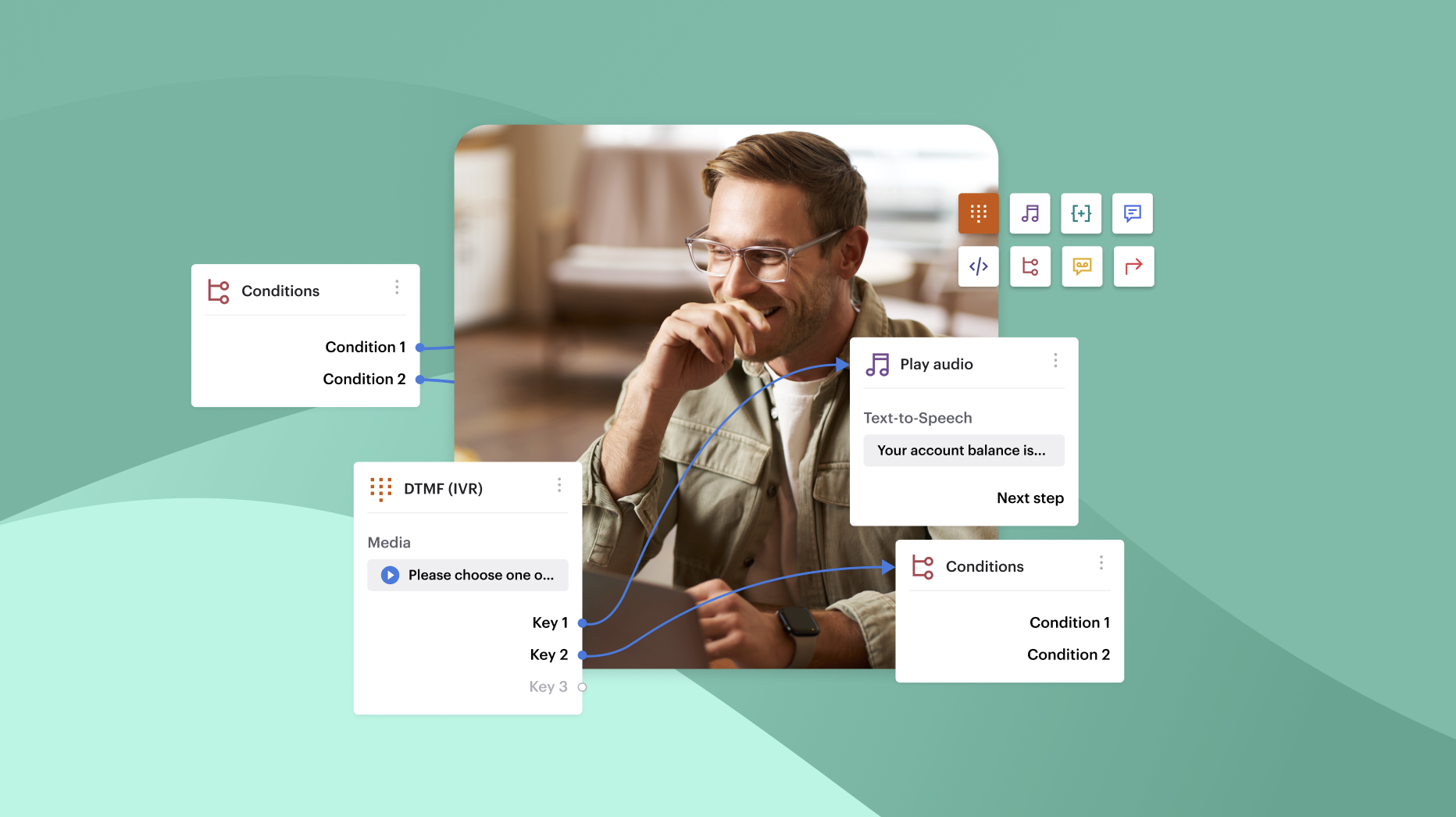
Visual tools like drag-and-drop flow builders for routing can cut the need for technical help when adjusting IVR paths or queue logic.
Self-service tools don’t replace support, but they give your team more control over day-to-day adjustments without waiting on someone else.
Security, compliance, and data privacy
International calling often involves personal or payment data. Security shouldn’t be something you evaluate last. It should be part of the process from the start.
Before choosing a provider, understand how they handle data, where it’s stored, and what controls are in place.
Regulatory compliance (GDPR, HIPAA, PCI)
If you operate in the EU, GDPR rules apply to how customer data is stored and accessed. If you handle healthcare information, HIPAA requirements may be relevant. And if your team collects payment details over the phone, PCI DSS controls matter.
A provider should clearly explain:
- How customer data is processed
- What standards or certifications they follow (if any)
- How access to recordings and call data is managed
- Whether features exist to pause recording when sensitive data is shared
Avoid providers that make vague claims about being “fully compliant.” Look for clear documentation and structured controls that support your internal compliance processes.
Call recording and data storage
If calls are recorded, you need to know where that data lives and how it’s protected.
Ask:
- In which regions are recordings stored?
- Is data encrypted during transmission and at rest?
- Who can access recordings, and how is access controlled?
- Is access logged?
- Can recordings be deleted or restricted when required?
Recordings should be accessible to authorized users for quality assurance or dispute resolution. At the same time, access should be limited and auditable.
Strong data governance protects both your customers and your business. It reduces legal exposure and builds trust in markets where data privacy expectations are high.
Red flags to avoid
Not every international VoIP provider operates with the same level of transparency. Some warning signs only show up after you’ve signed a contract. Better to catch them early.
Overpromising on “unlimited” plans
“Unlimited” international calling usually comes with conditions.
Look closely for:
- Fair usage limits
- Destination exclusions
- Throttling after certain volumes
- Restrictions on high-frequency outbound campaigns
Some plans cap usage quietly in the terms and conditions. Others limit certain countries or mobile numbers.
Before committing, ask what happens if your usage goes up. Actual cost clarity matters more than an attractive headline.
Poor transparency on pricing or support
If pricing feels unclear, that’s a red flag.
Warning signs include:
- No clear breakdown of additional fees
- Unclear concurrency limits
- Vague answers about number rental costs
- Difficulty getting pricing details in writing
Support transparency matters just as much. If it’s hard to reach someone before you sign, it’ll probably be harder afterward.
Ask:
- What are the official support hours?
- How are critical issues escalated?
- Are response times defined in writing by priority?
If answers are inconsistent or vague, take that as a signal.
Lack of localization or global reach
An international VoIP service should support the regions where you do business.
If a provider:
- Can’t provision local numbers in your main markets
- Has weak routing performance in certain countries
- Relies heavily on indirect carrier routes in your top destinations
That gap will affect both cost and reliability.
If your business depends on specific regions, test calls there before making a decision. International coverage should match your actual footprint, not a claim on a marketing page.
Final checklist before you choose
Before signing with any international VoIP provider, run through this:
- Have you defined whether your main goal is sales, support, or both?
- Have you calculated your real call volume and top destination countries?
- Do you understand how pricing works beyond the advertised per-minute rate?
- Have you reviewed concurrency limits and peak behavior?
- Are local numbers available in the regions that matter to you?
- Is routing quality clear for your main markets?
- Are reliability terms and support response times defined in writing?
- Do integrations with your CRM or helpdesk match your workflow?
- Is call data stored securely, with clear access controls?
And don’t rely only on documentation.
Request a demo. Ask for trial minutes if they’re available. Place test calls to your main international destinations. Check audio quality, connection time, and caller ID behavior.
A short trial will usually tell you more than a long feature list.
Want a setup tailored to your international calling needs?
Request a live walkthrough