

An international virtual phone number lets your business use local numbers in other countries without setting up physical infrastructure or telecom contracts in each location. You provision a number with a country code like +44 or +33, route calls through a cloud contact center using VoIP (Voice over Internet Protocol), and your agents can work remotely from many locations.
But the number itself isn’t the whole story. What matters is how it’s configured:
- How calls are routed
- How caller ID is displayed
- How it connects to your CRM
- How performance is tracked
This guide covers how international virtual phone numbers work, what to think through before getting one, and how to set one up properly inside a cloud contact center.
What an international virtual phone number actually does
Here’s the basic idea: instead of setting up physical phone lines in every country, you get a local number there and manage everything through your cloud contact center. The number exists locally, but calls are handled through VoIP inside your cloud PBX system, often using SIP depending on your provider setup.
In practice, that looks like this:
- Customers in the UK call a +44 number and reach your team, even if your agents sit in another country.
- Your outbound calls to Germany can display a local +49 caller ID when your carrier setup and number inventory support it.
- Calls get routed automatically using rule-based logic based on country, time of day, or team.
A few number types worth knowing:
- Local geographic number (e.g., +44 London): Tied to a specific city or region. Makes your business look locally established.
- Toll-free number: Customers typically call at low or no cost within that country, depending on the country and carrier.
- Virtual number managed through a cloud contact center: The number is issued or hosted via in-country carriers or numbering authorities, depending on the provider, but calls forward through the cloud using VoIP. No traditional landlines or on-premise PBX hardware needed.
The real shift is infrastructure. Instead of managing separate phone systems in every country, you centralize routing, call forwarding, recordings, and analytics inside one platform.
Worth noting: in many countries, you don’t need a physical office to get a local number. But some markets require proof of business registration or local documentation before provisioning. Those requirements vary by country and should always be checked in advance.
The short version: you get local presence with centralized control, without building out telecom infrastructure in every market you serve.
Use cases
Here are three common ones:
A US company serving clients in the UK. They provision a +44 number so outbound calls appear local and inbound UK calls route to their existing team. No physical UK office needed. Customers just see a domestic number.
A remote sales team working leads across multiple countries. A company running campaigns in France, Germany, and Spain uses local numbers for each market. Calls route through a cloud contact center, and outbound calls display the right local caller ID based on the lead’s country.
BPOs trying to improve outbound answer rates. An outsourced team dialing US customers uses US-based DIDs instead of foreign numbers. Calls appear domestic, which lifts pickup rates and keeps outbound performance consistent.
In all three scenarios, routing, caller ID configuration, and monitoring live inside one cloud-based system.
Why international numbers affect contact rates and conversion
An international virtual phone number lets you appear local. That directly affects whether customers answer, call back, or trust the interaction at all. For outbound-heavy teams, how a number shows up on someone’s phone can make or break contact rates and campaign performance.
Local caller ID and pickup rates
When outbound calls show a foreign country code, two things tend to happen:
- People ignore the call. An unfamiliar international code feels risky.
- Networks may treat the call differently. Spam filtering and carrier reputation systems can tank connect rates or slap a “suspected spam” label on it, depending on traffic patterns and number reputation.
This is why many outbound teams see higher pickup rates when displaying local numbers, especially at high volume.
A few examples of how this plays out:
- Fintech brokers in Cyprus calling UK leads: a +44 caller ID removes the “why is this international?” hesitation before the call even starts.
- Microlenders in the Philippines contacting local borrowers: a local number makes repayment or support calls feel legitimate and worth calling back.
- BPOs dialing the US from Eastern Europe: US-based DIDs with local caller ID cut the distrust tied to foreign codes and help stabilize campaign performance.
Infrastructure cost vs. physical presence
Traditionally, operating in multiple countries meant working with local telecom carriers in each market. Separate contracts, physical lines, hardware on-site. Expanding into a new country could mean weeks of setup and back-and-forth with local providers.
Cloud-based number provisioning works differently. Numbers are issued in-country, but routing and call management happen through a centralized cloud contact center. No physical equipment to deploy, no separate PBX systems per region.
| Traditional telecom setup | Cloud-based virtual numbers |
| Physical line required | No physical infrastructure |
| Separate contracts by country | Centralized management through one platform, often backed by carrier partners |
| Hardware PBX | Cloud-based routing |
Instead of managing telecom infrastructure market by market, you control routing, call handling, and reporting across countries from one platform.
This doesn’t eliminate regulatory or provisioning requirements in each country. But it cuts the operational complexity of international expansion considerably.
Regulatory considerations most businesses overlook
Before provisioning numbers in a new country, you need to understand what local telecom authorities require. These rules can affect timelines, which number types are available, and whether you’re even eligible to get a number.
Here’s what to look at:
Local presence requirements. Some countries require a local address or registered business entity to issue geographic numbers. In certain markets, only locally incorporated businesses can get specific number types.
KYC documentation for provisioning. Providers may ask for company registration documents, proof of address, or authorized signatory details before activating numbers. This is standard for geographic and national numbers.
Data residency expectations, especially in the EU. Even if call routing happens through a cloud platform, you should know where call recordings, transcripts, and logs are stored and who can access them. This matters a lot for EU-based operations.
Call recording consent laws. Recording rules vary by region. Some countries require one-party consent; others require all-party consent. Disclosure language and storage duration may also be regulated.
Telecom compliance vs. GDPR. Telecom regulations govern how numbers are issued and used. GDPR governs how personal data is processed and stored. They overlap in practice but aren’t the same framework.
These requirements vary a lot between countries and should be verified with your provider. Planning for them early helps you avoid delays or compliance problems during expansion.
Step-by-step: how to get an international virtual phone number
Setting up an international virtual phone number isn’t complicated, but it does take planning. Provisioning the number is the easy part. Getting the routing, compliance, and monitoring right is what makes it work.
Step 1: Pick your countries
Start with your commercial reality, not assumptions.
Ask yourself:
- Where are your customers or prospects actually located?
- Are you running outbound campaigns in those countries?
- Do you need geographic numbers (city-based), national numbers, or toll-free?
- Will customers call you back?
Also look at regulatory and “local presence” laws. Some countries let foreign companies get numbers easily. Others require a registered local entity or business address for geographic numbers.
Your number strategy should match your actual business needs (sales, collections, support, or market testing) not just branding.
Step 2: Evaluate providers
Before you get into documentation and provisioning, vet the provider carefully. Not all of them offer the same coverage, routing capabilities, or compliance support.
Look at:
- Country coverage: do they support the specific number types you need?
- Local caller ID support: can outbound calls display domestic numbers in each target country?
- Routing flexibility: do they support IVR, queue logic, time-based routing, and skill-based distribution?
- CRM integrations: can calls be logged automatically in Salesforce, Zoho, Freshdesk, or whatever you’re using?
- Analytics and reporting: are call logs, dashboards, and performance metrics available?
- Security and certifications: do they hold standards like ISO 27001?
- Support structure: is onboarding assisted? Is provisioning handled centrally?
If you’re comparing options, look at how their global virtual phone number solutions combine number provisioning with routing, CRM integrations, and monitoring.
Step 3: Validate regulatory and provisioning requirements
Before activation, nail down the practical details with your provider.
Check:
- Documentation requirements (business registration, proof of address, authorized signatory)
- Activation timelines (some countries are near-instant; others take days or weeks)
- Number portability rules (if you’re moving existing numbers)
- SMS capability restrictions (not all number types support messaging)
- Call recording limitations by country
These factors affect rollout speed and campaign planning. Better to validate early than delay go-live because of missing paperwork.
Step 4: Provision and configure your numbers
A typical setup flow:
- Submit required documentation.
- Provider provisions the number in-country.
- Assign the number to a queue or team.
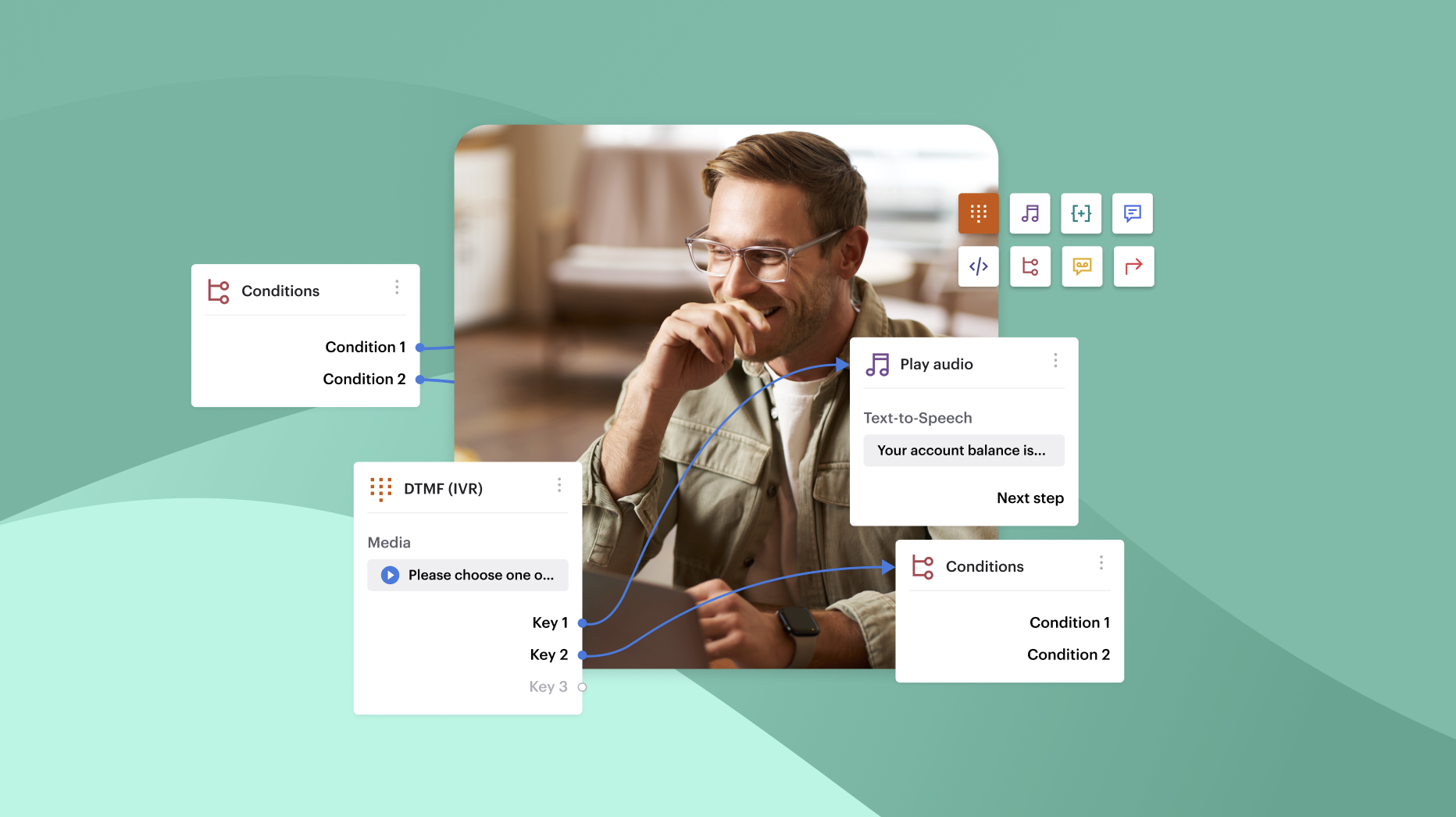
- Configure IVR paths and routing rules.
- Set up outbound caller ID.
- Test inbound and outbound flows before launch.
Most cloud providers manage this through an online dashboard. Some offer dedicated provisioning support during setup.
Step 5: Integrate with your systems
Connect the number to your CRM and support tools.
Integrations with platforms like Zoho, Salesforce, and Freshdesk give you click-to-call, automatic call logging, screen pop on inbound matches, and ticket creation for support workflows.
The goal is to make sure your international numbers plug into existing sales and support processes rather than creating a parallel workflow nobody wants to maintain.
Step 6: Start calling and monitor performance
After launch, monitor performance by country.
Track pickup rate, call duration, queue wait time, abandon rate, agent activity, and wrap-up codes by region.
Speech analytics tools can generate transcripts, group keywords, identify call topics, and score conversations. Supervisors can use that data to review call quality and manually adjust scripts or rule-based routing logic over time.
What to look for in a virtual number provider
You need a provider that supports how your team actually works when it comes to routing, caller ID setup, monitoring, compliance.
Core features
Country coverage and number types. Make sure the provider supports the exact countries and number types you need, including geographic, national, toll-free, or mobile. If a fintech company expanding into Germany needs a +49 geographic number for outbound sales but the provider only supports toll-free numbers there, the setup won’t match the sales strategy.
Local caller ID support. Confirm you can display local numbers on outbound calls and configure caller ID by campaign or region. A BPO dialing US customers from Poland, for instance, uses US-based DIDs so calls appear domestic. Without local caller ID, answer rates will likely drop.
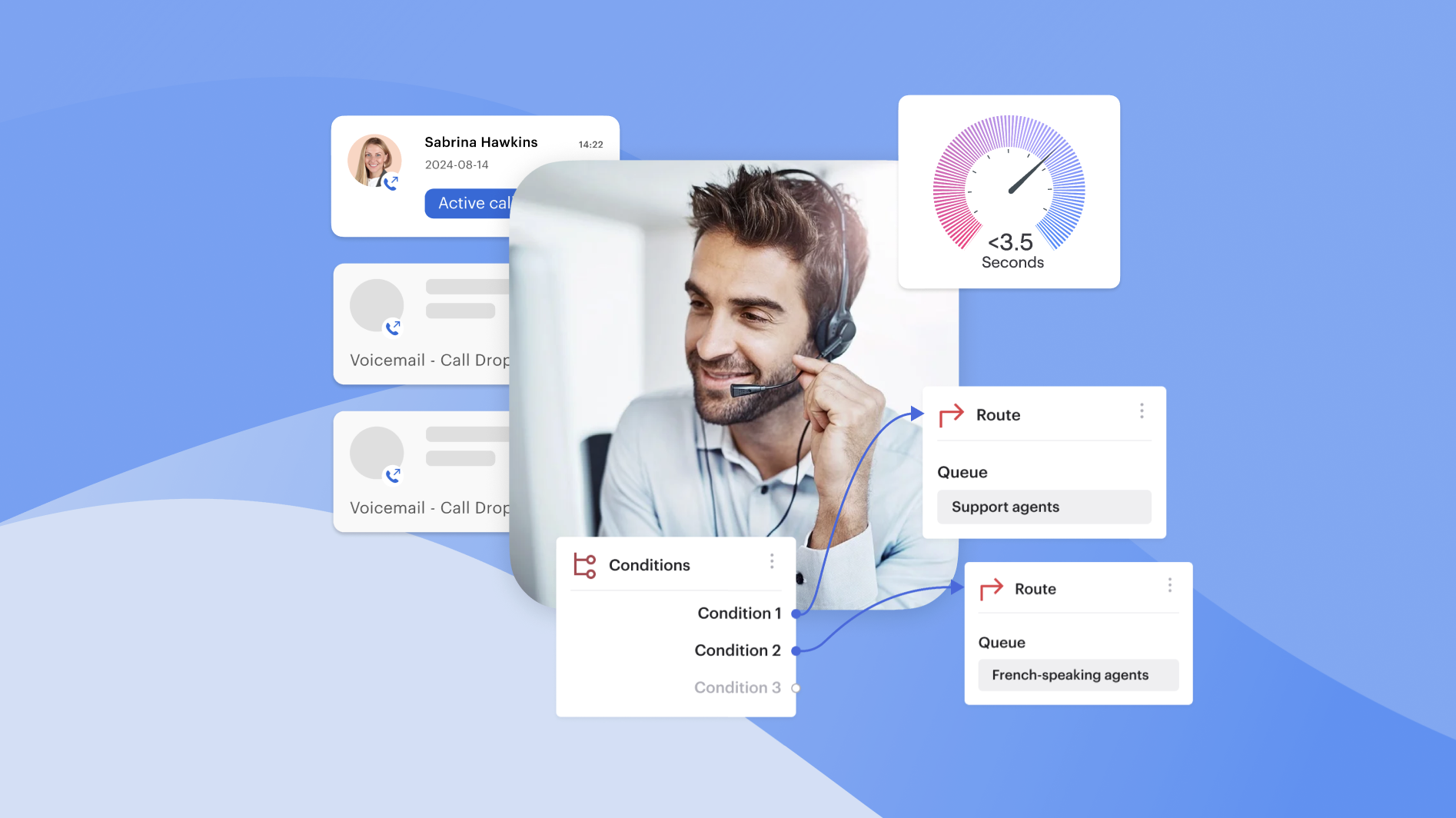
Routing flexibility. The platform should support rule-based IVR, time-based routing, queue management, and skill-based distribution. Say a SaaS company runs campaigns in France and Spain; they’d route French calls to French-speaking agents during Paris business hours and Spanish calls to a separate queue. Without structured routing, agents end up manually transferring calls.
CRM and workflow integration. Numbers should connect to your systems so agents aren’t doing manual data entry. A sales rep clicks a number inside Salesforce, the call logs automatically, notes can be saved under the contact record depending on your CRM setup. Without integration, agents log every call by hand.
SMS and voicemail handling. If relevant, check whether SMS is supported and how voicemail works. A microlender that sends an SMS repayment reminder after a missed call needs a number type that actually supports SMS, or that workflow falls apart.
Analytics and reporting. International numbers should feed into your dashboards and call logs. A Head of Sales reviewing pickup rates by country might spot lower answer rates in Italy and adjust caller ID strategy and routing to fix the gap.
Security standards and access control. Confirm certifications and how call recordings and logs are stored and accessed. A financial services firm that restricts access to call recordings by role is reducing compliance risk. Without structured access control, data exposure goes up.
Reliability and support
Features matter. But stability and support are what keep things running day to day.
Uptime SLAs. Ask for documented uptime commitments and incident processes. A support team operating 24/7 across regions can’t afford routing outages during peak hours.
24/7 support for urgent incidents may be available depending on your support plan. An outbound campaign running overnight US hours needs immediate help if caller ID display breaks.
Structured onboarding. A company provisioning numbers in three new countries benefits from guided setup instead of figuring out documentation solo.
Dedicated provisioning help. A business expanding into a new region needs additional DIDs fast and wants a clear process for getting them set up.
Common mistakes when setting up international numbers
Even experienced teams make avoidable mistakes when expanding into new markets. Most problems don’t come from the number itself. Instead, they come from poor planning around routing, compliance, or workflow alignment.
The ones that come up most:
No local caller ID support. If outbound calls don’t display a domestic number, pickup rates drop fast. Especially painful in outbound-heavy environments.
Skipping country-specific documentation. Some countries require local entity documents before issuing geographic numbers. Miss this and you could delay campaigns by days or weeks.
No routing configured before launch. Activating a number without setting up IVR, queues, or time-based routing leads to misrouted calls and frustrated customers.
Shared or recycled numbers. Numbers with prior traffic history may carry reputation baggage. That can hurt answer rates or trigger spam filtering.
No answer rate testing by country. Caller behavior varies by market. If you don’t test pickup rates by region, you’ll misread performance issues.
Number strategy that doesn’t match sales workflow. Using one generic number for multiple markets limits visibility and makes it harder to measure campaign performance by country.
Overlooking call recording regulations. Recording laws differ by jurisdiction. Failing to check consent requirements can create real compliance exposure.
International numbers are infrastructure, not a feature
An international number by itself doesn’t improve contact rates or conversion. The outcome depends on routing structure, caller ID configuration, CRM integration, and performance visibility.
Local caller ID supports answer rates. Structured IVR and queue logic get calls to the right team. CRM integration keeps your data clean. Country-level reporting shows you where things are working and where they aren’t.
The number is the entry point. The infrastructure behind it is what actually scales.
When you’re evaluating providers, focus on routing capability, monitoring depth, regulatory clarity, and long-term expansion support, not just price per number.
Looking to scale your contact center with international numbers?
See how Voiso supports international calling at scale (subject to country coverage and provisioning rules).