All Products

.svg)




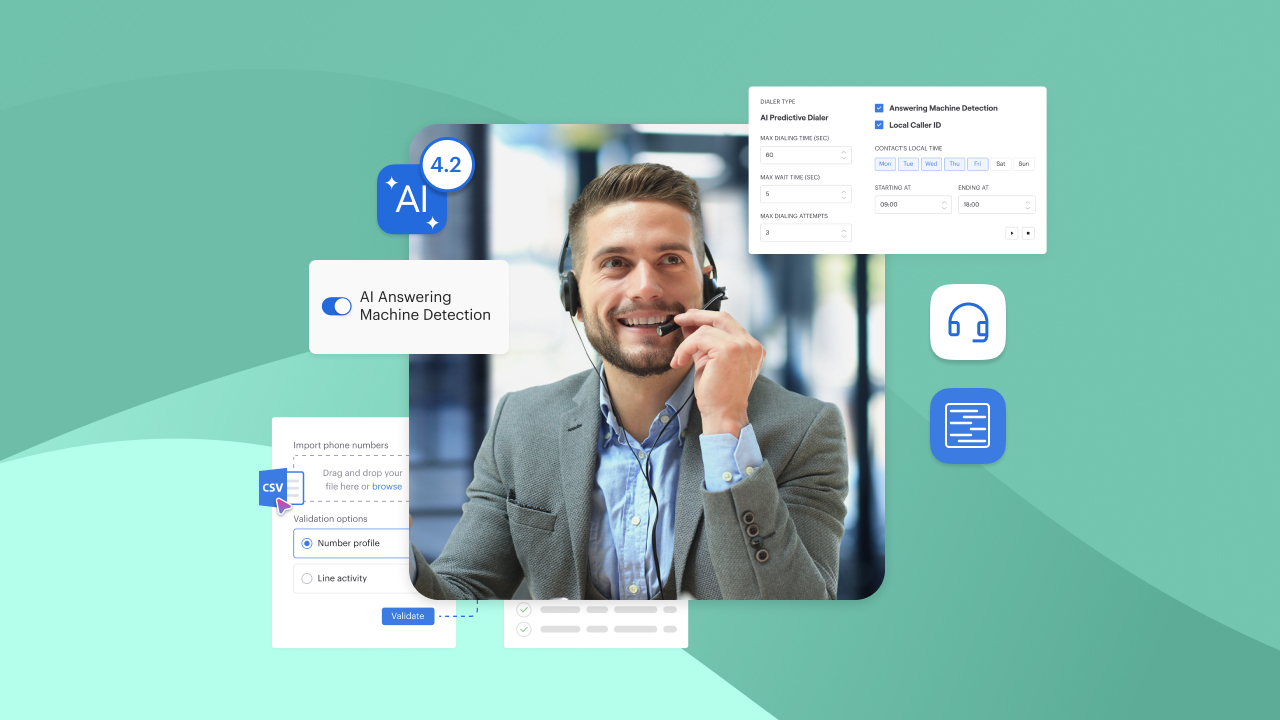
Sales development reps spend only 15–40% of their time actually talking to prospects, with the rest lost to dialing, voicemails, and admin work. In some outbound campaigns, up to 78% of calls go to voicemail, which significantly reduces real conversation time and slows pipeline growth . Connection rates vary widely depending on whether a team uses cold or warm outreach, which makes strategy selection a revenue decision, not just a sales activity choice.
The real question isn’t whether cold calling or warm calling works better. The real question is which one fits your sales model, deal size, and customer acquisition cost. Each approach plays a different role in the funnel, and using the wrong one at the wrong stage creates wasted spend and lost opportunities.
This guide breaks down when cold calling makes sense, where warm calling performs better, and how high-intent outreach fits into the picture. We’ll cover conversion benchmarks, cost differences, funnel positioning, industry use cases, and the technology stack that supports each strategy.
Key Takeaways
- Cold, warm, and hot calls serve different funnel stages: Cold outreach creates new pipeline, warm outreach develops existing interest, and hot outreach converts high-intent leads fastest.
- Cold calling is higher effort and higher cost: It works best for net-new pipeline, complex sales, and high-value deals where lower conversion rates can still pay off.
- Warm calling converts better: Prior engagement lowers resistance, shortens qualification, and usually leads to faster meetings and stronger conversion rates.
- Hot calling is the fastest to close: High-intent inbound follow-up usually has the shortest sales cycle and lowest acquisition cost, but it does not scale on its own.
- The best strategy is usually hybrid: High-performing teams combine cold outreach, nurture touches, warm follow-up, and fast response to hot leads.
- Cold calls should become warm opportunities: Multi-touch follow-up across phone, email, LinkedIn, and SMS builds familiarity and improves later conversion.
- Technology changes the economics: Dialers, local caller ID, AMD, CRM integrations, and AI analytics increase talk time, reduce voicemail waste, and improve follow-up quality.
- Metrics should focus on revenue, not activity alone: Teams should track connect rates, meeting conversion, close rates, cost per meeting, and pipeline contribution.
- Bottom Line: The right sales system does not choose between cold and warm calling. It uses cold calls to create demand, warm calls to develop it, and hot calls to close it faster.
What Is Cold Calling and When It Still Works
Cold calling still plays a core role in outbound sales. It creates a pipeline where no relationship exists yet. That matters most when growth depends on reaching net-new buyers at scale.
Cold calling means outbound contact with no prior engagement. The prospect hasn’t requested a demo, downloaded content, or replied on another channel. Your team starts the conversation from zero.
Where Cold Calling Is Operationally Critical
Cold outreach works best when volume, speed, and first-touch reach matter more than immediate conversion.
For several Voiso ICPs, phone-first outreach remains central:
- Fintech brokers: Sales teams often rely on direct phone outreach to explain complex products and convert leads.
- BPO telemarketing firms: Their model depends on high-volume outbound activity for lead generation and appointment setting.
- Microlenders and collections teams: They use outbound calls for collections, cross-sell activity, and account follow-up.
- New market expansion: When a brand enters a new segment, cold outreach often becomes the fastest way to test messaging and demand.
Cold calling also makes sense when average contract value is high. A lower conversion rate can still work if one closed deal covers acquisition cost.
The Real Economics of Cold Calling
Cold calling looks simple on the surface. The math behind it tells a different story. Up to 78% of outbound campaign calls can end in voicemail, according to Voiso’s AMD material. That changes staffing, pacing, and cost per live conversation. The same document states that 25% of agent call time is lost listening to machines when no answering machine detection is in place .
That means cold calling performance depends on operational ratios, not script quality alone:
- Dial-to-connect ratio: How many attempts produce one live conversation
- Voicemail share: How much of your list never reaches a person
- Talk-time loss: How much paid agent time goes to dead-end calls
- Time to conversion: How many touches happen before a meeting or sale
Once you view cold calling through those numbers, it stops being a brute-force tactic. It becomes a channel that needs careful cost control, routing logic, and list strategy.
What Is Warm Calling and Why Conversion Rates Are Higher
A warm call starts from familiarity, not interruption. That changes the tone, the pace, and the odds of getting a real conversation.
Warm calling means outbound follow-up after prior engagement. The prospect already knows your brand, offer, or company. Your team isn’t starting from zero.
Types of Warm Triggers
Warm outreach usually follows a clear buying signal. Common triggers include:
- Demo requests
- Webinar signups
- Content downloads
- CRM re-engagement campaigns
- Abandoned carts in D2C sales
Each trigger changes the context of the call. A demo request suggests active evaluation. An abandoned cart points to hesitation, timing, or unanswered questions.
Why Warm Calls Convert Better
Warm calls tend to move faster because the prospect has already crossed the first trust barrier. They’ve seen your brand before. They’re less likely to react like the call came out of nowhere.
Recognition matters in sales. Familiar names create less resistance than unknown ones. That lowers early objections and gives reps more time to qualify, rather than justify the call itself.
The funnel position also changes the math:
- Cold outreach: Awareness → Qualification → Nurture → Demo
- Warm outreach: Consideration → Qualification → Demo or next step
That shorter path matters. Reps spend less time proving relevance. Buyers spend less time figuring out who’s calling. The result is usually a smoother conversation, a shorter qualification stage, and a stronger chance of booking a meeting.
Everything your team needs in one platform
Hot Calling (High-Intent Inbound Follow-Up)
Hot calling sits at the bottom of the funnel. The prospect already wants to talk. Speed becomes the main factor that determines whether the opportunity converts.
What Is Hot Calling?
Hot calling means responding to high-intent signals. The prospect has already shown clear buying interest and expects contact.
Common hot call triggers include:
- “Call me back” forms
- Pricing page visits
- Event or conference meetings
- Partner or client referrals
Each signal suggests timing matters. Delayed response often means lost revenue, not just a missed call.
Why Hot Calls Convert Faster
Hot calls work differently from cold and warm outreach. The sales conversation starts with intent already established. The rep doesn’t need to create interest. They need to respond while interest is high.
Hot leads usually produce:
| Metric | Hot Calling Impact |
| Sales cycle | Shortest |
| Meeting-to-close rate | Highest |
| Cost per acquisition | Lowest |
| Lead volume | Limited |
Hot calling generates the lowest acquisition cost because marketing already did most of the work. Sales teams focus on qualification, pricing, and closing steps instead of prospecting.
The limitation comes from scale. High-intent leads don’t appear in unlimited numbers. Teams can’t rely on hot calling alone to build pipelines. They need cold outreach to create demand and warm outreach to nurture it.
Now that all three strategies are defined, the next step is to compare them side by side and look at actual performance differences.
Cold Calling vs Warm Calling: Conversion Rates Compared
Cold, warm, and hot outreach sit at different stages of the sales funnel. Comparing them directly helps teams decide where to invest time, headcount, and budget.
Conversion and Sales Effort Comparison
| Metric | Cold Calling | Warm Calling | Hot Calling |
| Prior engagement | None | Some | High |
| Connect rate | Low | Moderate | High |
| Objection intensity | High | Medium | Low |
| Sales cycle length | Long | Medium | Short |
| Cost per acquisition | Higher | Lower | Lowest |
| Scalability | Very high | Moderate | Limited |
The table shows why most teams don’t rely on just one strategy. Each one solves a different pipeline problem.
Time Investment and Sales Effort
Cold outreach requires the most activity per deal. Reps spend more time dialing, qualifying, and handling objections. Warm outreach reduces early-stage friction, so reps spend more time on real opportunities. Hot leads require fast response, but fewer touchpoints before a decision.
A simple way to look at effort per deal:
| Factor | Cold | Warm | Hot |
| Dials per meeting | Highest | Medium | Lowest |
| Follow-ups required | Many | Few | Very few |
| Time to first meeting | Long | Medium | Short |
Required SDR Skill Level and Ideal Deal Size
Each strategy also requires a different level of sales skill and works best with different deal values.
| Category | Cold Calling | Warm Calling | Hot Calling |
| SDR skill level | High | Medium | Medium |
| Product complexity | High | Medium | Any |
| Ideal deal size | High | Medium–High | Any |
| Best use case | New pipeline | Lead nurturing | Closing |
Cold outreach works best when deal value justifies the time investment. Warm outreach works best when marketing already generates interest. Hot outreach works best when speed determines who wins the deal.
The next step is deciding when each strategy should be used in a real sales operation.
When to Use Each Strategy (Decision Framework)
Choosing between cold, warm, and hot outreach depends on pipeline stage, deal value, and lead source. Most teams don’t choose one. They combine them based on where the prospect sits in the funnel.
Use Cold Calling When:
Cold outreach works best when your team needs a new pipeline, not immediate conversions.
Use cold calling when:
- Entering new markets with no existing audience
- Selling complex fintech or financial products that require explanation
- Scaling outbound in BPO or telemarketing environments
- Building net-new pipeline for sales teams
- High lifetime value justifies high outreach volume
Cold calling fills the top of the funnel. Without it, many sales teams run out of new opportunities to work on.
Use Warm Calling When:
Warm outreach works best when marketing and inbound channels already generate leads.
Use warm calling when:
- A strong inbound engine generates leads
- Account-based marketing campaigns run across email and LinkedIn
- D2C brands handle call-back requests or abandoned carts
- Travel agencies and service businesses respond to inquiries
Warm calling sits in the middle of the funnel. The goal isn’t to find prospects. The goal is to convert existing interest into meetings and deals.
Hybrid Strategy (Most Realistic Scenario)
Most high-performing teams use a hybrid approach. They create demand, nurture leads, and then convert them.
A simple hybrid workflow looks like this:
| Stage | Action | Channel |
| Prospecting | Cold outreach | Dialer |
| Nurture | Follow-up content | Email / LinkedIn |
| Re-engagement | Warm call | Phone |
| Post-call | Reminder or link | SMS |
| Support | Messaging | WhatsApp / Chat |
This approach turns cold prospects into warm conversations over time.
Tools also play a role in this transition. For example, IVR systems can redirect callers to messaging apps like WhatsApp, allowing conversations to continue on a more convenient channel. Voiso’s Flow Builder supports this type of cross-channel routing, helping teams move conversations from calls to messaging when appropriate.
SMS follow-ups also help maintain contact after a call. SMS messages have very high open rates, with 98% of messages opened and 90% read within three minutes, which makes them useful for confirmations and links after conversations .
The key takeaway: cold outreach creates opportunities, warm outreach develops them, and hot outreach closes them. The strategy works best when all three operate together, not separately.
Converting Cold Calls Into Warm Opportunities
Most cold calls don’t end in a meeting. That doesn’t make them a loss. They can still create familiarity, capture context, and set up a stronger second conversation.
Build a Multi-Touch Sequence
One call rarely does the job. Prospects need repetition across channels before they respond.
A practical sequence might look like this:
- Place the first outbound call
- Send a short follow-up email
- Connect on LinkedIn with a relevant note
- Send a second call attempt
- Follow with SMS if appropriate
- Re-engage later with a context-based call
The goal isn’t pressure. The goal is recognition. By the second or third touch, the call no longer feels random.
Use LinkedIn, Email, and SMS Together
Each channel does a different job. LinkedIn builds familiarity. Email adds context. SMS works well for short follow-up after contact.
SMS becomes especially useful after a brief conversation. Agents can send a template with a link, recap, or next step. Voiso supports SMS templates and lets agents send messages during or after calls .
That matters because timing shapes response. A fast text after a call keeps the conversation alive while interest still exists.
Log Every Touch in the CRM
A cold call becomes warmer when the next rep knows what happened before. Without CRM logging, teams repeat questions, miss context, and lose momentum.
Good logging should capture:
- Call outcome
- Objection raised
- Product interest
- Best callback time
- Next action
Voiso’s CRM integrations support automatic call logging and click-to-call workflows inside systems like Salesforce and Zoho . That reduces admin work and gives the next follow-up more context.
Use Automated Templates Without Sounding Generic
Templates save time, but poor ones feel robotic. Keep them short, specific, and tied to the last interaction.
A useful follow-up SMS might include:
- The rep’s name
- A brief reason for reaching out
- One link or next step
- A simple callback option
That structure gives the prospect a clear path forward. It also saves agents from rewriting the same message all day.
Reduce Idle Time Before the Follow-Up Even Starts
Better follow-up begins with better first-call productivity. If reps spend too much time hitting voicemail, they create fewer future opportunities.
Predictive dialers help teams move through lists faster. AMD removes calls answered by machines before they reach agents. According to Voiso, that can deliver 35% faster list processing, 95%+ accuracy, and $10 return for every $1 spent .
That changes the economics of cold outreach. Agents spend more time with real people. More real conversations mean more chances to create warm follow-up.
The next step is looking at the technology stack that improves both first-touch outreach and later-stage follow-up.
Technology That Improves Both Cold and Warm Calling
Sales strategy alone doesn’t determine results. Technology affects connect rates, agent talk time, and follow-up quality. The right setup helps teams reach more people and manage conversations better.
Auto Dialers & Local Caller ID
Manual dialing slows everything down. Auto dialers remove idle time between calls and help teams move through lists faster.
Local caller ID also affects pickup rates. Prospects are more likely to answer a local number than an international one. That small change can significantly increase connection rates and improve list penetration.
Auto dialers help teams:
- Reach more prospects per hour
- Reduce idle time between calls
- Improve connection rates with local numbers
- Maintain consistent outbound activity
That combination matters most for high-volume outbound teams and cold outreach campaigns.
Answering Machine Detection (AMD)
Voicemail remains one of the biggest problems in outbound calling. Answering Machine Detection solves that problem by filtering out voicemail before the call reaches an agent. Voiso’s AMD provides 95%+ detection accuracy, 35% faster list processing, and an estimated $10 return for every $1 spent .
That changes outbound performance in three ways:
| Without AMD | With AMD |
| Agents listen to voicemail | Agents speak to real people |
| Lower talk time | Higher talk time |
| Slow list penetration | Faster list penetration |
More live conversations mean more opportunities to create warm follow-ups and meetings.
AI Speech Analytics
Conversation data often goes unused. AI speech analytics turns calls into structured data that managers can use for coaching and performance tracking.
AI analysis can automatically:
- Score calls
- Detect topics and keywords
- Measure sentiment
- Generate call summaries
Voiso’s AI Speech Analytics transcribes calls, identifies topics, and generates summaries automatically, helping supervisors review conversations faster and coach agents more effectively .
That helps teams understand why some calls convert and others don’t.
CRM & Helpdesk Integrations
Calling works better when data and communication stay in one system. CRM integrations remove manual work and improve follow-up consistency.
Voiso integrates with platforms like Salesforce, Zoho, and Freshdesk. Agents can click-to-call, log calls automatically, and view customer history during conversations .
The operational impact:
| Without CRM Integration | With CRM Integration |
| Manual call logging | Automatic call logging |
| Switching between systems | One workspace |
| Missed follow-ups | Scheduled follow-ups |
| Limited context | Full customer history |
Better data leads to better timing, better conversations, and more conversions.
The next step is understanding how to measure whether cold and warm calling actually work.
Measuring Success: Metrics That Actually Matter
Activity alone doesn’t show whether cold or warm outreach works. Teams need performance metrics that connect calls to revenue, not just call volume. The right metrics also show where deals slow down and where processes need adjustment.
Cold Calling Metrics
Cold outreach performance depends on efficiency and list quality. Focus on metrics that show how many dials turn into real opportunities.
| Metric | What It Shows | Why It Matters |
| Dial-to-connect ratio | How many dials reach a person | Shows list quality and dialing efficiency |
| Connect-to-meeting rate | How many conversations become meetings | Shows script and qualification quality |
| Cost per meeting | Cost to generate one meeting | Shows acquisition efficiency |
| Talk time % | How much time agents speak with prospects | Shows productivity and idle time |
Dial-to-connect ratio often becomes the main operational metric. If that number drops, teams either have poor data or too many voicemails.
Warm Calling Metrics
Warm outreach sits closer to revenue, so conversion and deal progression matter more than dialing activity.
| Metric | What It Shows | Why It Matters |
| Meeting conversion rate | Meetings booked from warm leads | Shows lead quality |
| Close rate | Deals won from meetings | Shows sales effectiveness |
| Sales cycle length | Time from first call to deal | Shows funnel speed |
Warm leads should move faster through the pipeline. If sales cycles remain long, the issue usually sits in qualification or offer positioning.
Advanced Metrics for Both
Some metrics apply to both cold and warm strategies and give deeper insight into sales performance.
| Advanced Metric | What It Measures |
| Conversation score | Call quality and engagement |
| Pipeline contribution % | How much pipeline each channel generates |
| Follow-up rate | How consistently leads are contacted again |
| Contact rate by channel | Which channel produces most conversations |
AI conversation scoring adds another layer of visibility. Managers can see which calls perform well and use them for coaching and training. Pipeline contribution shows whether cold outreach fills the funnel and whether warm outreach converts it.
When teams track these numbers consistently, they stop guessing. They can see exactly where cold, warm, and hot outreach produce results and where adjustments are needed.
Common Mistakes (Condensed + Strategic)
Small mistakes in outreach strategy can quietly destroy conversion rates. Most of them don’t come from poor sales skills. They come from poor processes.
Cold Calling Mistakes
Cold outreach fails when teams treat it like random dialing instead of a structured process.
| Mistake | What Happens |
| No research | Conversations start without context |
| No tech stack | Agents waste time on manual dialing and voicemail |
| No follow-up sequence | Cold leads never become warm leads |
Lack of research leads to generic conversations. Prospects disengage quickly when calls feel irrelevant. Missing technology reduces talk time and lowers the number of real conversations. No follow-up means most potential deals disappear after the first call.
Warm Calling Mistakes
Warm outreach fails for different reasons. The lead already showed interest, so timing and context matter more.
| Mistake | What Happens |
| Calling too late | Lead interest drops |
| No CRM visibility | Reps call without context |
| Assuming intent = readiness | Reps push too fast and lose trust |
Warm leads go cold quickly when response time is slow. Missing CRM history creates poor conversations because reps ask questions the prospect already answered. Assuming every warm lead is ready to buy often creates pressure and objections.
Avoiding these mistakes often improves results faster than changing scripts or hiring more reps. The biggest gains usually come from better timing, better data, and consistent follow-up.
Conclusion
Cold calling builds pipelines. Warm calling converts it. Hot calling accelerates revenue. High-performing teams don’t choose one strategy. They combine all three to cover the entire funnel.
Cold outreach creates new opportunities and fills the top of the pipeline. Warm outreach moves interested prospects toward meetings and deals. Hot outreach captures high-intent leads and shortens the sales cycle. When used together, they create a predictable acquisition system.
The teams that consistently generate revenue focus on a few operational priorities:
- They use automation to increase talk time
- They track performance metrics, not just call volume
- They reduce idle time and voicemail impact
- They follow up across multiple channels
- They log every interaction in the CRM
Technology plays a major role in making this work. Dialers increase reach, Answering Machine Detection reduces wasted time, CRM integrations keep data organized, and AI analytics improve call quality over time.
If the goal is predictable pipeline and higher conversion rates, the strategy isn’t choosing between cold and warm calling. The strategy is building a system where cold calls create opportunities, warm calls develop them, and hot calls close them.
Further Reading