All Products

.svg)





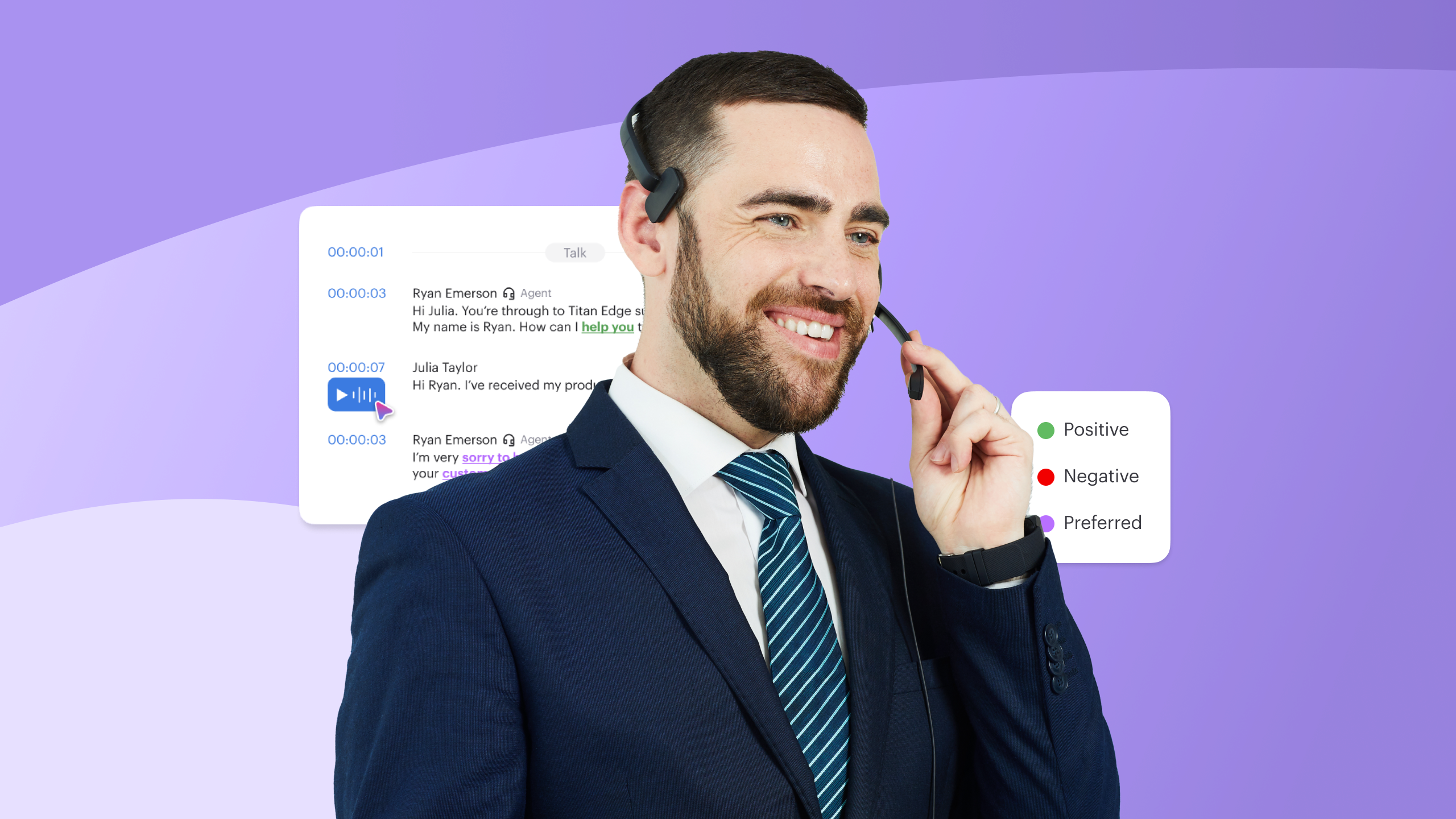
Most contact centers still review only 2–5% of calls through traditional QA, while AI can analyze every conversation. Voiso’s AI Speech Analytics, for example, transcribes, scores, summarizes, and tags each call with sentiment and topics.
Agent costs keep rising, and leaders need answers before issues spread. Missed buying signals, compliance risks, and churn warnings can’t wait for a weekly report.
That’s where ai enabled cloud telephony changes the role of voice. It moves business calling from basic infrastructure into an intelligence layer. Calls stop being isolated conversations. They become searchable, structured data for service, sales, compliance, and operations.
The value isn’t just smarter phone software. It’s faster decisions, better routing, stronger coaching, cleaner CRM records, and more revenue from every customer interaction.
What Is AI-Enabled Cloud Telephony?
Cloud phone systems already removed the need for on-site PBX hardware. AI adds a second layer on top of that infrastructure: interpretation and decision-making.
A traditional cloud phone system mainly transports calls through the internet. An AI-powered platform understands conversations, identifies patterns, and triggers actions while calls happen.
That difference changes how teams work. Instead of reviewing calls manually after problems appear, managers can monitor sentiment, intent, compliance risks, and buying signals in real time.
Platforms like Voiso, Ringcenral and Aircall helped businesses move voice communications into the cloud. AI-enabled cloud telephony pushes the category further by turning conversations into operational data.
Here’s the core distinction:
| Traditional Cloud Phone System | AI-Enabled Cloud Telephony |
| Focuses on call delivery | Interprets conversations |
| Routes calls using fixed rules | Adapts routing using intent and context |
| Stores recordings | Extracts insights from recordings |
| Depends on manual QA reviews | Analyzes every interaction automatically |
| Supports agents | Assists agents during live conversations |
Modern platforms combine several AI layers into one environment:
- Voice agents that handle repetitive inbound requests
- AI virtual assistants that guide customers across channels
- Conversation intelligence that detects sentiment, topics, silence, interruptions, and urgency
- Automated summaries and CRM updates after calls
- Real-time recommendations for agents during conversations
Voiso’s AI Speech Analytics, for example, can transcribe a five-minute call in roughly 15 seconds while identifying call topics and emotional tone. That shift matters because businesses no longer treat voice as temporary communication. They treat it as a live source of operational insight.
The Evolution: From PBX to AI-Powered Cloud Communication
Business calling didn’t jump from desk phones to AI overnight. Each stage made voice easier to route, record, search, and connect with customer data.
Legacy Systems → VoIP → Cloud PBX
Legacy PBX systems kept business calls tied to office hardware. Teams needed physical equipment, fixed lines, and technical support for basic changes.
VoIP moved calls onto internet networks. Companies could reduce hardware dependency and support distributed teams more easily.
Cloud PBX took that further. Businesses gained browser-based management, remote access, and faster scaling across locations.
SIP and APIs made the bigger change possible. SIP connects voice sessions across networks. APIs let phone systems exchange data with CRMs, helpdesks, dialers, and analytics platforms.
Voiso’s Salesforce integration shows how far that shift has gone. Agents can handle calls, view contact data, use call controls, and log activity inside Salesforce.
Why AI Became Viable
AI became useful for telephony once calls stopped being just audio files. Digital voice created data that software could process, search, and classify.
Real-time processing added another layer. Platforms can now analyze speech while conversations happen, not only after recordings get archived.
Lower AI model costs also changed the economics. Features once limited to large enterprises became practical for growing contact centers.
AI didn’t appear out of nowhere. It became usable once calls became structured data. That data now powers transcription, routing, coaching, compliance checks, and conversation intelligence.
How AI-Enabled Cloud Telephony Works
AI-powered communication platforms combine several layers working together in real time. Voice infrastructure handles the connection, while AI analyzes conversations and triggers actions automatically.
Voice Infrastructure Layer
Every interaction starts with cloud voice architecture. SIP, VoIP, and cloud PBX technology carry calls across internet networks instead of physical phone lines.
That foundation handles:
| Function | Purpose |
| SIP trunking | Connects calls across carriers and systems |
| VoIP routing | Directs voice traffic through internet infrastructure |
| Cloud PBX | Manages queues, extensions, and call flows |
| Geographic scaling | Supports teams across multiple countries |
| Load balancing | Prevents downtime during traffic spikes |
Cloud infrastructure matters because AI relies on stable, low-latency voice delivery. Delayed audio breaks transcription accuracy and routing logic.
Global coverage also affects outbound performance. Voiso’s dynamic local caller ID increases pickup rates by displaying regional numbers during outbound calls.
AI Processing Layer
Once calls become digital audio streams, AI models process conversations live. This layer handles transcription, speaker separation, sentiment analysis, topic tagging, and urgency detection while agents speak with customers.
The AI layer continuously analyzes:
- Emotional tone changes
- Escalation signals
- Compliance keywords
- Silence duration
- Interruptions
- Buying intent
- Churn indicators
Conversation scoring adds another dimension. AI evaluates language, pacing, overlap, and interaction quality to generate performance scores automatically.
Topic detection organizes calls into searchable categories. Managers can quickly locate conversations involving refunds, cancellations, outages, or pricing objections.
Urgency detection matters even more for sales and retention teams. AI can flag phrases linked to churn risk or purchase intent before opportunities disappear.
For example:
| Customer Phrase | AI Interpretation |
| “I’m comparing providers” | High buying intent |
| “I want to cancel” | Retention risk |
| “I already complained twice” | Escalation priority |
| “Send me pricing today” | Immediate follow-up needed |
That intelligence turns voice conversations into structured operational data instead of archived recordings.
Automation & Decision Layer
Once AI identifies intent and context, automation workflows decide what happens next.
AI-driven routing sends interactions to the right queue, department, or specialist based on customer behavior instead of static IVR rules. Voiso’s Flow Builder allows businesses to create drag-and-drop logic flows connecting calls, messaging, routing, and CRM actions.
A customer might:
- Call support
- Move into WhatsApp
- Receive automated updates
- Escalate to a live specialist
All within one connected workflow.
Automation also filters low-value interactions before agents answer them. Voiso’s Answering Machine Detection identifies machines versus humans with over 95% accuracy. That matters for outbound teams. Voiso reports up to 3.5x higher talk time when agents avoid voicemail connections.
Integration Layer
AI-powered calling platforms become far more useful once connected with CRM and support systems. Integrations sync customer history, tickets, notes, recordings, and call events automatically. Voiso integrates with Salesforce, Zoho, and Freshdesk to centralize workflows inside existing systems.
Agents can:
- Launch calls directly from CRM records
- View screen pops during inbound calls
- Log notes automatically
- Trigger ticket creation
- Access recordings without switching platforms
That removes repetitive admin work after conversations end.
Omnichannel Layer
Customers rarely stay on one channel anymore. They move between voice, SMS, web chat, and social messaging throughout the same journey.
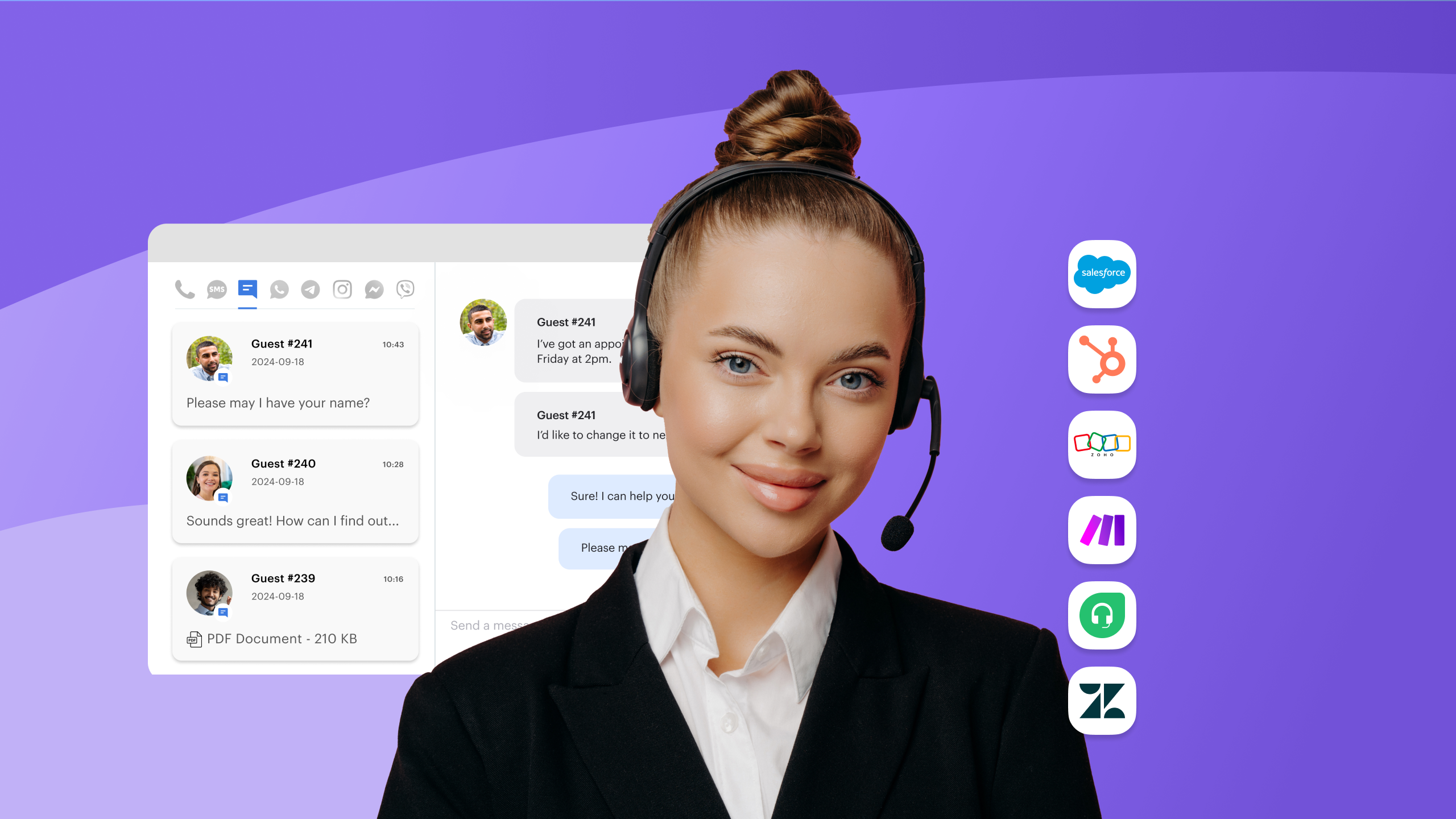
AI-enabled platforms connect those interactions into one conversation history. Voiso supports voice, SMS, WhatsApp, Instagram, Telegram, web chat, and Facebook messaging within a unified workspace. Agents can continue conversations across channels without losing context.
SMS follow-ups also play a larger role in post-call communication. Voiso reports SMS open rates reaching 98%. That creates faster follow-up cycles for payments, confirmations, onboarding links, and support updates.
Everything your team needs in one platform
Core Features of AI-Powered Cloud Telephony
Modern AI communication platforms do far more than route calls. They analyze conversations, guide agents, automate follow-ups, and surface operational risks while interactions happen.
AI Voice Agents and Assistants
Traditional IVR systems follow rigid menu trees. Customers press buttons, wait in queues, and repeat information multiple times. AI voice agents work differently. They understand natural language, detect intent, and respond conversationally.
They perform well in structured workflows such as:
- Appointment scheduling
- Order status requests
- Payment reminders
- Identity verification
- FAQ handling
They struggle with emotionally sensitive situations, complex negotiations, or conversations requiring judgment. That boundary matters. AI handles repetitive tasks well, while human agents remain critical for trust-driven interactions. For example, financial services teams often rely on live agents during disputes, onboarding, or regulated conversations requiring empathy and clarification.
Intelligent Call Routing
Older routing systems depend on fixed rules. Calls move based on queue order, time schedules, or keypad selections.
AI routing considers live context instead.
The platform can evaluate:
| Signal | Routing Outcome |
| Customer sentiment | Escalates frustrated callers |
| Purchase intent | Prioritizes sales specialists |
| VIP status | Routes high-value clients faster |
| Language detection | Matches native-speaking agents |
| Churn risk | Sends calls to retention teams |
Voiso’s Flow Builder also supports routing across messaging and voice channels inside connected workflows. That creates smoother handovers between departments and communication channels.
Real-Time Agent Assist
AI can support agents during live calls without interrupting conversations. Instead of reviewing mistakes afterward, supervisors can guide performance while interactions remain active.
Real-time assistance may include:
- Compliance reminders
- Suggested responses
- Mandatory disclosure prompts
- Knowledge base recommendations
- Talk-to-listen ratio tracking
Conversation analytics also measure silence, interruptions, and overlapping speech patterns.
That helps managers identify rushed conversations, weak listening habits, or calls drifting off-topic.
For newer agents, live guidance shortens onboarding time and reduces dependency on supervisors.
Post-Call Automation
After-call work consumes a large portion of agent time. Notes, CRM updates, summaries, and follow-ups often happen manually. AI reduces that workload immediately after conversations end. Voiso’s AI Speech Analytics automatically generates summaries, transcripts, topic labels, and conversation scores.
Integrated CRM systems can also log:
- Call duration
- Disposition codes
- Notes
- Recordings
- Customer updates
SMS follow-ups add another layer after conversations close. Voiso reports SMS open rates as high as 98%. That makes SMS useful for payment links, appointment confirmations, onboarding instructions, and post-call documentation.
AI Analytics & QA
Traditional QA teams manually review a small percentage of calls. AI removes that limitation by analyzing every interaction automatically.
Managers can search conversations using:
- Keywords
- Topics
- Sentiment shifts
- Compliance phrases
- Conversation scores
Voiso’s AI analytics platform also supports topic identification, sentiment analysis, and custom keyword tracking across calls.
That creates a searchable record of operational trends.
Compliance teams can identify risky language quickly. Sales managers can isolate high-converting conversations. Support leaders can monitor recurring complaints before they spread across channels.
Business Impact
AI-powered communication platforms affect far more than call handling. They change response speed, staffing models, operational visibility, and revenue tracking across the business.
Customer Experience
Customers expect fast answers and continuity across channels. Long wait times and repeated explanations damage trust quickly. AI routing reduces queue friction by directing conversations based on intent, urgency, and customer history.
Omnichannel communication also creates smoother handovers. A customer can move from voice to WhatsApp without restarting the conversation. Consistency improves as well. AI-generated summaries and CRM synchronization give agents immediate context before calls begin. Proactive outreach becomes easier once platforms identify churn signals and unresolved complaints automatically.
For example:
| AI Signal | Business Response |
| Negative sentiment spike | Supervisor intervention |
| Missed payment risk | Automated SMS reminder |
| Repeated complaint topic | Priority escalation |
| High purchase intent | Immediate sales follow-up |
That shortens resolution time and reduces customer frustration during high-pressure interactions.
Productivity Gains
Manual workflows consume a surprising amount of agent time. Call logging, voicemail handling, note-taking, and after-call administration create operational drag. AI automation removes much of that repetitive work.
Voiso’s Answering Machine Detection increases agent talk time by up to 3.5x by filtering voicemail connections automatically. That matters heavily for outbound teams handling large campaign volumes. AI-generated summaries also reduce wrap-up workload after calls. Supervisors gain searchable records without reviewing recordings manually. Teams can process more interactions without increasing headcount.
Cost Reduction
Many businesses still staff heavily for repetitive tier-one requests. AI voice agents and automated workflows reduce pressure on frontline teams.
Common low-complexity tasks include:
- Password resets
- Appointment confirmations
- Delivery updates
- Payment reminders
- Balance checks
Automation also reduces platform sprawl. Businesses can combine voice, messaging, analytics, routing, and reporting inside one environment instead of managing disconnected systems. That lowers training overhead and administrative complexity. Cloud infrastructure further reduces hardware maintenance costs compared with legacy PBX environments.
Revenue Impact
Revenue teams benefit from faster qualification and stronger conversation visibility. AI identifies buying intent during calls and flags leads requiring immediate follow-up. Conversation intelligence also helps managers isolate high-performing sales patterns across thousands of interactions.
Voiso’s AI analytics platform tracks topics, keywords, sentiment, and conversation scores across every call.
That creates clearer visibility into:
| Revenue Area | AI Contribution |
| Lead qualification | Prioritizes high-intent prospects |
| Conversion analysis | Identifies successful talk tracks |
| Upsell opportunities | Detects product interest signals |
| Retention efforts | Flags cancellation risks early |
| Campaign tracking | Connects calls with outcomes |
Sales and support teams no longer rely only on anecdotal feedback. They gain measurable insight from live customer conversations.
Real-World Use Cases
AI-powered calling creates the most value when tied to daily operating goals. Different teams use the same platform in very different ways.
Contact Centers / BPOs
BPOs need high agent utilization without sacrificing control. Idle time, voicemail connections, and poor data visibility cut directly into margins. AI helps teams prioritize live conversations, monitor performance, and reduce wasted dialing time.
Sales Teams
Fintech sales teams often sell complex products by phone. Buyers need education, trust, and clear follow-up before they convert. AI supports lead qualification by flagging intent, objections, and urgency during conversations.
Call recording also matters in regulated sales environments. Teams can review conversations, check compliance language, and coach agents with real examples.
Customer Support
Support teams need speed, context, and clean handoffs. AI reduces manual work by summarizing calls, tagging topics, and updating records automatically. Freshdesk integration supports automatic ticket creation for inbound and outbound calls.
Sentiment analysis adds another layer. Negative tone, repeat complaints, or escalation keywords can trigger faster supervisor review. That helps support leaders catch urgent cases before they become churn risks.
Industry Applications
Different industries use AI-powered communication platforms for very different operational pressures. Some focus on compliance, others on outbound reach, retention, or high-value service interactions.
Financial Services
Financial companies depend heavily on trust, compliance, and accurate records. Poor communication handling can create legal exposure and customer churn quickly.
AI helps teams monitor conversations for:
- Compliance language
- Escalation risk
- Negative sentiment
- Sales objections
- Disclosure adherence
Call recording and transcription also create searchable audit trails for regulated environments.
Fintech firms often rely on outbound sales teams to explain complex products and build confidence with prospects. According to Voiso’s ICP research, many prioritize analytics, omnichannel communication, and compliance visibility.
Travel / Hospitality
Travel interactions rarely happen in a single conversation. Customers move between calls, messaging, confirmations, updates, and support requests across multiple touchpoints.
AI-powered routing and omnichannel history help agents continue conversations without losing context.
That matters heavily for:
| Interaction Type | Operational Challenge |
| Flight disruptions | High urgency and volume |
| Premium bookings | Longer consultative conversations |
| Group reservations | Multiple follow-ups |
| Travel document issues | Time-sensitive support |
Voiso’s omnichannel workspace supports voice, WhatsApp, web chat, and social messaging inside one interface.
Travel companies also rely heavily on international communication. Routing, local numbers, and conversation history become critical during fast-moving service issues.
E-commerce / D2C
D2C brands compete heavily on retention and customer loyalty. Acquiring new customers keeps getting more expensive, so repeat buyers matter more.
AI supports e-commerce teams by connecting communication across voice and messaging channels.
Common use cases include:
- Delivery updates
- Cart recovery follow-ups
- Product inquiries
- Refund handling
- VIP customer routing
Voiso’s ICP research highlights omnichannel communication and CRM integration as major priorities for D2C brands.
SMS also plays a major role after purchases. High open rates make it useful for shipping updates, payment links, and customer support follow-ups.
Microlending / Collections
Collections teams operate in high-volume outbound environments where talk time and contact rates directly affect revenue recovery.
AI-driven dialing and AMD reduce wasted agent time by filtering unanswered and machine-answered calls automatically.
Microlenders also need careful communication monitoring. Aggressive or non-compliant language can damage brand reputation and create regulatory risk.
AI analytics helps supervisors identify:
- Escalation patterns
- Payment intent
- Vulnerable customers
- Compliance violations
- High-performing collection strategies
Voiso’s ICP research shows many lending organizations prioritize automation, metrics, omnichannel outreach, and cost control simultaneously.
AI-Enabled vs Traditional Cloud Phone Systems
Cloud phone systems already improved flexibility and scalability compared with legacy PBX infrastructure. AI adds another operational layer focused on analysis, automation, and decision-making.
The difference becomes clear once businesses compare how both systems handle conversations, routing, reporting, and quality control.
| Capability | Traditional Cloud Phone | AI-Powered Cloud |
| Call handling | Manual agent handling | Automated and assisted workflows |
| Routing | Static rules and IVR menus | AI-driven intent and sentiment routing |
| Quality assurance | Sample-based reviews | Analysis across every interaction |
| Insights | Historical reporting only | Real-time operational intelligence |
| Call summaries | Manual note-taking | AI-generated summaries |
| CRM updates | Agent-driven input | Automatic logging and synchronization |
| Customer intent detection | Limited visibility | Live detection of urgency and buying signals |
| Omnichannel continuity | Often fragmented | Unified cross-channel history |
| Coaching | Post-call reviews | Live prompts and compliance guidance |
| Outbound dialing | Manual filtering | AI-powered AMD and prioritization |
Traditional systems mainly move calls from one endpoint to another. AI-powered platforms interpret conversations while they happen.
That shift changes how managers monitor quality, how agents handle conversations, and how businesses respond to customer behavior in real time.
How to Choose a Provider
Not every cloud telephony vendor approaches AI the same way. Some platforms bolt AI features onto older infrastructure. Others build automation, analytics, and routing directly into the platform.
That difference affects speed, cost, scalability, and long-term usability.
Evaluate Native AI vs Add-Ons
Some providers rely on third-party AI connectors layered over separate systems. That often creates delays, fragmented reporting, and inconsistent workflows.
Native AI platforms usually deliver:
| Area | Native AI Platform | Add-On Model |
| Transcription speed | Real-time or near real-time | Delayed processing |
| Reporting consistency | Unified analytics | Split dashboards |
| Routing logic | Shared AI context | Limited interoperability |
| Maintenance | Single ecosystem | Multiple vendor dependencies |
Disconnected systems also create operational blind spots. Sentiment analysis may sit outside routing logic, or CRM updates may lag behind conversations.
Check Transcription Accuracy Carefully
Accuracy matters more than feature volume.
Poor transcription affects:
- QA reviews
- Compliance audits
- Conversation summaries
- Keyword detection
- Sentiment analysis
Multilingual environments make the problem harder. Background noise, accents, interruptions, and industry terminology can reduce reliability quickly.
Voiso’s AI Speech Analytics supports transcription across 10 languages with topic labeling, sentiment tracking, and searchable transcripts.
Ask vendors how they handle:
- Crosstalk
- Low-quality audio
- Industry-specific terminology
- Speaker separation
- Mixed-language conversations
Assess Voice Agent Maturity
Many vendors market basic IVR systems as AI assistants.
Real conversational agents should understand intent, context, and follow-up questions without forcing customers into rigid menus.
Ask providers where automation performs well and where human escalation becomes necessary.
Mature systems usually support:
- Natural language understanding
- Context retention
- Omnichannel continuity
- CRM-aware responses
- Escalation workflows
Rigid bots often create frustration during emotionally sensitive or complex interactions.
Review Integration Depth
Basic integrations only sync call records. Deeper integrations connect workflows, reporting, ticketing, routing, and automation logic.
Voiso integrates with Salesforce, Zoho, and Freshdesk for embedded calling, screen pops, automatic logging, and ticket synchronization.
Ask vendors whether integrations support:
| Capability | Why It Matters |
| Screen pops | Faster call handling |
| Automatic logging | Less admin work |
| Workflow triggers | Cross-system automation |
| Ticket synchronization | Better support continuity |
| Unified reporting | Cleaner operational visibility |
Verify Compliance and Security Standards
Financial services, healthcare, and support teams often handle sensitive customer information daily.
Providers should clearly document compliance standards such as:
- GDPR
- PCI DSS
- ISO 27001
Voiso also supports recording controls designed for PCI DSS and GDPR workflows.
Security gaps create operational risk quickly once AI systems process customer conversations at scale.
Evaluate Global SIP Coverage
International operations depend heavily on call quality, routing reliability, and regional number availability.
Weak carrier infrastructure creates latency, dropped calls, and poor audio quality.
That directly affects AI performance. Delayed audio reduces transcription reliability and routing accuracy.
Global SIP coverage matters heavily for:
- Distributed teams
- International sales
- Travel companies
- Outsourced support operations
- Multiregional compliance handling
Watch for Hidden Costs
AI pricing often looks simple initially but expands quickly with usage.
Some vendors charge separately for:
- Transcription minutes
- AI summaries
- Sentiment analysis
- Storage
- Voice bot interactions
- API requests
Those costs can scale rapidly in high-volume environments.
Latency creates another hidden operational issue. Real-time AI depends on fast processing. Delays reduce routing quality and weaken live agent assistance.
Some businesses also consider building AI communication systems internally. That approach offers customization but creates ongoing infrastructure, maintenance, compliance, and model-training costs.
For most mid-sized operations, buying an integrated platform remains faster and easier to scale.
Common Challenges & Limitations
AI-powered communication platforms solve many operational problems, but they also introduce new risks. Understanding those limitations helps businesses set realistic expectations before deployment.
AI Accuracy in Noisy Environments
AI depends heavily on audio quality. Background noise, overlapping speech, poor microphones, and unstable connections reduce transcription accuracy quickly.
Call centers often deal with:
- Open-office noise
- Crosstalk
- Regional accents
- Fast speech patterns
- Unstable mobile connections
Those conditions affect sentiment analysis, keyword tracking, and automated summaries.
Even advanced models can misinterpret urgency or intent when conversations become chaotic or emotionally charged.
That creates downstream issues for QA reviews, compliance monitoring, and reporting accuracy.
Multilingual Limitations
Many AI systems perform well in English but struggle across multilingual conversations.
Problems often appear with:
| Challenge | Operational Impact |
| Accent variation | Lower transcription accuracy |
| Mixed-language calls | Broken sentiment analysis |
| Regional slang | Misclassified topics |
| Industry terminology | Incorrect summaries |
Global businesses should test language coverage carefully before deployment.
Voiso’s AI Speech Analytics supports multilingual transcription, but performance still depends on call quality and language complexity.
No AI model handles every language and dialect equally well.
Over-Automation Risks
Automation reduces repetitive workload, but excessive automation can damage customer trust.
Customers still expect human support during:
- Billing disputes
- Fraud concerns
- Escalations
- Emotional complaints
- Complex onboarding
Rigid workflows frustrate callers when systems fail to recognize nuance or urgency.
Businesses sometimes over-prioritize containment rates instead of resolution quality. That creates longer customer journeys and higher escalation pressure later.
The strongest implementations balance automation with clear paths to live agents.
Agent Resistance
AI monitoring can create tension inside support and sales teams.
Some agents worry about:
- Constant performance tracking
- Automated scoring
- Job replacement
- Reduced autonomy
Poor rollout communication often increases resistance.
Managers should position AI as operational support rather than surveillance.
For example, live coaching prompts can help newer agents improve faster without waiting for manual reviews.
Teams usually adopt AI more successfully when platforms reduce repetitive admin work instead of adding oversight pressure.
AI Still Requires Human Oversight
AI platforms process conversations at scale, but they still need supervision, calibration, and regular review.
Businesses should continuously evaluate:
- False sentiment flags
- Routing accuracy
- Compliance detection
- Automation failures
- Customer escalation patterns
Conversation intelligence works best when paired with operational judgment, not used as a replacement for it.
Conclusion: Turning Conversations Into Data Assets
Voice conversations used to disappear into recordings, notes, and disconnected systems. AI changes that by turning calls into structured data.
Every transcript, topic, score, and sentiment signal helps teams understand what customers need, where agents struggle, and which opportunities deserve action.
For customer-facing teams, that means faster answers, cleaner follow-ups, and stronger revenue visibility. For managers, it means fewer blind spots across sales, support, and compliance.
Voiso brings voice, automation, analytics, CRM integrations, and omnichannel communication into one AI-powered cloud telephony platform.
Explore Voiso’s AI-powered cloud telephony and book a strategy call to see how your conversations can become business intelligence.
FAQs
How long does implementation take?
Implementation timelines depend on integrations, workflows, and team size.
Basic deployments can take a few days. Complex enterprise environments may require several weeks for routing logic, CRM integration, compliance setup, and onboarding.
Cloud-based systems usually deploy faster than legacy PBX infrastructure because they don’t require physical hardware installation.
How accurate is AI call analysis?
Accuracy depends heavily on audio quality, language complexity, and background noise.
Modern AI models perform well in structured conversations with clear audio. Performance drops during overlapping speech, heavy accents, or noisy environments.
Most platforms continue improving accuracy through model updates and workflow training.
Can AI-powered cloud telephony support compliance requirements?
Many providers support compliance frameworks such as GDPR and PCI DSS.
Features often include:
- Call recording controls
- Data retention settings
- Access permissions
- Audit logs
- Consent workflows
Businesses handling sensitive customer data should still review vendor certifications and regional compliance requirements carefully.
Does AI-enabled cloud telephony support omnichannel communication?
Yes. Most modern platforms combine voice, SMS, WhatsApp, web chat, and CRM activity inside one workspace.
That gives agents shared conversation history across channels instead of disconnected communication threads.
How quickly can businesses see ROI?
Some operational gains appear quickly after deployment.
Automation often reduces repetitive admin work immediately, while AMD can increase live talk time for outbound teams.
Longer-term ROI usually comes from:
| Area | Typical Impact |
| Agent productivity | Lower manual workload |
| QA operations | Faster review processes |
| Customer retention | Earlier risk detection |
| Sales performance | Better lead prioritization |
| Platform consolidation | Reduced software overlap |
Most businesses measure meaningful operational impact within the first few months after rollout.