

Contact center leaders often track handle time to the second, but forget to look at what happens after the call ends. That gap adds up fast.
Across industries, agents spend 6% to 12% of their total shift on After-Call Work (ACW). For a team of 100 agents, that’s the equivalent of 6–12 full-time roles dedicated purely to wrap-up tasks. Most of it goes unexamined, despite the fact that even a 10-second reduction per call can unlock thousands of additional interactions each month.
ACW isn’t just admin, it’s a daily operational lever hiding in plain sight. The trick isn’t cutting it down blindly. It’s knowing what to measure, where to intervene, and how to keep quality intact while recovering time your team’s already spending.
Key Takeaways
- After-Call Work (ACW) can account for 6–12% of total agent time, equal to several full-time roles in large contact centers.
- Cutting ACW blindly risks compliance issues, repeat contacts, and poor handoffs; the focus should be on structure, clarity, and tool support, not speed alone.
- Industry benchmarks vary: retail averages 30–45 sec per call, while healthcare can reach 60–90 sec, context and complexity dictate what’s “efficient.”
- Voiso reduces ACW with AI-generated summaries, in-call tagging, CRM integration, and single-screen workspaces, turning wrap-up from a bottleneck into a value driver.
- Teams that define ACW standards by call type and track per-agent variance see faster, more consistent documentation without compromising quality.
Why ACW Deserves More Attention Than You Think
Every second spent on wrap-up work reduces the time agents can spend helping the next caller. That sounds obvious, but the scale of the impact often goes unnoticed. It’s not just about one agent taking a bit longer to type a note. Multiply that delay across hundreds of interactions, across dozens of agents, and you’ve got a hidden bottleneck that slowly eats into your capacity.
The average after-call work (ACW) time in contact centers sits between 45 and 90 seconds, depending on industry complexity. A McKinsey analysis of enterprise contact centers showed that just a 15-second reduction in ACW can increase monthly interaction capacity by 40 to 70 additional calls per agent, without hiring a single new person or cutting corners on quality.
That kind of time gain has downstream effects. Shorter wrap-ups mean faster agent availability. Faster availability means shorter queues, better service levels, and less burnout caused by back-to-back calls with no breathing room. And for workforce planners, it’s the difference between overstaffing and running lean without risking SLA violations.
The math matters. But the real cost sits deeper: missed KPIs, reduced morale, and operational strain that often gets misdiagnosed as a staffing problem.
When “Faster” Doesn’t Mean “Better”
Shaving time for the sake of speed rarely works. In fact, it can backfire.
Rushed notes often miss key details, customer preferences, compliance statements, or specific product questions. That gap shows up later when the next agent stumbles into a poorly documented case or when a regulator audits your call logs and finds inconsistencies.
Contact centers in finance and healthcare, where documentation carries legal weight, have learned this the hard way. Cutting ACW time too aggressively led to a spike in escalations and audit flags. Many have since adjusted by focusing not on speed, but on value captured within the time spent.
That’s the shift that matters most. Optimizing ACW isn’t about asking agents to type faster. It’s about giving them the right tools, the right structure, and the right prompts so every second delivers value, without the chaos that comes from rushing.
Dissecting the Anatomy of ACW
Once a conversation ends, the clock doesn’t stop for the agent. They’re still working, just not speaking.
The next few seconds (or minutes) involve wrapping up the interaction. That might include typing out notes, updating fields in the CRM, assigning follow-up tasks, or attaching relevant documents. For outbound teams, that could also mean logging outcomes tied to campaign goals. For inbound teams, it’s often about creating continuity so the next interaction starts with full context.
Across voice, chat, and messaging channels, the shape of ACW shifts. Chat transcripts may need tagging. Omnichannel platforms like WhatsApp or Instagram might require follow-up messages, not just wrap-up codes. Agents who handle more than one channel at a time often find that ACW becomes layered, different systems, different workflows, all converging in one short time window.
Some centers try to handle this work during the interaction itself. Others leave it entirely to the post-call window. The approach varies widely, but one truth holds: unless it’s defined and measured clearly, it becomes a blind spot.
Context Matters: ACW Time by Industry
No two contact centers operate under the same rules. Complexity, compliance, and customer expectations all influence what “reasonable” ACW looks like. Targets that work for a retail operation make no sense in a regulatory-heavy environment like healthcare or banking.
Here’s how industry averages compare:
| Industry | Average ACW Time | Best-in-Class Performance |
|---|---|---|
| Healthcare | 60–90 seconds | Under 55 seconds |
| Financial Services | 45–60 seconds | Under 40 seconds |
| Retail | 30–45 seconds | Under 25 seconds |
| Telecommunications | 35–50 seconds | Under 30 seconds |
| Technical Support | 60–90 seconds | Under 50 seconds |
| Government Services | 50–70 seconds | Under 45 seconds |
| Utilities | 40–60 seconds | Under 35 seconds |
| Insurance | 55–75 seconds | Under 50 seconds |
Even within one industry, those benchmarks aren’t fixed. A claims agent processing incident reports needs a different timeframe than someone updating billing information. Chasing arbitrary targets across teams leads to missed details and stressed agents.
The only benchmarks that matter are the ones aligned with the actual complexity of the work. That means tailoring targets based on channel, call type, and resolution depth, not copying what looks efficient on paper.
Where Time Slips Through the Cracks
No agent enjoys toggling between five systems just to log one conversation. That’s still the reality for many teams. Call notes live in one tab, CRM in another, and wrap-up codes hide behind three clicks. When tools don’t talk to each other, agents lose time, not seconds, but whole minutes, every hour.
Some teams also deal with clunky user interfaces that load slowly or require repetitive data entry. Those moments add up. According to Deloitte, inefficient workflows can account for 15–20% of an agent’s non-productive time in contact centers.
When the interface works against the agent, even top performers start lagging behind.
Voiso’s single-screen workspace solves this by consolidating everything into one window. Agents view, update, and complete interactions without jumping between platforms. It’s not just about convenience, it’s about keeping wrap-up work inside a clean, focused workflow that doesn’t waste seconds on the obvious.
Fuzzy Processes
Without clear expectations, agents spend too much, or too little, time closing out an interaction. Some write two-line summaries. Others create essays. The problem isn’t laziness or perfectionism, it’s ambiguity.
When teams don’t define what “complete” looks like, every agent improvises. In one case, a telecom provider found that ACW times ranged from 22 to 119 seconds across the same call type, depending on the agent. That variance wrecked scheduling accuracy and made QA reviews harder to compare.
Inconsistent standards also cause friction during handoffs. One agent might leave a note saying, “customer called re: issue, resolved,” while another outlines the problem, steps taken, and customer expectations. Only one of those supports the next interaction.
Instead of chasing shorter wrap-ups, high-performing teams start by defining quality. They set documentation guidelines by call category, not just channel. And they align QA rubrics to those expectations, so speed and clarity actually reinforce each other.
Skill Gaps That Creep in Quietly
Some agents finish wrap-up work faster not because they rush, but because they know their tools. They use shortcuts. They apply templates. They write less but communicate more.
Others aren’t slower by choice, they simply never learned the faster way. In many contact centers, onboarding focuses on handling live calls, not what happens after. That leaves wrap-up work undertrained and undervalued.
Agents often don’t know how to document while the call’s still active, during hold time, while the customer checks for information, or when confirming details. Without concurrent documentation skills, they rely too heavily on memory once the call ends. That habit lengthens ACW and increases error rates.
Training doesn’t need to be complicated. The most effective programs teach three things:
- How to navigate systems without retracing steps
- How to use templates without sounding robotic
- How to document live without compromising the conversation
When those gaps close, agents get faster, but not by cutting corners. They just stop losing time in ways no one was measuring before.
Strategies That Actually Work (and Why)
Numerous contact centres worked hard to identify most efficient strategies that improve ACW. Some have withstood the test of time while others are no longer relevant. Below you can see some of the most common and probably the easiest fixes of ACW-related challenges.
System-Level Fixes
No one needs convincing that poor tools slow agents down, but the opposite often gets overlooked. Smart, well-placed system features can quietly shave seconds off every interaction without changing the way agents work.
- Start with templates. Voiso lets teams create reusable snippets that cover common interaction outcomes, saves agents from typing the same phrase fifteen times a day. Add auto-suggestions, and documentation starts filling itself in before they’ve even finished typing.
- Then there’s AI-generated summaries. Instead of expecting agents to reconstruct a conversation from memory, Voiso transcribes and summarizes calls instantly. That turns a 90-second admin task into a quick scan and confirm. Most teams report a drop to under 30 seconds per summary, and fewer mistakes.
- For teams using Salesforce, Zoho, or Freshdesk, the integration layer matters just as much. Click-to-call, auto-logging, and real-time screen pops create one workspace, not three. Agents stay focused. Notes land where they should. Nobody’s wasting time copying fields between tabs.
Process Improvements That Stick
Good systems only go so far if the process around them stays vague.
One place to start? Categorizing wrap-up tasks. An address update shouldn’t take the same time as a billing dispute. High-performing teams assign ACW targets by task type, not just channel or call length. That turns vague guidance into real, measurable standards.
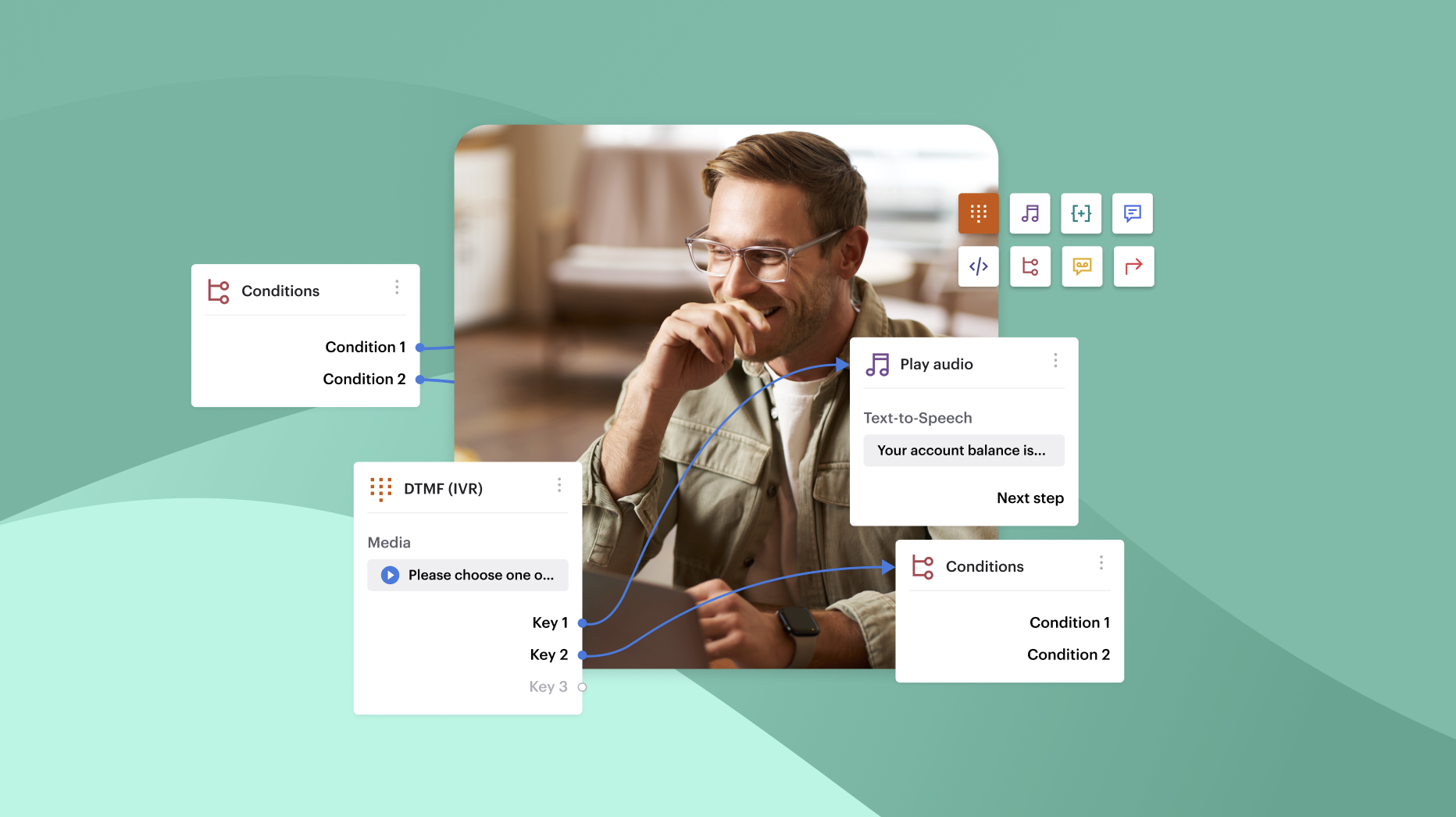
Then there’s the call itself. Many teams still treat wrap-up as something that starts after the goodbye. That habit wastes time. Voiso’s Flow Builder lets teams tag issues and outcomes mid-call. Agents can label key moments as they happen, during hold, while listening, or while confirming details. By the time the call ends, half the work’s already done.
Another smart shortcut: wrap-up code tagging. Instead of asking agents to write a paragraph about what happened, they select from structured options tied to contact reason, resolution type, or escalation path. Managers then use that structured data for reporting, QA, and workflow adjustments.
The best process changes don’t require more work. They shift effort into the moments where it’s easiest to complete, and hardest to forget.
Training That Moves the Needle
ACW optimization isn’t just technical, it’s behavioral. Teams that focus on tooling alone miss the chance to fix habits that quietly erode productivity.
One Voiso customer, a multilingual outbound team, built a gamified training module focused only on wrap-up documentation. Agents learned keyboard shortcuts, how to summarize clearly, and how to use voice-to-text. After four weeks, average ACW dropped by 20%, without sacrificing note quality.
Clarity matters more than speed. When agents understand what to include (and what to skip), they write less and communicate more. That requires more than a checklist. It takes QA feedback based on real outcomes, not just word counts or time spent.
The most effective teams use documentation scorecards. Instead of checking for format, they check for function. Does the next agent know what happened? Would a manager reading the notes trust them? Did the agent record compliance language accurately?
When training is tied to answers like those, agents improve quickly, and wrap-up time starts shrinking without anyone needing to push for speed.
Measuring What Matters
Looking at average after-call work time tells you one thing: the midpoint. That’s it. It won’t explain why two agents handling the same call type differ by 40 seconds. It won’t catch what’s slipping between shifts or which topics take longer to document.
What does help? Per-agent variance. That shows whether someone’s documenting thoughtfully or just dragging. Time-of-day patterns matter too. Agents tend to work faster early in the day, then slow down, especially after back-to-back complex interactions. Without tracking when and why duration spikes, teams miss patterns that tools alone can’t fix.
Topic-level tracking also makes a difference. If password resets take 18 seconds to wrap but billing escalations need 90, that matters. Most teams never break down ACW by category. So they set the wrong benchmarks, then wonder why half the team “underperforms.”
Voiso’s dashboards are built for real operational questions, not vanity metrics. Managers see ACW trends by agent, interaction type, time slot, and wrap-up tag. That kind of visibility changes conversations from “Why are you so slow?” to “Let’s look at what’s slowing you down.”
When Less Isn’t More: Balancing Speed and Quality
Cutting average ACW time might look like a win, until it starts erasing context agents actually need. One major BPO reduced wrap-up targets across the board. Six weeks later, CSAT dipped by 11%. Turns out, “resolved” wasn’t always as resolved as the notes claimed.
That’s where quality-balancing KPIs matter. Not every fast wrap-up is a good one, and not every long one is wasteful. Voiso’s AI Speech Analytics makes those trade-offs visible. Teams can map wrap-up time against sentiment shifts, resolution accuracy, or even repeat contact rates. Longer wrap-ups often correlate with higher-quality resolutions, when done right.
Instead of penalizing time, high-performing teams track time with purpose. They connect ACW length to what it actually supports: accuracy, continuity, and customer satisfaction. Some even set dual thresholds: one for time, one for documentation quality. If both meet standard, no issue. If one falls short, that’s where the coaching starts.
Speed traps don’t just hurt the agent, they bleed into CX. A metric only matters if it tells the whole story. And the whole story includes what happens after the line drops.
Industry-Specific Guidance
Every industry will have a different experience with balancing speed and quality of agent work. Below is a quick summary of what ACW optimization looks like for various industries.
| Sector | Focus Area for ACW Optimization | Key Feature |
|---|---|---|
| FinTech | Compliance-ready documentation + call summarization | Voiso AI Summaries |
| Healthcare | Structured note-taking templates for accuracy | Voiso Flow Builder |
| BPOs | Agent efficiency through templates and analytics | Voiso Dashboards |
| Travel & Tourism | Call history + SMS follow-up links | Voiso SMS Templates |
| E-Commerce | CRM sync + auto-tagging common inquiries | Voiso CRM Integrations |
FinTech
Regulated industries don’t get a pass on ACW, but they also can’t afford loose documentation. Voiso’s AI-generated summaries give agents a compliant starting point. Nothing gets missed, and auditors aren’t left guessing what happened.
Healthcare
Accuracy matters more than speed when documenting patient interactions. Voiso Flow Builder lets teams design structured templates tailored to clinical workflows. Agents don’t have to recall formats, they just follow the flow and fill in the details.
BPOs
With dozens of clients and SLAs to juggle, every second counts. Voiso Dashboards help BPO managers track ACW by client, by process, by shift. Pair that with templates for common case types, and reps can move faster without cutting corners.
Travel & Tourism
Follow-up is everything when booking windows are short. Voiso’s SMS templates let agents send booking confirmations, reminders, or payment links, without jumping into another tool. A quick note and a link post-call can mean the difference between a lost lead and a closed sale.
E-Commerce
Support teams often field the same five questions in slightly different ways. Voiso’s CRM integrations auto-tag those interactions, sync contact history, and keep notes consistent across agents. The result? Fewer repeats, faster handoffs, and better context—without rework.
Building Your ACW Optimization Plan
Step 1 — Audit the Current State
Start by surfacing where ACW is actually going. Voiso’s Call Detail Records (CDRs) and analytics dashboards break down post-call time by agent, shift, and interaction type. You’ll spot gaps fas, whether it’s lag from switching tabs, unclear wrap-up tasks, or one process dragging out the rest. There’s no guesswork when the data tells the story.
Step 2 — Classify and Standardize
Not every call deserves the same post-call time. Categorize interactions by complexity, simple verifications, account issues, escalations, and define ACW standards for each. If a password reset takes the same time to document as a fraud case, you’re either over-documenting one or under-documenting the other. Teams work faster when the rules make sense.
Step 3 — Implement with Iteration
Roll out small but meaningful changes, and watch how they land. Use Voiso’s AI transcription, templated wrap-ups, and on-call tagging to streamline wrap-up steps. Then track what shifts. If certain reps nail it faster, check how they’re doing it and fold it into training. Optimization doesn’t come from one big move, it’s built from a loop of trying, measuring, and refining.
Wrapping Up on Wrap-Up
ACW isn’t downtime, it’s where accuracy, context, and accountability meet. Every second agents spend post-call is either working for you or against you. With the right systems in place, that time doesn’t just shrink, it starts delivering value. Less rework. Fewer compliance flags. More calls are handled per shift.
Voiso gives teams a faster way to document without losing detail. AI summaries, live tagging, synced CRMs, all built to help agents move on to the next call without dragging yesterday’s tasks behind them.
Further Reading