

A single number can tell you who’s ready to promote your brand, and who’s quietly walking away. But only if you know what to do with it.
Nearly 2/3 of companies use Net Promoter Score (NPS) to track loyalty, yet most don’t act on the insights it surfaces. They ask the question, collect the score, and file it away – treating it as a badge, not a signal. The real cost? Missed opportunities to prevent churn, deepen relationships, and create customers who actually do recommend you.
NPS isn’t broken. The way businesses use it is. This article repositions Net Promoter Score from a passive metric to an active driver of customer experience, especially for teams running high-stakes contact centers.
If you’ve ever seen a promising lead disappear after a single bad interaction, or watched agents repeat the same missteps because no one shared what customers actually said, then you’re not looking for theory. You’re looking for a way to connect what customers feel with what your business does next.
Let’s walk through the shifts that matter, starting with why the number still matters, and why most teams misread it.
Key Takeaways
- Net Promoter Score (NPS) tracks customer loyalty using a single question, but its true value lies in analyzing the “why” behind the score, not just the number.
- Voiso transforms NPS from a static metric into a dynamic system by combining call transcripts, AI speech analytics, sentiment scoring, and keyword-triggered workflows.
- Segmenting NPS by channel, customer lifecycle, geography, and agent performance reveals deeper patterns that help prevent churn and improve CX strategy.
- Real-time response is critical: Voiso’s omnichannel dashboards and mobile app empower supervisors to act on feedback immediately, turning detractors into loyal customers.
- Passives pose a hidden risk; identifying and re-engaging them with targeted follow-ups can significantly reduce silent churn and boost long-term loyalty.
Why NPS Still Matters
NPS started as a shortcut. Ask one question, sort the answers, subtract one group from another, and you’ve got a benchmark for customer loyalty. That simplicity is part of its appeal, but also the reason it’s often misused. Teams collect the number, compare it to last quarter’s, and move on. No follow-up, no analysis, no action.
Treating NPS as a standalone figure strips it of its power. It’s not a finish line. It’s an entry point into customer sentiment, an alert that something either worked, or didn’t. The score itself isn’t the story. What matters is why someone gave you a 3 instead of a 9, and what you plan to do about it.
The companies that grow fastest don’t chase higher NPS numbers, they build systems around the feedback. Bain & Company found that businesses with well-structured NPS programs grow more than twice as fast as their competitors. Not because they have better products, but because they know how to listen and respond at scale.
That’s the shift most teams miss. NPS isn’t a quarterly report, it’s a call-to-action. When it’s embedded into your workflows, not just your dashboards, it starts to shape behavior: agents learn what good experiences sound like, leaders spot patterns faster, and your customers notice that their feedback isn’t just heard, it’s acted on.
Knowing that difference is step one. The next is facing where the traditional NPS model starts to fall apart.
One Question, Many Problems: The Real Limits of Traditional NPS
“How likely are you to recommend us to a friend or colleague?” It’s a clean question, easy to ask, easy to score. But it doesn’t capture what really drives loyalty, or what erodes it.
That simplicity creates blind spots. Someone might give you a 9 because the product worked, but they’ve never actually recommended you. Another might rate you a 4 – not because of the core service, but because they had to wait 12 minutes on hold. The score tells you how they felt in the moment. It doesn’t tell you why.
The gaps grow wider depending on who you’re serving. BPOs, for example, often rely on outsourced teams who speak with hundreds of customers per week. When those customers give low scores, there’s no context, just a number. Without follow-up, you can’t tell if it was the script, the tone, or the tech that went wrong.
Fintech call centers face a different issue. Customers may be happy with the app and still rate low because they didn’t get the exchange rate they expected. Or they might give a 10 out of habit, but switch to a competitor a month later. In both cases, the number feels meaningful. It isn’t.
Promoters don’t always promote. Detractors don’t always explain. And Passives? They often say nothing at all, which makes them harder to detect until it’s too late.
So if you’re just collecting the score and skipping the conversation behind it, you’re not measuring loyalty, you’re guessing. And the guesswork costs more than you think. That’s where strategy enters. Instead of chasing scores, ask better questions and treat feedback as data. In the next section, we’ll show how that shift works – and why it’s the only way to turn NPS into something worth using.
Reframing NPS: From a Score to a System of Action
The question isn’t “What’s our score?” It’s “What do our customers want us to fix first?”
A number won’t tell you that. A 6 from a frustrated user might mean poor service, slow resolution, or unclear communication – but unless you ask more, you won’t know. That’s why score-only NPS programs fall flat. They miss the story behind the rating.
To turn NPS into something useful, link it directly to follow-up data: call transcripts, open-text comments, and real-time speech insights. That’s where Voiso’s AI Speech Analytics steps in. It listens, tags, scores, and summarizes thousands of conversations without manual review.
Here’s how structured feedback transforms decision-making:
- Call summaries surface root causes. If someone gives a low score and mentions “repeating myself” or “long wait,” that gets flagged immediately – no need to comb through the audio.
- Sentiment tracking highlights urgency. Neutral wording? Low risk. Negative tone plus high-value client? That’s your priority.
- Custom keyword alerts create automation triggers. Terms like “cancel,” “switch,” or “problem” can activate workflows – callbacks, supervisor pings, or training reviews.
Now every low score becomes a lead. Every promoter becomes a reference case. And every interaction contributes to something bigger than a dashboard. To make that actionable, you need segmentation. Because a detractor in one region, or channel, or team, might mean something very different than in another. Let’s go there next.
Why NPS Without Context Is Just Noise
The score doesn’t lie, but it doesn’t explain much either. A +30 in one market could mean progress; in another, it could signal decline. Without context, NPS turns into a guessing game. That’s where segmentation and real-time feedback come in – not as add-ons, but as essentials.
Comparing scores to industry averages sounds smart, but it rarely tells you what you need to know. Benchmarks flatten nuance. What matters more is tracking your own movement over time, within the segments that matter, like:
- Channel: Are voice calls underperforming while WhatsApp scores rise?
- Customer lifecycle: Do new users rate you higher than long-term ones?
- Geography or language: Are certain regions producing more detractors, and why?
- Team or agent: Are specific agents consistently linked to promoters or passives?
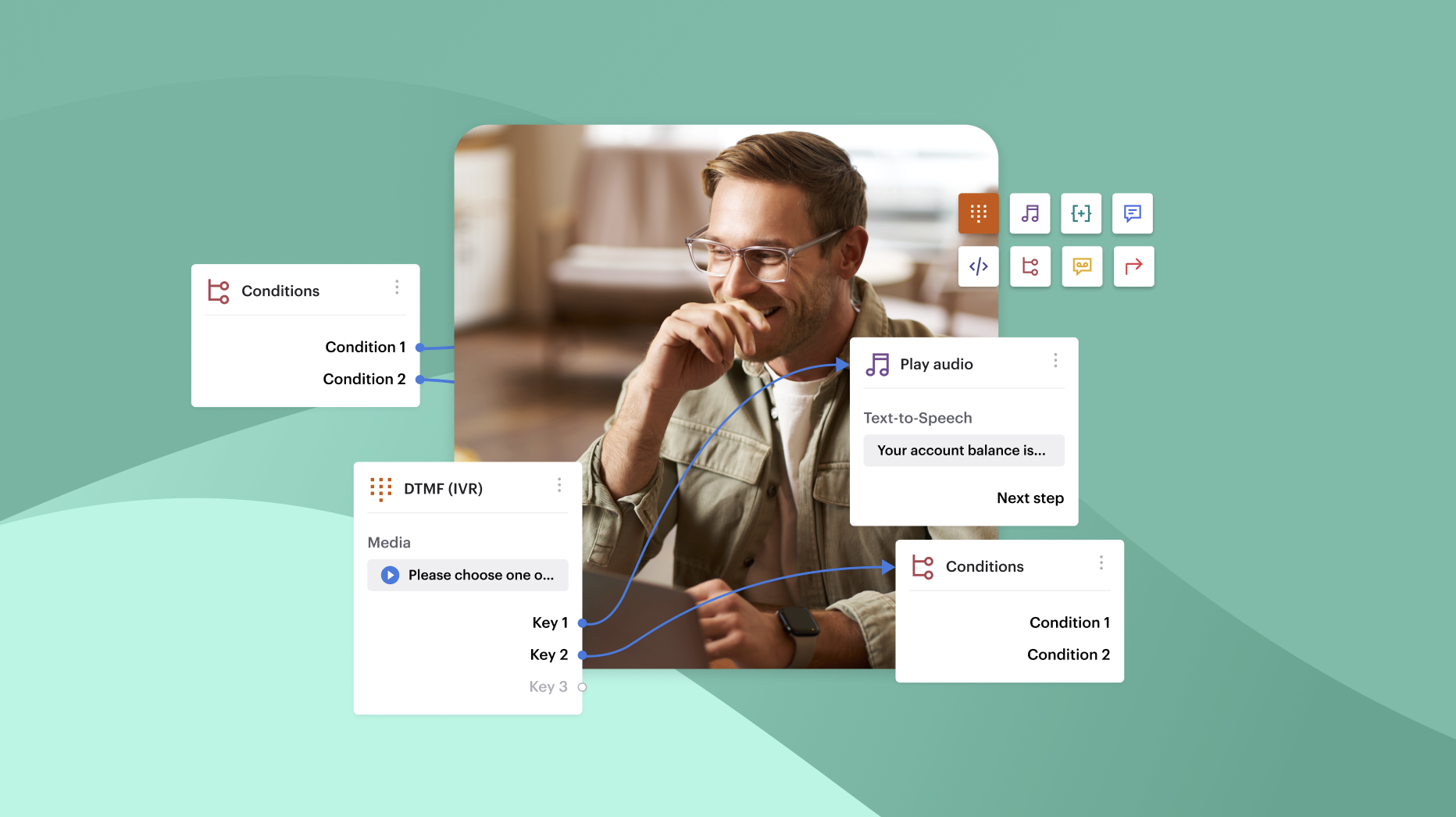
Voiso’s Flow Builder helps translate this segmentation into real-world actions. Let’s say a caller gives a low IVR rating. Instead of logging it and moving on, you can route them to a real person, automatically trigger a callback, or even send a follow-up SMS with resolution options. Now the score doesn’t just sit there, it drives something forward.
Speech and sentiment analysis add another layer. You might receive a neutral score but pick up signs of rising frustration in the call transcript. Or someone gives a 9, but the conversation reveals confusion, those contradictions help you spot where perceived customer satisfaction masks deeper issues.
Context doesn’t mean slicing data for the sake of it. It means understanding why a number showed up in the first place, where it came from, and what needs to happen next. The better your segmentation and the faster your follow-up, the less likely it is that a passive customer quietly turns into a lost one.
And speaking of passives, that’s where we’re headed next. Because they’re often the most dangerous group of all.
The Detractor Playbook: Close the Loop or Lose the Customer
Most detractors don’t expect a response. That’s exactly why following up matters.
Silence after negative feedback sends a message: no one’s listening. But when a response lands within minutes, a callback, a targeted SMS, a support ticket already in motion, it rewrites the experience. Frustration becomes surprise. Sometimes, loyalty.
Voiso makes that automatic. Integrate with tools like Hubspot, Salesforce, or Zoho, and trigger workflows the second a low score drops. Assign ownership, launch recovery steps, and track resolution, all without manual lift.
It’s not about fixing every problem instantly. It’s about showing up when it counts.
Passive ≠ Safe: Why Passives Might Be Your Greatest Risk
Passives rarely complain. They also rarely come back.
They won’t flood your support inbox or leave angry reviews, but they’ll quietly shift to a competitor the moment something feels easier, cheaper, or more responsive. That’s what makes them dangerous: they don’t warn you before they leave.
Unlike detractors, passives usually seem content on the surface. But their language, tone, and hesitation often reveal friction that goes unnoticed. Voiso users rely on sentiment scoring to detect that hesitation early, flagging neutral tones and indecisive language as potential churn signals. When spotted, they trigger follow-up SMS workflows with context-aware outreach: a clarifying message, a check-in, or a quick resolution offer.
Below is a simplified framework for how to approach each NPS group, with action, not assumptions:
| Category | Action Step 1 | Action Step 2 | Risk Level |
| Promoter | Ask for referral | Identify loyalty drivers | Low |
| Passive | Run sentiment analysis | Offer targeted engagement | Medium |
| Detractor | Trigger real-time callback | Assign to recovery team | High |
Passives don’t demand attention, but the ones you ignore today will cost you tomorrow. Spotting them early means you still have a shot at keeping them. Next, we’ll explore how real-time systems make that possible, before churn becomes inevitable.
NPS in Real Time: Can Your Platform Keep Up?
A negative score delivered next week is already a missed opportunity.
In contact centers, timing is leverage. If a promoter leaves a glowing review and hears nothing, momentum fades. If a detractor submits harsh feedback and no one follows up until Monday, the relationship is already broken. Real-time response is no longer a nice-to-have, it’s survival.
Voiso’s omnichannel dashboards change the speed of decision-making. Supervisors don’t wait for weekly reports. They see feedback linked to actual conversations, across calls, SMS, WhatsApp, and chat – in real time. And with AI tagging sentiment and urgency, there’s no need to guess what needs action.
Mobile access adds a critical layer. Many Voiso clients manage distributed or hybrid teams. With the Voiso Mobile App, agents and managers can respond to flagged interactions immediately, even if they’re not at their desks. A detractor gets a call back from the same rep, within the hour. A promoter receives a referral message while the experience is still fresh.
Common Mistakes (And How Smart Teams Avoid Them)
- Measuring AHT across all channels with the same benchmarks.
A BPO handling both voice and chat support applied identical targets to every interaction. Chat agents felt pressured to rush, resulting in dropped sessions and incomplete resolutions. After separating metrics by channel, they saw a 17% improvement in chat satisfaction. - Ignoring language barriers in global support teams.
A financial services provider operating in LATAM used the same call script across regions. Spanish-speaking agents struggled with phrasing not adapted for local nuances, leading to longer calls. Localizing scripts brought call duration back down and cut repeat contacts. - Relying solely on sentiment scores without context.
An e-commerce contact center noticed high sentiment on returns calls but didn’t realize agents were offering discounts too freely. Speech analytics flagged patterns, helping managers coach for better judgment, without needing to lengthen calls.
What NPS Can’t Do — and What Only You Can
NPS will point to where the cracks are, but it won’t tell you how deep they run, or how to fix them. That’s your job. Real impact happens when feedback drives change, not just reporting.
The smartest teams don’t just measure trust, they earn it. They reduce effort where it matters, listen when it counts, and act fast enough for the customer to notice.
Want to turn NPS into actual progress? See how Voiso helps you close the loop at scale.
FAQs
How often should you send NPS surveys without annoying customers?
The optimal NPS survey frequency depends on your customer interaction patterns and relationship depth. For most businesses, quarterly surveys work well for regular customers, while post-interaction surveys should be limited to significant touchpoints.
Transactional NPS (after support calls or purchases) should target no more than 20-30% of interactions to avoid survey fatigue. Use smart sampling rather than surveying every customer every time.
Relationship NPS works best every 3-6 months for active customers, with annual surveys for less frequent users. High-value customers can handle more frequent touchpoints, while occasional users should receive surveys sparingly.
Key rules: never survey the same customer more than once per month, skip customers who’ve recently completed other feedback requests, and always provide clear opt-out options. Monitor response rates closely – if they drop below 15-20%, you’re likely over-surveying. Consider customer lifecycle stage too: new customers might appreciate more frequent check-ins, while long-term customers prefer less frequent but more meaningful outreach.
Should you offer incentives for NPS survey completion?
Incentives can boost response rates but may compromise data quality and attract responses motivated by rewards rather than genuine feedback.
When incentives work well: Low-engagement customer segments, B2B relationships where response rates are typically poor, or when you need larger sample sizes for statistical significance. Small, non-monetary incentives like early access to features or exclusive content often work better than cash rewards.
When to avoid incentives: High-engagement customers who already provide feedback willingly, when you need authentic sentiment (incentives can inflate scores), or for transactional surveys where emotions are fresh and motivation is naturally high.
Best practices: If using incentives, keep them modest ($5-10 gift cards), enter respondents into drawings rather than guaranteed rewards, and A/B test incentivized vs. non-incentivized groups to measure quality differences. Focus on making surveys short, mobile-friendly, and genuinely valuable to customers rather than relying on incentives. The goal is authentic feedback, not just higher response rates.
How long should you retain NPS survey data?
Legal requirements typically mandate 2-7 years depending on your jurisdiction and industry. GDPR requires data retention periods to be “no longer than necessary” for the original purpose, while financial services often require longer retention for regulatory compliance.
Business value perspective: Most NPS trend analysis benefits from 3-5 years of historical data to identify long-term patterns, seasonal variations, and improvement trajectories. Beyond five years, older data becomes less relevant due to product evolution and market changes.
Practical recommendations: Retain detailed individual responses for 2-3 years for follow-up and analysis, then aggregate into anonymized trend data for longer-term storage. Archive personal identifiers after the active retention period while keeping score trends for benchmarking.
Storage considerations: Raw survey data with personal information requires secure storage and regular access reviews. Consider data minimization – store only necessary fields and purge detailed comments after extracting actionable insights. Always maintain clear data retention policies and honor customer deletion requests promptly under privacy regulations.
How do you handle NPS surveys for customers who interact through multiple channels?
Managing NPS across multiple channels requires unified customer tracking and attribution rules to avoid survey fatigue and conflicting feedback.
Unified approach: Link all customer touchpoints under one profile to prevent duplicate surveys. If a customer calls support, then uses live chat the same week, send only one survey covering the overall experience rather than separate channel-specific surveys.
Attribution strategies: Survey based on the most recent significant interaction or the channel where resolution occurred. For complex journeys spanning multiple channels, focus on the final resolution point rather than each individual touchpoint.
Channel-specific considerations: Some channels naturally lend themselves to immediate feedback (chat, email) while others work better with delayed surveys (phone calls after emotions settle). SMS and email surveys typically see higher response rates than in-app prompts.
Best practices: Use a 7-14 day window after the last interaction before surveying, ask about the overall experience rather than individual channels, and track channel performance separately in your analysis while presenting a unified survey experience to customers. Consider channel preferences – some customers prefer feedback via the same channel they used for support.
How quickly can you expect to see NPS improvements after implementing changes?
NPS improvements typically follow a 3-6 month timeline for meaningful changes, though initial shifts may appear within 4-6 weeks depending on the type of improvement implemented.
Quick wins (4-8 weeks): Process improvements like faster response times, better call routing, or agent script updates can show measurable impact relatively quickly, especially for transactional NPS surveys.
Medium-term improvements (2-4 months): Agent training programs, system integrations, or workflow optimizations typically require 2-3 months to show consistent results as new behaviors become routine and customer interactions improve.
Longer-term changes (6+ months): Cultural shifts, major technology implementations, or product improvements may take 6-12 months to fully reflect in NPS scores as customer perceptions gradually shift.
Factors affecting timeline: Customer interaction frequency (high-touch customers reflect changes faster), change scope (minor tweaks vs. major overhauls), and baseline performance (lower-performing operations often see faster initial improvements). Track leading indicators like first-call resolution and customer effort scores for earlier signals of improvement before they appear in NPS trends.
Further Reading