All Products

.svg)





Cloud communications moved voice, SMS, and video off the hardware in your building and into someone else’s data center. That solved a cost-and-maintenance problem. It didn’t, on its own, let your software do anything with those channels. That gap is what CPaaS fills. Communications Platform as a Service gives businesses APIs to embed calls, messages, and video directly into the apps and workflows they already run. Its purpose is straightforward: make communication something you build into your product, not a separate tool your team has to step out and use.
The demand reflects that shift. Juniper Research valued the global CPaaS market at around $29 billion by 2025, up from roughly $16 billion in 2022, with most analysts projecting continued double-digit annual growth through the early 2030s. The money is moving toward programmability.
Key Takeaways
- Cloud comms and CPaaS aren’t the same: Cloud communications move channels online; CPaaS makes them programmable through APIs so your software can trigger and control them.
- The core purpose is embedding: CPaaS puts communication inside the systems where work already happens, instead of in a separate tool teams switch to.
- It unlocks three things: Communication built into your tools, control over the routing and automation logic, and scaling without new infrastructure.
- Outbound gets smarter: Predictive dialing, answering machine detection, and local caller ID raise pickup rates and cut wasted dials.
- Inbound and omnichannel get unified: No-code flow builders route calls by data, and one conversation can span voice, SMS, WhatsApp, and chat.
- CPaaS vs UCaaS vs CCaaS: CPaaS is building blocks; UCaaS connects your team; CCaaS is a prebuilt contact center. CPaaS usually bills per use, the others per seat.
- It isn’t always the answer: Choose CPaaS to build comms into your own systems; choose a prebuilt platform when you want something ready to run with minimal setup.
- Bottom Line: CPaaS is the logic layer that lets businesses embed communication where work happens, control how it behaves, and scale it without rebuilding infrastructure.
Cloud communications and CPaaS aren’t the same thing
It’s worth separating the two, because they’re often used interchangeably and they answer different questions.
Cloud communications describes where your communication lives. Instead of an on-premise PBX with physical lines and a server closet, voice, messaging, and video run as hosted services you reach over the internet. You stop maintaining hardware and start paying for a service. That’s the move most businesses have already made.
CPaaS changes what you can do with those channels. It exposes them through APIs and developer tools, so a call or a text becomes something your own systems can trigger, route, and act on. A booking platform can send a confirmation the moment a reservation is made. A bank’s fraud system can place a verification call without a human dialing it. A logistics app can push a delivery update over WhatsApp the instant a driver marks a parcel as out for delivery.
The difference is control. Cloud communications hands you the channels. CPaaS hands you the logic that decides when, how, and inside which workflow those channels fire.
The main purpose, stated plainly
The core job of CPaaS is to put communication inside the systems where work already happens.
Most customer-facing teams lose time switching between tools: a CRM in one window, a dialer in another, a separate inbox for messages. Every switch is a place to lose context and make mistakes. CPaaS collapses that distance. The communication happens where the data already is, triggered by the events that already matter to the business.
That single purpose tends to show up in three practical ways:
It lets teams embed communication into the tools they use. A sales rep clicks to call from inside the CRM, and the call logs itself against the right record. A support ticket update goes out as an SMS without anyone copying a phone number into a separate app.
It gives businesses control over the logic. Rather than accepting a vendor’s fixed menu of behaviors, teams decide how a call routes, what triggers a follow-up message, and which channel a customer reaches next.
And it scales without new infrastructure. Because the platform handles capacity, a campaign can go from a few hundred contacts to several thousand without anyone provisioning lines or servers. You pay for what you send and receive rather than for hardware you hope to grow into.
Everything your team needs in one platform
What this looks like in practice
The value of CPaaS becomes clearer with specifics, because “embed communication into your workflow” can sound abstract until you see the mechanics.
Take outbound calling. Connecting with people is harder than it should be when every call shows up as an unknown or out-of-area number. CPaaS tools address this directly: a predictive dialer paces calls so agents spend time talking rather than waiting, answering machine detection skips voicemails instead of burning an agent’s time on them, and local caller ID presents a number familiar to the person being called, which lifts pickup rates. None of these are features a team toggles in a generic phone app; they’re behaviors built into the calling logic.
Inbound works on the same principle from the other direction. Instead of a rigid phone menu, a visual flow builder lets a team map out how calls route based on the caller, the time of day, or data pulled from the CRM, and adjust it without writing code or filing a developer ticket. Voiso’s Flow Builder is one example of this kind of no-code routing, where the people who run the contact center can change the logic themselves.
Then there’s the omnichannel side. A customer might start on web chat, switch to WhatsApp, and call the next day. CPaaS makes it possible to keep that as one continuous conversation rather than three disconnected ones. The channels CPaaS commonly brings together include:
- Voice, inbound and outbound
- SMS and A2P messaging
- WhatsApp and other messaging apps
- Web chat and live chat widgets
- Video and email
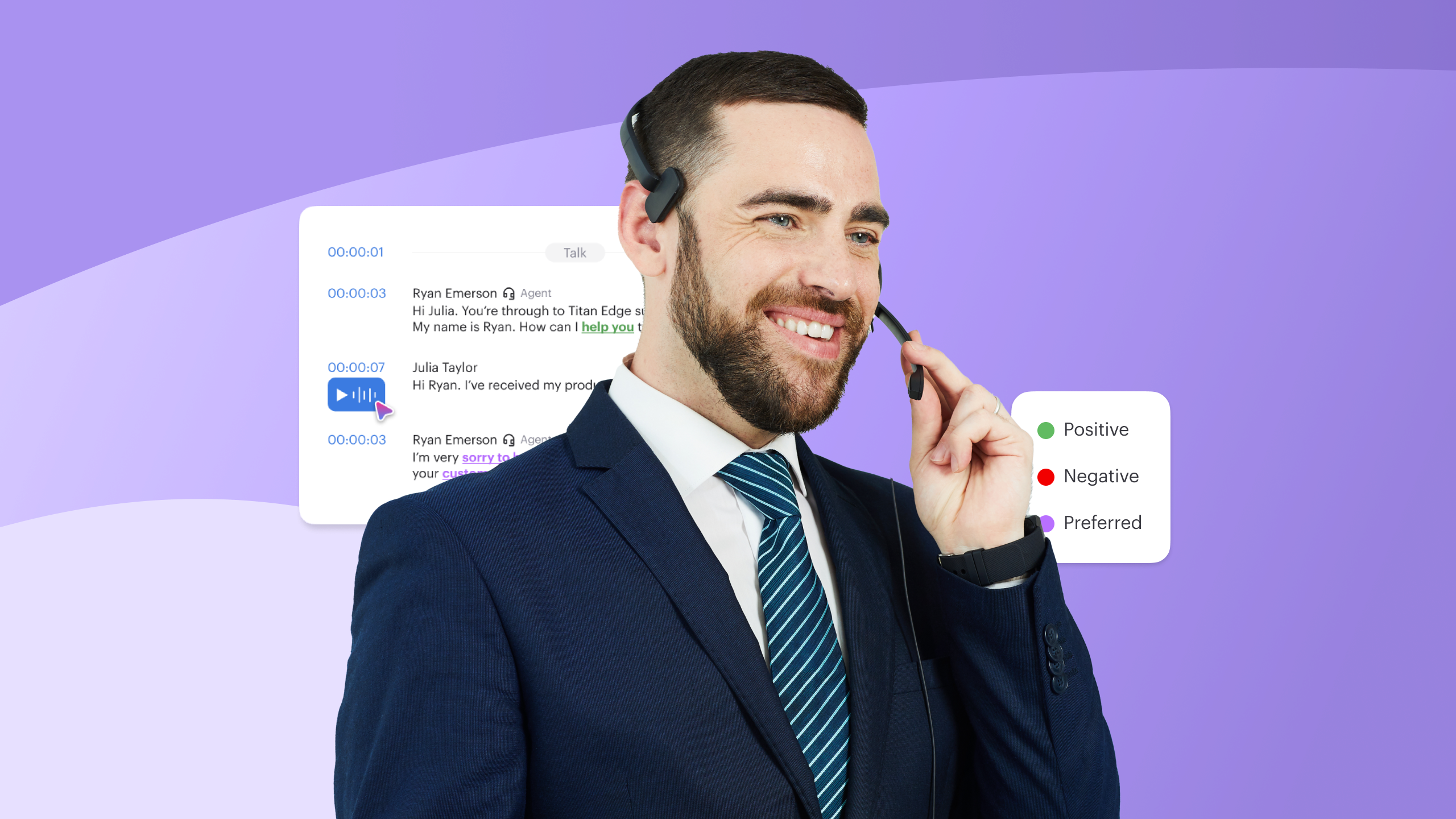
Layered on top, analytics turn those interactions into something measurable. Tools like AI speech analytics can transcribe and score calls, surface recurring issues, and give QA leads a way to coach based on what actually happened on a call rather than on a small hand-reviewed sample.
Across industries, the same building blocks get arranged differently. A fintech firm leans on CPaaS for verification messages and compliant, multi-language outreach, using answering machine detection to keep automated campaigns clean. A travel platform or online retailer uses it for real-time booking confirmations, delivery updates, and the occasional well-timed upsell across whichever channel the customer prefers. A BPO depends on it to spin up new client campaigns quickly, blend inbound and outbound work, and show clients real-time dashboards that prove SLAs are being met. The purpose is constant; the configuration changes.
Where CPaaS sits next to UCaaS and CCaaS
CPaaS is easiest to understand alongside its two cousins, because the three solve genuinely different problems.
UCaaS, Unified Communications as a Service, connects your team. It bundles internal voice, video, messaging, and collaboration into one prebuilt suite. You configure it and use it as is.
CCaaS, Contact Center as a Service, connects you to your customers. It’s a prebuilt contact center with routing, IVR, queueing, and reporting, ready to deploy.
CPaaS is the set of building blocks underneath. Rather than a finished application, it gives you the APIs and tools to build communication into whatever you’re already running, or to assemble exactly the contact center logic you need.
Two practical distinctions follow from that. The first is who it’s for: UCaaS and CCaaS are bought by teams who want something that works out of the box, while CPaaS suits teams who want to shape the behavior themselves. The second is how you pay: CPaaS typically bills per use, so you pay per message sent or minute used, whereas UCaaS and CCaaS usually charge a per-seat subscription tier whether or not you use every feature in it.
In reality the categories blur. Many modern platforms combine prebuilt contact center features with programmable APIs, so a team can start with something ready-made and customize the parts that need it.
How to tell whether CPaaS is what you need
CPaaS is the right answer in some situations and overkill in others, and being honest about that saves money.
Reach for CPaaS when communication needs to live inside your own product or workflow rather than in a separate app, when you want to control the routing and automation logic instead of accepting a fixed set of behaviors, when you’re scaling outreach across markets and need to add capacity quickly, or when you need to trigger messages and calls automatically from events in your other systems.
A prebuilt CCaaS or UCaaS platform may serve you better when you want a complete contact center running fast with minimal setup, when your team doesn’t have, and doesn’t want to dedicate, technical resources to building communication flows, or when your needs map cleanly onto what an off-the-shelf product already does. There’s no prize for engineering something custom when a standard tool fits.
The useful question isn’t “is CPaaS good?” It’s “do I need to build communication into my own systems, or do I need a ready-made tool to use?” The honest answer points you to the right category.
The takeaway
Cloud communications moved your channels into the cloud. CPaaS is what makes them programmable, turning voice, messaging, and video into building blocks your software can act on. That’s the purpose in one line: it’s the logic layer that lets businesses embed communication where work happens, control how it behaves, and scale it without rebuilding infrastructure. The result shows up as faster customer responses, less time lost switching between tools, and communication that fits the business rather than the other way around.
If you want to see what programmable cloud communications looks like in practice, explore Voiso’s Flow Builder for no-code call routing or take a closer look at its omnichannel workspace.