


Modern contact center software isn’t just about answering calls faster; it’s about delivering a seamless, personalized experience that keeps customers coming back. But with so many tools out there, how do you know which features truly matter?
Let’s walk through the essential features that transform good contact centers into great ones, helping your team handle higher volumes, maintain quality, and improve customer satisfaction without burning out.
Key Takeaways
- Omnichannel communication is essential, allowing seamless interactions across voice, chat, email, social media, and SMS within a single interface.
- CRM integration provides instant access to customer data, improving personalization, reducing handling time, and enhancing resolution rates.
- Intelligent call routing and ACD ensure customers are directed to the right agent, reducing wait times and improving satisfaction.
- IVR systems help automate routine inquiries, improving self-service and reducing agent workload for common requests.
- Real-time analytics and reporting allow managers to monitor KPIs like AHT, CSAT, and FCR to drive continuous improvements.
- Workforce management tools like agent scheduling, coaching, and gamification boost productivity and engagement.
- Automation and AI capabilities streamline workflows, prioritize urgent requests, summarize calls, and assist agents with suggestions.
- Cloud-based architecture offers scalability, remote access, and flexibility, reducing infrastructure maintenance and setup costs.
- Security and compliance features such as encryption, access controls, and regulatory certifications (e.g., HIPAA, PCI-DSS, GDPR) are critical for data protection.
- Hardware and network readiness (e.g., noise-canceling headsets, stable VoIP connection, QoS configuration) ensures call quality and agent efficiency.
- Pre-launch planning and training are vital, successful deployments require testing, user training, and clear internal documentation.
Essential Software Features for Modern Contact Centers
Omnichannel communication
Today’s customers don’t want to jump through hoops to get help. One minute they’re DMing on Instagram, the next they’re firing off an email or calling your support line.
Effective contact center software brings all channels, like voice, chat, email, social, and SMS, into one unified inbox so your agents can handle conversations without missing context.
And real-time syncing ensures a customer doesn’t need to repeat themselves across platforms, creating a smooth, frustration-free journey that feels consistent, no matter how they reach out.
CRM integration and customer data management
Great service comes down to knowing your customers; that’s why seamless integration with CRMs like Salesforce, HubSpot, or Zoho is a must to make customer profiles update automatically, while calls and interactions log without manual input.
Agents can see previous conversations, purchase history, and preferences instantly, allowing them to personalize each interaction and solve problems faster without digging for information.
Intelligent call routing and ACD
Nothing tanks customer satisfaction faster than being bounced around to the wrong department multiple times in a row. Intelligent call routing and Automatic Call Distribution (ACD) ensure customers reach the right agent the first time, using skill-based routing, queue prioritization, geo-routing, and language detection to sort calls efficiently.
It not only reduces wait times but also improves resolution rates, keeping customers and agents happy.
Interactive Voice Response (IVR) system
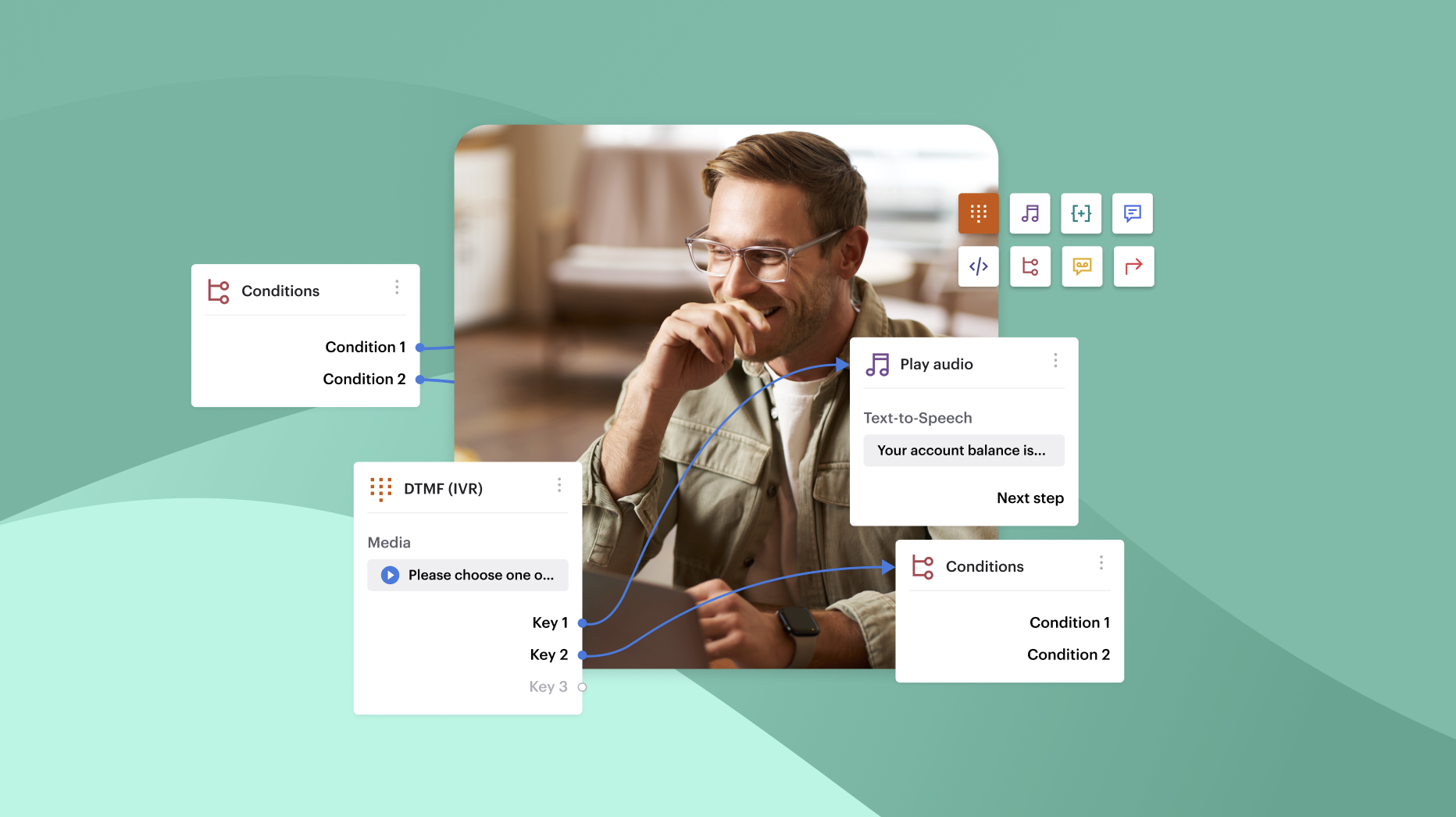
An effective IVR system can turn long hold times into quick solutions by allowing customers to navigate self-service menus using voice prompts or keypad inputs (DTMF).
IVRs can handle common tasks like checking order status, making payments, or booking appointments without an agent. And advanced ones can integrate with knowledge bases and FAQs, and even support speech recognition for a more natural experience to help your team focus on higher-value interactions.
Real-time analytics and reporting
You can’t improve what you don’t measure: modern contact center software offers real-time dashboards for managers and agents, providing instant insights into key metrics like Average Handle Time (AHT), First Call Resolution (FCR), CSAT, NPS, and queue times. Plus, historical data helps forecast staffing needs and evaluate agent performance, turning data into actionable improvements.
Workforce and performance management tools
Keeping your team productive and motivated is easier with the right tools. Features like agent scheduling, adherence tracking, and coaching modules help managers keep operations smooth, while gamification, scorecards, and feedback loops give agents clear goals and recognition for their achievements. It’s about empowering your team to do their best work while staying engaged.
Automation and workflow management
Automation isn’t about replacing your agents; it’s about letting them focus on what humans do best. Features like auto-ticketing, follow-up scheduling, and escalation triggers ensure no customer slips through the cracks. AI-powered prioritization can route urgent cases to the right agents instantly, while routine tasks are handled automatically, reducing manual work and speeding up resolutions.
Security and compliance features
Whether you handle healthcare, finance, or e-commerce, security isn’t negotiable. Effective contact center software should support compliance with GDPR, HIPAA, and PCI-DSS, using role-based access, call encryption, and audit trails to protect sensitive customer data while maintaining transparency and accountability.
Cloud-based architecture and scalability
Gone are the days of clunky on-premise systems – cloud-based contact center software allows your team to work from anywhere, on any device, while scaling effortlessly during seasonal spikes or business growth. The architecture eliminates infrastructure headaches and makes it easy to add agents or expand capabilities as your needs evolve.
Integration ecosystem
Modern contact centers rarely operate in a vacuum. Look for platforms that offer open APIs and webhooks, allowing you to connect your contact center to help desk systems, HR tools, payment processors, and other parts of your business stack. It gives you flexibility that ensures your workflows stay connected, no matter how your tech evolves.
AI-powered capabilities
AI is becoming essential in delivering smarter customer experiences. Features like sentiment analysis, predictive routing, auto-summarization, voice transcription, and natural language understanding allow your contact center to anticipate customer needs, identify urgent issues, and automate routine processes, improving efficiency while maintaining a human touch.
Call recording and quality assurance
Finally, call recording isn’t just for compliance; it’s a tool for continuous improvement. Look for software that supports on-demand or automatic recording, audio tagging, easy playback, and coaching integrations. Features like these help managers identify areas for training and allow agents to review their calls, promoting a culture of growth and accountability.
Hardware & Infrastructure Requirements
Agent workstation setup
Your agents don’t need gaming rigs, but they do need reliable, fast machines to handle call volumes without lag. Aim for laptops or PCs with at least 8GB of RAM and modern multi-core processors, ensuring they can run your contact center platform and CRM simultaneously.
Noise-canceling headsets are non-negotiable for clear calls, while webcams are essential if your team handles video support or identity verification. Comfort matters, and agents perform better when they’re equipped with quality tools.
Network and connectivity needs
VoIP calls live and die by your internet connection. For clear, drop-free conversations, you’ll need a stable connection with at least 100 kbps per concurrent call, though higher speeds are ideal when screen sharing or video is in the mix.
And having a backup connectivity option and configuring VoIP prioritization (QoS) on your network can save you during outages or peak usage times, ensuring customers don’t experience stuttering calls when they need help the most.
Server requirements (for on-premise setups)
If you’re going the on-premise route, you’ll need dedicated PBX servers with sufficient CPU, RAM, and storage to handle concurrent calls and call recordings without hiccups. Consider redundancy setups, load balancing, and uptime protocols to keep your system operational during hardware failures or maintenance windows. On-premise setups can offer full control, but they demand proactive monitoring and resources to keep everything running smoothly.
Telephony equipment (if hybrid)
Hybrid setups often use SIP-enabled desk phones alongside softphones for flexibility, so make sure your routers and network hardware are VoIP-compatible and configured to prioritize voice traffic. Depending on your setup, you might also need Session Border Controllers (SBCs) to handle secure VoIP connections, ensuring call quality and security across your infrastructure.
Security infrastructure
Your contact center will handle sensitive customer data, so security infrastructure is a must, not a nice-to-have. Use firewalls, VPNs, and endpoint encryption to protect communications, and implement authentication protocols like two-factor authentication (2FA) or single sign-on (SSO) for agents. Having a layered security approach keeps customer data safe while maintaining compliance with standards like HIPAA, PCI-DSS, and GDPR.
Contact Center Software Checklist
✅ Pre-implementation planning
- Define clear objectives (e.g., reduce hold times, improve CSAT, lower abandonment rates).
- Map current tools, CRMs, and integrations you will need to connect.
- Determine total agent count, expected call/chat volumes, and peak usage times.
- Identify budget and licensing preferences (per-agent, usage-based, flat-rate).
✅ Deployment and testing
- Decide on deployment type: on-premise, cloud, or hybrid.
- Run sandbox tests with sample call flows and CRM connections.
- Test IVR menus, call routing, and escalation triggers.
- Verify compliance, data handling, and encryption settings.
- Confirm network and connectivity stability under expected load.
✅ Training and onboarding
- Set up user roles and permissions for agents and managers.
- Train agents on call handling, dashboards, and using scripts.
- Train managers on monitoring, coaching, and using reporting tools.
- Create documentation, quick-reference guides, and internal support resources.
✅ Ongoing optimisation and support
- Schedule regular performance audits (weekly or monthly).
- Track KPIs such as AHT, FCR, CSAT, and queue wait times.
- Gather and review agent feedback for workflow improvements.
- Adjust call flows, routing, and scripts based on performance data.
- Keep software and security patches up to date.
FAQs
How do I know if cloud-based contact center software is better than on-premise?
If you want fast deployment, easier remote access, and lower upfront costs, cloud-based software typically wins over on-premise setups.
Can I use contact center software without a CRM?
Yes, but you’ll miss out on customer history syncing and personalized interactions that improve agent efficiency.
What are the minimum bandwidth requirements for VoIP in a contact center?
Plan for at least 100 kbps (up/down) per concurrent VoIP call for clear audio quality without jitter or dropouts.
How does AI improve agent productivity in a contact center environment?
AI can handle repetitive tasks, suggest responses, and summarize calls, freeing agents to focus on complex conversations.
Are there free or open-source options that meet standard contact center requirements?
Yes, tools like VICIdial and FreePBX offer call routing and recording features, but require technical expertise to set up and maintain.
What’s the typical onboarding time for a new contact center software?
Most cloud-based platforms can go live within a few days to a few weeks, depending on integrations and agent training.
Is a virtual desktop environment necessary for remote contact center agents?
It’s not mandatory but can improve security and consistency, especially for large teams handling sensitive data.
How can contact center software support multilingual customer service?
It can route calls to agents by language, provide multilingual IVR, and use AI for real-time translation in chat and email channels.