

Cloud contact centers were supposed to reduce costs. In many cases, they didn’t. Costs simply moved to different categories and became harder to control. The real problem isn’t the cloud itself. The real problem is inefficiency inside the operation.
Labor still represents 50–70% of total contact center costs, making it the single largest expense category. Technology, telecom, and management overhead make up the rest. That means most cost problems come from how teams work, not what platform they use.
So the goal shouldn’t be “cut costs.” The goal should be to eliminate inefficiency.
Key Takeaways:
- Cost issues usually come from inefficiency, not the cloud: The biggest waste sits in labor, routing, idle time, repeat contacts, and poor channel use.
- Labor is the main cost lever: Since labor makes up most contact center spend, productivity gains usually save more than cheaper software.
- Fix wasted agent time first: AMD, predictive dialing, and CRM integrations increase live talk time and reduce after-call admin.
- Move simple work out of voice: IVR, voice bots, SMS, chat, and WhatsApp lower cost per interaction without hurting CX.
- Use AI to cut overhead: Speech Analytics, smart recording controls, and automated reporting reduce QA, compliance, and analyst workload.
- Measure the right outcomes: Cost per resolution and revenue per seat matter more than cost per call alone.
- Bottom Line: Lower costs by removing waste, improving resolution, and raising output per agent instead of cutting headcount.
Why Cloud Didn’t Automatically Reduce Costs
Cloud platforms removed hardware and maintenance expenses. That part worked. But cloud pricing introduced usage-based billing, which changes how costs grow.
Usage-based pricing often includes:
- Per-minute call charges
- Per-user licensing
- Add-ons for AI, analytics, dialers, and integrations
- Storage costs for recordings
- SMS and messaging fees
Costs increase as soon as call volume increases, even if performance doesn’t improve. Many contact centers scale usage faster than they scale revenue, which creates a cost problem instead of solving one.
The Biggest Cost Driver Is Still Labor
Most leaders try to reduce software costs first. That’s usually the wrong place to start. Labor remains the largest expense in almost every contact center model.
Typical cost distribution:
| Cost Category | Share of Total Cost |
| Labor | 50–70% |
| Technology | 10–20% |
| Telecom | 10–15% |
| Management & QA | 5–10% |
| Compliance & Security | 3–5% |
Small productivity improvements have a larger financial impact than negotiating software pricing. If agent productivity increases by 20%, cost per call drops without reducing headcount.
Hidden Cost Amplifiers Most Teams Ignore
Many cost problems come from operational inefficiencies that don’t appear in pricing calculators but heavily affect total spend.
The most common cost amplifiers:
| Inefficiency | How It Increases Cost |
| Voicemail-heavy outbound | Agents spend paid time not talking to customers |
| Poor routing | Calls reach the wrong agent and get transferred |
| Low First Call Resolution | Customers call again, doubling cost per issue |
| Channel misallocation | Expensive voice used for simple requests |
| Agent idle time | Paid time without productive conversations |
For example, outbound teams often reach voicemail on a large share of calls, which wastes paid agent time. Up to 78% of outbound calls can reach voicemail, and 25% of agent call time can be lost to machines, which directly increases cost per conversation.
None of these problems are caused by the cloud. They’re caused by how the contact center operates.
The Real Cost Problem: Inefficiency, Not Technology
Most contact centers don’t have a pricing problem. They have:
- A productivity problem
- A routing problem
- A channel strategy problem
- An automation gap
Companies that focus only on platform pricing usually reduce costs by 5–10%. Companies that fix inefficiencies often reduce operational costs by 20–40% without reducing team size.
The next step is understanding where your costs actually come from, because most teams underestimate several major cost layers.
Understanding Your True Cloud Contact Center Cost Structure
Most teams look at platform pricing and telecom bills when calculating costs. That only shows part of the picture. The real cost structure runs deeper and often includes hidden operational losses that never appear on invoices.
Before reducing costs, you need to understand where money actually goes. Most contact centers overspend in areas they rarely measure, especially productivity loss and missed revenue opportunities.
The 5 Cost Layers Most Teams Underestimate
Cloud contact center costs fall into five main layers. Some are visible in invoices. Others appear as lost time, missed conversions, or compliance risk.
| Cost Layer | What It Includes | Where Costs Increase |
| Labor | Salaries, bonuses, training, idle time | Low utilization, long after-call work |
| Technology | Licenses, AI tools, integrations, storage | Paying for add-ons that don’t increase output |
| Telecom | Call minutes, carrier fees, dialing inefficiencies | Voicemail calls, low connection rates |
| Compliance & QA | QA teams, audits, call reviews, fines | Manual QA and regulatory exposure |
| Revenue Leakage | Lost leads, poor follow-ups, low FCR | Missed conversions and repeat calls |
Labor usually remains the largest cost, but revenue leakage often becomes the most expensive problem because it reduces return per agent.
To understand how this works in practice, it helps to look at real operational models.
Sample Cost Breakdown Models
The following examples show how costs typically distribute across different contact center types.
150-Agent Outbound Fintech Team
| Cost Category | Monthly Cost | % of Total |
| Labor | $375,000 | 60% |
| Technology | $90,000 | 14% |
| Telecom | $70,000 | 11% |
| Compliance & QA | $45,000 | 7% |
| Revenue Leakage | $50,000 | 8% |
| Total | $630,000 | 100% |
Outbound fintech teams have high labor costs and high revenue leakage due to conversion-based sales models.
80-Agent Customer Support Team
| Cost Category | Monthly Cost | % of Total |
| Labor | $160,000 | 64% |
| Technology | $35,000 | 14% |
| Telecom | $22,000 | 9% |
| Compliance & QA | $18,000 | 7% |
| Revenue Leakage | $15,000 | 6% |
| Total | $250,000 | 100% |
Support teams spend more on labor due to inbound volume and service level requirements.
40-Agent Collections Team
| Cost Category | Monthly Cost | % of Total |
| Labor | $88,000 | 55% |
| Technology | $22,000 | 14% |
| Telecom | $28,000 | 18% |
| Compliance & QA | $12,000 | 8% |
| Revenue Leakage | $10,000 | 5% |
| Total | $160,000 | 100% |
Collections teams typically have higher telecom costs due to heavy outbound dialing and low answer rates.
Strategy #1–#3: Increase Agent Productivity Before Cutting Headcount
Cutting seats too early creates a new problem. Queue times rise, service slips, and revenue drops. A better move comes first: get more output from the team you already pay for.
The next three strategies target wasted agent time. They reduce dead air, admin work, and low-value activity. That changes cost per conversation without forcing a hiring freeze or a restructure.
Strategy 1: Maximize Talk Time With AI Answering Machine Detection
Outbound teams lose a surprising share of the day to voicemail. Voiso reports that up to 78% of outbound campaign calls are answered by voicemail and 25% of agent call time is lost listening to machines. Its AMD also delivers 3.5x talk time growth and over 95% accuracy.
That matters most in teams where live conversations drive revenue:
- Fintech brokers
- Collections teams
- Telemarketing BPOs
Without AMD, agents spend paid hours waiting through greetings, beeps, and disconnected calls. With it, the dialer keeps working until a real person answers. Agents spend more of the day selling, collecting, or qualifying.
Cost math: what wasted talk time really costs
Here’s a simple model:
| Metric | Value |
| Monthly cost per agent | $2,500 |
| Time wasted on non-live calls | 30% |
| Monthly waste per agent | $750 |
| Team size | 100 agents |
| Monthly waste for team | $75,000 |
| Annual waste for team | $900,000 |
A 100-agent team can lose $75,000 per month when 30% of paid time goes nowhere. That’s before telecom charges and missed sales are added.
For outbound-heavy teams, AMD isn’t a minor dialer feature. It protects payroll spend and makes each seat more productive. Voiso’s AMD was built for that exact problem.
Strategy 2: Use Predictive Dialing to Increase Revenue per Seat
Once agents stop wasting time on voicemail, the next gap appears: idle time between calls. Predictive dialing closes that gap by pacing outbound traffic around agent availability.
Voiso states that its outbound calling flow can improve calling list processing speed by 35% when AMD keeps campaigns moving toward live answers. A faster list means more attempts, more live contacts, and more chances to convert the same lead pool.
That changes revenue per seat in two ways:
- Agents spend less time waiting for the next call.
- Teams work through lead lists faster, before data goes stale.
Performance-based BPOs feel that impact first. Their margins depend on output per hour. Sales-heavy teams feel it too, especially when acquisition costs are high and every live contact matters.
A simple way to view predictive dialing:
| Without predictive dialing | With predictive dialing |
| More idle gaps between calls | Tighter call pacing |
| Slower list coverage | Faster list coverage |
| Higher cost per acquisition | Lower cost per acquisition |
| Fewer live conversations per shift | More live conversations per shift |
Cheap platforms often look attractive on paper. But when agents wait between calls, cost per acquisition rises fast. A stronger dialer can carry a higher software price and still produce a lower operating cost.
Strategy 3: Reduce After-Call Work With CRM Integrations
Talk time matters, but the post-call admin can quietly eat the rest of the shift. Logging notes, updating records, and creating tickets all pull agents away from the next interaction.
Voiso reduces that manual work through direct CRM and helpdesk integrations:
- Salesforce supports automatic call logging and lets agents work inside Salesforce without switching systems.
- Zoho updates call history automatically and lets agents add call details inside Zoho.
- Freshdesk creates tickets automatically for calls and logs notes inside the ticket flow.
That saves time on every call. It also improves record quality. Manual entry often creates missing notes, duplicate records, or inconsistent follow-up.
Where the savings come from
| Workflow step | Manual process | Integrated process |
| Call logging | Agent enters data after each call | Logged automatically |
| Ticket creation | Agent opens and creates a case | Ticket created automatically |
| Notes capture | Agent retypes context | Notes added during the call |
| Customer lookup | Agent searches records manually | Screen pop shows details instantly |
A small time saving per interaction adds up quickly. If an integration saves one minute after each call, and an agent handles 60 calls per day, that returns one full hour. Across a large team, that can remove the need for extra admin headcount and give agents more time for live work.
Productivity gains usually come from dozens of small fixes, not one dramatic cut. AMD removes wasted talk time. Predictive dialing reduces gaps. CRM integrations shrink after-call admin. Together, they create more output from the same payroll base, which sets up the next layer of savings: reducing contact volume without hurting customer experience.
Strategy #4–#6: Deflect Volume Without Hurting CX
Reducing cost per contact doesn’t always require fewer agents. A smarter approach reduces the number of contacts that need an agent in the first place. Simple questions, status updates, and routine requests don’t need live conversations. When those interactions move to automation and messaging, cost per interaction drops without damaging customer experience.
The next three strategies focus on volume deflection and channel mix.
Strategy 4: Deploy AI Voice Bots & Smart IVR (Flow Builder)
Many contact centers still use IVR only to route calls. That misses a major cost opportunity. Modern IVR and voice bots can resolve simple requests without an agent.
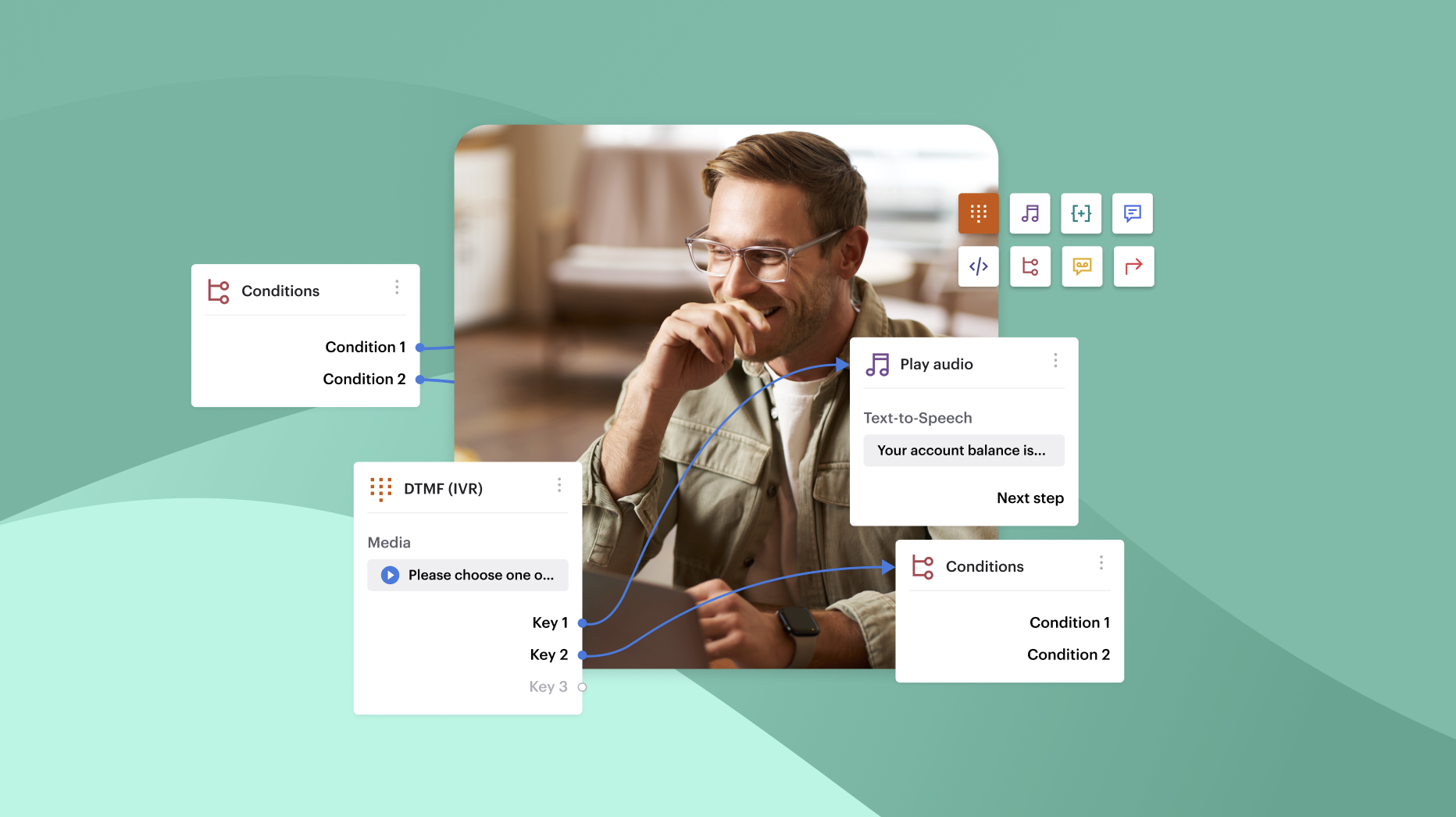
Voiso’s Flow Builder allows teams to build automated call flows without code and route interactions across channels, including handovers from IVR to WhatsApp or messaging.
That matters because the cost difference between automation and a live agent is significant.
| Interaction Type | Estimated Cost per Interaction |
| Live agent (voice) | $5 – $12 |
| IVR / Voice bot | $0.50 – $1 |
| Messaging / WhatsApp | $1 – $3 |
Automation works best for:
- Balance or account information
- Appointment confirmations
- Payment reminders
- Order status
- FAQ queries
When those contacts move to IVR or messaging, agents spend more time on complex conversations that require human involvement.
Flow Builder also supports cross-channel handover. A caller can move from IVR to WhatsApp and continue the conversation without repeating information. That reduces queue pressure and keeps resolution times low.
Strategy 5: Use Omnichannel to Lower Cost per Interaction
Voice remains the most expensive support channel. Messaging and chat allow agents to handle multiple conversations at the same time, which changes the cost model completely.
Voiso reports that 83% of customers prefer to communicate through their preferred messaging channel rather than voice. When customers move to messaging, cost per interaction drops because one agent can manage several conversations simultaneously.
Channel cost comparison:
| Channel | Cost Level | Agent Capacity |
| Voice | High | 1 conversation |
| Live Chat | Medium | 2–3 conversations |
| SMS / WhatsApp | Low | 3–5 conversations |
Blended agents play a major role here. When call volume drops, they switch to chat or SMS instead of sitting idle. That improves utilization and keeps service levels stable across channels. Voiso’s omnichannel workspace allows agents to handle voice, SMS, WhatsApp, and social messaging in one place.
Strategy 6: Leverage SMS Follow-Up to Reduce Repeat Calls
Repeat calls quietly increase contact center costs. Many happen because customers forget details, lose links, or need confirmation after a call.
SMS follow-up solves that problem quickly. Voiso data shows:
- 98% SMS open rate
- 90% read within 3 minutes
- Delivery within 20 seconds
That makes SMS ideal for:
- Payment links
- Order confirmations
- Appointment reminders
- Case updates
- Documents and forms
Sending information by SMS during or after a call reduces average handle time and increases first call resolution because customers don’t need to call again for the same information. SMS templates also reduce agent workload and shorten wrap-up time.
Strategy #7–#9: Cut Compliance & QA Costs with AI
QA and compliance costs rarely sit in one line item. They spread across supervisors, analysts, audits, disputes, and rework. AI changes that by reviewing more calls, spotting risk faster, and reducing manual reporting.
The next three strategies focus on overhead that grows quietly as teams scale.
Strategy 7: Replace Manual QA With AI Speech Analytics
Manual QA has a coverage problem. Most teams review only 1–3% of calls, which leaves the rest unseen. AI speech analytics changes that by reviewing every conversation automatically.
Voiso’s AI Speech Analytics supports 10+ languages, AI-generated summaries, sentiment tracking, and conversation scoring. It also labels topics and lets managers search calls by keywords and themes.
That changes QA from random sampling to full-call visibility.
| QA activity | Manual process | AI-led process |
| Call review coverage | Small sample | Full call set |
| Summary creation | Written by supervisors | Generated automatically |
| Sentiment review | Manual listening | Flagged automatically |
| Scoring | Done one call at a time | Produced at scale |
| Topic detection | Hard to track | Searchable by label |
That saves time in two places. Supervisors spend less time listening to recordings. Team leads spend less time chasing calls that may not matter.
It also lowers risk. When every call gets checked, missed disclosures, risky phrases, and poor call handling surface faster. For regulated teams, that can reduce the need for extra QA headcount as volume grows.
Strategy 8: Reduce Regulatory Risk With Smart Recording Controls
Some conversations carry a higher compliance burden than others. Payment data creates one of the biggest risks. Recording card details without proper controls can lead to fines, legal issues, and audit failures.
Voiso’s Flow Builder supports pause recording during sensitive moments, which helps teams protect payment data and support PCI DSS and GDPR workflows.
That matters most for:
- Fintech brokers
- Micro-lenders
- Payment processing teams
Recording controls reduce risk in a practical way. Agents can continue the call, but sensitive details stay out of the recording. That means less exposure during audits, disputes, and data requests.
A simple way to view the impact:
| Risk area | Without controls | With pause recording |
| Card data exposure | Higher | Lower |
| Audit preparation | Slower | Simpler |
| Legal exposure | Broader | Narrower |
| Storage risk | Larger sensitive data set | Smaller sensitive data set |
Compliance spend doesn’t only come from fines. It also comes from legal review, remediation work, audit preparation, and reputational damage. Recording controls help contain all four.
Strategy 9: Automate Reporting & CDR Analysis
Reporting often becomes a hidden labor cost. Analysts export data, clean spreadsheets, search recordings, and build weekly summaries. That takes hours and slows decisions.
Voiso’s Call Detail Records and Speech Analytics filters let teams search calls by keywords, conversation score, topics, language, queue, duration, and more.
That shortens the path from question to answer.
Instead of pulling broad reports, managers can find:
- Calls with low scores
- Conversations that mention a compliance keyword
- Calls tied to a specific topic
- Patterns inside one queue or campaign
That reduces analyst workload and speeds up action.
| Reporting task | Manual method | Automated analysis |
| Find risky calls | Listen and tag manually | Filter by keyword or score |
| Review campaign quality | Build custom exports | Search by topic and outcome |
| Spot agent trends | Compare reports manually | Use structured call data |
| Prepare supervisor review | Gather multiple sources | Pull from one dataset |
Faster decision cycles matter financially. Problems get fixed sooner. Managers spend less time preparing reports. Analysts spend more time on planning, not sorting data.
Together, speech analytics, smart recording controls, and automated CDR analysis reduce one of the least visible cost layers in a contact center: compliance and QA overhead. The next step moves from oversight costs to workforce and infrastructure costs.
Strategy #10–#11: Infrastructure & Workforce Cost Optimization
At some point, cost reduction stops being about calls and starts being about structure. Office space, hiring limitations, and idle time between channels create fixed costs that are hard to reduce. Infrastructure and workforce design often determine whether a contact center scales profitably or becomes expensive to maintain.
The next two strategies focus on where teams work and how agents handle different channels.
Strategy 10: Mobile-Enabled Remote Teams
Office-based contact centers carry fixed costs that don’t change with performance. Rent, hardware, utilities, and local hiring limits all increase operational cost per agent.
Mobile-enabled contact center software removes most of those constraints. Voiso’s Mobile App allows agents to handle inbound and outbound calls directly from their mobile devices while managers monitor performance in real time. The platform also supports security standards including ISO 27001, which allows companies to run remote teams without compromising compliance.
Here’s how the cost structure changes:
| Cost Category | Office-Based Team | Remote Mobile Team |
| Office rent | High | None |
| Hardware | Desk phones & PCs | Mobile devices |
| Hiring | Limited to one city | Hire globally |
| Business continuity | Location-dependent | Distributed |
| Expansion speed | Slow | Fast |
Remote teams also affect retention. Agents often prefer remote roles, which reduces turnover and training costs. Faster hiring in new regions also allows companies to scale teams without opening new offices.
Strategy 11: Intelligent Workforce & Channel Blending
Many contact centers still assign agents to one channel only. That creates idle time when that channel slows down. Idle time remains one of the most expensive operational problems because salaries continue while no conversations happen.
Blended agents solve that problem by handling multiple channels during the same shift. Voiso’s omnichannel workspace allows agents to manage voice, SMS, WhatsApp, and chat from one interface, which makes channel blending practical.
Example of workload balancing:
| Time Period | Voice Volume | Messaging Volume | Blended Agent Activity |
| Morning | High | Low | Voice |
| Midday | Medium | Medium | Voice + Messaging |
| Afternoon | Low | High | Messaging |
| Evening | Low | Medium | Messaging |
That model reduces idle time and improves utilization across the day.
It also changes cost per interaction. Voice requires one agent per conversation. Messaging allows several conversations at the same time. When agents switch between channels based on demand, cost per interaction drops without reducing staff.
Workforce optimization often comes from scheduling and channel strategy rather than layoffs. When remote teams and blended agents work together, companies reduce facility costs, reduce idle time, and increase output per agent.
Strategy #12: Align Cost Reduction With Revenue Generation
Many companies try to reduce costs by cutting agents. That often creates a hidden problem. Fewer agents can mean longer wait times, lower conversion rates, and lost customers. Costs may drop, but revenue drops faster.
Real cost optimization comes from increasing revenue per agent, not just reducing headcount.
This section explains the difference between cost per call and cost per resolution, and why revenue per seat changes the entire cost structure.
Cost Per Call vs Cost Per Resolution
Cost per call looks at how much each interaction costs. Cost per resolution looks at how much it costs to actually solve a problem or close a deal. Those two numbers often tell very different stories.
| Metric | What It Measures | What It Misses |
| Cost per call | Cost of handling one interaction | Whether the issue was resolved |
| Cost per resolution | Cost to solve the problem | Requires better tracking |
| Revenue per seat | Revenue generated per agent | Requires sales data |
A contact center with low cost per call can still be expensive if customers call multiple times or deals don’t close. A contact center with higher cost per call can be more profitable if more issues get resolved on the first call or more deals close.
That’s why first call resolution and conversion rate matter more than average handle time alone.
Revenue Per Seat Model
Revenue per seat shows whether the contact center generates profit or just handles volume. This metric is critical for outbound sales, collections, fintech, and telemarketing teams.
Simple revenue per seat model:
| Metric | Value |
| Agents | 100 |
| Average deals per agent per month | 15 |
| Revenue per deal | $200 |
| Monthly revenue | $300,000 |
| Agent payroll cost | $250,000 |
| Technology & telecom | $80,000 |
| Total cost | $330,000 |
| Profit | -$30,000 |
Now compare the same team after productivity improvements:
| Metric | Value |
| Agents | 100 |
| Average deals per agent per month | 22 |
| Revenue per deal | $200 |
| Monthly revenue | $440,000 |
| Agent payroll cost | $250,000 |
| Technology & telecom | $90,000 |
| Total cost | $340,000 |
| Profit | $100,000 |
The team size didn’t change. Technology cost increased slightly. Profit increased because revenue per agent increased.
That’s the difference between cost cutting and cost optimization.
Scenario Comparison: Cheap Platform vs Optimized Platform
Many companies choose platforms based only on license price. That decision often increases total cost later due to lower productivity and fewer conversions.
| Scenario | Cheap Platform | Optimized Platform |
| License cost | Low | Higher |
| Agent productivity | Lower | Higher |
| Conversion rate | Lower | Higher |
| Idle time | Higher | Lower |
| Revenue per seat | Lower | Higher |
| Total cost per sale | Higher | Lower |
A platform that increases talk time, automation, and contact rates often produces a lower cost per acquisition, even if the license price is higher.
Industry-Specific Cost Optimization Models
Cost structure changes depending on the industry. Outbound sales teams, collections teams, and support teams don’t lose money in the same places. Each industry has a different cost driver, which means each one needs a different optimization strategy.
Below are the most common cost models based on Voiso’s core industries.
Fintech
Fintech contact centers usually rely on outbound sales and account management. That makes talk time, compliance, and conversion rates the main cost drivers.
Where fintech teams lose money:
- Low contact rates
- Agents reaching voicemail
- High compliance workload
- Low conversion rates on complex products
Where fintech teams reduce costs:
| Cost Problem | Optimization Model |
| Low contact rates | Answering Machine Detection |
| Idle time | Predictive dialer |
| Compliance workload | Speech analytics |
| Missed follow-ups | CRM integration |
| International calls | Local caller ID |
Fintech teams benefit most from AMD, predictive dialing, and speech analytics because revenue depends on live conversations and compliance control.
Micro-Lenders
Micro-lenders focus heavily on collections and repayment reminders. Their main cost problem comes from repeated outreach attempts and strict compliance requirements.
Key optimization areas:
- Collections efficiency
- SMS reminders and payment links
- Call recording and compliance tracking
- Automated outreach workflows
| Cost Problem | Optimization Model |
| Repeat calls | SMS follow-up |
| Low answer rates | Predictive dialer |
| Compliance risk | Call recording controls |
| Agent workload | Workflow automation |
SMS plays a major role here. Payment reminders and links sent by SMS reduce repeat calls and increase repayment rates. Voiso SMS delivery reaches customers quickly and has very high open rates, which makes it effective for reminders and confirmations.
Outsourced Telemarketing (BPOs)
Outsourced telemarketing companies usually work on performance-based contracts. Their profitability depends on agent productivity and contact rates.
Main cost drivers:
- Agent idle time
- Low answer rates
- Telecom costs
- Campaign performance reporting
| Cost Problem | Optimization Model |
| Idle agents | Predictive dialing |
| Voicemail calls | AMD |
| Low pickup rates | Local caller ID |
| Reporting workload | Automated analytics |
For BPOs, small productivity improvements can significantly increase profit because revenue depends on output per hour.
OTAs (Online Travel Agencies)
OTAs handle complex bookings and high-value customers. Their cost problem comes from long call times and high service expectations.
Optimization focus:
- Multichannel support
- Smart routing
- Upselling during support calls
- High first contact resolution
| Cost Problem | Optimization Model |
| Long call times | IVR and automation |
| High service cost | Messaging channels |
| Missed upsells | CRM integration |
| Repeat calls | SMS updates |
Messaging helps OTAs handle booking updates and confirmations without long voice calls, which lowers cost per interaction.
D2C & E-commerce Brands
D2C brands focus on conversions, repeat customers, and order support. Their contact centers influence revenue directly, not just support costs.
Optimization focus:
- Conversion tracking
- CRM integration
- Omnichannel communication
- Repeat customer management
| Cost Problem | Optimization Model |
| Low conversion rate | CRM integration |
| High support volume | Automation |
| Repeat inquiries | SMS updates |
| Channel switching | Omnichannel |
For D2C brands, the contact center should be measured as a revenue channel, not just a support function. CRM data, automation, and messaging usually produce the biggest financial impact.
Implementation Roadmap: How to Reduce Costs Without Disrupting CX
Cost reduction fails when teams change too much at once. Service levels slip, agents struggle, and customers feel the disruption. A better plan starts with visibility, then fixes the biggest waste first.
This roadmap keeps the process practical. Each phase builds on the one before it, so you reduce costs without creating new service problems.
Phase 1: Audit Your Cost Drivers
Start with a clear baseline. Most teams know their software bill, but they don’t know what drives waste inside daily operations.
Review five areas first:
- Agent utilization
- Channel mix
- Repeat contact volume
- Routing performance
- Compliance and QA workload
Track the metrics that expose hidden cost pressure.
| Audit Area | What to Measure | Why It Matters |
| Labor | Occupancy, idle time, after-call work | Shows paid time lost |
| Voice operations | Voicemail rate, transfer rate, queue time | Reveals routing and dialing waste |
| Resolution | FCR, repeat contacts, reopen rates | Shows unresolved work |
| Channel mix | Voice vs chat vs SMS volumes | Finds expensive contact patterns |
| Oversight | QA coverage, reporting hours, compliance reviews | Shows manual overhead |
This phase gives you a cost map. Without it, teams often automate the wrong process first.
Phase 2: Prioritize High-Impact Automation
Once the audit is complete, focus on the changes that remove the most waste fastest. Don’t start with a broad transformation. Start with repetitive work that consumes paid hours every day.
Good first targets include:
- Voicemail-heavy outbound
- Repetitive inbound queries
- Manual call logging
- Post-call summaries
- SMS follow-ups for common requests
Voiso’s tools fit this phase well. AMD reduces wasted outbound time. Flow Builder automates simple inbound journeys. CRM integrations remove admin work. AI Speech Analytics reduces manual review.
A simple rule helps here: automate work that happens often, follows a pattern, and doesn’t need judgment.
Phase 3: Optimize Routing and Channel Allocation
After automation removes obvious waste, routing becomes the next lever. Poor routing drives transfers, repeat calls, and long handle times.
Look at where contacts should go instead of where they go now.
| Contact Type | Best First Destination | Cost Outcome |
| Payment reminder | SMS | Lower repeat volume |
| Order status | IVR or messaging | Lower live agent demand |
| Simple support query | Chat or WhatsApp | Lower cost per interaction |
| High-value sales lead | Live agent | Better conversion potential |
| Complex complaint | Skilled voice agent | Better resolution odds |
This phase also includes cross-channel handover. Voiso’s Flow Builder supports IVR-to-WhatsApp deflection, which helps move simple work away from voice queues.
Better routing doesn’t just reduce costs. It protects service quality by matching each contact to the right channel.
Phase 4: Tune Workforce Design
Once flows improve, adjust staffing around real demand. Many teams schedule agents by habit instead of channel behavior.
Focus on:
- Blended agents across voice and messaging
- Remote staffing where facility costs are high
- Team structures based on skill, not just queue
- Schedules built around demand by hour and channel
Voiso’s omnichannel workspace supports blended agent models, while the Mobile App supports remote teams with ISO 27001-aligned security controls.
That creates a leaner operating model without cutting service coverage.
Phase 5: Commit to Continuous AI Optimization
Cost reduction isn’t a one-time project. Contact patterns change. Campaigns change. Customer behavior shifts across channels. Teams need ongoing tuning.
Build a review cycle around:
- Monthly cost-per-resolution trends
- Channel migration trends
- QA and compliance flags
- Conversion and contact-rate changes
- Automation performance by flow
AI helps here because it keeps producing new data. Speech Analytics surfaces patterns in conversations. CDR filtering helps managers spot changes faster.
The strongest operators treat optimization as an ongoing discipline, not a one-off initiative.
A Practical Rollout Sequence
| Phase | Main Goal | Expected Result |
| Audit | Find hidden waste | Clear baseline |
| High-impact automation | Remove repetitive paid work | Fast savings |
| Routing optimization | Send contacts to the right path | Fewer transfers and repeats |
| Workforce tuning | Match staffing to real demand | Lower idle time |
| Continuous AI optimization | Keep refining performance | Lasting cost control |
A phased rollout protects CX while lowering spend. It also makes change easier for agents and supervisors. Once the roadmap is in place, the final step becomes simple: turn the plan into action and measure the return.
Start Reducing Your Cloud Contact Center Costs Today
Reducing contact center costs doesn’t require layoffs, platform migrations, or major disruption. Most savings come from fixing inefficiencies, not cutting capacity. The strategies in this guide focus on talk time, automation, channel mix, and workforce structure because they produce measurable financial impact.
A practical next step starts with understanding where money is lost today and what changes will produce the fastest return.
What to Do Next
Use this simple starting framework:
| Step | Action | Outcome |
| 1 | Audit cost drivers | Identify biggest waste areas |
| 2 | Calculate cost per resolution | Understand true service cost |
| 3 | Measure revenue per agent | Link performance to profit |
| 4 | Automate repetitive work | Reduce paid manual time |
| 5 | Optimize channel mix | Lower cost per interaction |
Teams that follow this process usually find that the biggest savings come from:
- Increasing agent talk time
- Reducing repeat contacts
- Moving simple queries to automation
- Using SMS for follow-ups
- Blending voice and messaging work
Small operational changes often produce larger financial results than large cost-cutting initiatives.
Book a Cost & ROI Assessment
If you want to see where your contact center is losing money, the next step is a cost analysis and ROI simulation. That process shows:
- Cost per call vs cost per resolution
- Agent utilization and idle time
- Automation opportunities
- Channel cost comparison
- Revenue per seat potential
From there, you can build a cost reduction plan based on data, not assumptions.
Next steps:
- Book an ROI assessment
- Get a cost simulation
- Request a Voiso demo
The goal isn’t just to spend less. The goal is to build a contact center that handles more conversations, generates more revenue, and costs less per interaction at the same time.