

The right call center phone system is the backbone keeping conversations organized, customers happy, and your team working efficiently whether they’re in the office, at home, or on the move.
But with so many options out there, it’s easy to get overwhelmed. We’ve broken down why modern call center phone systems are essential for businesses today, how they’ve evolved, and what they actually do to improve customer experience while helping your team work smarter, not harder.
Key Takeaways
- Cloud-based phone systems are the new standard in 2026, offering flexibility, remote access, easier scaling, and lower infrastructure costs compared to traditional PBX setups.
- Voiso stands out for AI-powered automation, analytics, and omnichannel capabilities, making it ideal for growing teams managing high call volumes with minimal IT involvement.
- Top competitors like Zoom Phone, RingCentral, and Talkdesk cater to different needs, from internal video collaboration to omnichannel routing, sales, and support scalability.
- Key modern features include: VoIP, ACD, IVR, CRM integration, call monitoring, predictive dialers, and live analytics, all of which improve both customer satisfaction and agent efficiency.
- AI is redefining phone systems through virtual agents, NLP-powered routing, and real-time transcriptions, enabling faster resolutions and better quality assurance.
Why Call Center Phone Systems Matter in 2026
The evolution of business communication
Business communication has come a long way from clunky desk phones and tangled cords. Traditional on-premise PBX systems are being replaced by cloud-based VoIP solutions that are more flexible, cost-effective, and scalable. The shift means your team can handle calls from anywhere—at home, in the office, or even while traveling, without losing quality or reliability.
At the same time, the rise of remote and hybrid work has made these cloud systems a necessity rather than a nice-to-have. Managers need visibility into call volumes and agent performance, while agents need tools that let them work seamlessly regardless of where they’re logging in. Cloud phone systems check every box, making remote operations feel as connected as an in-office environment.
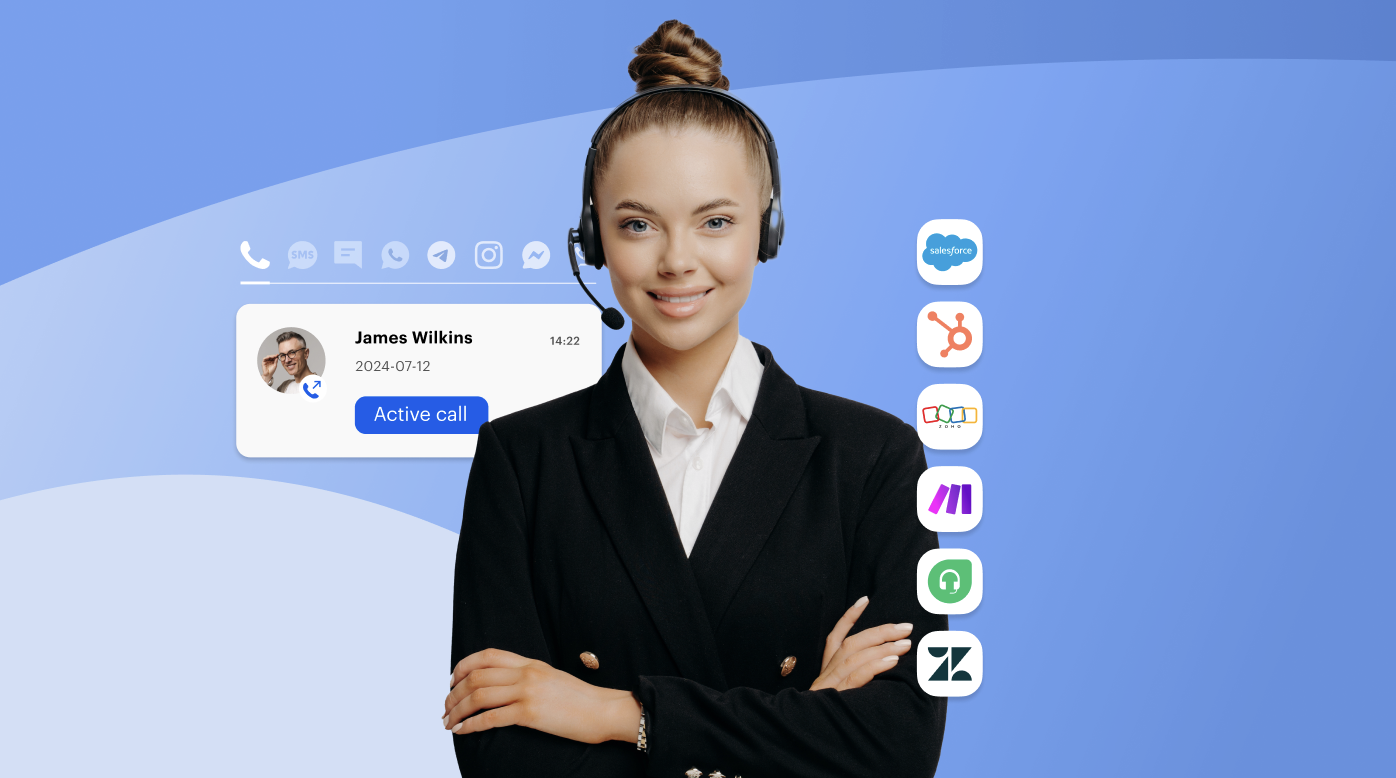
There’s also been a massive push toward omnichannel customer engagement. Customers don’t just call; they message, email, chat, and DM, often expecting a seamless experience across all channels. Modern call center systems integrate these touchpoints into one platform, allowing agents to manage all conversations without switching tabs constantly, which keeps customers from repeating themselves and speeds up resolution.
Impact on customer experience & operational efficiency
Your phone system isn’t just a tool for answering calls; it’s a critical part of your customer experience strategy. Modern systems enable smart routing and IVR (Interactive Voice Response) that quickly direct customers to the right agent or department, cutting down on hold times and getting issues resolved faster.
Because calls, messages, and chats are centralized within these systems, your agents have better customer data at their fingertips, such as past interactions, purchase history, and notes, all in one place. The added context empowers your team to personalize conversations, which customers appreciate and remember.
There’s also a financial upside: upgrading to a modern call center phone system can lead to significant cost savings compared to traditional setups. You’ll reduce maintenance expenses tied to legacy phone infrastructure, gain flexibility in scaling up or down without hardware headaches, and avoid the downtime that comes with outdated systems. In other words, you’re not just investing in customer experience; you’re investing in operational efficiency that saves your business money in the long run.
Top Call Center Phone Systems for 2026
| Provider | Key features | Pricing | Pros | Cons |
| 1. Voiso | Omnichannel communication, intuitive workflow builder, AI-predictive dialer, speech analytics, real-time dashboards. | Starts at $49/user/month. | Cost-effective, strong outbound tools, powerful analytics, AI-driven insights. | Limited workforce management tools. |
| 2. RingCentral | Video conferencing, messaging, team collaboration, integrations with popular tools. | Starts at $20/user/month. | Feature-rich, reliable, wide integration options . | Premium features drive up cost. |
| 3. Talkdesk | AI-powered automation, seamless integrations, and omnichannel capabilities. | Starts at $85/user/month. | User-friendly interface, seamless CRM integrations, scalability to accommodate growing businesses. | Pricing can be steep, support quality varies depending on the service tier. |
| 4. Aircall | Cloud-based VoIP, user-friendly interface, and team collaboration features. | Starts at $30/user/month. | User-friendly, quick setup, strong integration options . | Limited scalability, higher cost per user. |
| 5. Zoom Phone | HD video conferencing, VoIP, global coverage. | Starts with a free basic plan, and up to $22.49 for higher tier plans. | Affordable, easy to deploy, strong call quality, integrates well with Zoom Meetings. | Limited advanced contact center features, basic reporting tools. |
| 6. Five9 | AI-driven automation, predictive dialing, and omnichannel contact center solutions. | Starts at $119/user/month with a 36-month contract. | Powerful call center tools, seamless CRM integrations, excellent scalability for growing teams. | Steep learning curve, premium features can be expensive, limited flexibility for small businesses. |
1. Voiso
Voiso’s cloud-based contact center platform is built to simplify communication for small to medium businesses. With its user-friendly design and rapid setup, it’s the perfect choice for teams who want to get started as soon as possible. Whether it’s customer service, sales, or juggling multiple communication channels at the forefront, Voiso has the tools you need to deliver exceptional customer experiences.
With productivity-boosting AI features like speech analytics and chatbots, your business can optimize workflows and get meaningful insights into customer interactions, enabling smarter, data-driven decisions. Plus, Voiso can automate routine tasks, freeing up agents for more complex tasks.
With its blend of simplicity, cutting-edge technology, and efficiency-driving automation, Voiso is the top choice for businesses looking to scale personalized and effective support.
Overview of features
VoIP
Voiso offers high-quality VoIP calling, allowing teams to handle local and international calls without worrying about call drops or poor audio. It’s reliable, scalable, and eliminates the cost headaches of traditional phone lines.
Analytics
With real-time and historical analytics that track agent performance, call volumes, and campaign outcomes, teams can see what’s working, where bottlenecks happen, and how to improve customer experiences over time.
ACD
With Automatic Call Distribution, calls are routed to the right agent based on skills, language, or customer priority, reducing wait times and ensuring customers reach someone who can actually solve their problem on the first try.
IVR
Voiso’s IVR capabilities let customers navigate to the right department or self-serve for simple requests, cutting down on transfers and letting agents focus on high-value calls.
CRM sync
The CRM sync pulls customer data and history right into the call interface, giving agents immediate context and preventing customers from repeating themselves, making conversations more efficient and personalized.
Best suited for…
Voiso is ideal for mid to large enterprises that handle high call volumes and need advanced routing, reporting, and CRM integration to keep teams aligned while scaling customer support or outbound sales operations.
Strengths
AI automation
Voiso uses AI to automate repetitive tasks, provide smart call routing, and generate insights from call data, letting agents focus on customers instead of manual, tedious work.
Fast deployment
Voiso is fast to deploy, with teams typically going live in days, and with minimal IT headaches. It’s a practical choice for businesses that need to get moving quickly.
Intuitive UI
Voiso’s intuitive interface makes it easy for agents and managers to learn and use without getting lost in cluttered menus, keeping daily operations smooth and efficient.
2. Zoom Contact Center
Zoom Contact Center extends the familiar Zoom experience into customer service, blending voice, video, and chat within the same system already used for meetings. It’s designed for businesses that want to handle customer calls and messages without switching between multiple apps, creating a smoother workflow for agents and a better experience for customers.
If your team already uses Zoom for meetings and internal communication, adding Zoom Contact Center helps manage customer conversations with minimal friction, keeping everything in one place while adding advanced contact center tools.
Overview of features
Omnichannel support
Zoom Contact Center lets customers reach out by voice, chat, or video while keeping interactions organized for agents in a single view. It allows customers to get help on their preferred channels while ensuring your team can handle different types of requests without confusion.
Zoom-native integration
Because it’s built into Zoom, teams can move easily between customer interactions, internal chats, and meetings without logging into different systems. This helps to keep daily operations simple while allowing agents to consult with teammates if they need help during a customer call.
Intelligent routing
Calls and messages are directed to the right agent based on skills or priority, reducing unnecessary transfers and cutting down on wait times. This means that customers get to the right person faster, improving satisfaction and first-contact resolution rates.
Video-first support
Zoom’s video support is a standout feature, allowing face-to-face help for complex or high-touch customer needs. It’s especially useful in healthcare, financial services, and technical support, where a visual conversation can resolve issues faster and build trust.
Analytics dashboard
Zoom Contact Center includes live dashboards and reporting tools to monitor call volumes, wait times, agent performance, and customer feedback, helping supervisors adjust staffing, improve workflows, and keep service levels consistent.
Best suited for…
Zoom Contact Center is a good fit for remote and hybrid teams already using Zoom who want to add customer support capabilities without adopting a completely separate system. It’s also practical for businesses looking to offer video support to customers while keeping setup and training straightforward.
Strengths
Seamless integration
Teams already familiar with Zoom can start using the contact center tool quickly without a steep learning curve, helping them maintain consistent workflows and reduce onboarding time.
Video-enabled support
Built-in video options allow agents to provide personalized, high-quality support, which can lead to faster issue resolution and stronger customer relationships.
User-friendly interface
Zoom Contact Center keeps the clean, intuitive design that users expect from Zoom, making it easy for agents and supervisors to handle calls, chats, and video requests without feeling overwhelmed.
3. RingCentral
RingCentral is a cloud phone system designed for businesses that need reliable voice quality, built-in team collaboration, and flexibility as they scale. It’s popular among teams that want to keep everything, like calls, messages, video meetings, and contact center operations, under one roof without juggling disconnected tools.
Whether you’re managing customer support or outbound campaigns, RingCentral makes it easy to add new agents, monitor live activity, and adjust call flows on the fly, all while keeping remote and in-office teams seamlessly connected
Overview of features
VoIP calling
RingCentral offers crystal-clear VoIP calling with high reliability, so teams can handle customer calls confidently whether working in the office or remotely.
Omnichannel routing
It supports calls, SMS, chat, email, and social messaging in one place, allowing customers to reach you on their preferred channels while maintaining a unified workflow for agents.
Visual IVR
RingCentral’s drag-and-drop IVR builder allows you to create self-service menus and call flows without heavy IT involvement, enabling customers to reach the right department quickly.
Built-in team messaging
A key differentiator, RingCentral includes integrated team messaging and video meetings, making it easier for agents to collaborate internally without leaving the platform.
Analytics and reporting
RingCentral provides live dashboards and customizable reports, allowing supervisors to monitor call volumes, wait times, and agent performance in real time.
Best suited for…
RingCentral is ideal for remote and hybrid teams that need unified communications and contact center capabilities on one platform, reducing the amount of necessary apps while improving collaboration and customer responsiveness.
Strengths
Integrated collaboration
RingCentral’s unique combination of messaging, video, and contact center functionality means agents can easily consult with teammates or managers during customer interactions.
Easy to scale
Adding new agents, locations, or channels is straightforward, making it a good fit for growing teams that need flexibility without heavy technical work.
Reliable voice quality
RingCentral is known for its stable call quality, reducing dropped calls and ensuring smooth customer conversations even during peak hours.
4. Five9
Five9 is a cloud-based contact center solution built for businesses that need serious scalability and strong automation while keeping customer experience at the forefront. It’s known for its AI-powered workforce optimization and advanced outbound dialing, and helps sales and support teams improve efficiency while maintaining high service quality, even during high-volume spikes.
Whether you’re handling inbound support, running outbound sales campaigns, or managing blended teams, Five9 gives you the tools to manage performance, automate low-value tasks, and deliver personalized service at scale.
Overview of features
Predictive dialer
Five9’s predictive dialing engine helps outbound sales teams maximize connection rates while reducing agent idle time, intelligently pacing calls to align with agent availability and time zone regulations.
AI speech analytics
Five9 includes built-in speech analytics that transcribe and analyze calls for sentiment, keywords, and compliance, providing managers with insights to coach agents and optimize conversations.
Workforce optimization
Five9 offers advanced WFO tools for forecasting, scheduling, and monitoring agent adherence, ensuring the right staffing levels while managing cost efficiency.
Omnichannel engagement
Unlike simpler systems, Five9 provides true omnichannel handling with integrated voice, email, chat, SMS, and social, so customers get a seamless experience no matter how they reach out.
CRM integrations
Five9 integrates with Salesforce, Zendesk, Microsoft Dynamics, and other CRMs, automatically syncing interaction histories and customer data to give agents immediate context.
Best suited for…
Five9 is ideal for mid to large enterprises managing high call volumes that need advanced routing, predictive dialing, and AI-powered workflow automation to drive efficiency while scaling their contact center operations.
Strengths
AI automation
Five9 uses AI to power predictive dialing, intelligent virtual agents, and smart routing, automating repetitive tasks while providing actionable insights to improve agent performance and customer experiences.
Advanced outbound capabilities
Five9 offers powerful outbound dialing tools, including predictive and progressive dialing, making it a strong choice for sales-focused teams looking to increase connection rates while staying compliant.
Deep analytics and reporting
Five9’s comprehensive analytics tools let managers easily track agent performance, monitor call quality, and optimize staffing, ensuring your contact center remains efficient and customer-focused.
5. Talkdesk
Talkdesk is a cloud contact center platform designed for businesses that want to deliver fast, personalized customer service while maintaining flexibility as they grow. It’s known for its user-friendly design, AI-powered features, and ability to integrate easily with existing CRMs and business tools.
If your team needs a system that can scale as your call volumes grow while giving you tools to track performance and customer experience, Talkdesk is worth considering for both support and outbound teams.
Overview of features
VoIP calling
Talkdesk offers reliable VoIP calling with clear audio quality for local and international calls, reducing costs tied to traditional phone lines while giving teams the flexibility to handle high call volumes.
AI-powered tools
With AI tools like virtual agents and speech analytics, Talkdesk helps automate routine tasks, route calls intelligently, and uncover customer insights from conversations, letting agents focus on handling complex customer issues.
Smart routing
Calls are automatically routed to the best available agent based on skills, customer data, and priority, reducing wait times and improving first-contact resolution rates without manual intervention.
Workforce management
Built-in workforce management tools help schedule agents effectively, track adherence, and forecast staffing needs, so teams can keep up with demand while maintaining service levels.
CRM integrations
Talkdesk integrates with popular CRMs like Salesforce, HubSpot, and Zendesk, allowing agents to see customer history and notes within the call interface to provide faster, more personalized support.
Best suited for…
Talkdesk is ideal for mid to large enterprises that need a flexible, scalable contact center solution with strong AI capabilities and built-in workforce management to handle high call volumes efficiently.
Strengths
Advanced AI capabilities
Talkdesk’s AI tools help automate repetitive tasks, route calls more accurately, and analyze customer sentiment, allowing teams to work smarter while reducing manual effort.
Scalability
Talkdesk is designed to grow with your business, making it a good choice for companies expecting to expand their support or sales operations without constant system changes.
Ease of use
Talkdesk has a clean, intuitive interface that keeps daily operations straightforward for agents and managers, helping reduce training time and maintain productivity across teams.
6. Aircall
Aircall is a cloud-based phone system designed specifically for modern sales and support teams that want to get up and running quickly without complicated setups. It’s known for its simplicity, clean interface, and seamless integrations with popular CRM and help desk tools, making it a great choice for small to mid-sized teams looking for efficiency and transparency in customer communications.
Aircall focuses on helping teams collaborate easily, track call activity, and manage customer conversations across channels without needing heavy IT support.
Overview of features
VoIP calling
Aircall offers high-quality VoIP calls with easy number management across countries, allowing teams to handle local and international calls without hassle or expensive infrastructure.
Call tagging and notes
Agents can tag calls and add notes directly within the app, making it easier for teams to track conversation context and ensure smooth handovers between agents.
Shared call inbox
Aircall’s shared inbox helps teams manage missed calls, voicemails, and callbacks in one place, ensuring no customer inquiry falls through the cracks.
Analytics and reporting
Clear, real-time insights into call volumes, agent performance, and missed calls, helping managers spot trends and optimize workflows.
CRM and helpdesk integrations
Aircall connects with tools like HubSpot, Salesforce, Pipedrive, and Zendesk, pulling customer data into the call interface so agents have context at their fingertips.
Best suited for…
Aircall is a strong choice for small to mid-sized businesses that want a straightforward, fast-to-deploy phone system for sales and support teams while maintaining clear visibility and collaboration across calls.
Strengths
Fast deployment
Aircall is quick to set up, allowing teams to start making and receiving calls within a day, without complicated hardware or lengthy onboarding.
User-friendly design
The interface is clean and easy to navigate, so agents can focus on conversations rather than getting lost in complex systems.
Collaborative features
Aircall’s shared inbox, tagging, and note-taking capabilities help teams stay aligned and ensure smooth handoffs between sales and support teams.
Key Features of Modern Call Center Phone Systems
Choosing the right call center phone system isn’t just about making and taking calls anymore. Today’s platforms come packed with smart features that keep customers happy, agents productive, and operations running smoothly, even on your busiest days.
Whether you’re scaling a fast-growing support team or improving your outbound sales, understanding the key features of modern call center phone systems will help you pick a system that actually moves the needle for your business.
VoIP technology & cloud-based architecture
VoIP, or voice over internet protocol, basically means your calls travel over the internet instead of old-school phone lines, which brings huge perks like easy scalability to add or remove users without hassle. It also cuts costs since you’re not tied to expensive physical phone lines or hardware, and it lets your team work from anywhere with internet access, making remote or hybrid setups a breeze.
On top of that, cloud-based systems offer great reliability. They have built-in failover and uptime protections, so if one server or location goes down, your calls automatically reroute elsewhere. That means your customers won’t get dropped or stuck waiting just because of technical hiccups.
Automatic Call Distribution (ACD)
ACD is the magic behind the scenes that makes sure calls land with the right agent. When a call comes in, ACD looks at pre-set rules, like who’s free, who’s best qualified, or who’s handled similar issues before, and instantly routes the call there, cutting wait times and reducing frustrating call transfers.
For high-volume call centers, ACD is a game-changer. It balances loads evenly across your team so nobody gets overwhelmed, helping maintain steady service levels even during spikes. Plus, it improves first-contact resolution because callers speak directly with someone who can actually help.
Interactive Voice Response (IVR)
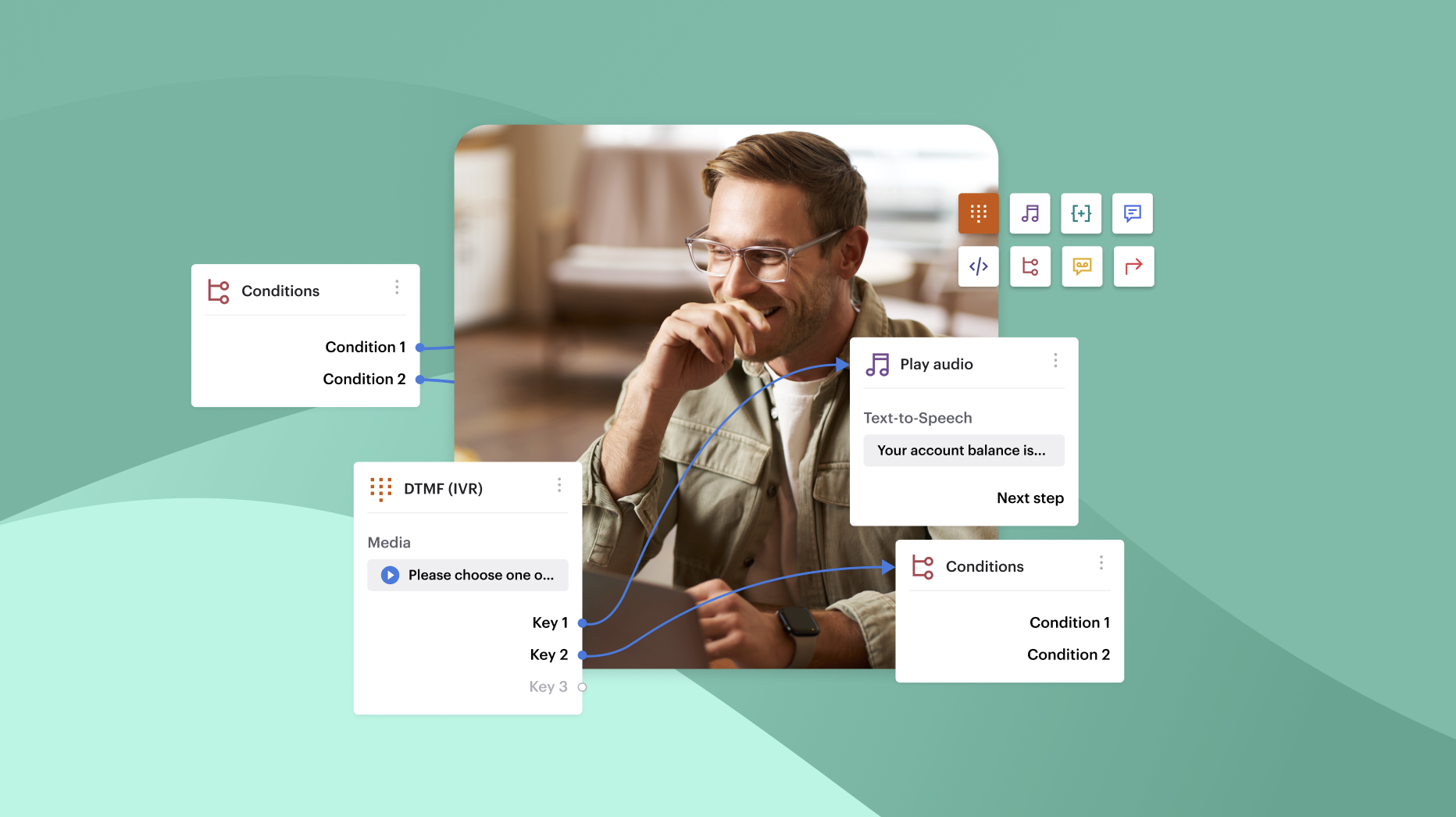
IVR is that automated voice system you hear when you call and hear “press 1 for billing, 2 for support” and so on. It lets customers self-serve simple tasks, like checking account balances or confirming appointments, without needing a live agent, freeing up your team to focus on more complex issues.
Today’s IVR systems are smarter, too. They personalize the call flow based on what they know about the customer, maybe even skipping options or routing directly based on previous calls or data. It makes the experience feel faster and less frustrating, helping customers get answers more smoothly.
CRM integration
A big boost to agent productivity is having customer info right at their fingertips. CRM integration means your call system syncs directly with your customer database, pulling up past interactions, preferences, and notes the moment the call connects.
Having a unified view helps agents pick up the conversation without making customers repeat themselves, while powering more personalized service since reps can tailor their approach based on history. Plus, with everything in one place, supervisors get clear dashboards to track team performance and customer trends.
Call monitoring & quality assurance
Keeping quality high means managers and supervisors need tools to listen in, either live or after calls. Real-time monitoring helps catch issues as they happen, like an agent struggling with a tricky question or a customer getting frustrated.
Post-call review tools let teams analyze conversations to spot patterns and training opportunities, which is where coaching and feedback really come into play, helping agents improve over time, boosting morale, and ultimately delivering better customer experiences.
Analytics & reporting
Numbers don’t lie, and modern call centers thrive on data. Systems track key performance indicators like call volume, how long customers wait, resolution times, and how often callers hang up before talking to someone.
Custom dashboards help managers get a quick snapshot of team health, identify bottlenecks, and make smarter staffing or process decisions. Over time, the collected data drives continuous improvement, so your operation doesn’t just run well, but gets better and better.
Predictive & power dialers
Dialers powered by AI are a huge productivity boost, especially for sales or outbound teams. Predictive dialers anticipate when agents will be free and place calls automatically, keeping agents talking rather than waiting or manually dialing.
Power dialers let reps call through lists quickly but with control over pacing, which helps stay compliant with regulations about call frequency and timing. They boost connect rates, reduce downtime, and ensure your team spends more time engaging customers and less time on busywork.
How to Choose the Best Call Center Phone System
Picking the right phone system can feel challenging, but breaking it down step-by-step makes it way easier. You want a solution that fits your team’s unique needs, keeps customers happy, and doesn’t blow your budget.
Assessing your team size & use case
First up, think about who’s using the system and how: Are you mainly handling inbound calls, like customer support or help desk? Or is your team dialing out to prospects and leads? Maybe it’s a mix of both, which calls for a blended setup that can juggle inbound and outbound smoothly.
Also, consider if the system will be for internal support– think IT helpdesk or HR inquiries– or customer-facing calls. The features and routing priorities can look very different depending on who you’re connecting with and what kind of conversations are happening.
Essential questions to ask vendors
Once you’ve nailed down your needs, it’s time to dig into what vendors offer. Ask about their SLAs (service level agreements) to know how reliable their system really is. Compliance matters too, especially if you’re dealing with sensitive info covered by regulations like GDPR or HIPAA.
Integration is huge: Will the system play nicely with your CRM, helpdesk tools, or other software? And what about scalability; can it grow with you without painful upgrades? Don’t forget to check what kind of onboarding and ongoing training they provide, as smooth adoption makes all the difference.
Comparing upfront vs ongoing costs
Costs can get tricky, so break them down: Some systems charge per user seat, others might base pricing on usage or offer free tiers for smaller teams. Be clear on what’s included so you’re not caught off guard.
Also, consider hardware needs. Cloud-based systems often skip the physical gear, but some setups might still require phones or servers. Factor in installation and maintenance when comparing options so you get the full picture.
Cloud vs On-Premise Call Center Systems
| Feature | Cloud-based systems | On-premise systems |
| Pros |
|
|
| Cons |
|
|
| Best for | Teams looking for flexibility, fast scaling, and remote-friendly operations. | Organizations needing full control, strict compliance, or heavy customisation. |
| Maintenance | Handled by vendor, minimal in-house effort. | Requires dedicated IT resources for patches, upgrades, and troubleshooting. |
| Scalability | Easily scales up or down with user needs. | Scaling often requires additional hardware and planning. |
AI and Automation in Phone Systems
AI-powered call routing & transcriptions
Modern phone systems use natural language processing (NLP) to understand what callers need and route them to the right agent without wasting time on hold or transferring between departments, speeding up resolution and reducing customer frustration.
Additionally, real-time and post-call transcriptions help with compliance checks and give managers accurate records for quality coaching without needing to listen to entire calls.
Virtual agents & voice bots
Virtual agents and voice bots handle first-line support by answering FAQs, resetting passwords, or collecting basic information, freeing up your team for more complex calls. If the bot can’t fully resolve the issue, the system seamlessly escalates to a live agent with all collected context, so customers don’t have to repeat themselves.
Ensuring Compliance and Security
Industry standards to look for
When choosing a phone system, check for compliance with standards like PCI-DSS, ISO 27001, HIPAA, and GDPR. Such certifications ensure your provider can securely handle payment data, patient information, and customer details according to industry regulations.
Security best practices
Look for systems offering end-to-end encryption to protect calls and recordings, along with role-based access controls and audit logs to track activity and prevent unauthorized data access.
Future Trends in Call Center Phone Systems
Omnichannel & unified communications
Call centers are moving beyond phone-only support toward omnichannel customer engagement, letting customers switch seamlessly between voice, chat, email, and SMS without losing context. It makes a single customer view essential, ensuring agents can see the full history of interactions across channels to deliver consistent, efficient support.
Hyper-personalisation & sentiment analysis
With advancements in AI, real-time sentiment analysis is becoming a practical tool for call centers, allowing systems to track customer mood during interactions and adjust routing or escalation paths accordingly. Combined with dynamic scripting for agents, teams can tailor conversations in the moment, creating more personal and effective customer experiences while improving outcomes.
FAQs
What is the difference between a contact center and a call center phone system?
A contact center handles multiple channels like voice, chat, and email, while a call center phone system focuses on voice calls only.
Do I need special hardware to use a cloud-based VoIP call center solution?
Usually, you just need a computer, headset, and stable internet—no special hardware is required.
Can call center phone systems integrate with ticketing or helpdesk tools?
Yes, most modern systems offer integrations with popular helpdesk and CRM platforms for unified workflows.
How long does it typically take to onboard a team onto a new phone system?
Onboarding can take anywhere from a few days to a few weeks depending on team size and system complexity.
What are the most common issues companies face when switching systems?
Companies often face challenges with data migration, agent training, and ensuring call quality during the transition.
Are VoIP call center systems reliable for international calling?
Yes, VoIP systems are generally reliable for international calls if you have sufficient bandwidth and network quality.
How does call quality compare between cloud-based and on-premise systems?
With a good internet connection, cloud-based systems can match or exceed the call quality of on-premise systems.
Can I use a call center phone system for a hybrid or remote team?
Absolutely, cloud-based call center systems are designed to support remote and hybrid teams seamlessly.
Further Reading