

95% of contact centers track talk time, but less than half actually use the data to make decisions. That stat, from a 2024 report by ContactBabel, says everything about how misunderstood Average Talk Time (ATT) really is. It’s one of the most monitored metrics in contact center dashboards, but rarely one of the most correctly interpreted.
ATT gets treated like a scoreboard: the lower the better. But that’s not what it is.
Talk time doesn’t just measure how long agents stay on the phone. It tells you why they stay on the phone. It points to bottlenecks, uncovers training needs, and highlights where your systems may be silently failing your team.
Yet in many contact centers, ATT is still wielded like a blunt tool. Managers set arbitrary targets. Agents are told to talk less without being given the tools or context to do so. The result? Slashed ATT numbers that come with a hidden cost, rushed conversations, unresolved issues, and drops in customer trust.
This article isn’t about defining ATT in a vacuum. It’s about showing how to interpret it in context, connect it to the right adjacent metrics, and use it to make meaningful operational decisions. You’ll find where ATT gets misread, how to avoid that, and what changes actually help lower talk time without harming the customer experience.
Key Takeaways: Average Talk Time in Contact Centres
- What ATT Really Measures: ATT reflects only the time agents spend actively speaking with customers, not hold time or after-call work. It’s often confused with AHT, but the two track different aspects of call handling.
- Benchmarks Vary Widely: Average Talk Time differs by industry. E-commerce calls may last 3–5 minutes, while healthcare or financial services can go up to 10 minutes. Benchmark internally before using external figures.
- ATT Is a Diagnostic Tool: Treat ATT as a mirror, not a scorecard. It reveals customer complexity, workflow inefficiencies, and training gaps more than it reflects agent performance alone.
- Don’t Chase the Lowest Number: Lower ATT doesn’t always mean better service. Rushed calls can hurt CSAT and FCR. High ATT isn’t always bad, it could indicate valuable, trust-building conversations.
- Optimize, Don’t Reduce: Use tools like CRM screen pops, IVR flows (e.g. Voiso’s Flow Builder), and AI Speech Analytics to shorten talk time naturally, without compromising the quality of interactions.
- Connect ATT to Other Metrics: Monitor ATT alongside First Call Resolution (FCR), Customer Satisfaction (CSAT), and Agent Utilization. ATT only becomes meaningful when part of a bigger dashboard view.
- Intervene Based on Trends, Not Gut: Spikes by issue type, persistent high ATT from select agents, or sudden drops all require investigation. The context around the number matters more than the number itself.
- AI Tools Make a Difference: Platforms like Voiso’s AI Speech Analytics reduce ATT by improving agent clarity and confidence, not by pushing for speed. Smarter tools lead to smarter conversations.
- Bottom Line: The best ATT isn’t the shortest, it’s the one that resolves the issue, earns trust, and respects both the customer’s and agent’s time.
What Is Average Talk Time And What Is It Not
Average Talk Time (ATT) gets cited often. But it’s often misused and frequently confused with other metrics that measure very different things. At its core, ATT reflects how long an agent actually talks to a customer. Not how long the entire call process takes. Not how long a customer waits on hold. Just the direct, spoken interaction between agent and caller.
That may sound simple. But the confusion begins when it’s lumped together with broader metrics like Average Handle Time (AHT). Let’s break that apart first.
ATT vs. AHT: The Common Mistake
ATT is the duration of the actual conversation between the agent and the customer. If a call lasts 6 minutes, and the customer was on hold for 1 minute, then the agent wrapped up notes for another minute after hanging up, the ATT is just 4 minutes.
By contrast, Average Handle Time (AHT) includes:
- Time spent talking (ATT)
- Time spent on hold
- After-call work (e.g. notes, wrap-up tasks)
Here’s how the two stack up:
| Metric | What It Includes | Typical Use |
| ATT | Agent + customer talking time only | Measure interaction length |
| AHT | ATT + hold + after-call work | Gauge total call burden |
Quick Formula (ATT):
ATT = Total Talk Time / Number of Calls Handled
It’s not a complex calculation, but the misinterpretation of ATT as AHT is what drives the wrong decisions. They measure different moments in the call journey, and using one in place of the other obscures what’s really going on.
Industry Benchmarks: How Much Talk Time Is Too Much?
There’s no single “right” number for ATT. It depends heavily on the type of service you provide, the complexity of your customer issues, and the expectations set by your business model.
Here’s a snapshot of ATT benchmarks across a few major sectors, based on data from ContactBabel’s US Contact Center Decision-Makers Guide (2024) and SQM Group research:
| Industry | Average Talk Time |
| Retail/Consumer Support | 4–5 minutes |
| Financial Services | 6–8 minutes |
| Healthcare | 7–10 minutes |
| B2B Sales | 6–12 minutes |
Why such variation? Because not all conversations are created equal.
- In retail, issues are often transactional, like order status or returns. Resolution is quick.
- In finance or healthcare, the stakes are higher. You’re building trust, navigating regulation, and resolving complex questions.
- In sales, agents spend more time uncovering needs and persuading, which naturally stretches the conversation.
That’s why blindly benchmarking against industry averages rarely helps. A financial services team trying to mimic e-commerce ATT targets might slash minutes but damage trust. The better move is to benchmark internally, by issue type, product line, or agent group, to find meaningful baselines for your operation.
ATT Is a Mirror Not a Scorecard
Average Talk Time is too often treated as a metric to beat. Managers set arbitrary targets, expecting shorter calls to signal better performance. But ATT doesn’t tell you if an agent is doing well. It tells you what’s getting in the way.
When viewed correctly, ATT becomes less of a scoreboard and more of a mirror, one that reflects what’s working, what’s broken, and what your agents are up against.
It Reflects Customer Complexity
A long talk time isn’t always a red flag. In many cases, it’s just the reality of navigating a complex customer issue.
- If your product or service is intricate, the customer journey will be too.
- If your IVR sends people to the wrong place, agents spend precious minutes rerouting or repeating basics.
- If your documentation is unclear, customers arrive unprepared and calls take longer.
In other words, high ATT might be highlighting friction elsewhere. Customers aren’t calling to chit-chat, they’re calling because something didn’t go as planned. ATT helps you see where complexity lives in your experience.
It Surfaces Workflow Inefficiencies
When agents spend too long on a call, it often has nothing to do with the conversation itself. It’s what’s happening, or not happening, behind the scenes.
Common culprits include:
- Incomplete or outdated knowledge bases
- Systems that don’t sync in real time
- Disconnected workflows between departments
For instance, if an agent needs five clicks across three tabs to find a return policy, your ATT just inherited two extra minutes. ATT won’t tell you which process is broken, but it will tell you something is.
It Indicates Agent Confidence (or the Lack of It)
Another reason talk time stretches? Uncertainty.
Agents unsure about policies, escalation rules, or how much they’re allowed to promise tend to over-talk. They double-check, hesitate, and stall, not because they’re careless, but because they’re trying not to mess up.
That’s where support systems matter. Tools that offer real-time agent assistance, like on-screen prompts, contextual knowledge suggestions, or AI-driven coaching, can reduce talk time meaningfully, without forcing agents into rigid scripts.
Solutions like Voiso’s AI Speech Analytics or real-time transcription and CRM integrations (e.g. Salesforce or Zoho) empower agents to respond faster, stay accurate, and end calls with clarity, not confusion.
Where ATT Can Go Wrong: Common Pitfalls
Used in isolation, Average Talk Time can drive the wrong decisions. It’s easy to chase a smaller number and think you’re optimizing, but without the right context, that “improvement” can quietly break your customer experience, frustrate your team, and damage performance. Let’s walk through the most common ways ATT gets misused or misread, and how to avoid them.
“Chasing the Lowest Number” Trap
Lower talk time doesn’t always mean better service. When leadership pushes for shorter calls without considering complexity or outcome, agents respond the only way they can, by rushing.
That often leads to:
- Incomplete resolutions
- More repeat calls
- Lower First Call Resolution (FCR)
- Drop in Customer Satisfaction (CSAT)
A 2023 Gartner report found that forcing talk time targets without linking them to quality metrics resulted in a 21% drop in CSAT across large-scale B2C support centers. The pressure to be quick ends up costing more in callbacks and lost loyalty.
Penalizing Agents for Good Conversations
Some of your highest ATT agents might be your most valuable. In regulated or high-trust environments, like finance, healthcare, or legal services, a longer conversation often means the agent is doing exactly what they should: explaining clearly, checking compliance boxes, and building rapport.
Cutting those conversations short can backfire. It can:
- Undermine trust
- Trigger compliance risks
- Erode the emotional connection customers expect
The best-performing teams don’t chase lower ATT, they balance it with context. They know when high talk time is intentional and supports long-term goals like retention or upselling.
Misattributing High ATT
Another common mistake? Assuming high ATT always reflects agent behavior. In reality, a large portion of “talk time” may be technical lag, outside the agent’s control.
Consider the silent culprits:
- Hold time misclassified as talk time
- Slow-loading CRMs that freeze up mid-call
- Lag in transferring calls between departments
- Poor system integration, forcing manual lookups
For example, if your CRM takes five seconds to load customer data and that happens 20 times a day per agent, that’s nearly two minutes of artificial ATT per shift, multiplied across your team. Blaming agents for delays baked into your tech stack creates frustration and misdirected coaching.
Strategies to Optimize ATT With Context
Shorter talk time isn’t always better, but smarter talk time is. Optimizing Average Talk Time doesn’t mean driving agents to speak faster or cut conversations short. It means giving them the tools, data, and structure to handle calls with clarity and confidence.
Here’s how to reduce talk time intelligently without damaging the experience for customers or agents.
Equip Agents With Real-Time Context
The fastest way to cut unnecessary talk time? Make agents stop digging for information.
With platforms like Voiso’s Salesforce and Zoho integrations, agents get real-time screen pops showing caller data before they even pick up the phone. They can view:
- Call history
- Previous issues
- CRM notes and ticket status
- Customer tier, product use, or sales cycle stage
No more asking, “Have you called us before?” or scrolling through three systems to find the last order.
And when platforms layer in AI-transcribed call history, agents walk into every interaction already knowing what happened last time, eliminating repetition, confusion, and delays.
Redesign Routing With Intelligence
Sometimes the most effective way to shorten talk time is to improve what happens before the call reaches the agent.
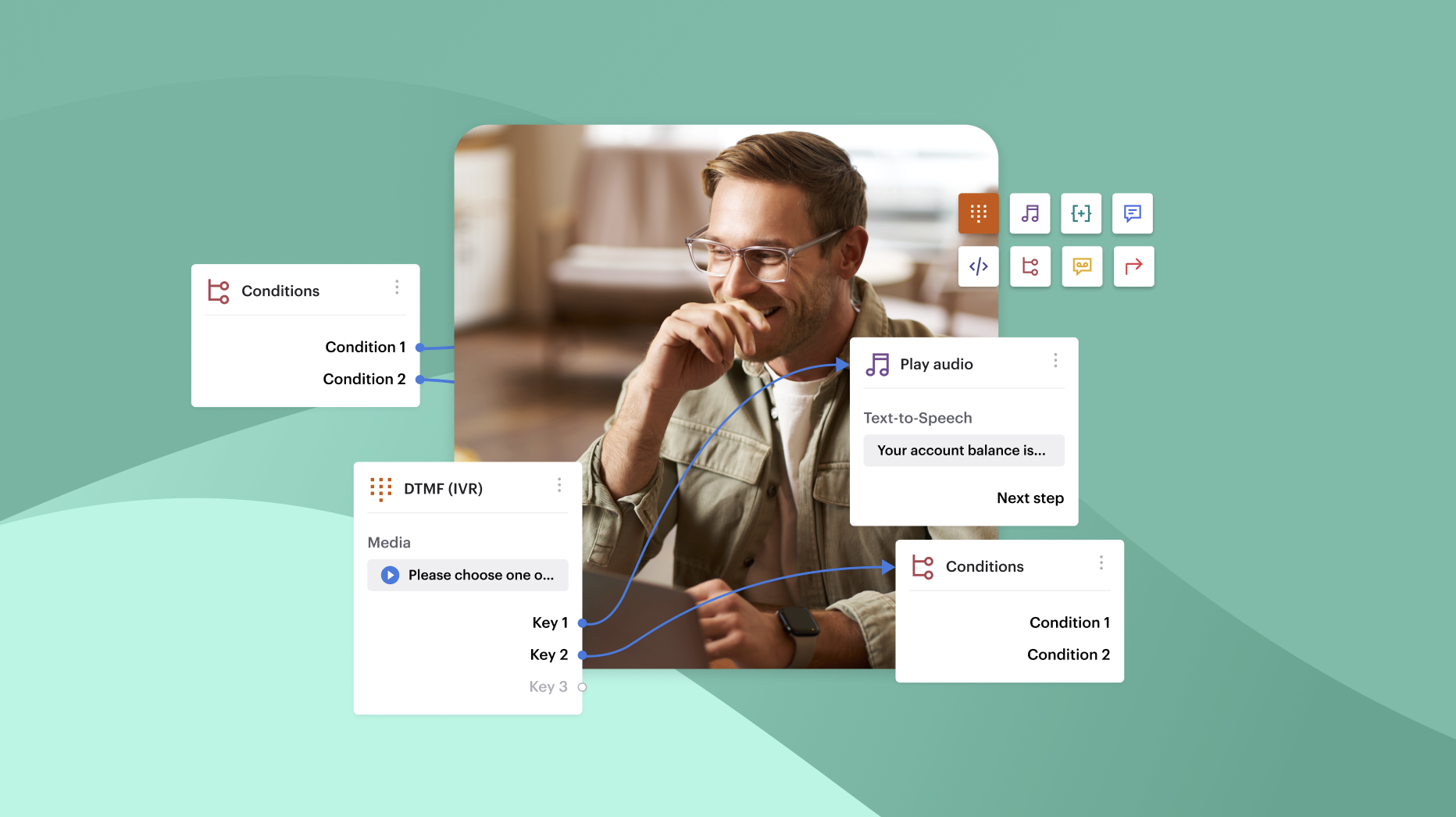
Voiso’s Flow Builder lets you build intelligent, multi-layer IVR paths that direct calls based on language, product, urgency, or account status, without code.
That means:
- Fewer misrouted calls
- Less agent time spent transferring or explaining
- More qualified, ready-to-resolve conversations
You’re not speeding up the agent, you’re reducing the noise around them.
Implement “Soft Structure,” Not Scripts
Rigid call scripts rarely work. They slow down skilled agents and frustrate customers who can tell they’re being read to. Instead, use soft frameworks that guide conversations while staying flexible.
A simple example: PACE
- Problem: Identify the issue
- Ask: Gather relevant context
- Clarify: Confirm expectations or constraints
- Execute: Solve or transfer clearly
This approach keeps calls focused without making them robotic. It also empowers agents to stay in control of the conversation, without micromanagement.
Use Post-Call Data for Coaching, Not Surveillance
Long talk times aren’t just a number to flag—they’re a coaching opportunity.
Platforms using AI Speech Analytics, like Voiso’s, don’t just show you that a call took too long. They tell you why. With:
- Sentiment tracking
- Keyword flags (e.g. “confused,” “unclear,” “call back”)
- AI-generated call summaries
- Conversation scores
Managers can review patterns across agents and topics to coach specific behaviors, like how to explain a product clearly, when to escalate, or how to avoid repeating information. The goal isn’t to pressure agents into rushing. It’s to build clarity, which naturally reduces talk time without compromising the conversation.
ATT in Context: Connecting It to Metrics That Actually Matter
Looking at Average Talk Time in isolation is like checking your car’s speed without knowing where you’re going. It’s a number, but not a direction.
ATT only becomes useful when paired with the right supporting metrics. That’s where true insight lives, in the relationships between talk time, resolution rates, satisfaction scores, and agent productivity. Here’s how to read ATT as part of a bigger operational picture.
ATT vs. First Call Resolution (FCR)
Shorter calls don’t always mean better outcomes. In fact, longer calls often prevent repeat ones.
Take this example: A contact center notices that agents who spend 2 minutes more per call are also resolving 25% more issues on the first attempt. That’s a tradeoff worth making.
Pushing for lower ATT without looking at FCR is a mistake. What appears to be an efficiency gain may actually be a leak, one that leads to:
- More inbound volume
- Higher operational costs
- Lower customer trust
When tracking ATT, always ask: Are we fixing the issue the first time around? If not, shorter talk time is a false win.
ATT and Customer Satisfaction (CSAT)
Talk time only matters if customers leave the call satisfied. That’s why CSAT should sit side by side with ATT in every dashboard.
Let’s say an agent consistently keeps ATT below the team average. If their CSAT is also dipping, it’s a red flag, they may be rushing, cutting corners, or missing opportunities to listen.
On the flip side, if an agent’s ATT is above average and their CSAT is high, it signals value: they’re building rapport, solving complex issues, or giving customers time to breathe. ATT without CSAT is a dead-end number. Together, they tell the real story of service quality.
ATT and Agent Utilization
High talk time doesn’t automatically equal low productivity. In fact, the opposite can be true, especially if agents are keeping wrap-up time short and minimizing idle minutes between calls.
Here’s where utilization metrics matter:
- An agent with 7-minute ATT and minimal wrap-up is likely in control.
- An agent with 4-minute ATT but 3 minutes of idle time after every call? That’s a workflow issue, not a talk time success.
Real optimization happens when you connect ATT to wrap-up, hold, and idle time. Without that full view, it’s easy to mistake silence for efficiency.
When to Intervene: What ATT Trends to Watch For
Knowing when to act on Average Talk Time is just as important as knowing how to measure it. Not every spike or drop signals a problem, but patterns in ATT can be early warnings of deeper issues in your operation.
Here are three ATT trends that deserve a closer look, plus what they might actually be telling you.
Spikes in ATT by Issue Type
If talk time suddenly jumps for a specific type of inquiry, say, billing calls or account verification, it’s time to dig beneath the surface.
Possible causes include:
- A backend change customers aren’t aware of
- An FAQ that’s outdated or buried too deep to be useful
- New policies agents haven’t been properly trained on
- A missing IVR menu option that’s sending the wrong calls to the wrong queues
ATT spikes tied to topics, not agents, often reflect a process or communication failure upstream. Don’t fix the call, fix what’s creating it.
Persistent High ATT from Specific Agents
One agent consistently logs longer calls than the rest? That’s not automatically a performance issue.
Ask yourself:
- Are they handling more complex call types?
- Do they take high-value customers or VIP accounts?
- Is their FCR or CSAT higher than average?
If yes, then high ATT might be the cost of better outcomes. But if their metrics lag and talk time stays high, it may point to:
- A knowledge gap
- Lack of confidence in procedures
- Trouble navigating systems in real time
In that case, personalized coaching, with call recordings and AI speech analytics, is the right move.
Sudden Drops in ATT
A sharp drop in ATT across a team, or from a specific agent, should raise eyebrows.
Are they:
- Rushing to hit new performance targets?
- Avoiding escalation steps just to end the call faster?
- Cutting off conversations to improve stats?
These behaviors usually come with side effects: lower CSAT, poor FCR, more repeat calls. That’s why ATT should never be viewed alone.
When you see ATT fall fast, check it against the bigger picture. If everything else drops with it, it’s not progress, it’s pressure.
FAQs About ATT
What is a good Average Talk Time by industry?
There’s no one-size-fits-all benchmark. ATT varies widely depending on industry, customer type, and call purpose. But here’s a quick snapshot, based on data from ContactBabel and SQM Group:
| Industry | Typical ATT Range |
| E-commerce Support | 3–5 minutes |
| Financial Services | 6–8 minutes |
| Healthcare | 7–10 minutes |
| B2B Sales | 6–12 minutes |
But these numbers only help if your call mix and service model match. Always benchmark against your own historical data first.
How do I know if my ATT is too high?
Ask two questions:
- Is First Call Resolution dropping?
- Is CSAT holding steady, or falling?
If ATT is rising and those two metrics are suffering, it’s time to investigate. High ATT alone doesn’t mean inefficiency, but high ATT paired with repeat calls and lower satisfaction usually does. Look for clustering: Are long calls tied to a specific issue, product, or team? That’s where your fix is hiding.
Can AI tools really help lower talk time?
Yes, but only if they’re used to support, not surveil. Tools like Voiso’s AI Speech Analytics don’t just flag long calls, they explain them. By showing sentiment shifts, summarizing key points, and surfacing repeated pain points, they help agents learn what slows them down and how to tighten the next call.
Pair that with CRM-integrated screen pops and real-time transcription, and you remove most of the delays caused by uncertainty, data hunting, or unclear histories.
The result? Shorter calls, not because agents are rushed, but because they’re ready.
What’s the difference between optimizing and reducing ATT?
Reducing ATT is about shrinking the number. Optimizing ATT is about improving the experience behind the number. When you reduce ATT without strategy, you risk rushed calls, lower trust, and poor outcomes. When you optimize it, you streamline workflows, equip agents better, and resolve calls more clearly, so they naturally take less time. One saves seconds. The other saves relationships.