

In competitive education markets, communication has become operational infrastructure. Delayed callbacks, fragmented responses between departments, or unclear escalation paths don’t feel like minor administrative issues.
Unlike commercial businesses, schools rarely think of themselves as service organizations. Yet they manage high volumes of inbound enquiries, time-sensitive updates, sensitive personal information, and emotionally charged conversations. The expectations placed on them increasingly resemble those placed on structured service operations.
This article examines what exceptional customer service means in an educational context. We’ll explore where communication breaks down inside schools, how to introduce measurable service standards, and what infrastructure supports consistency without turning education into a call center.
Why service quality in schools now determines enrolment, retention, and reputation
A PWC survey found that 70% of executives believe customer expectations are outpacing their organization’s ability to adapt. While the data reflects broader industry trends, the pressure is visible in education as well. Families expect timely responses, clear information, and consistent communication, often across multiple channels.
In increasingly competitive education markets, communication quality is no longer secondary. It shapes perception early and compounds over time.
Enrolment decisions are influenced early
Admissions is often the first operational stress test.
If enquiries about fees, curriculum, or entry requirements sit unanswered, families interpret the delay as disorganization. They rarely escalate; they simply apply elsewhere. Lost enrolments often begin with slow follow-up.
Retention is shaped by accumulated friction
Re-enrolment decisions build over time.
Repeated delays in billing clarification, inconsistent answers across departments, or unclear policy communication gradually erode trust. Academic dissatisfaction may be debated. Administrative friction quietly compounds.
Schools with defined response standards and documented interaction histories reduce that friction. Those relying on informal inbox management often experience avoidable attrition.
Fee collection and complaint escalation reflect response gaps
Extended fee timelines frequently stem from unresolved questions rather than inability to pay. Clear routing and follow-up processes shorten resolution cycles.
Similarly, many complaints escalate only after silence. When acknowledgement and accountability are visible, fewer issues reach senior leadership unnecessarily.
Reputation now reflects accessibility
Online reviews and parent forums frequently reference responsiveness more than curriculum quality. Comments about being “impossible to reach” or receiving conflicting information shape perception quickly.
Today, schools operate in a choice-driven environment. Parents compare transparency and accessibility as indicators of institutional reliability.
Institutions that treat communication as infrastructure, not administrative overhead, tend to see more stable retention and fewer avoidable escalations. Service quality in education is about operational clarity. And clarity directly affects enrollment, retention, and reputation.
Mapping the school service ecosystem: where communication actually breaks down
Breakdowns in communication stem from unclear routing, disconnected systems, and undefined ownership. Below are the most common friction points.
Admissions and enquiry overload
Admissions teams experience predictable spikes: application deadlines, open days, scholarship announcements. Yet the underlying systems often remain static.
Common failure points include:
- Missed calls during peak periods
- Enquiries routed to general reception without specialization
- Manual callback tracking in inboxes or spreadsheets
- No clear visibility into which enquiries were answered, and which weren’t
When routing is informal, accountability becomes unclear. If a voicemail is left with reception and forwarded by email, follow-up depends entirely on individual initiative.
Without structured call routing or queue logic, admissions staff cannot prioritize high-intent enquiries. Without interaction logging, schools might not be able to track response times or identify bottlenecks. Over time, this leads to silent losses: prospective families who simply disengage.
Operationally, this is where structured routing, centralized call logs, and CRM-linked activity tracking can improve visibility into unanswered enquiries.
Fragmented parent communication across departments
In many schools, finance, academic staff, and administration operate independently from a communication standpoint.
A parent may:
- Call about a billing issue.
- Email a teacher about attendance.
- Contact reception regarding a schedule change.
Each interaction is handled separately. There’s no shared context.
The result is predictable:
- Parents repeat the same issue multiple times.
- Staff lack visibility into previous conversations.
- Responses contradict each other.
This fragmentation is rarely intentional. It is a systems issue.
When interaction history is centralized, through unified communication logs or shared dashboards, departments can see prior contact before responding. Internal notes, transfer protocols, and documented call outcomes can reduce repetition and misalignment.
Without shared visibility, friction compounds. With it, responses become coherent.
Crisis communication gaps
Emergency notifications, last-minute schedule changes, or policy updates expose communication weaknesses immediately.
Common gaps include:
- Relying solely on email for urgent updates
- No structured broadcast mechanism for time-sensitive alerts
- Inconsistent messaging across channels
- No confirmation of message delivery
In urgent situations, single-channel communication creates risk. Multi-channel escalation, combining voice messages, SMS alerts, and structured notification flows, can increase reach and clarity.
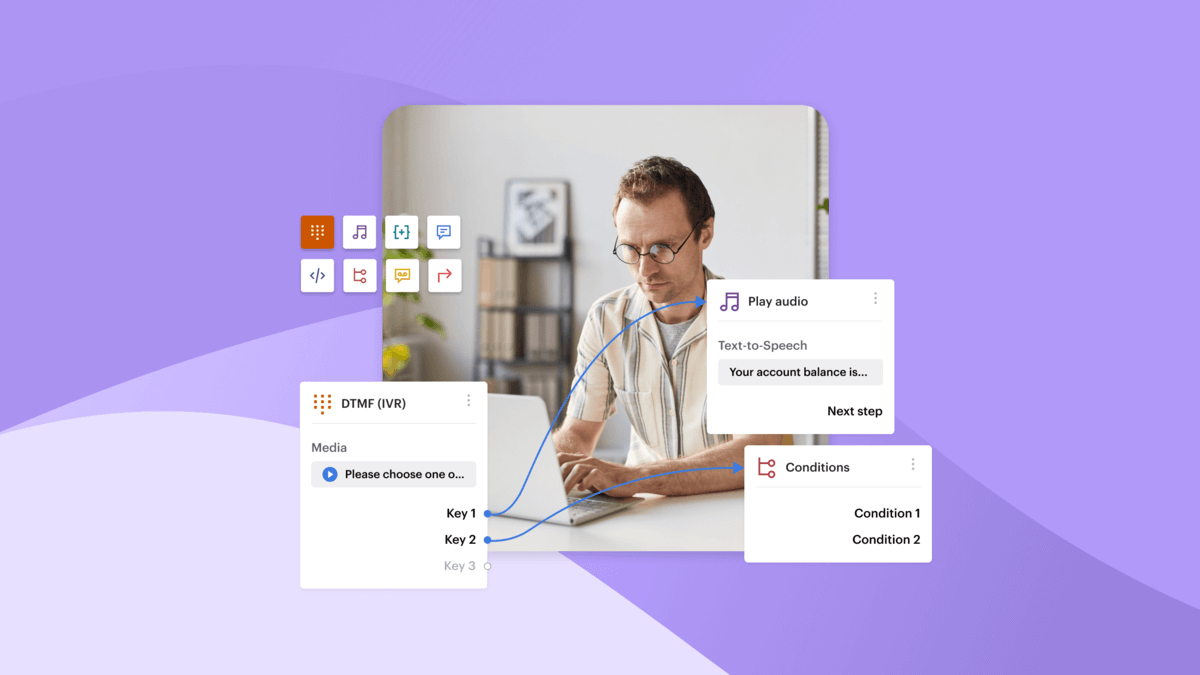
Predefined IVR paths can also help manage inbound volume during high-stress periods, directing callers to recorded updates rather than overwhelming front-office staff.
Schools that define escalation protocols in advance can respond more coherently when pressure rises.
Building a measurable service culture inside schools
Improving communication in schools starts with defining standards, measuring adherence, and reviewing real interactions.
Service culture becomes sustainable only when it’s operationalized.
Define response time benchmarks
Most schools expect staff to “respond promptly.” Few define what that means.
Clear benchmarks remove ambiguity. For example:
- 24-hour parent response standard for non-urgent enquiries
- Same-day callback KPI for missed calls during school hours
- First-contact resolution targets for routine administrative issues
These standards shift communication from discretionary effort to institutional expectation.
Measurement is equally important. Without visibility, standards degrade into intentions.
Call analytics and operational dashboards can provide:
- Average response time
- Missed call rates
- Callback completion tracking
- Resolution outcomes through wrap-up codes
This doesn’t require transforming schools into high-volume contact centers. It requires basic visibility into whether commitments are being met.
Train staff using real interaction data
Training in schools often relies on policy review or scenario discussion. While useful, it rarely reflects real communication patterns.
Reviewing actual interactions introduces clarity.
Call recordings allow leadership to assess:
- How concerns are acknowledged
- Whether tone remains calm under pressure
- How clearly policies are explained
Post-call insights such as transcripts, keyword grouping, and conversation scoring, can support structured review. These tools don’t replace human judgment, but they help supervisors identify patterns worth examining.
AI-generated call summaries, for example, can streamline post-call review workflows.
When staff review real calls:
- Conflict handling improves through specific feedback
- Tone management becomes observable rather than assumed
- Policy explanations become more consistent
Training shifts from abstract principles to evidence-based coaching.
Make service accountability transparent
Unstructured complaint handling creates uncertainty for both families and staff.
A measurable service culture requires defined workflows:
- Complaint tracking systems with documented timelines
- An escalation matrix outlining when issues move to senior leadership
- Follow-up confirmation processes once issues are resolved
Without these structures, parents often escalate simply to gain visibility.
Transparency reduces unnecessary escalation. When families understand who owns their issue and when they can expect follow-up, tension decreases.
Some schools also adopt a simple “you said, we did” reporting model: summarizing recurring concerns and outlining actions taken. This signals responsiveness at an institutional level.
When schools define response standards, review real interactions, and document issue resolution, service culture becomes measurable. And what’s measurable can be improved.
Communication infrastructure schools should implement
Defining service standards is necessary. Without infrastructure, they’re difficult to sustain.
The following systems don’t turn a school into a commercial contact center. But, they introduce structure where communication volume and complexity already exist.
Centralized call management for departments
In many schools, inbound calls flow through reception and are manually transferred. During peak periods, this creates delays and inconsistent handling.
Role-based call routing introduces structure. Calls can be directed to:
- Admissions during intake cycles
- Finance for billing and payment enquiries
- Academic support for attendance or scheduling matters
This reduces dependency on a single gatekeeper and shortens transfer chains.
During predictable peaks, such as enrolment deadlines or fee due dates, smart routing tools can prioritize certain queues or distribute volume across available staff. This is rule-based configuration, not automated decision-making. It ensures calls reach the appropriate team based on predefined logic.
Call recording, where appropriate and compliant with local regulations, also supports operational clarity. Recordings can be used for:
- Reviewing complaint handling
- Verifying what was communicated
- Supporting staff training
From an operational standpoint, structured routing and logging can provide two benefits:
- Fewer abandoned calls due to misdirection
- Clear accountability trails for who handled which enquiry
Omnichannel parent engagement
Communication expectations have expanded beyond voice. Research indicates that 83% of consumers prefer messaging as a communication channel. While schools operate differently from commercial brands, parents increasingly expect flexibility.
Practical channel coverage may include:
- Voice calls
- SMS notifications
- WhatsApp messaging (where regionally appropriate)
- Website webchat
- Email integration
Offering multiple channels isn’t sufficient on its own. The operational value comes from consolidating interaction history.
When calls, messages, and chats are logged within a shared system, staff can view prior contact before responding. This reduces repetition and conflicting information.
Seamless handovers between channels, for example, continuing a conversation via SMS after a missed call, should follow defined processes rather than ad hoc decisions.
A blended staffing model can also help balance workload. During quieter call periods, staff may handle messaging queues. During high inbound volume, focus can shift back to voice. This is workload management, not automation.
Self-service portals and IVR for routine enquiries
Not every enquiry requires live staff involvement.
Common routine requests include:
- Fee payment reminders
- Attendance verification
- Transcript requests
- Event confirmations
IVR systems allow schools to provide recorded information or route callers based on predefined menu options. This reduces repetitive handling while maintaining clarity.
For follow-up communication, SMS can be effective. Industry data shows SMS open rates as high as 98%, with most messages read within minutes. Used appropriately, SMS reminders can support attendance confirmations or payment notifications without increasing inbound volume.
The operational implication is cost containment. When routine enquiries are structured through IVR paths or automated notifications, staff capacity can be reserved for complex or sensitive matters.
Mobile-ready administration teams
School leadership and administrative staff are not always desk-bound.
Principals may be on school trips. Administrators may manage events off-site. Admissions staff may attend external fairs.
Mobile-enabled access to calling and communication systems allows staff to:
- Handle urgent calls remotely
- Monitor queues during peak periods
- Review interaction history outside the office
This doesn’t replace formal office infrastructure, but it extends access when necessary.
Cloud-based systems can include structured access controls and encrypted data storage. Certifications such as ISO 27001 and adherence to data protection frameworks like GDPR indicate defined information security processes. They don’t eliminate compliance responsibility, but they contribute to a controlled environment.
For schools, mobility is less about flexibility and more about continuity. When key decision-makers remain reachable through structured systems, rather than personal devices, accountability is preserved.
Handling sensitive conversations with professionalism and compliance
In schools, some conversations carry higher stakes. Complaints can escalate quickly. Fee disputes can become legal matters. Discussions may involve personal data, academic records, or financial information.
Professionalism in these moments is about maintaining structure, documentation, and controlled information handling.
Structured escalation protocol for complaints
Unstructured complaint handling creates risk.
When issues move informally between staff, without documentation or defined ownership, resolution becomes inconsistent. More importantly, there is no reliable record of what was acknowledged, promised, or resolved.
A structured escalation protocol reduces that ambiguity. A practical framework includes:
- Acknowledge: Confirm receipt of the complaint within a defined timeframe. Even if investigation takes longer, acknowledgement signals accountability.
- Document: Log the interaction clearly: including date, summary of concern, and any immediate commitments made. Documentation should be factual, not interpretive.
- Investigate: Assign ownership. Identify who is responsible for reviewing the issue and define a review timeline.
- Resolve: Provide a clear response outlining findings and next steps. Avoid vague assurances.
- Follow up: Confirm resolution and document closure. Where appropriate, provide written confirmation.
The legal value of documentation is significant. If disputes escalate, whether internally, to governing bodies, or externally, a structured interaction record demonstrates due process. It protects both the institution and staff members by showing that concerns were handled consistently and within defined timelines.
Protecting student data during communication
Schools operate within regulatory environments that require careful data handling.
In the United States, FERPA governs access to student education records. In the European Union, GDPR regulates the processing of personal data. If schools collect fee payments over the phone, PCI DSS standards apply to card information handling.
These frameworks differ in scope, but they share a common principle: sensitive information must be controlled, limited, and documented appropriately.
Operational safeguards may include:
- Role-based access controls to communication records
- Clear internal policies on who can access student data
- Defined data retention practices
- Secure storage of call recordings
When payments are taken by phone, additional precautions are required. Some communication platforms support pausing or masking call recordings while sensitive payment details are shared. This helps reduce unnecessary exposure of card data within recorded archives. Such features support compliance efforts but do not replace institutional responsibility for regulatory adherence.
Compliance is ongoing discipline.
Structured escalation protocols and controlled data handling ensure that sensitive conversations are not only handled calmly, but defensibly.
Measuring what actually improves school service performance
Many schools rely on anecdotal feedback to assess communication quality. While informal signals are useful, they rarely reveal structural patterns. Measurement introduces clarity, not to increase pressure, but to reduce uncertainty.
Below are practical metrics that reflect operational health when interpreted in context.
| Metric | What it reveals | Risk if ignored |
| Average response time | How efficiently enquiries are acknowledged and handled | Parent dissatisfaction and perceived inaccessibility |
| First-contact resolution | Staff preparedness and clarity of internal processes | Repeat calls and avoidable escalations |
| Call abandonment rate | Accessibility gaps during peak periods | Lost admissions and unresolved concerns |
| Sentiment trends (post-call analysis) | Emotional tone patterns across interactions | Reputation risk if negative patterns go unnoticed |
| Interaction volume by department | Workload distribution across teams | Staffing imbalance and burnout |
The value of these metrics lies in interpretation.
For example, a high call volume in finance during fee cycles may not indicate underperformance. It may indicate predictable seasonality that requires temporary capacity adjustment. Similarly, lower first-contact resolution rates may highlight unclear internal policies rather than staff capability.
Turning metrics into visibility
Operational dashboards support three types of visibility:
Live visibility: Supervisors can monitor active queues, missed calls, and current volume. This helps teams respond to spikes rather than discover them after the fact.
Historical reporting: Trend analysis across months reveals recurring bottlenecks: such as consistent admissions delays during intake season or repeated billing-related enquiries before deadlines.
SLA tracking: When response benchmarks are defined (e.g., 24-hour acknowledgement standards), dashboards can help assess adherence. If response times drift, leadership can investigate root causes early.
Importantly, analytics provide operational insight, not automatic solutions. Data doesn’t resolve complaints or shorten queues by itself. It highlights where structural adjustments may be required.
The role of AI in future-ready school communication
Used conservatively, AI can reduce administrative load, highlight patterns, and support review processes. It doesn’t replace educators, and it shouldn’t replace decision-making. It supports structured oversight.
AI-assisted call summaries for faster follow-up
Administrative teams spend significant time documenting conversations.
Post-call transcription and AI-generated summaries can reduce that burden. Instead of manually writing detailed notes after every call, staff can review an automatically generated summary and edit where necessary.
This saves time in two ways:
- Faster documentation after complex conversations
- Easier review for supervisors when investigating complaints or disputes
Transcripts also allow teams to search past conversations without replaying entire recordings. For schools managing high volumes of routine enquiries, this improves retrieval speed without changing how decisions are made.
Identifying patterns that may require attention
Schools often recognize issues only after they escalate.
When interaction data is aggregated and analyzed over time, patterns become more visible. For example:
- Repeated complaints about a specific process
- Frequent parent concerns tied to a particular policy
- Spikes in attendance-related calls within a specific term
Trend analysis can highlight areas that may warrant review.
In this sense, analytics can support early visibility. Post-call scoring trends can be reviewed over time. If certain keywords appear repeatedly in transcripts, policy clarification may be needed.
Automating routine updates without removing the human touch
Routine updates, such as fee reminders, attendance confirmations, or event notifications, can be scheduled through predefined workflows. SMS confirmations and recorded IVR messages can help limit repeat enquiries when used appropriately.
As mentioned, Industry data consistently shows high engagement rates for SMS, making it suitable for time-sensitive reminders. When used appropriately, automated notifications can reduce manual follow-up for routine updates.
The key distinction is intent.
Automation should handle predictable, repetitive communication. Humans should handle nuance, emotion, and complex decision-making.
A hybrid model; structured automation for routine updates, live staff for sensitive matters, allows schools to remain accessible without overwhelming administrative teams.
Looking to bring more to school communication?
Explore how Voiso can support structured communication for education teams.
FAQs
How can schools reduce response time to parent enquiries?
Reducing response time starts with visibility. Schools benefit from defining clear response benchmarks (for example, 24-hour acknowledgement standards) and routing enquiries to the appropriate department rather than relying on general inboxes.
Centralized call routing, shared interaction logs, and queue visibility can help leadership identify bottlenecks.
What communication systems improve student retention?
Retention is influenced by accumulated experience. Systems that improve visibility across departments, such as shared call logs, documented complaint workflows, and defined escalation paths, can reduce repetitive friction.
When parents don’t need to repeat concerns and receive clear follow-up, trust stabilizes. Communication consistency often matters as much as policy quality.
How should schools document and track complaints?
A structured escalation framework is recommended:
- Acknowledge receipt within a defined timeframe
- Document the issue factually
- Assign ownership for investigation
- Provide a clear resolution
- Confirm closure with follow-up
Interaction logging and recorded communication (where legally appropriate) create traceability. Documentation protects both families and the institution by demonstrating due process.
What technology helps schools manage admissions calls efficiently?
Role-based call routing ensures admissions enquiries reach the correct team directly. During peak seasons, predefined routing rules can distribute volume more evenly.
Call logging and CRM-linked activity tracking can help schools monitor response times and identify unanswered enquiries.
How can schools ensure GDPR or FERPA compliance in phone communication?
Compliance depends on institutional policy and regulatory understanding. Communication systems can support compliance by providing:
- Role-based access controls
- Secure storage of call records
- Clear documentation of interactions
- Optional recording controls when sensitive data is shared
However, no platform alone guarantees compliance. Schools remain responsible for aligning processes with applicable regulations such as FERPA (U.S.) or GDPR (EU).
What metrics should school administrators track to improve service quality?
Practical metrics include:
- Average response time
- First-contact resolution rate
- Call abandonment rate
- Interaction volume by department
These indicators provide operational visibility. They don’t replace leadership judgment but help identify structural friction before it escalates.