

That gap often forces teams into duct-taped workarounds: forwarding lines manually, relying on inbox assignments, or layering multiple tools on top of HubSpot. None of those scale. None of them offer the level of control that real-time, voice-first businesses need.
Smart call routing solves that. It connects your inbound voice channel directly to the logic in your CRM — so calls land with the right person, at the right time, without human intervention. Sales reps stop wasting time answering support calls. High-value leads stop bouncing between agents. And support tickets flagged as urgent are automatically escalated to the right team.
In this guide, we’ll walk through:
- What smart call routing actually means in a CRM like HubSpot
- The limitations of HubSpot’s native capabilities
- How Voiso makes intelligent, no-code call routing possible inside HubSpot
- Practical examples of smart routing flows you can build today
Let’s start with what smart call routing really is and why it matters.
What Is Smart Call Routing in a CRM Like HubSpot?
Before diving into how to build routing flows, it’s important to define what call routing actually means in the context of HubSpot, and why it’s not just another technical term.
Definition and purpose
Call routing refers to the logic that determines where an inbound call goes, automatically. It’s not about transferring calls after they’re answered. It’s about deciding — before the call even rings — who should pick it up and why.
In a CRM-integrated setup, smart call routing connects the voice channel to your contact records, ticket queues, or custom properties. This way, calls are assigned dynamically based on factors like customer status, language preferences, deal stage, or even the last agent contacted.
Smart routing lets you make human responses more intentional. The right person gets the right call, without relying on manual sorting or guesswork.
When does it matter?
Smart routing becomes critical when:
- Your team handles high inbound volumes and can’t afford to waste time on manual triage
- You’ve got multiple departments (sales, support, success) answering from the same number
- Agents operate in shifts or across different time zones
- You support regional markets, tiered service levels, or priority clients
In these scenarios, lack of routing logic leads to dropped calls, missed SLAs, or a poor customer experience — especially when the person on the other end has already tried to reach you before.
Without it, even the best teams end up answering the wrong calls at the wrong time. Smart routing fixes that by embedding decision-making into the call path itself, before an agent ever picks up.
What call routing features are built into HubSpot?
If you’re using HubSpot as your central CRM, it’s natural to expect it can manage call routing the same way it handles emails or tickets. But voice is different and HubSpot doesn’t offer the kind of real-time, logic-driven voice routing that growing teams rely on.
This section breaks down what HubSpot does offer natively, and where those capabilities fall short for teams that depend on voice as a primary channel.
Native limitations
HubSpot’s workflows are designed for marketing automation, not inbound voice logic. You can create detailed routing for emails, tasks, and tickets — but when it comes to phone calls, the platform stops short.
There’s no way to:
- Automatically assign calls by region, time zone, or business hours
- Route based on availability, custom properties, or agent skill
- Prioritize calls linked to urgent tickets or high-value deals
Even basics like after-hours routing or call overflow queues aren’t supported out of the box.
For teams with more than a few agents — or with SLAs to meet — those gaps create friction. Calls either go unanswered, get forwarded manually, or are routed based on whoever’s listed as a contact owner, regardless of context.
What you can do natively
HubSpot does offer a few tools that support manual or semi-automated routing workflows:
- You can assign contact or ticket ownership, which determines who’s notified or responsible for follow-up
- Workflow automation lets you route emails or SMS messages based on trigger criteria
- Shared inboxes and call forwarding settings offer limited control over where calls land — but without logic tied to CRM fields or real-time agent status
In short: you can organize your contacts and queue up follow-ups, but you can’t control the call experience itself. And for any team that’s voice-driven, that creates a disjointed handoff.
That’s where a tool like Voiso comes in. It’s designed to connect directly with HubSpot, while adding the routing logic that’s missing.
How Voiso enables smart call routing within HubSpot
HubSpot may be a CRM, but it wasn’t built with voice in mind. Voiso brings advanced, real-time call routing into the picture — without needing custom development or third-party patchwork. Calls follow logic. Agents only get calls that match their role. And everything stays synced with HubSpot.
Here’s how it works.
Route calls based on CRM data
Voiso connects directly to your HubSpot records. That means you can build routing logic using any CRM field — like lifecycle stage, region, deal size, or contact owner.
A few examples:
- Calls from leads can route straight to sales
- VIP clients tagged by deal value can skip the IVR and connect with senior reps
- Customers with specific geo or language tags can be matched to the right regional team
The result is fully automated routing that adapts to the context of the caller, using the data you already manage in HubSpot.
Route by availability and shift schedules
HubSpot doesn’t know if your agent is on a call. Voiso does.
With Voiso, call routing adapts in real time:
- Agents marked unavailable won’t receive calls
- After-hours calls can be rerouted to voicemail, on-call agents, or backup teams
- You can define shift-based routing rules for follow-the-sun support or regional coverage
There’s no need to manually toggle availability or forward calls. Voiso uses live agent status to keep routing accurate at every moment.
Prioritize calls based on case or ticket status
For support teams, routing based on urgency can make or break SLAs.
With Voiso, call logic can be tied to the status of tickets inside HubSpot:
- If a ticket is marked “Urgent,” the next call from that customer can jump the queue
- Escalations can be routed directly to specialists, bypassing Tier 1 entirely
- Dynamic IVR flows can shift based on whether the contact has open issues
This ensures high-priority cases are handled fast, without relying on manual checks or call notes.
Route through IVR with built-in logic
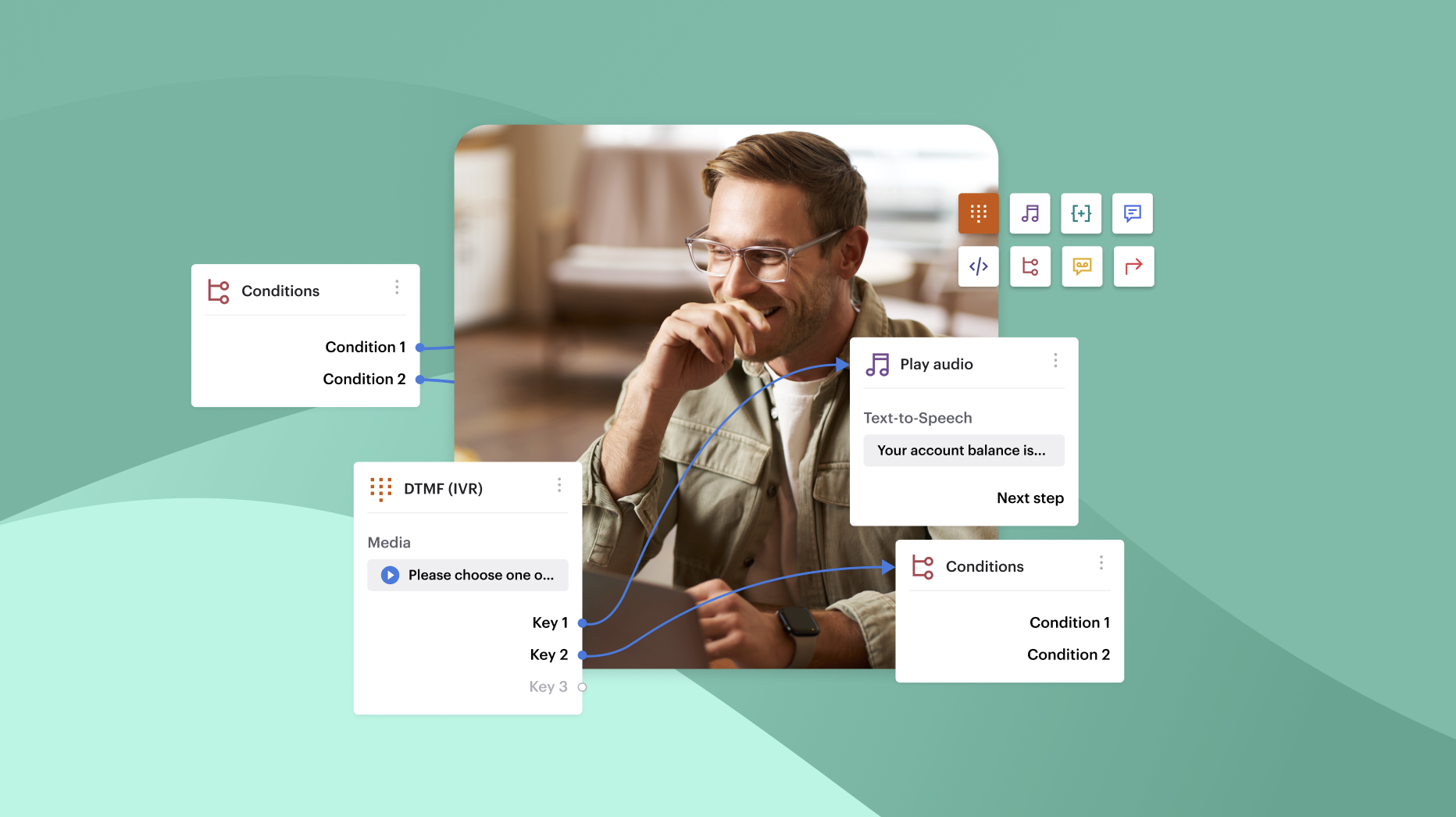
Voiso’s Flow Builder allows you to create multi-level IVR menus, no code required. More importantly, those menus aren’t static. You can tie each option to CRM logic.
For instance:
- “Press 2 for Billing” can check the contact’s account type and route them accordingly
- “Press 1 for Support” can send premium users to a dedicated support line
The routing logic doesn’t live in a spreadsheet or a dev backlog — it lives in the visual builder, where your team can update flows in seconds.
Voiso’s Flow Builder makes all of this accessible. The drag-and-drop interface lets non-technical users build and deploy complex call flows — without waiting for developers or breaking HubSpot workflows.
Example call routing workflows you can build with Voiso + HubSpot
Voiso offers flexible routing rules and gives you a way to map those rules directly to your business priorities inside HubSpot. Below are four practical routing workflows your team can launch without writing a line of code.
Routing by territory or time zone
If your sales or support teams are organized by geography, routing by territory is critical.
Example:
- A lead with a country code from Germany is automatically routed to the DACH sales team
- A caller in the Pacific time zone connects with the West Coast support queue
- Regional handoffs between teams are automated when business hours shift
This eliminates manual reassignment and ensures each caller speaks with someone local—or at least local to their time zone.
Routing by contact lifecycle stage
Lifecycle data in HubSpot helps prioritize who should handle which conversations. Voiso makes it actionable.
Example:
- Calls from contacts marked as “Leads” go to the sales queue
- “Customers” are routed to their assigned account manager
- If a client is tagged as “Churn Risk,” calls get routed to a retention specialist or success manager
By matching caller context to the right team, you reduce handoffs and speed up resolution time.
After-hours routing for Support
Support teams don’t always run 24/7, yet customers still call outside business hours. Voiso handles this gracefully.
Example:
- Weeknight or weekend calls are routed to a voicemail inbox or auto-responder
- Backup agents in different time zones are engaged for after-hours shifts
- Overflow queues can push calls to an external BPO or on-call technician if SLAs require it
You avoid dropped calls while protecting agent schedules and coverage.
VIP client routing based on deal size
Some clients simply can’t wait. With Voiso, you can treat them that way automatically.
Example:
- If the contact is linked to a deal over $50K, their calls skip IVR and go directly to senior staff
- VIP tags in HubSpot trigger a fast lane routing rule
- High-value opportunities can ring out to a dedicated white-glove team
This protects relationships while shortening sales cycles and improving close rates.
Setting it up: a step-by-step guide to smart call routing in HubSpot with Voiso
Setting up intelligent call routing doesn’t require custom code or a dev team. With Voiso’s native HubSpot integration and Flow Builder, you can go from zero to live routing in less than an hour.
Here’s how to do it step by step.
Step 1: connect Voiso to HubSpot
Voiso integrates directly with HubSpot through a native, no-code setup.
- Open your Voiso admin dashboard
- Navigate to Integrations → HubSpot
- Click Connect and authenticate with your HubSpot account
- Select which CRM data Voiso can access (e.g., contacts, deals, tickets)
Once connected, Voiso syncs contact and ticket data in real time. Calls are handled in Voiso’s browser-based softphone, and all history flows back into HubSpot automatically.
Step 2: define routing logic in Voiso Flow Builder
This is where smart routing comes to life. Voiso’s drag-and-drop Flow Builder lets you define exactly how each call is handled.
- Go to Flow Builder and create a new inbound flow
- Choose a routing trigger (e.g., contact owner, lifecycle stage, country, or deal value)
- Use Conditions to define logic, for example:
- If region = EMEA → route to Queue A
- If contact status = VIP → bypass IVR
- Add an IVR menu if needed (e.g., “Press 1 for Support”)
- Set fallback rules for after-hours, busy queues, or no match conditions
Step 3: test and go live
Before launching live traffic, test the setup to ensure calls follow the right paths.
- Create a few test contacts in HubSpot with varied properties (region, lifecycle, etc.)
- Dial in and track which agent or queue receives the call
- Review routing logs in Voiso’s Real-Time Dashboard
- Tweak conditions or fallback rules as needed
Once satisfied, publish the flow — and it’s live.
Benefits of smart call routing in HubSpot for sales and support teams
Smart routing handles calls more efficiently and reshapes how your team performs. Namely, by eliminating waste, speeding up responses, and making each interaction count. Here’s how that translates into measurable outcomes across your sales and support functions.
Faster response times and SLA adherence
Every second spent forwarding a call or scrambling to find the right person adds friction — and for teams with defined SLAs, that delay becomes a liability.
With Voiso’s routing tied to CRM data and real-time agent status, callers reach the right team the first time. No manual sorting. No bounce-backs. Just direct connections.
Higher customer satisfaction
The shortest path to a better experience is a faster handoff to someone who can help.
When calls route directly to the most relevant person — whether that’s a product specialist, account manager, or Tier 2 support agent — callers don’t have to repeat themselves or wait through long menus.
For returning customers, routing logic can remember their preferences and behavior, giving them the same quality of service every time.
Better team productivity
Smart routing is about speed and precision. Agents only take the calls they’re equipped to handle, which means:
- Fewer internal transfers
- Less context switching
- More time spent solving issues or closing deals
Supervisors also gain cleaner analytics. Because call distribution is rule-based, it’s easier to identify workload imbalances, missed SLAs, or underused capacity.
Tip: Use Voiso’s dashboard to track how routing decisions impact queue load and agent output over time.
Final thoughts: route calls smarter, close conversations faster
Most teams using HubSpot already know the power of a centralized CRM. But when voice calls are left out of the automation layer, response times slow down, agent workload increases, and customers are left hanging.
HubSpot doesn’t offer native voice routing — that’s the gap. Voiso closes it.
With Voiso, every inbound call becomes part of your CRM strategy:
- Logic-based routing flows are visual, flexible, and update-ready in minutes
- Call handling aligns with deal size, ticket urgency, or any CRM field you choose
- You stay inside your HubSpot ecosystem—no patchwork tools or hand-coded workflows
Whether your team is scaling fast, expanding into new markets, or trying to cut down support wait times, intelligent voice routing ensures the right conversations happen faster.
FAQs
Can I route calls in HubSpot without a third-party integration?
No. HubSpot doesn’t offer built-in logic for voice call routing. It supports workflows for emails and tickets, but routing calls requires a dedicated solution like Voiso.
Can I create time-based or geo-based routing rules?
Yes. Voiso supports time-of-day, time-zone, and region-based routing. You can also set up fallback options for after-hours coverage.
How does Voiso handle call overflow or unavailable agents?
Voiso monitors real-time agent availability. If no one is available, it automatically reroutes the call to a backup queue, on-call agent, or voicemail based on your flow settings.
Will Voiso call routing interfere with other HubSpot workflows?
No. Voiso’s integration complements HubSpot workflows. It uses CRM data to make routing decisions and pushes call activity back into HubSpot without disrupting existing automation.
How long does setup take?
Most teams can connect Voiso to HubSpot and build their first routing flow in under an hour. The setup is entirely no-code and browser-based.