All Products

.svg)






The skills needed for customer service in 2026 fall into three groups. First come the human abilities, such as active listening, empathy and emotional steadiness. Next are working skills like plain writing, diagnosis and fluency with contact center software. The third group is newer: compliance literacy and the ability to work alongside AI. Most published lists stop at the first group, yet for a contact center manager hiring across several countries, the second and third usually decide whether a new hire is productive within eight weeks or still escalating routine issues half a year later.
This guide is written for the people who recruit, coach and measure agents rather than for job seekers polishing a resume. Each section explains what a skill looks like during a live interaction, how a supervisor can observe it, and where expectations change by market, since a UAE outbound team, a UK lender and a US insurer do not ask quite the same things of whoever answers.
Key takeaways
- Empathy, listening and clear communication remain the foundation, but they only count when they show up in outcomes such as first contact resolution and fewer repeat contacts.
- Compliance literacy has become a frontline competency, because outbound disclosure rules in the US, the UK, the UAE and Australia differ, and agents are the ones who must say the right words.
- Agents increasingly pick up conversations that a chatbot or voice agent started, so absorbing context quickly now matters as much as a friendly greeting.
- Every skill on this list is measurable through scorecards, transcripts and automated call scoring, which turns “good with people” into something a coach can work on every week.
What Skills Are Needed for Customer Service Agents?
The core set covers listening actively, showing empathy, communicating clearly, solving problems, product knowledge with systems fluency, staying composed, managing time, compliance awareness and comfort working with AI tools. Official occupational data points the same way: the US Bureau of Labor Statistics (BLS) lists communication, interpersonal, listening, patience and problem-solving qualities for customer service representatives, an occupation that held roughly 2.7 million American jobs in 2025.
What the government profiles cannot tell a hiring manager is how those qualities surface in a queue, or which ones deserve priority in a particular operation. The table below pairs each skill with the behavior to look for and the evidence a quality team can check.
| Skill | What it looks like in practice | Where supervisors find evidence |
| Active listening | Restates the issue accurately before proposing a fix | Transcripts show paraphrasing and few clarifying loops |
| Empathy | Acknowledges the situation without scripted over-apology | Sentiment recovers during the conversation |
| Clear communication | Uses short, plain explanations and adapts register to the channel | Low repeat contact on the same topic |
| Problem-solving | Diagnoses the root cause and offers options | Share of issues fixed on first contact |
| Product and systems knowledge | Locates answers in CRM records or help articles without long holds | Hold time and transfer rate |
| Composure | Keeps tone steady with angry callers | Escalations and complaint outcomes |
| Time management | Paces conversations and finishes wrap-up notes promptly | After-call work time |
| Compliance literacy | Gives the disclosures required in the destination market | Script adherence checks |
| AI collaboration | Picks up bot handoffs without making people repeat themselves | Post-transfer CSAT and handoff transcripts |
Priorities vary by operation. An inbound customer support desk for a digital bank leans hardest on listening, diagnosis and vulnerability awareness, while an outbound iGaming or lending team needs disclosure discipline and resilience first. A BPO running several client programs, meanwhile, often values fast learning above everything else, because agents may switch between products within one roster.
Everything your team needs in one platform
Active Listening: The Skill Every Other Skill Depends On
Put simply, active listening is understanding the full problem, including anything the customer has not said outright, before responding. It sounds basic, and perhaps that is why it is so often assumed rather than tested.
How active listening sounds on a voice call
During voice calls, strong listeners let the caller finish, summarize the issue in their own words, and confirm the summary before acting. A useful habit is the “check back”: a single sentence such as “So the refund posted, but the balance still shows the old amount?” If the caller corrects the summary, the agent has saved several minutes of solving the wrong problem.
Weak listening leaves traces that are easy to find. Transcripts show agents asking for information the caller already gave, jumping to a scripted answer after the first keyword, or talking over the end of sentences. AI Speech Analytics can surface those patterns across thousands of recordings instead of the handful a coach has time to replay.
Listening in chat, SMS and messaging apps
Written channels demand a different kind of attention. Customers in chat tend to send fragments, often across several messages, and the real question may arrive last. Good digital agents read the whole thread before replying, notice emotional signals in punctuation or word choice, and resist firing back a canned response the moment a familiar phrase appears.
For multilingual teams, listening also covers cultural register. A direct request from a customer in Germany and an indirect, courteous one from a caller in the Gulf can carry the same urgency, and agents who miss that difference risk sounding either curt or evasive.
Empathy and Composure Under Pressure
Empathy in customer service is recognizing how a situation feels for the customer and responding in a way that lowers tension while still moving toward a resolution. Composure is its partner: staying steady when the other person is not.
Acknowledging feelings without over-apologizing
Scripted empathy (“I completely understand your frustration”) tends to irritate people when it is repeated three times in one call. More credible is specific acknowledgment tied to the facts: “You’ve been charged twice and it’s the week before rent is due; let’s get the duplicate reversed first.” That sentence names the impact, signals priority, and commits to an action.
Voiso’s article on emotional intelligence in customer service goes further into self-awareness and regulation, so this guide will not repeat that ground. The practical point for managers is that empathy should be scored on what agents do, not on whether they recited a phrase.
Recognizing customers in vulnerable circumstances
In some markets, empathy has a regulatory edge. The UK Financial Conduct Authority expects firms to make sure frontline staff have the skills and capability to recognize and respond to characteristics of vulnerability, and the same guidance cites its October 2020 Financial Lives survey, in which 53% of UK adults showed at least one such characteristic.
That figure is specific to the UK and to a pandemic-era survey, so it should not be read as a global rate. Still, the underlying skill travels well. Agents in lending, insurance or healthcare anywhere benefit from spotting signs such as confusion about basic terms, mentions of bereavement or illness, or a third party speaking on someone’s behalf, and from knowing the internal route for extra support.
Staying calm when a caller escalates
De-escalation is a learnable sequence rather than a personality trait: lower the pace of speech, avoid arguing about facts early, offer a concrete next step, and set boundaries politely if abuse continues. Voiso has a separate guide to de-escalation techniques for customer service with scripts for each stage.
Composure also protects the agent. The BLS notes that representatives may work under pressure to answer a set number of calls while being monitored, and that dealing with dissatisfied customers can be stressful. Teams that treat recovery breaks and supervisor support as part of the job, rather than as a reward, usually keep calmer agents for longer.
Clear Communication Across Channels and Languages
Communication is clear when the customer understands the answer, the follow-up action and the timeline on the first attempt. Anything that forces a second contact to decode the first one counts as a communication failure, however polite it sounded.
Plain language and signposting
Strong communicators avoid internal jargon (“your ticket is in L2 pending RCA”), break instructions into short steps, and tell customers what will happen next and when. Signposting helps on voice calls in particular: “I’m going to check two things, which will take about a minute, and then I’ll explain your options.”
Compare two replies to the same billing question. The first reads: “Your adjustment has been processed and will reflect next cycle.” The second says: “We’ve removed the extra charge, and your next bill, dated October 1, will show the corrected amount.” Both are accurate, but only the second tells the customer what they actually wanted to know.
Writing skill matters more than many hiring processes assume. An agent who speaks warmly but writes vague emails generates follow-up contacts, which quietly inflate cost. Test both during recruitment if the role covers more than one channel.
Serving multilingual queues
International operations add another layer. Language ability counts in its own right, but so does the discipline of using simple structures that non-native speakers can follow, confirming understanding without condescension, and recognizing the moment to transfer to a colleague who speaks the customer’s first language.
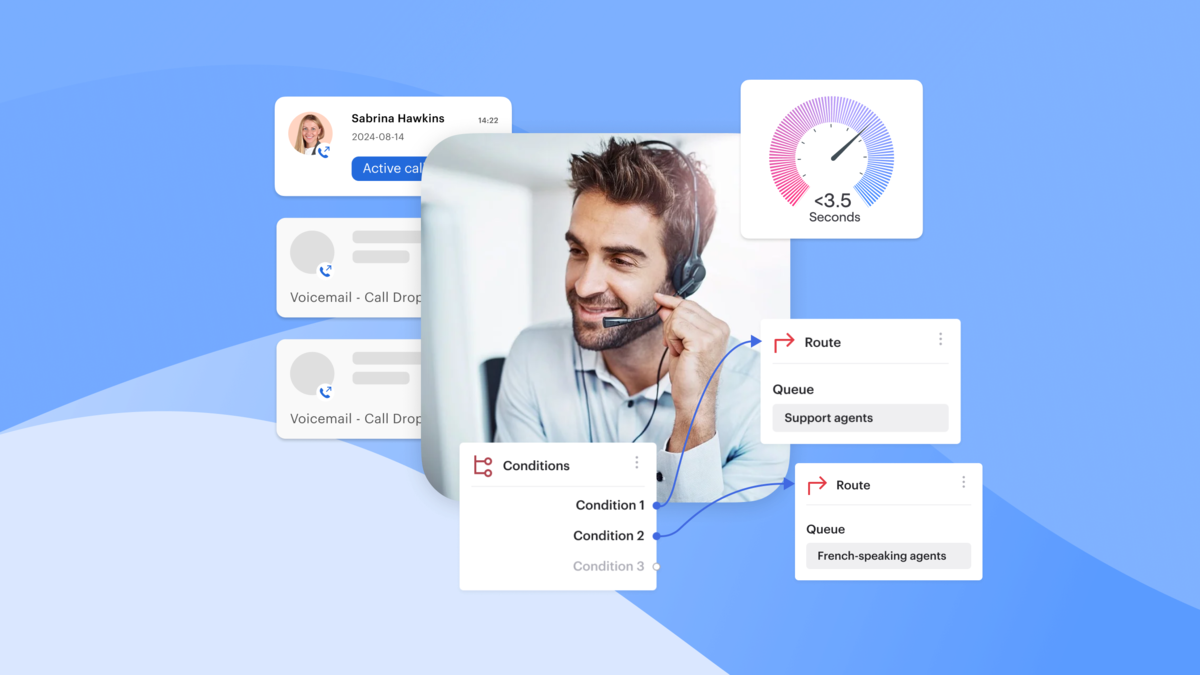
Technology can support that judgment. Skills-based call routing sends conversations to agents tagged for a given language or product, which means an agent’s recorded skills profile directly shapes the calls they receive. Keeping those tags accurate is a management responsibility that many teams neglect after the initial setup.
Problem-Solving, Ownership and Time Management
Inside a support queue, problem-solving means finding the cause of an issue, choosing a fix within policy, and confirming it worked. Ownership means the customer never has to chase. Time management keeps both possible when the queue is long.
Diagnosing before answering
Good problem-solvers ask a few targeted questions before offering a solution, test one hypothesis at a time, and explain their reasoning briefly so the customer can follow. When the first fix fails, they return to diagnosis instead of cycling through random suggestions.
The outcome worth tracking here is first call resolution, since it rewards agents who solve the real problem rather than the most visible symptom. Transfer rate and returning contacts within seven days are useful companion signals.
Knowing when to escalate, and pacing the work
Escalating well takes skill, and it is not a failure. Agents need to recognize quickly when an issue is outside their authority, hand it over with a clean summary, and tell the customer honestly what happens next. A warm transfer with context beats a blind one in nearly all cases.
Time management covers the minutes around the conversation as well. Agents who finish notes and dispositions promptly keep records accurate for the next colleague, while those who rush wrap-up to hit a handle-time target create hidden work later. Is a slightly longer call that ends the issue really worse than two short ones? For most support teams, no.
Distributed operations add a scheduling dimension. When agents in Manila, Limassol and Mexico City cover one global queue, punctual log-ins and tidy handovers between regions matter no less than speed on any individual call. A dedicated Voiso piece on time zone management for call centers looks at rostering in more detail.
Product Knowledge and Technical Fluency
Knowing the product means an agent can explain what the company sells, how it works and what policy allows, without placing the customer on hold for every second question. Technical skills in this context are less about coding and more about moving confidently through several tools at once.
Working the agent desktop and CRM
A typical support agent in 2026 may juggle a softphone, a CRM record, a knowledge base, a messaging inbox and a ticketing tool within a single interaction. Fluency here shows up as short holds, accurate notes and correct dispositions. It is teachable, although candidates who adapt quickly to unfamiliar software tend to reach proficiency faster.
Integration reduces the burden. When the contact center platform passes caller details and history into the systems agents already use, such as HubSpot, Salesforce, Zendesk or Freshdesk through Voiso’s integrations, less of the work depends on memorizing where information lives. The CRM or help desk remains the record; the communication layer simply puts the relevant file in front of the agent at the right moment.
Keeping knowledge current
Products, prices and policies change faster than onboarding decks. Teams that keep agents sharp usually run short weekly updates, maintain a searchable knowledge base with named owners, and review recordings where agents gave outdated answers. Regulated sectors carry an extra load: the BLS points out that US representatives working for banks and insurers must stay current with changing regulations, and some need state licensing.
Learning fast and adapting to change
Adaptability is the capacity to absorb new products, processes and tools without a long dip in quality. It matters most in BPO environments, where one agent may support two or three client brands, and in fast-moving sectors like fintech or iGaming, where promotions and verification steps change often.
Fast learners share a few habits. They take notes in plain shorthand during training, ask why a policy exists rather than only what it says, and replay their own recordings after a difficult interaction. Managers can test the trait during recruitment by handing candidates an unfamiliar product sheet, allowing ten minutes to read it, and then running a brief scenario based on its contents. How quickly does the candidate recover when that scenario introduces a question the sheet does not cover? The answer tends to predict performance in the role better than a polished reply to a rehearsed interview question.
Compliance Literacy: The Skill That Changes by Market
An agent’s compliance literacy is their working knowledge of what the law requires them to say, avoid and record in a given conversation. For outbound calling, the rules generally follow the location of the person being contacted, which means a team calling several countries needs agents who can switch disclosure habits by destination.
What outbound agents must say, market by market
The obligations below are a starting point for training design, not legal advice, and each should be checked with counsel before scripts go live.
| Market | Selected obligations that land on the agent | Source |
| United States | In outbound sales calls, promptly disclose the seller’s identity, that the purpose is to sell, and the nature of what is offered | FTC TSR |
| United Kingdom (financial services) | Spot vulnerable customers and adapt support, backed by staff training | FCA guidance FG21/1 |
| United Arab Emirates | Identify the company and purpose when the call opens, announce recording, ask whether the consumer wishes to continue, phone only between 9am and 6pm, and never call back after a refusal | Cabinet Resolution 56/2024 |
| Australia | Name the business early in the call and end it when the recipient asks | ACMA |
| European Union | Where an AI system talks directly with people, inform them they are interacting with AI | EU AI Act, Article 50 |
The US disclosures come from the FTC’s business guide to the Telemarketing Sales Rule. For UAE operations, Cabinet Resolution No. 56 of 2024 goes a step further than most regimes by requiring companies to train marketers in the ethics of their calls and in using the Do Not Call Registry, which turns agent skill into a written legal duty.
Australian callers face a similar expectation: the regulator has reminded businesses, including call centers, to identify themselves at the start of calls and to hang up on request. Australia’s official register website adds that the telemarketing industry standard applies even to callers exempt from the register, such as registered charities.
A reader running teams elsewhere can take a general lesson from the table: disclosure requirements tend to cluster around identity, purpose, recording and opt-out. Agents who master those four habits adapt far more easily when a new country is added to the dialing plan. Voiso’s overview of call center compliance covers the platform-side controls in more depth.
Recording, data and accessibility awareness
Inbound agents need compliance skills too, just different ones. They should know how to handle card details or health information when a call is being recorded, how to verify identity without collecting more data than necessary, and what to do when a customer asks for their information to be deleted. The applicable rules depend on whose personal data is involved, so a single global script rarely works.
Another emerging area concerns disability access. The European Accessibility Act has applied since June 28, 2025 to a defined set of products and services across the EU, and Ireland’s National Disability Authority notes that its standards work extends to support services such as help desks and call centers. Agents serving EU consumers in covered sectors benefit from knowing which accessible contact options their organization offers and how to explain them.
Working Alongside AI Agents and Automation
Working with AI means taking over conversations from automated systems gracefully, using AI outputs critically, and judging when to overrule them. It is quickly moving from a nice extra to a baseline expectation.
Taking over from chatbots and voice agents
Automation is already absorbing simpler contacts. In its US outlook for the occupation, the BLS expects self-service systems and mobile apps to take on more routine tasks, while companies keep in-house teams for complex inquiries such as refunds or insurance coverage questions. The conversations left for humans are therefore harder, more emotional and more likely to arrive mid-stream.
That changes what a good handoff looks like, since nobody enjoys explaining a problem to a machine and then hearing “can you describe the issue again?” A dependable routine can be taught in four steps:
- Scan the automated transcript and any collected details before greeting the person.
- Open by stating what has already been captured, so the caller feels heard rather than reset.
- Confirm the one or two facts most likely to be wrong, such as which account or order is involved.
- Note why the automation could not finish, which gives the bot owners something concrete to fix.
Disclosure expectations are rising alongside this. In the EU, Article 50 of the AI Act, applying from August 2, 2026, requires that people be informed when they interact directly with an AI system; operators in other regions may reasonably expect similar transparency rules, so agents should be comfortable explaining where automation ends and a human begins. For background on the technology itself, see Voiso’s explainer on what an AI voice agent is.
Using AI summaries and scores as coaching input
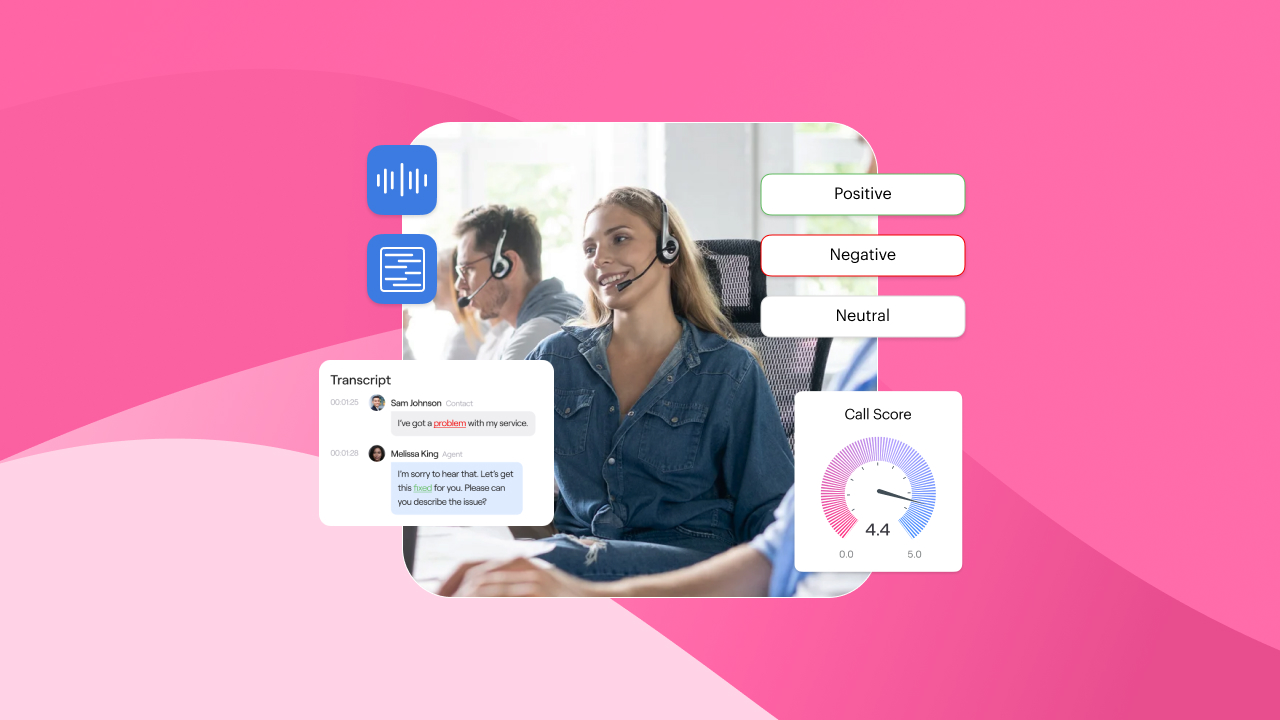
AI tools also change how skills are developed. Voiso’s speech analytics includes call transcription in 10 languages, AI call summaries, and AI call scoring that rates multi-language conversations on a 1 to 5 scale. Those scores help a team lead decide which recordings deserve a human review.
The skill agents need here is healthy skepticism. A summary can miss a promise made in the last thirty seconds, and a score can penalize an unusual but correct resolution. Agents who check AI notes before saving them, and who flag scoring errors, make the whole system more trustworthy.
How to Hire, Measure and Coach Customer Service Skills
Hiring for these skills succeeds when candidates demonstrate them rather than describe them, and development sticks when the same criteria appear in recruitment, QA scorecards and coaching sessions.
Screening candidates for the skills that matter
Role-play beats interview questions. A ten-minute simulated call with a frustrated customer reveals listening, composure and diagnostic ability far more reliably than asking someone to name their strengths. For digital roles, a short written exercise, such as replying to a muddled three-message chat, exposes writing clarity quickly.
Hiring managers should decide in advance which skills can be trained and which must arrive with the candidate. Systems fluency and product familiarity are usually trainable; patience and a genuine interest in solving problems are much harder to teach. Voiso’s piece on helping new agents perform in high-performing contact centers covers the first weeks after the offer is accepted.
Scoring skills in QA and coaching loops
A scorecard translates each skill into observable behaviors, weighted by what matters for the operation. Outbound teams might weight disclosure accuracy heavily, while support desks prioritize resolution and empathy. A walkthrough on building a call center agent performance scorecard includes templates.
Coaching then closes the loop. Short, frequent sessions built around two or three recordings tend to change behavior faster than a monthly review. Live support helps as well: agent monitoring tools let supervisors listen to calls, whisper guidance the customer cannot hear, or join when a conversation needs rescue. Perhaps the most useful habit of all is asking agents to score one of their own calls before the team lead does; the gap between the two scores often says more than either number.
Frequently Asked Questions
What are the top three communication skills for customer service phone calls?
The three that matter most on the phone are vocal tone, pacing and verbal confirmation. Because callers cannot see facial expressions, a warm but steady tone carries much of the reassurance that body language would provide in person. Pacing matters for comprehension, especially with international callers or people under stress. Verbal confirmation, such as briefly repeating account numbers or next steps back to the caller, prevents errors and shows attention. Many contact centers review these three elements together when scoring recorded calls during quality assurance.
Are customer service skills hard skills or soft skills?
Customer service combines both, and effective agents need each kind. Soft skills include empathy, patience, listening and composure, which shape how a conversation feels. Hard skills include typing speed, CRM navigation, product configuration, payment handling and knowledge of disclosure rules, which shape whether the work is done correctly. Hiring processes often overweight soft skills in interviews and then find gaps in systems fluency during onboarding. A balanced assessment uses role-play for interpersonal ability and a practical task inside a sandbox CRM.
How long does it take to train a customer service representative?
In the United States, customer service representatives usually receive short on-the-job training lasting two to four weeks, according to the Bureau of Labor Statistics. Banking and insurance roles can need several months, because agents must learn complicated regulations; some also require licensing by the state. Real proficiency usually takes longer than formal training, since handling unusual cases depends on exposure. UAE operators should also note that Cabinet Resolution No. 56 of 2024 obliges telemarketing companies to give marketers training on calling ethics and use of the national DNCR.
Will AI replace customer service agents?
AI is replacing some tasks, not the whole role. The US Bureau of Labor Statistics projects employment of customer service representatives to decline 5% from 2025 to 2035, yet it still expects about 289,500 openings each year across the decade, mostly to replace workers who leave the occupation. Self-service tools absorb routine requests, while human agents keep complex, emotional or high-value conversations. As a result, skills such as judgment, empathy, regulatory awareness and handling AI handoffs are becoming more valuable, not less, for the humans still on the team.
What customer service skills matter most for remote agents?
Remote agents need self-management and written communication on top of the usual frontline skills. Without a supervisor nearby, they must manage breaks, stay focused through quiet periods, and raise problems early rather than waiting to be noticed. Clear writing matters because much team contact happens through chat. Basic technical troubleshooting helps too, since a weak home connection or headset fault affects call quality directly. For distributed teams across time zones, reliability during agreed hours and careful handoffs to colleagues starting later are often what separate strong remote performers.
What skills does a customer service supervisor need?
A customer service supervisor needs every frontline skill plus coaching, workforce planning and data analysis abilities. Supervisors must give specific, fair feedback from recordings, spot patterns in dashboards, and adjust staffing when queues build during peak hours. Australia’s Jobs and Skills Australia occupation profile, for example, describes contact center roles that include coaching staff, listening to calls to give performance feedback, and developing rosters. Strong supervisors also protect team well-being, handle escalated complaints personally when needed, and translate operational data into clear priorities that agents can act on.
Build a Team With the Right Customer Service Skills
The skills needed for customer service have not been replaced in 2026; they have been stretched. Agents still need to listen, empathize and solve problems, but they now do it across more channels, more markets and more handoffs from automation, often with a regulator’s expectations in the background.
The platform behind those agents shapes how easily their behavior can be observed and developed. Voiso connects voice and digital channels in one workspace, routes conversations by skill and language, and turns recordings into transcripts, summaries and quality ratings that coaches can work from. To see how that works for your queues and markets, book a demo with the Voiso sales team. Teams that prefer to explore on their own can also start a free trial.