All Products

.svg)





Inbound calls are started by the customer, who reaches out to a business for help; outbound calls are started by the business, reaching out to customers or prospects. That single difference in who dials first shapes almost everything else: the goal of the call, the skills an agent needs, the technology behind it, and the rules an operator has to follow. Understanding both sides helps a team design the right setup rather than forcing one model to do two jobs.
This comparison lays out what each type is, how they differ in practice, which metrics and skills matter for each, and where compliance changes the picture by market. It also looks at whether one team can handle both, since many operations run a blend rather than a pure split.
Key points at a glance
- Inbound calls are customer-initiated and reactive; outbound calls are business-initiated and proactive.
- Inbound work leans on listening, patience, and problem-solving; outbound leans on persuasion and resilience.
- Outbound calling carries heavier legal duties, and those duties change from country to country.
- Many teams run a blended model, moving agents between inbound and outbound as demand shifts through the day.
What is the difference between inbound and outbound calls?
The core difference is direction: an inbound call comes into the business from a customer, while an outbound call goes out from the business to a customer or prospect. From that flows the purpose of each. Inbound calls usually solve a problem or answer a question; outbound calls usually pursue a goal the business set, such as a sale, a renewal, or a survey.
The distinction matters because it changes how you staff, measure, and equip a team. An inbound operation is judged on how fast and well it responds; an outbound operation is judged on how many quality conversations it starts and where they lead. Confusing the two, or measuring one with the other’s yardstick, is a common and expensive mistake.
What is an inbound call?
An inbound call is any call a customer or prospect places to a business, typically to get support, ask a question, or complete a purchase. The agent’s job is to respond well to a need the caller already has, which makes inbound work reactive by nature.
Common types of inbound calls
- Technical support and troubleshooting.
- Billing and account questions.
- Order placement and status checks.
- Inquiries from prospects weighing a purchase.
- Complaints and issue resolution.
Skills and technology for inbound
Inbound agents rely on listening, patience, product knowledge, and calm problem-solving. The technology behind them focuses on getting each caller to the right place fast: an IVR menu, skills-based routing, and queue management. Voiso supports this side with inbound call center software and an IVR built into the flow builder, so a caller reaches the right agent without a maze of menus.
Everything your team needs in one platform
What is an outbound call?
An outbound call is one the business initiates, dialing out to a customer or prospect to achieve a defined goal. Because the person on the other end did not ask to be called, outbound work is proactive, and it carries the extra weight of doing that respectfully and legally. The timing, the opening line, and the list itself all matter more than they do on inbound, since you are interrupting someone’s day and have a few seconds to earn the conversation. Get those right and outbound becomes a growth engine; get them wrong and it becomes noise the recipient blocks.
Common types of outbound calls
- Sales and cold calling to new prospects.
- Lead qualification and follow-up.
- Renewals, retention, and win-back campaigns.
- Appointment setting and reminders.
- Surveys and market research.
Skills and technology for outbound
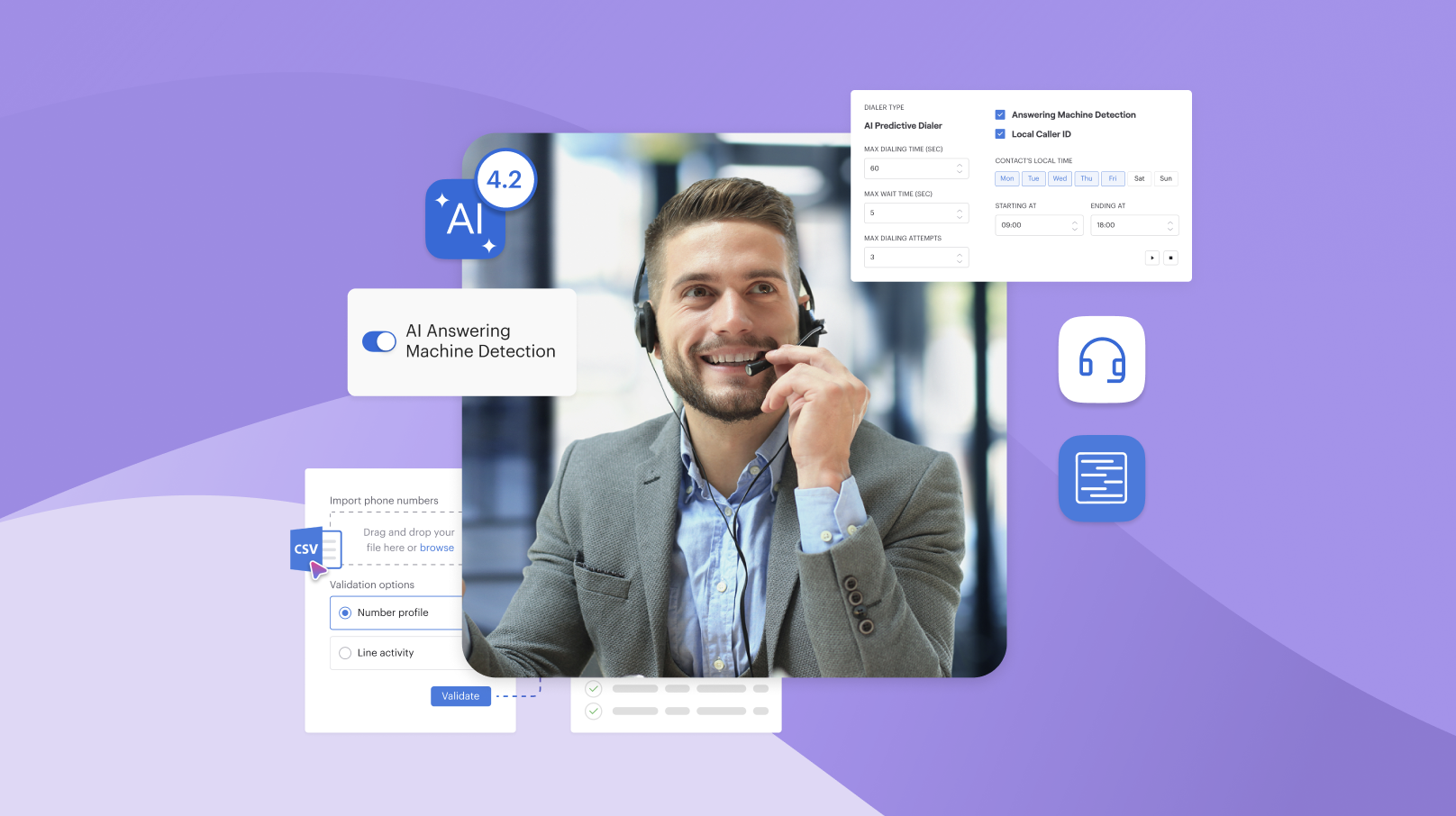
Outbound agents need persuasion, resilience in the face of rejection, and the discipline to work a list without sounding scripted. The technology emphasizes reaching more of the right people: an AI predictive dialer that paces calls to agent availability, local caller ID, and answering machine detection so agents talk to people rather than voicemail. Voiso’s guide to outbound calling best practices covers how to lift results without crossing a line.
Which is harder, inbound or outbound?
Neither is universally harder; they are difficult in different ways, and agents often prefer one over the other. Inbound can be intense because volume is unpredictable and some callers arrive already frustrated. Outbound is taxing because most calls end in rejection, and staying upbeat through that takes real resilience.
The honest answer is that the harder role depends on the person and the setup. A well-run inbound desk with good routing feels manageable; a poorly targeted outbound list feels punishing. What matters more than the label is matching people to the work that suits them and giving each the right tools.
The two roles also reward different temperaments. Some agents thrive on the variety and problem-solving of inbound, never knowing what the next call brings. Others prefer the rhythm and clear targets of outbound, where the goal is fixed and progress is easy to see. Neither preference is better; a manager who learns which agents suit which work tends to see higher morale and lower turnover than one who treats the two as interchangeable.
Metrics that matter for each
Inbound and outbound reward different measures, and mixing them up hides the real picture. Inbound cares about responsiveness and resolution; outbound cares about reach and results.
For inbound, watch service level, average speed of answer, first call resolution, and customer satisfaction. For outbound, watch contact rate, conversion, calls per agent, and answer rate. Voiso’s guide to inbound call center metrics goes deeper on the service side, while outbound teams lean on dialer analytics to see what is landing.
A subtle trap is importing one side’s targets to the other. Pushing an inbound desk purely on call volume can rush agents and hurt resolution, while judging an outbound team on average handle time can punish reps for having the longer, better conversations that actually close. Pick measures that reflect what each model is for, review them on a steady rhythm, and resist the urge to reward speed where quality is the point. The best operations keep a short, honest set of numbers per direction rather than one blended dashboard that flatters neither.
Compliance: outbound calling carries extra rules by market
Outbound calling is where regulation bites hardest, and the rules change from one country to the next, so a team dialing several markets follows several rulebooks at once. Inbound calls face lighter obligations, mostly around recording consent, while outbound adds consent to call and do-not-call screening.
United States: outbound telemarketing falls under the TCPA and the FTC Telemarketing Sales Rule, and callers must screen against the National Do Not Call Registry, with some states adding their own limits.
United Kingdom: live marketing calls are governed by PECR and the Telephone Preference Service, enforced by the ICO.
Australia: the Do Not Call Register and a telemarketing standard set who may be called and when.
United Arab Emirates: marketing calls must follow the TDRA registry and the 2024 telemarketing regulations, including defined calling hours.
The pattern rhymes across markets, but the register, the consent standard, and the permitted hours differ, so confirm each jurisdiction before a campaign goes live. Regulated industries also complete a country-by-country compliance step, and Voiso sets out its own posture on its Trust and Compliance Center.
Can one team do both? The blended model
Yes, many operations run a blended model, where agents handle inbound calls when volume is high and switch to outbound work when the queue quiets. This keeps people productive through the day and smooths the peaks and troughs that pure inbound or pure outbound teams struggle with.
Blending asks more of both the agents and the technology. Agents need the range to greet a frustrated customer and, an hour later, open a cold call warmly. The platform has to move people between modes without dropping the thread. Voiso explains the trade-offs in its overview of the blended contact center, which suits teams whose demand does not fit neatly into one lane.
Which type does your business need?
The right model follows what you are trying to achieve, and most businesses lean toward one before adding the other. A quick read of your goals usually points the way.
When inbound fits best
Choose an inbound-first setup when customers already come to you and the priority is helping them fast. Service-heavy businesses like clinics, repair services, utilities, and software support live here: demand arrives on its own, and success is measured by how quickly and well you respond. The investment goes into routing, self-service, and enough staff to keep waits short at peak.
When outbound fits best
Choose an outbound-first setup when growth depends on reaching people who have not called you. Sales-driven operations, lending, insurance, and research teams fit this mold: the business sets the goal and works a list toward it. The investment goes into a dialer, clean data, caller ID reputation, and the compliance controls that keep campaigns on the right side of the law.
When a blend makes sense
Many businesses need both, and the demand rarely arrives evenly. A team might field support in the morning rush and switch to renewals or follow-ups in the quieter afternoon. If your call volume swings through the day, or if the same customers need both service and proactive contact, a blended model keeps agents busy and the operation efficient without running two separate teams.
Examples of inbound and outbound calls
Inbound: a customer calls to reset a password, a shopper rings to check stock before buying, a policyholder phones to make a claim. Each starts with the customer and a need.
Outbound: a sales rep calls a lead who downloaded a guide, an account manager rings before a contract renews, a researcher surveys recent buyers. Each starts with the business and a goal. The same phone system can carry both, but the intent, the opening, and the rules behind them differ every time.
How AI is changing both inbound and outbound
Artificial intelligence is reshaping both directions, though it lands differently on each. On inbound, AI reads caller intent from natural speech and routes accordingly, answers routine questions without a queue, and transcribes and scores calls for quality review. That means shorter waits for simple requests and more agent attention for the hard ones.
On outbound, AI raises the odds a call reaches a live person. Answering machine detection screens out voicemail so agents spend time in conversations, and predictive pacing keeps them talking rather than waiting between attempts. AI can also flag which leads to prioritize, though the compliance limits on how and when you call still apply, whatever the technology promises.
The common thread is that AI absorbs the repetitive parts of each model, freeing agents for the judgment and rapport that people do best. It does not erase the inbound and outbound distinction; it sharpens each. A team that understands where its calls come from can point AI at the right bottleneck, rather than adding automation for its own sake.
How Voiso supports inbound and outbound calls
Voiso runs both inbound and outbound on one cloud platform, so a team is not stitching together separate tools for each direction. On the inbound side, IVR, skills-based routing, and queue management get callers to the right agent quickly. For outbound work, the outbound call center software pairs an AI predictive dialer with local caller ID and answering machine detection to lift connect rates.
Because both live in one place, a blended team can move between modes without friction, and managers see the whole operation in one set of reports. Voiso stays the communication layer throughout, passing call data to the CRM that owns the customer record rather than trying to replace it. The result is one system that fits whichever direction, or mix, your calls take.
Frequently asked questions
What is an example of an outbound call?
An outbound call is any call a business places to a customer or prospect, such as a sales rep phoning a lead who requested information, an account manager calling before a subscription renews, or a team ringing customers for a satisfaction survey. The defining feature is that the business initiates the contact to pursue a goal it set, rather than responding to a request. Outbound calls carry extra legal duties around consent and do-not-call screening that inbound calls generally do not.
What are the four types of calls?
Calls are commonly grouped as inbound, outbound, internal, and blended. Inbound calls come from customers to the business, outbound calls go from the business to customers, and internal calls happen between colleagues within an organization. Blended describes a setup where agents handle both inbound and outbound depending on demand. For customer-facing operations, the inbound and outbound distinction matters most, because it drives staffing, skills, technology, and the compliance rules that apply to each.
How many outbound calls should an agent make per day?
There is no single correct number, because it depends on the call type, the dialer, and the list quality. Manual dialing on complex sales calls might mean a few dozen conversations a day, while an AI predictive dialer can raise connected calls substantially by removing idle time between attempts. Rather than chasing a raw call count, strong outbound teams focus on quality contacts and conversion, and they respect the frequency limits that some markets place on how often a person may be called.
Are inbound or outbound calls better for my business?
Neither is better in general; the right choice depends on your goal. If customers need support and reach out to you, an inbound setup focused on fast, helpful resolution fits best. If you need to generate sales, renewals, or research, an outbound setup built around a dialer and good lists suits the task. Many businesses need both, and a blended model lets one team handle inbound demand and outbound goals from a single platform.
What skills do inbound and outbound agents need?
Inbound agents need strong listening, patience, product knowledge, and calm problem-solving, because callers arrive with a need and sometimes with frustration. Outbound agents need persuasion, resilience against frequent rejection, and the discipline to work a list while sounding natural. Some people are suited to one more than the other, which is why blended teams still benefit from matching agents to the work where they perform best, rather than assuming everyone handles both equally well.
Run inbound and outbound from one platform
Whether your calls come in, go out, or both, the goal is the same: reach the right person, follow the rules of their market, and give agents the tools to do the work well. Voiso brings inbound routing, outbound dialing, and blended workflows into one cloud platform, with analytics that read across the whole operation. To see how it fits your call mix and the countries you serve, book a demo with the Voiso team, or start a free trial and test it against your own campaigns.