

Getting those early days right is crucial because agents need to know what “good” looks like before bad habits take root.
This article covers how those teams structure the first 30 days to cut churn and get agents productive faster. It breaks down the feedback loops and performance signals that actually work, with a straightforward goal: set expectations early without drowning new agents or overloading QA.
The first 30 days: a phase most teams underestimate
Contact centers often underestimate how much the first 30 days actually matter. Here’s why:
Most failures are about setup, not hiring
When a new agent struggles early, the default explanation is usually a bad hire. But that’s rarely the whole story. More often, performance issues trace back to how the role was introduced and supported in those first weeks.
New agents are expected to juggle multiple systems, follow loosely defined workflows, and decode expectations that live in someone else’s head. Feedback shows up late, if it shows up at all. By the time a supervisor steps in, small mistakes have already hardened into patterns.
Operations leaders see this over and over. Teams with high turnover tend to share the same problems: nobody owns onboarding, tooling access is a mess, and coaching depends on manual QA reviews done weeks after calls happen. The hire wasn’t wrong. The environment was.
What happens in the first month sticks
The first 30 days create behavioral defaults. Agents learn how fast to talk, how closely to follow scripts, how much effort “good enough” actually takes. Those defaults tend to persist.
When expectations are vague, agents fill the gaps on their own. Sporadic coaching pushes them to optimize for speed over quality (or the reverse) rather than finding an appropriate balance. By month two or three, changing bad habits takes a lot more effort and managerial time.
High-performing contact centers treat the first month as a shaping period, not probation. Habits will form either way. The only question is whether they’re the right ones.
What high-performing contact centers do differently
Strong teams design the first month with intent. The structure mirrors real conditions, and feedback arrives while behavior is still easy to change.
Structured onboarding with real-world scenarios
The best contact centers move past passive shadowing fast. Instead of having new agents listen in and “pick things up,” they rehearse the job as it’s actually done.
That means walking agents through realistic call paths and the failure points they’ll actually hit. Frustrated callers, compliance-sensitive moments, queue transfers. Skills get tracked with simple checklists so gaps show up early.
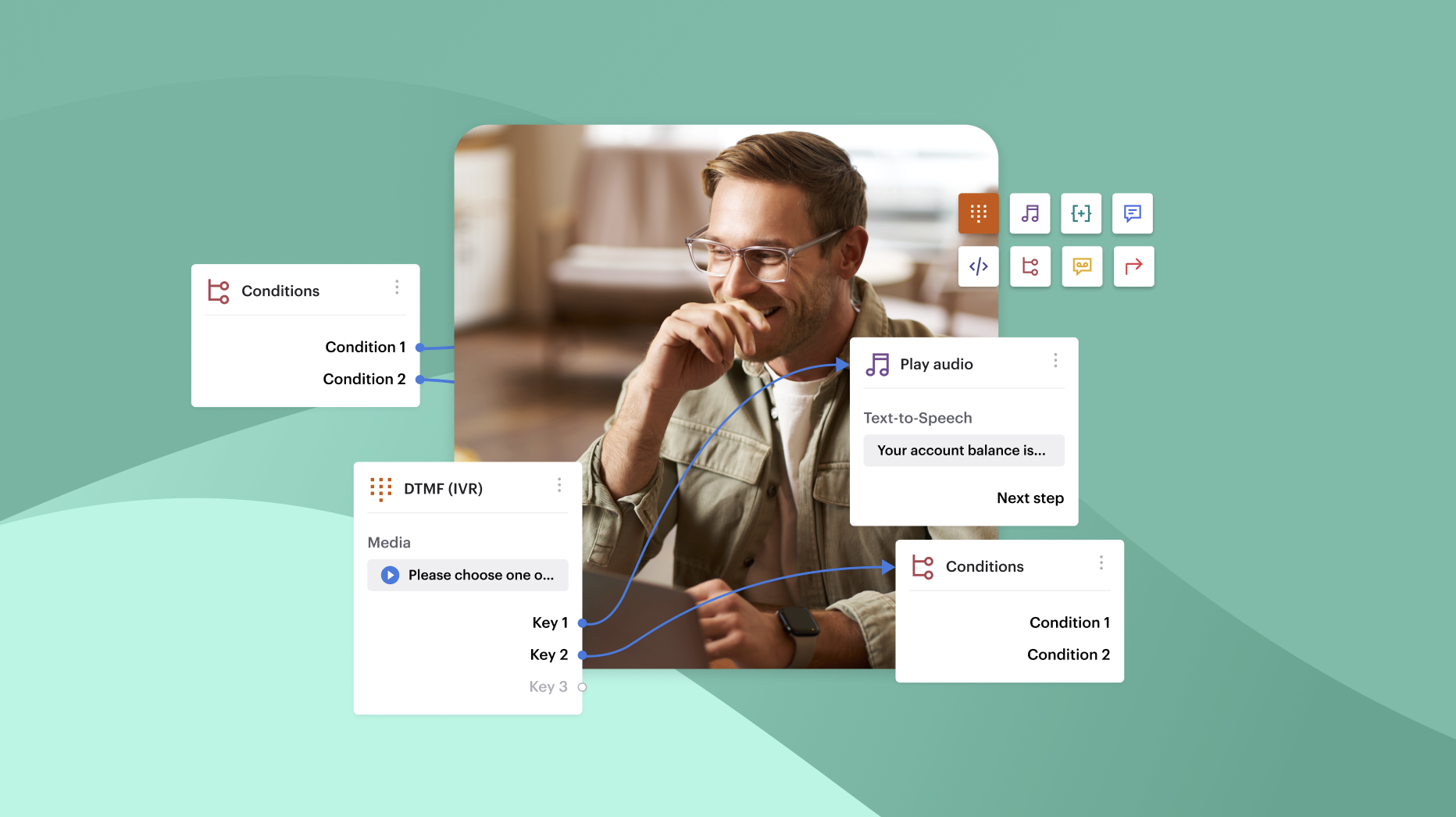
Some teams use call flow tools to map IVR paths or simulate routing logic before agents ever go live. It cuts down on surprises when real calls start rolling in.
Timely feedback, not end-of-week reviews
High-performing teams close the gap between action and feedback. Waiting until Friday to review calls means mistakes repeat unchecked all week.
Supervisors need to review call recordings, transcripts, and speech analytics data soon after interactions happen, while context is still fresh. Quality coaching zeroes in on specific behaviors like pace, clarity, and adherence, not broad scores.
The goal is to help agents adjust before patterns become sticky. Early course correction consistently cuts rework and QA escalations compared to delayed debriefs.
Visibility from day one
In most onboarding programs, performance data is something managers see and agents hear about later. High-performing teams flip that.
New agents get access to their own dashboards, KPIs, and call insights from day one. They can see their metrics, review their calls, and understand how performance is assessed. QA criteria are visible early, not surfaced weeks later through manual reviews.
Radical transparency changes behavior. When agents can see how they’re measured, self-correction starts sooner. Coaching conversations get more productive, too.
Tracking performance without overwhelming new agents
The best contact centers limit what they measure early so agents can actually focus on improving.
Focus on progress, not perfection
Don’t try to track everything from day one. Strong teams anchor early performance around a small set of signals that show whether an agent is learning and gaining control.
Common first-month indicators:
- Talk-to-listen ratio — are they talking too much, or not enough?
- Conversation quality over time — are escalation phrases going down, and are call outcomes getting better?
- First call resolution attempts — are agents trying to resolve issues on the call, even when they still need backup?
- Time to autonomy — how quickly can they handle calls solo, tracked by volume or call type?
These metrics show trajectory. When progress is visible, motivation holds up and coaching stays on track.
Share QA metrics early, and make them human
High-performing contact centers demystify QA from the start. Criteria get shared early, explained in plain language, and tied to real calls. Agents see what’s evaluated, why it matters, and how it plays out in their own work. That kills the fear and second-guessing.
Feedback sessions look different, too. Instead of spreadsheet reviews or abstract scores, managers pull up recordings, transcripts, and analytics in their one-on-ones. That keeps the conversation grounded in specific behaviors and decisions, not personal judgment.
The onboarding stack: tools that make 30 days count
Teams lose a lot of time bouncing between tools and systems. That’s one reason strong teams keep their stack small: fewer tools, tighter feedback loops, clearer expectations from day one.
Speech analytics for early coaching signals
Manual QA alone can’t scale in the first month. Reviewing enough calls to guide every new agent turns into a bottleneck fast.
More teams are using speech analytics to surface coaching signals without listening to every recording. Transcripts, flagged keywords, and call scoring help supervisors prioritize reviews and spot patterns that warrant attention.
Voiso’s AI Speech Analytics, for example, supports custom keywords and keyword highlighting in transcripts, which makes it easier to catch recurring issues.
When insights are available soon after calls end, feedback stays timely and grounded in evidence, without blowing up QA workload.
Live dashboards and KPI benchmarks
Early performance tracking only works if agents can see it themselves. Dashboards make abstract expectations concrete.
That’s why high-performing teams give new agents a limited set of KPIs from the start: talk time, wrap-up codes, queue handling, and basic outcome indicators that teams often use as internal quality proxies.
Voiso supports this approach with live dashboards and historical performance views. Supervisors can keep onboarding focused on a handful of KPIs rather than full operational complexity. Faster self-awareness, fewer corrective conversations later.
Templates, scripts, and guided call flows
Cognitive overload is one of the fastest ways to derail a new agent. Good teams reduce it wherever they can.
Pre-set SMS templates let agents follow up without improvising under pressure. IVR and call flows can improve routing accuracy and reduce avoidable transfers. Routing logic, queue structure, and predefined workflows support agents in the background without turning every conversation into a rigid script.
Your 30-day action plan
Don’t leave the first month to chance. The teams that do this well break it into clear phases, each with its own purpose. The structure keeps expectations realistic while making progress visible.
Week 1: Orientation and tool familiarity
The first week is about reducing uncertainty. New agents should understand how work moves through the contact center before anyone starts measuring performance.
Focus on queue logic, escalation paths, CRM context, and after-call work. Mock calls and controlled simulations let agents practice without pressure. The goal here is role clarity: know what to do, where to do it, and when to ask for help.
Week 2: Real conversations and safe feedback
In week two, agents move into live calls with guardrails. Call volumes stay light, and performance gets closely monitored.
Feedback loops tighten here. Supervisors review calls soon after they happen and focus on a small number of behaviors at a time. Coaching is specific and supportive, not punitive. This is where confidence starts to build, as long as mistakes are treated as data, not failure.
Week 3: Measurable autonomy
By week three, agents should be handling full calls on their own for defined scenarios, with clearer expectations in place.
Basic KPIs should be live on dashboards. Agents can see how they’re pacing, how calls are resolved, and where they stand against early benchmarks.
This is also where time-to-autonomy becomes clear. You can see who’s ready for more complexity and who needs more support.
Week 4: Shifting to ongoing development
The final week moves onboarding into continuous improvement. Schedule formal QA reviews and discuss early trends openly.
Agents should leave the first month knowing what “good” looks like, how they’ll be coached going forward, and what to work on next. Managers should leave with better data and fewer surprises.
At this point, onboarding stops being a one-time event and becomes part of how the team operates.
Strong starts beat quick fixes
Done well, onboarding gives you a system where agents grow in a predictable, repeatable way.
The first 30 days decide whether an agent builds confidence and solid habits, or spends the next six months unlearning workarounds. Without structure, managers react to problems instead of guiding progress. Late feedback lets small issues become performance gaps. Limited visibility means accountability never really takes hold.
The teams that get this right treat onboarding as an operating model, not a checklist. Clear workflows, early performance signals, and consistent coaching produce agents who are easier to support and more likely to stay.
Want to rethink your onboarding?