


When it comes to predicting customer loyalty, most businesses rely on metrics like Net Promoter Score (NPS) or Customer Satisfaction (CSAT). But there’s one metric that quietly outperforms them both, Customer Effort Score (CES). According to research by the CEB (now part of Gartner), 96% of customers who experience a high-effort service interaction become more disloyal, while only 9% of those who experience a low-effort interaction do the same. The numbers are staggering and they change the conversation around what really drives retention.
CSAT tells you how someone felt about a specific experience. NPS reveals how likely they are to recommend your brand. But CES digs deeper, it captures pain. It doesn’t ask how happy a customer is; it asks how hard it was to get what they needed. That makes it especially useful for identifying friction that might be invisible in satisfaction surveys but deadly to loyalty.
Trying to delight customers with over-the-top service sounds good in theory. But in practice, it’s expensive, inconsistent, and rarely delivers lasting impact. What customers actually remember and what gets them to return, is how easy you made their life. Reducing effort lowers churn, raises lifetime value, and does so at a fraction of the cost of “wowing” them.
In the sections that follow, we’ll break down why CES matters, how to measure it properly, and how to act on the results, including real ways Voiso helps reduce effort across every interaction.
Let’s start with what makes CES a more powerful loyalty driver than most CX teams realize.
Key Takeaways:
- CES Predicts Loyalty Better Than CSAT or NPS: 96% of high-effort experiences lead to disloyalty, while only 9% of low-effort ones do, making CES a stronger churn indicator than satisfaction or promoter scores.
- Ask the Right Question, in the Right Way: CES surveys should directly reflect task difficulty (e.g., “The company made it easy for me to resolve my issue”) and be timed within hours of the interaction to ensure accuracy.
- Use CES, CSAT, and NPS Together Strategically: Each metric serves a distinct purpose. CES captures effort, CSAT reflects momentary satisfaction, and NPS reveals brand loyalty — all best used at different points in the customer journey.
- Don’t Chase Benchmarks, Track Trends: A good CES score depends on context. Segment by interaction type or channel, and focus on improving score trajectories over time rather than hitting arbitrary targets.
- High CES Signals a Deeper Problem: Clunky IVRs, broken self-service, and poor agent context are the real friction points. Voiso tools like Flow Builder and AI Speech Analytics help pinpoint and fix the root causes.
- 5 Proven Ways to Lower CES with Voiso: Streamline call flows, boost self-service with omnichannel continuity, detect pain points using AI, enable mobile resolution, and give agents real-time context with CRM integrations.
- Trigger CES Surveys Where Friction Happens: Focus on escalated support, onboarding drop-offs, failed self-service attempts, and follow-ups, not on generic or low-effort interactions.
- Avoid These Common Pitfalls: Never rely on numbers alone, survey before resolution, over-send surveys, or ignore outcome data. CES must connect to business impact to be valuable.
- Operationalize CES Data with Voiso: Build playbooks for high-effort flows, assign coaching based on effort-linked calls, and A/B test improvements by channel to make real gains from survey insights.
- Voiso Helps You Act on CES, Not Just Track It: With intelligent routing, omnichannel context, and AI-driven insights, Voiso reduces friction at scale while lowering support costs.
Measuring CES Correctly: Don’t Just Copy-Paste a Survey Question
Asking the Right Question
Customer Effort Score surveys work because they’re simple. But simple doesn’t mean one-size-fits-all. To capture meaningful data, you need to ask a question that clearly connects to the customer’s experience, not just a generic form field dropped into a survey.
The standard CES format reads:
“The company made it easy for me to [complete my task].”
Respondents rate their agreement on a numeric or agreement scale. What matters most is that the question points directly to the effort involved in resolving their issue, not how friendly the agent was or how satisfied they felt.
Some Voiso users tailor this structure to fit specific scenarios. For instance:
- After a chatbot handover: “It was easy to switch from the bot to a live agent.”
- Post-call: “The support team made it easy for me to resolve my issue.”
- After outbound verification calls: “The process to confirm my identity was easy to follow.”
These small adjustments make the question feel more relevant, which increases response accuracy and completion rates. Avoid vague wording like “Was your issue resolved?” That’s not effort, that’s outcome. CES measures how hard customers had to work to get there.
Scale and Format Variations
You’ll often see CES questions paired with one of two formats:
- 1–5 or 1–7 numeric scales
- Likert-style “Strongly disagree” to “Strongly agree”
Which you choose depends on your audience.
For broad customer bases or international markets, agreement-based formats tend to perform better. “Strongly agree” is clearer than deciding if a “5” means easy or just okay. It also avoids confusion in cultures where middle-point responses are more common due to social norms.
Numeric scales can work well in fast-paced, transactional environments, especially when integrated into apps or support portals, but they risk misinterpretation without labels. If you go numeric, label the endpoints (e.g., 1 = Very Difficult, 7 = Very Easy) to remove ambiguity.
The Role of Timing
CES loses value the longer you wait to collect it. Customers forget details. Frustration fades (or grows) into something else. That’s why CES surveys should trigger automatically within hours of the interaction, not days later, buried in an email campaign.
Voiso users often rely on the Flow Builder to automate survey delivery at the precise moment it matters. For example:
- A support ticket closes → the system sends an SMS survey instantly.
- A call ends → Voiso logs the result and triggers a follow-up survey within minutes.
- An IVR workflow completes → a final prompt collects effort feedback before the call wraps.
Voiso’s integrations with platforms like Salesforce and Freshdesk make this even more seamless. Survey triggers can be linked to specific wrap-up codes or outcomes, ensuring you’re capturing CES at moments that actually reflect the customer’s experience, not after it’s been diluted by time or additional interactions.
Done right, CES gives you a near real-time look at where effort lives in your customer journey, but only if you ask the right question, in the right way, at the right time.
CES vs CSAT vs NPS: When to Use What
Most CX teams track at least one of the “big three” customer experience metrics: Customer Effort Score (CES), Customer Satisfaction (CSAT), and Net Promoter Score (NPS). But using them interchangeably misses their strengths and weakens your insight into customer behavior.
Each metric serves a different purpose. CES tells you how hard it was. CSAT tells you how it felt. NPS tells you how loyal they might be. No single metric gives a complete picture, but combined, they form a strategic framework that helps teams act with confidence.
Here’s how they compare:
| Metric | What It Measures | Best Use Case | Sample Question |
| CES | Ease of interaction | After service or support | “The company made it easy for me to resolve my issue.” |
| CSAT | Satisfaction with a touchpoint | After any transaction or interaction | “How satisfied were you with your experience?” |
| NPS | Brand loyalty and advocacy | Periodic brand health check | “How likely are you to recommend us to a friend or colleague?” |
How to Use All Three Without Redundancy
You don’t need to bombard customers with three surveys after every interaction. Instead, build a layered CX strategy:
- Use CES after service or support interactions to pinpoint friction and reduce churn risk.
- Use CSAT after critical operational touchpoints, like onboarding, delivery, or billing, to monitor satisfaction with specific parts of the journey.
- Use NPS quarterly or biannually to measure brand perception across your full customer base and identify long-term advocates.
Voiso users often automate this structure with the Flow Builder or CRM integrations. For example, a CES survey can be sent immediately after a call, while a CSAT or NPS survey is scheduled through a CRM milestone, ensuring each metric shows up at the right time, not all at once.
Each signal adds a different layer of context. CES alerts you to breakdowns. CSAT tells you whether the experience felt good. NPS reveals whether customers are likely to stay and promote. Together, they move from opinions to actionable insight.
Interpreting CES: Trends Matter More Than Benchmarks
Why “What’s a Good Score?” Is the Wrong Question
Chasing a universal CES benchmark is a mistake. There isn’t one. A “4.2” might be excellent in one context and a red flag in another. That’s because effort is always relative, to the task, the customer’s expectations, and the channel used.
Instead of comparing to some external standard, segment your CES data by:
- Interaction type (support ticket vs. IVR flow)
- Product line (basic vs. premium)
- Channel (phone, chat, WhatsApp, etc.)
For example, a CES of 4 on a simple password reset is concerning, but the same score after a 30-minute account verification call might reflect a well-managed process. Focus on where effort is out of alignment with the task, not how the number compares to an arbitrary benchmark.
Contextual Interpretation
Not all high CES scores point to failure. In fact, complex or regulated processes, such as financial onboarding or identity verification, often involve unavoidable steps. What matters is whether your tools and teams are making those steps as painless as possible.
Over time, look for trajectory, not just snapshots:
- Is CES improving quarter over quarter?
- Are high-effort touchpoints shrinking in volume?
- Do new workflows result in lower effort ratings?
Even small shifts in effort can compound into major gains in retention and operational efficiency, but only if you’re watching the trendline, not chasing a static number.
Turn Data into Decisions
Raw CES numbers mean little without connection to outcomes. Voiso’s AI analytics tools let you move beyond the score itself to understand what it actually impacts.
Start by correlating CES with:
- Churn: Are high-effort interactions followed by cancellations?
- Upsell conversion: Do customers who rate effort low ignore cross-sell offers?
- Support ticket volume: Are low-effort touchpoints reducing repeat contacts?
With Voiso, teams can segment effort data by agent, channel, or workflow, and drill down into specific pain points. Combine this with Speech Analytics and Call Detail Records to get a fuller picture, not just of what happened, but why.
Effort doesn’t exist in isolation. It affects behavior, spend, and sentiment. That’s why interpreting CES correctly means looking at patterns, not perfection.
High CES Is a Symptom. These Are the Root Causes
A high Customer Effort Score isn’t the problem, it’s the signal. When customers report difficulty, they’re pointing to something broken beneath the surface. The only way to fix CES is to understand where the friction lives.
Common Sources of Customer Friction
Start with the structure of your service flows. Customers aren’t frustrated by effort alone, they’re frustrated by wasted effort. And few things waste time like clunky IVRs and unclear instructions.
Here’s a real contrast from Voiso users:
- Before Voiso Flow Builder: A generic IVR tree with five options, multiple dead ends, no routing logic tied to customer data. Result? Long hold times, abandoned calls, high CES.
- After Flow Builder optimization: Menu options dynamically adjust based on caller history pulled from a CRM. High-priority clients get routed directly to their dedicated support tier. Time to resolution drops. Effort follows.
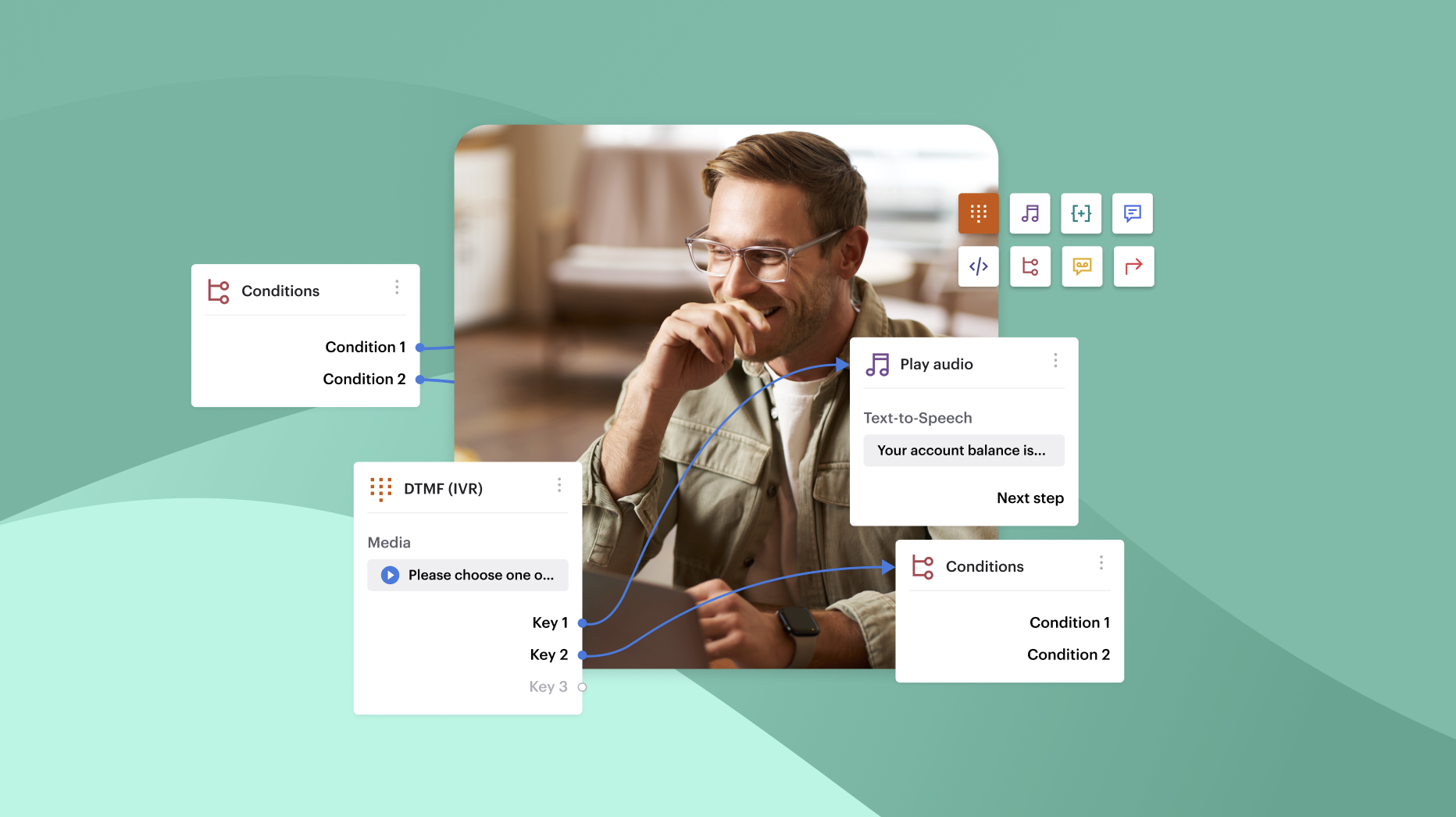
Voiso’s drag-and-drop interface makes it easy to visualize and fix bottlenecks. You don’t need to code. You just need to build flows that reflect what your customers actually want, not what’s easy to design.
Broken Self-Service Journeys
Most customers don’t mind helping themselves until the system gets in their way. Broken knowledge bases, dead-end bots, or channel-switching that wipes context can all drive CES through the roof.
The biggest gap? Chatbot-to-agent handovers. Customers explain their issue to a bot, only to repeat it all over again when transferred to a human.
Voiso’s omnichannel suite solves this by:
- Letting customers shift from webchat to WhatsApp or SMS without losing context
- Preserving full message histories and intent data across all platforms
- Equipping agents with the entire conversation thread, not just a ticket number
This continuity slashes repeat effort and makes customers feel understood, not just processed.
Agent Behavior
Even with perfect workflows and seamless handovers, the final experience comes down to people. And some of the biggest CES spikes come from:
- Repeated transfers or escalations
- Agents missing key context
- Unresolved issues on the first call
Voiso’s AI Speech Analytics helps teams find and fix those moments. Every call is automatically transcribed, scored, and tagged with key topics and sentiment markers. Managers can filter by low-CES interactions and drill into what went wrong.
Did the agent lack product knowledge? Did they interrupt too often? Was there confusion over next steps? Voiso doesn’t just measure effort, it maps it to specific actions, so coaching becomes data-driven.
High CES isn’t random. It’s a pattern with traceable roots. And when those roots are visible, they’re fixable.
5 Proven Strategies to Lower Customer Effort
Reducing customer effort doesn’t require guesswork, just the right playbook. With Voiso, every layer of the contact center stack can be tuned to reduce friction. Below are five proven strategies grounded in real tools your team can deploy today.
Streamline Workflows with Flow Builder
Every second a customer spends navigating your system is a second of added effort. Voiso’s Flow Builder eliminates the guesswork by dynamically routing calls based on CRM data and caller intent.
- Use CRM fields (like account type or open cases) to automatically route high-value customers to the right agent.
- Trigger different IVR paths based on the number dialed, language preferences, or recent history.
- Replace static menus with conditional logic to skip unnecessary prompts and reduce repeat queries.
The result? Fewer transfers, faster resolution, and dramatically lower CES.
Boost Self-Service with AI and Smart Messaging
Voiso’s omnichannel tools let customers engage on their terms and keep context intact across every touchpoint. That means less repeating, fewer dropped issues, and faster resolutions without speaking to an agent.
Examples in action:
- A customer starts in webchat, switches to WhatsApp mid-conversation, and receives an SMS follow-up with a help article, all without losing the thread.
- Agents can send templated SMS messages instantly, with links to personalized knowledge base content, reducing call durations and unnecessary callbacks.
When self-service journeys are smart and seamless, they reduce support volume and effort.
Use AI Analytics to Detect and Solve Friction
Effort hides in places data alone can’t show, but Voiso’s AI Speech Analytics brings those friction points to the surface.
- Automatically tag calls by topic and sentiment to find where frustration builds.
- Set alerts when CES drops below a certain threshold for specific agents or workflows.
- Track overlap in talk time or long silences to pinpoint inefficient interactions.
This isn’t passive monitoring, it’s actionable intelligence that teams can use to coach, adjust scripts, or redesign workflows.
Mobile Access for Real-Time Resolution
Some issues don’t need a full support team, just a fast response. With the Voiso Mobile App, agents can step in immediately from anywhere.
- Receive inbound alerts, respond to customers, and log notes without waiting to return to a desk.
- Mobile dashboards track agent availability and KPIs in real time.
- Integrated security (like multi-factor authentication and call encryption) ensures no tradeoff between speed and compliance.
Mobile access shortens resolution windows and shorter windows mean lower CES.
Empower Agents with Real Context
Even the best agents create effort when they lack visibility. That’s why Voiso’s integrations with Salesforce and Freshdesk are built to surface real-time context, not just caller ID.
- View full contact history, recent interactions, and intent markers directly in the agent panel.
- Skip redundant verification steps by pulling profile data instantly.
- Log every call, note, and resolution without switching between tabs.
The less your agents ask “Can you tell me that again?”, the more your CES goes down.
Lowering customer effort is about stacking small wins, faster routing, clearer context, smarter handovers. Voiso’s platform is built to make those wins repeatable.
CES Survey Triggers That Actually Yield Insight
Asking the right CES question is only half the equation, the real value comes from when you ask it. Timing determines whether you capture meaningful insight or just noise. A well-placed survey measures pain at the source, not in hindsight.
Here’s how to trigger CES surveys based on actual customer friction, not just arbitrary touchpoints.
After Support, Especially Escalated Cases
Routine support doesn’t always warrant a CES survey. But when an issue escalates, passes through multiple agents, or requires significant back-and-forth, that’s when effort peaks.
Use Voiso’s Flow Builder or CRM tags to identify these events:
- Escalation flags
- Long duration or high call transfer count
- Specific wrap-up codes (e.g., “technical issue”)
Trigger an SMS CES survey immediately after these cases. You’re not measuring the outcome, you’re measuring how hard the customer had to work to get there.
During Onboarding, Measuring Drop-Off or Time-to-Activation
Onboarding is where friction silently kills conversion. Instead of guessing why a customer didn’t activate, ask them directly.
Trigger CES surveys based on:
- Delay between signup and first action
- Abandoned onboarding flows
- Long activation cycles (e.g., delayed document submission, failed ID verification)
Voiso users often automate this with timed workflows: If activation doesn’t happen within 48 hours, the system sends a CES question asking, “Was it easy to get started?” The answers often reveal overlooked blockers.
After Self-Service Attempts, Especially Bot-to-Agent Handovers
Self-service should reduce effort. But when it fails, it often adds friction, especially if the customer ends up repeating themselves after switching to an agent.
Trigger CES surveys only after:
- Customers exit a chatbot flow and escalate to live support
- FAQ pages lead to “contact us” clicks
- IVR deflection attempts end in agent transfer
These points show where the system tried and failed to deliver ease. Measuring effort here highlights which parts of the journey need better logic, not better people.
Post-Call Follow-Ups via SMS (Using Voiso Templates)
Timing matters, but delivery matters too. Most customers won’t open an email sent two days later. But 90% of SMS messages are read within 3 minutes, making it the ideal CES delivery channel.
With Voiso’s templated SMS follow-ups:
- You can embed CES questions into existing outreach (e.g., “Was it easy to get what you needed today?”)
- Surveys reach the customer while the experience is still fresh
- All responses are logged directly in the system for analysis
Don’t survey every call. Survey the calls that matter, the ones where effort was likely. That’s how CES becomes more than a number, it becomes a signal for action.
Avoid These 4 Costly Mistakes with CES
1. Relying on Numeric CES Without Open-Text Follow-Ups
A single number doesn’t tell you why a customer struggled. And without that context, you’re stuck guessing at fixes. Always pair your CES question with an optional open-text field. The most valuable feedback often comes from just a few sentences, especially when effort spikes unexpectedly.
Voiso users can link text responses directly to call transcripts or agent interactions using analytics tools, helping teams validate subjective feedback with actual conversation data.
2. Surveying at the Wrong Touchpoints
Sending a CES survey before an issue is resolved is a surefire way to gather misleading data. Customers can’t accurately rate effort mid-stream, especially if they’re still waiting for a follow-up.
Instead, use Voiso’s Flow Builder or CRM integrations to delay surveys until after the final resolution event: ticket closure, call wrap-up, or task completion. CES should measure total journey effort, not partial steps.
3. Causing Survey Fatigue by Over-Sending
Blanket-sending CES surveys after every single call quickly trains customers to ignore them. Worse, it can skew data by over-representing frequent contacts and under-representing more complex interactions.
Set logic-based triggers using Voiso to limit surveys to meaningful moments, escalations, first-call resolutions, or onboarding journeys. That ensures fewer surveys, better data, and higher response quality.
4. Failing to Link CES to Real Business Outcomes
A CES score on its own is just a number. It becomes powerful when tied to KPIs that matter, retention, ticket deflection, upsell success, or agent performance.
With Voiso’s analytics, users can visualize CES alongside:
- Repeat call rates
- Churn likelihood
- CSAT and NPS trends
- Team-specific performance
If CES isn’t driving operational decisions, you’re not using it to its potential.
Closing the Loop: Turn CES Insights into Operational Gains
Collecting CES data is easy. Acting on it consistently, that’s where the impact happens. Turning CES into change means building workflows that respond, not just analyze.
Create Playbooks for High-Effort Issues
When CES drops in a specific interaction type, like payment troubleshooting or order tracking, codify the fix. Build playbooks that outline:
- How to greet and set expectations
- What questions to ask upfront
- When to escalate or hand off
These playbooks reduce agent variability and give customers a consistent low-effort experience.
Assign Coaching Based on Effort-Linked Calls
Voiso dashboards let you filter low-CES calls by agent, team, or topic. From there, supervisors can drill into transcripts, sentiment tags, and call scores to coach with precision.
Instead of general feedback like “be more helpful,” agents receive targeted guidance tied to moments where customers felt the pain. That’s the difference between generic training and real behavior change.
Segment CES by Channel and Test Improvements
Not all channels create the same experience. Segment CES data by voice, chat, WhatsApp, and email to identify which ones create friction.
Once identified, run A/B tests:
- Revise scripts or menu flows
- Shorten IVR paths
- Improve self-service links in messaging
Use Voiso’s analytics and Flow Builder to monitor changes in CES over time. The goal isn’t to find the perfect channel, it’s to make each one easier.
The real ROI of CES comes after the survey, in the processes, workflows, and behaviors you improve because of it. Voiso gives you the visibility to act.
How Voiso Helps Reduce Customer Effort
Reducing customer effort doesn’t require massive overhauls, it takes clarity, the right tools, and a platform built to respond in real time. Voiso helps contact centers cut friction at every layer of the customer journey.
With intelligent call routing, customers reach the right agent faster. Through unified channels, conversations stay consistent, whether they start on WhatsApp, continue via SMS, or end in a live call. And with AI-powered analytics, teams don’t just measure CES, they understand what’s driving it.
From first contact to final resolution, Voiso makes it easier for your customers to get what they came for and easier for your team to deliver it.
Book a demo to see how Voiso helps lower CES, reduce repeat interactions, and bring support costs under control without compromising experience.