

Call Answer Rate (CAR) determines how often conversations actually happen and it’s often far lower than expected. In cold outbound campaigns, average answer rates fall between 2% and 10%, according to data.
That means up to 98 out of every 100 calls never even reach a human. For sales and support teams, this gap is more than a performance issue, it’s lost revenue, wasted labor, and missed opportunities to retain or convert customers.
In inbound contact centers, low CAR typically points to staffing or routing issues that lead to high abandonment and poor CX. In outbound environments, it signals deeper problems with caller identity, timing, list quality, or the dialing system itself. Whether you’re running BPO operations or managing customer communications in fintech, ignoring this metric translates into higher costs and slower growth.
Improving CAR isn’t just about dialing smarter, it’s about understanding the real reasons behind unanswered calls and addressing them systematically. From number management and dialer configuration to contact list hygiene and call analytics, every small adjustment has a measurable impact.
Let’s start with what Call Answer Rate actually means and why it’s often misunderstood.
Key Takeaways: Call Answer Rate (CAR)
- CAR Reflects Real Contact: Call Answer Rate shows how often calls are answered, not just dialed and directly affects sales, support quality, and operational efficiency.
- Outbound Answer Rates Are Alarmingly Low: In cold campaigns, CAR can drop as low as 2–10%, meaning up to 98% of calls go unanswered, causing wasted resources and missed opportunities.
- CAR Is Not the Same as Connect Rate: CAR includes voicemail and IVR pickups; Connect Rate only counts live human answers. Know the difference to diagnose performance issues accurately.
- Voiso Optimizes CAR at Every Level: Tools like Answering Machine Detection (AMD), predictive dialers, branded caller ID, and Flow Builder help increase real conversations and reduce waste.
- Timing and Caller ID Are Critical: Call during high-response windows and use local or branded IDs. Bad timing or anonymous numbers are leading causes of ignored calls.
- List Hygiene Drives Results: Outdated or duplicate numbers crush CAR. Use CRM integrations and verification tools to keep contact lists accurate and dialer-ready.
- Omnichannel Boosts Reach: Redirect unresponsive contacts to SMS or email using Voiso’s omnichannel flow logic, especially for demographics less likely to answer voice calls.
- Smarter Dialing, Not More Dialing: Match dialing strategy to campaign type, manual, preview, power, or predictive, avoiding over-dialing and spam flags that harm answer rates.
- Measure What Matters: CAR is just one metric. Pair it with Connect Rate, Completion Rate, and Conversion Rate to understand actual performance and outcomes.
- Voiso Delivers Actionable Insights: Real-time dashboards, AI Speech Analytics, and number reputation tracking help teams understand why calls succeed, or fail and fix problems fast.
What Is the Call Answer Rate?
Call Answer Rate (CAR) measures the percentage of calls successfully answered by the recipient, whether inbound or outbound. It’s calculated across total attempted calls within a defined period and serves as one of the clearest indicators of contact center performance.
CAR applies to three types of environments:
- Inbound support: where agents respond to customer inquiries or issues.
- Outbound sales: where reps initiate calls to prospects or leads.
- Blended operations: such as BPOs or hybrid teams managing both incoming and outgoing calls.
For BPOs, CAR directly impacts SLA adherence and client retention. In fintech, it influences user trust during time-sensitive communications like fraud alerts or onboarding. Ecommerce teams rely on high CAR to quickly resolve delivery or support issues, where speed defines customer satisfaction.
Formula for Call Answer Rate
The CAR formula is straightforward:
CAR (%) = (Number of Answered Calls ÷ Total Call Attempts) × 100
Examples:
- Outbound: A sales team makes 800 calls in a day. 160 of those are answered.
CAR = (160 ÷ 800) × 100 = 20% - Inbound: A support center receives 500 calls. Agents manage to answer 450.
CAR = (450 ÷ 500) × 100 = 90%
Most modern CRMs and contact center platforms automatically calculate CAR in real-time through integrated dashboards. Voiso, for instance, breaks this data down by campaign, region, and agent, eliminating the guesswork and manual tracking that slows down decision-making.
CAR vs. Call Connect Rate
Though often used interchangeably, CAR and Call Connect Rate measure two distinct outcomes. Understanding the difference is essential for diagnosing low performance.
| Metric | What It Tracks | Outcome | Why It Matters |
| Call Answer Rate | Whether the call was picked up | Includes live answers, voicemails, and IVR pickups | Tracks overall availability of the contact |
| Call Connect Rate | Whether a human answered the call | Excludes voicemails and IVRs | Tracks actual conversation potential |
Voiso’s Answering Machine Detection (AMD) helps bridge the gap by identifying when calls hit voicemail or other automated systems. Combined with predictive dialers, it ensures reps are only connected to real people, improving both CAR visibility and connect quality.
Next, we’ll look at why these metrics matter and how even a small shift in CAR can influence revenue, customer experience, and staffing.
Why Call Answer Rate Matters
A strong Call Answer Rate doesn’t just reflect performance, it shapes how fast teams convert leads, resolve issues, and scale operations. Whether your team handles outbound sales, inbound support, or a hybrid of both, low answer rates create a ripple effect across revenue, service quality, and resource planning.
Revenue Impact in Outbound Sales
When agents spend hours dialing numbers that go unanswered, every stage of the sales cycle slows down. A drop from 20% to 10% in CAR cuts live conversations in half, slashing opportunities to qualify leads, move deals forward, or close revenue.
Over time, that compounds. Sales cycles stretch, conversion velocity drops, and acquisition costs climb. For outbound campaigns targeting high-volume markets, even small percentage changes in CAR directly impact ROI.
Voiso addresses this with Answering Machine Detection (AMD), which automatically filters out voicemail pickups, so agents only connect with real prospects. Pair that with local caller ID, and pickup rates climb significantly. Instead of appearing as a random or unknown number, the call shows a familiar area code, making prospects more likely to answer.
Service Levels in Inbound Centers
In inbound support, missed calls often mean missed trust. CAR directly influences CSAT and Net Promoter Score (NPS), especially when callers are left waiting too long or drop off without help.
When too many calls go unanswered, abandonment rates spike, leading to poor first impressions and lower loyalty. That’s especially risky for industries like fintech or healthcare, where urgency and trust matter most.
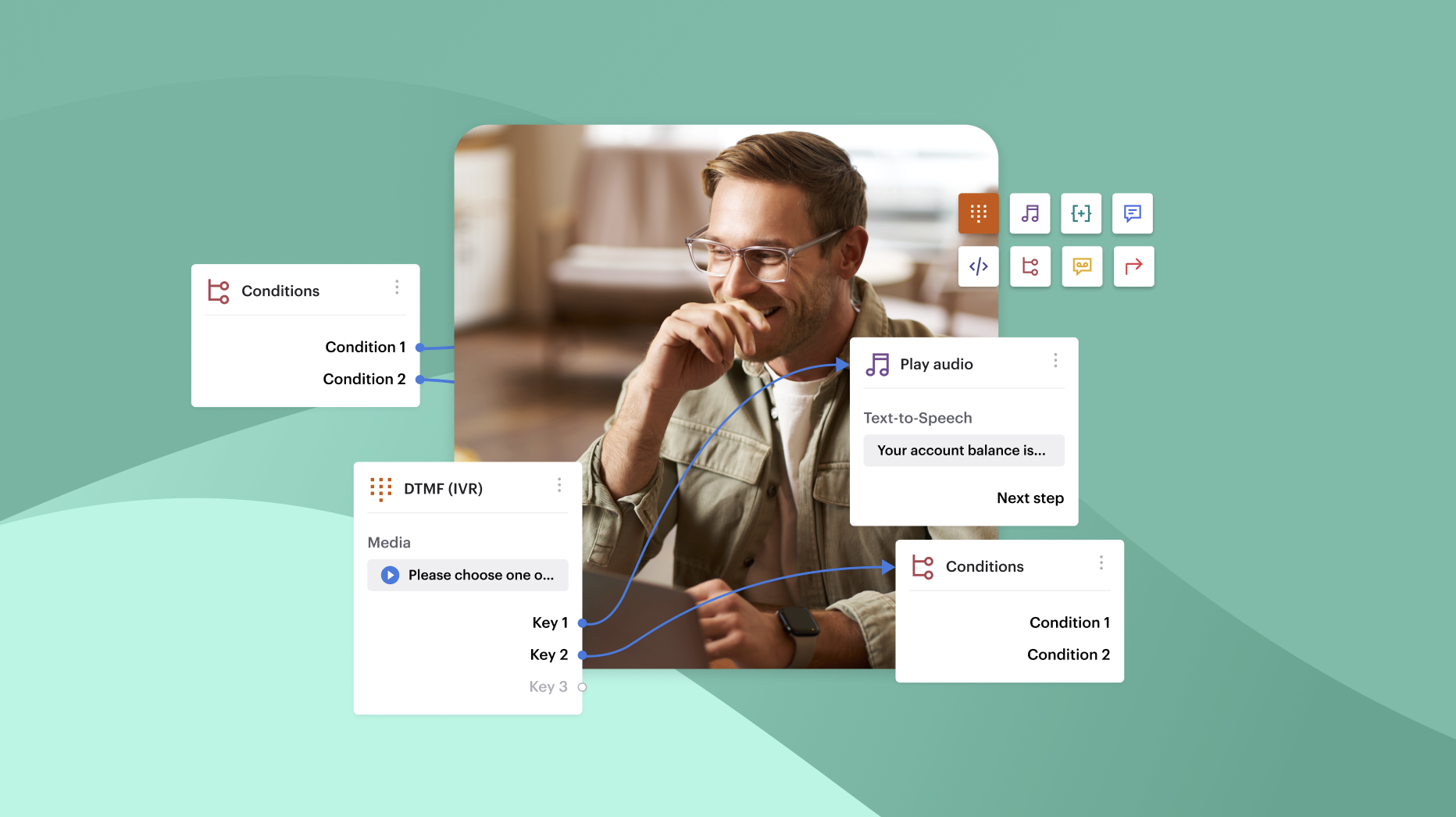
With Voiso’s Flow Builder, teams can design custom call routing and deflection flows, ensuring callers get answers faster, whether from a live agent, IVR, or a callback queue. Voiso also supports automatic callback scheduling, helping reduce queue times and improve response reliability without increasing headcount.
Operational Efficiency
Call Answer Rate is also a planning tool. Trends in CAR can reveal gaps in shift coverage, agent availability, or list quality, all of which directly affect daily output and long-term cost control.
Voiso’s mobile app extends the reach of hybrid and remote teams. Agents can take calls, receive alerts, and manage conversations from their phones, minimizing missed calls when they’re away from their desks. That flexibility translates into faster responses and better coverage without increasing overhead.
Key Factors Influencing Call Answer Rate
Answer rates don’t drop randomly, they’re shaped by how, when, and to whom calls are made. Four elements have the greatest influence: timing, caller ID setup, audience behavior, and dialing method. Each can raise or ruin performance depending on how they’re managed.
Call Timing & Time Zone Precision
Reaching someone at the wrong time guarantees one thing: silence.
For B2B outreach, mid-morning (10–11:30 a.m.) and early afternoon (2–4 p.m.) on weekdays tend to drive higher answer rates. For B2C campaigns, late afternoons and early evenings are more productive, especially between 4–7 p.m., when consumers are more likely to be available.
The challenge is maintaining time-zone accuracy across distributed lists. Voiso’s predictive dialer solves this by automatically adjusting call times based on the contact’s location. It segments by time zone and applies historical answer data to prioritize when leads are most responsive.
Caller ID Configuration
The number displayed on the recipient’s phone can make or break the first impression. When a call appears as “Unknown” or is flagged as potential spam, most people won’t pick up.
Using a local presence caller ID helps create familiarity. In fact, studies show calls from local area codes can increase answer rates by up to 20%. Going further, branded caller ID allows companies to display their name, adding legitimacy and removing doubt.
Voiso supports dynamic caller ID rotation and number registration features that reduce spam labeling. For teams concerned about trust and reachability, Voiso’s number reputation tools provide real-time monitoring across carriers, allowing fast remediation before deliverability drops.
Audience Behavior by Industry
Answer behavior changes dramatically by audience type and segmenting by use case is critical.
- B2B targets often screen unknown numbers or delegate them to voicemail. Gatekeepers, auto-attendants, and scheduling boundaries all lower pickup rates.
- B2C contacts, especially in retail, logistics, or healthcare, show stronger response rates but vary by demographic.
- Younger consumers prefer asynchronous or digital-first channels. They’re more likely to ignore unknown calls entirely.
- Older consumers may still rely on voice but expect legitimacy signals, like a known caller ID or follow-up SMS.
Voiso’s omnichannel flow logic can redirect unresponsive segments to alternative outreach methods (like text or email), giving each persona a path that matches how they prefer to engage.
Dialing Strategy
How calls are delivered matters just as much as when. Manual dialing may give agents full control, but it’s slow and inconsistent. On the other hand, aggressive dialers can trigger spam filters or frustrate prospects.
Here’s a visual breakdown of how different strategies impact CAR:
| Dialing Method | Description | CAR Impact | Best Used For |
| Manual | Agent dials manually | Low | Small, high-touch campaigns |
| Preview | Agent reviews contact before calling | Moderate | Complex sales or support calls |
| Power | System dials next number automatically | Moderate to High | Mid-volume outbound |
| Predictive | System dials multiple lines per agent | High (if managed well) | High-volume outbound |
Voiso’s AMD + Predictive Dialer combo filters out voicemail pickups and adjusts pacing based on real-time availability. That means agents only connect when there’s someone ready on the other side, not a beep, recording, or dead air.
Measuring & Interpreting CAR Effectively
Tracking Call Answer Rate only matters if the insights lead to action. The right measurement strategy can show where performance dips, when to adjust, and how to improve conversations across your contact center. Below, we break down how to measure CAR with precision and interpret what those numbers actually mean.
CRM & Analytics Dashboards
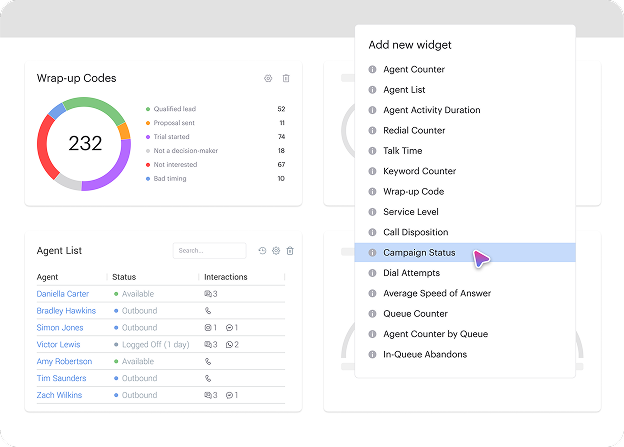
Call Answer Rate becomes useful when tied to real behaviors. Voiso’s call analytics dashboard connects CAR data with live agent activity, contact outcomes, and interaction quality. That means teams don’t just see how often calls get answered, they understand why.
For example:
- Agent-level filters help uncover top vs. low performers.
- Call outcomes (answered, abandoned, voicemail) track performance by campaign.
- AI Speech Analytics detects conversational trends, like poor intros or timing issues, which can explain answer dips on specific lists or time slots.
All data syncs into your CRM, making it easier to correlate CAR with conversion, sales velocity, or case resolution time. Whether running outbound sales or inbound support, the insights drive practical, measurable changes.
Trend Analysis
Answer rates never stay static. But sudden spikes or drops usually point to larger shifts and reading them right can prevent small issues from becoming serious problems.
- A drop in CAR might signal growing spam flagging, list fatigue, or poor time targeting.
- A sudden spike can be misleading, often driven by a small list, one high-performing agent, or a new local number.
Voiso’s Flow Builder helps isolate those changes. For example, if a new routing rule was deployed last week and CAR increased, the platform’s reporting can confirm the trigger point. It also allows teams to test routing logic across mobile vs. desktop, or inbound vs. outbound, to see where each adjustment has the most impact.
Smart Benchmarking
Too many teams rely on broad, generic benchmarks, like “a good CAR is 20%.” That doesn’t work. An ecommerce brand calling new customers at scale shouldn’t measure against the same yardstick as a fintech team reaching CFOs directly.
Smart benchmarking means:
- Comparing against your own historical data, segmented by use case, channel, or campaign.
- Segment-based benchmarking, where performance is tracked by audience type (e.g., cold leads vs. warm follow-ups).
- Use-case alignment, especially in specialized environments like BPOs or high-touch fintech campaigns.
For instance, a fintech team running a reactivation campaign to verified users might see a strong CAR above 35%. A cold acquisition campaign using purchased data might average closer to 8–12%. Context drives clarity.
Actionable Ways To Improve Call Answer Rate
Raising your Call Answer Rate isn’t about luck or brute-force dialing, it’s about consistent, intentional improvements across every stage of outreach. The five strategies below target the root causes of missed calls, from poor timing to untrustworthy numbers.
Smart Scheduling
Calls sent at the wrong time are dead on arrival. Voiso’s predictive dialer uses contact history, local time zones, and campaign-specific response patterns to auto-schedule outreach when people are most likely to pick up.
It doesn’t just automate timing, it learns from outcomes. Over time, the system prioritizes windows with historically higher answer probabilities, trimming unproductive hours and focusing attention where it counts.
Dynamic Caller ID Management
Calls from unfamiliar numbers get ignored. Calls flagged as spam don’t even get the chance.
Voiso counters this with:
- Local presence IDs, dynamically matching the area code of the recipient
- Branded caller ID, where carriers allow, to display your business name
- Rotating number pools, which limit the overuse of any single outbound number
Together, these steps protect caller trust and help maintain long-term deliverability. Voiso’s built-in number reputation tools also alert you when a line begins showing spam risk, allowing proactive fixes before it affects CAR.
Contact List Hygiene
Outdated, duplicated, or unverified contacts create noise and inflate your dialing volume. More calls to unreachable numbers equals fewer real conversations and lower CAR.
Basic cleanup isn’t enough. High-performing teams layer list hygiene into their entire call flow:
- CRM integration filters out duplicates and inactive numbers in real time
- Voiso’s Flow Builder uses segmentation logic to route validated lists through dialers
- Number verification steps ensure only real, reachable contacts make it to the queue
That means fewer wasted attempts and a sharper, more responsive call list.
Opening Line Optimization
Even when calls get answered, poor openings can sabotage the rest of the interaction. Voiso’s AI Speech Analytics scores agent intros based on clarity, tone, and engagement, flagging low-performing scripts and surfacing high-converting openers.
Supervisors can then coach agents based on real call examples. Combined with Voiso’s call summaries and recordings, it becomes easier to train teams on what actually works, not just what sounds good on paper.
Reduce Spam Labeling Risk
Spam flags don’t happen randomly. They follow patterns. Carriers look at volume per number, answer rates, and user behavior (e.g., call rejections, complaints). Voiso helps minimize risk with a few tactical layers:
- Register outbound numbers via STIR/SHAKEN protocols
- Use CNAM registration where supported to verify your brand name
- Rotate numbers across campaigns and keep volumes balanced
- Monitor caller reputation continuously with Voiso’s real-time number scorecards
These steps don’t just protect your current CAR, they keep your future campaigns from getting throttled.
Callback & Queue Alternatives
Inbound centers often lose calls not from poor service, but from queue fatigue. Long wait times and unclear routing lead callers to hang up before speaking to anyone.
Voiso’s answer: let them leave, but give them a way back.
- Callback requests allow customers to hold their place in line without staying on hold
- SMS follow-up flows notify them when an agent is ready, or offer resolution through text
Both features can be deployed through Voiso Flow Builder, tailoring fallback options to the contact’s original intent or urgency level.
Mistakes That Kill Answer Rates
Even with strong dialing systems and optimized workflows, a few common missteps can drag your Call Answer Rate down fast. Each one silently erodes pickup rates and often signals to carriers or customers that your calls aren’t worth answering. Here’s where many teams slip up:
- Over-dialing the same contact
Calling the same number repeatedly in short intervals triggers carrier-level spam filters. It also frustrates recipients, leading to call blocks and opt-outs. Smart dialers like Voiso’s limit retries based on outcomes and time gaps. - No local caller ID
National or toll-free numbers often get ignored, especially by mobile users. Without local presence, your call looks unfamiliar and likely untrustworthy. Always match area codes to the recipient when possible. - Poor number hygiene
Outdated or incorrect contact data bloats your call attempts and reduces answer probability. It also leads to more failed connections, which negatively impacts your dialing reputation over time. - No voicemail or SMS follow-up
When a call isn’t answered, many teams stop there. Skipping voicemail or SMS follow-ups wastes an opportunity to re-engage on the recipient’s terms, especially critical in inbound flows or missed callbacks. - Using the wrong dialer strategy
Power dialers on cold lists? Manual calls during a flash campaign? Mismatched dialing strategies lead to low connect rates and wasted effort. Choose the dialer mode that fits the campaign’s urgency, list type, and contact behavior.
Related KPIs To Monitor With Call Answer Rate
Call Answer Rate gives you one lens on performance, but relying on it alone can be misleading. To understand whether answered calls are actually meaningful, you need to track complementary metrics. Each one below reveals how contacts are handled after the initial pickup, helping you pinpoint gaps in your funnel.
| KPI | What It Measures | Relation to CAR | Ideal Range |
| Connect Rate | Percentage of calls reaching a human | Validates whether answered calls are real people | 20–30% |
| Completion Rate | Conversations that reach a defined end | Builds on CAR to show full interaction success | 85–95% |
| Abandonment Rate | Calls where the contact gave up waiting | Inversely tied to CAR, spikes indicate poor timing or staffing | Under 5% |
| Conversion Rate | Percentage of calls that achieve a goal | Tracks value from connected calls | Varies by campaign |
Interpreting These KPIs Across Use Cases
Context matters. A BPO managing high-volume customer service may weigh completion rate and abandonment rate more heavily, especially where SLA compliance or queue wait times affect NPS scores. In contrast, fintech outbound teams often care most about connect and conversion rates, where each interaction must justify its cost.
When tracked together, these KPIs give you a composite view of how your contact center performs, not just how many calls are answered, but whether they move the needle. In the final section, we’ll address the top questions teams ask when optimizing Call Answer Rate.
FAQs
The questions below come up frequently when teams start to focus on Call Answer Rate. Here’s what matters and what to do about it.
What’s considered a good Call Answer Rate in different environments?
It depends on the context. In cold outbound campaigns, answer rates below 10% are common, but with smart dialing and caller ID management, 15–20% is achievable. Inbound support centers usually see 60–90%, depending on queue wait times and availability. Blended teams should set separate CAR benchmarks by campaign type, then track progress over time.
How does spam labeling affect CAR, and how can it be prevented?
Spam labeling immediately drops answer rates, users either don’t see the call or ignore it. It also affects long-term deliverability. To prevent it:
- Rotate numbers to avoid overuse
- Register through STIR/SHAKEN and CNAM frameworks
- Monitor reputation with number scoring tools
Voiso’s caller ID management features handle all three.
Should we use multiple local presence numbers?
Yes, especially for outbound. Using a single number across regions increases the chance of spam flags. With local presence, calls appear more familiar and trustworthy. Voiso automatically matches area codes to contact locations and rotates numbers to reduce risk.
How often should we clean our call lists?
Weekly, at minimum. Lists decay fast. Inactive, incorrect, or duplicated entries drive down CAR and waste resources. CRM-integrated cleaning ensures lists stay accurate before each campaign starts. Voiso’s Flow Builder can also route contacts dynamically based on data quality.
What dialing system works best to improve CAR?
For warm lists or time-sensitive campaigns, predictive dialing performs best, especially when paired with Voiso’s Answering Machine Detection. For B2B outreach or high-value leads, preview or manual dialing gives agents more control. The key is matching the strategy to the list, not defaulting to one method for every use case.
Transform Your Call Answer Rate with Voiso
Call Answer Rate isn’t just a metric, it’s the entry point to every conversation that drives revenue, retention, and service quality. If you’re missing calls, you’re missing opportunities.
Voiso brings together everything you need to change that.
Voiso’s contact center platform combines AI-powered dialing, smart caller ID management, and real-time analytics to help you boost answer rates, reduce waste, and have more meaningful conversations, whether you’re running outbound sales campaigns, managing inbound support, or doing both.
Want to see what optimized CAR looks like in action?
Book a Demo and start turning missed calls into closed deals.