

Agents lose time jumping between systems. Reporting gaps multiply. IT ends up babysitting complexity instead of making real improvements. And leadership pays for overlap instead of progress. More licenses, more integrations, more friction per interaction, and more headaches.
This article covers how high-growth contact centers are simplifying their stacks in 2026, what a modern setup actually looks like, and how to make the transition without breaking what already works.
The hidden cost of complexity in contact centers
Contact centers are full of tech. That doesn’t mean they’re better equipped. Despite widespread frustration with tool overload, 79% of employees say their company hasn’t made any real effort to reduce tool fatigue or cut redundancies.
When more tools doesn’t mean more productivity
A typical contact center stack includes separate platforms for workforce management, auto-dialing, QA monitoring, CRM overlays, customer analytics, and messaging. Think about how much data gets lost when all of that is held together with duct-tape integrations and manual processes.
Agents feel it first. Every interaction turns into a maze of tabs, logins, and sync issues. It takes longer to find context, longer to finish wrap-ups, longer to move to the next call. A short delay might seem minor until you repeat it across hundreds of daily interactions.
The result: more switching, more clicking, more cognitive load. A Lokalise report found that over half of employees say constant toggling between tools, alerts, and overlapping systems disrupts their focus every week.
Supervisors have their own problems. Metrics live in different systems, timestamps don’t line up, and building a clear picture often means exporting CSV files into tools that were never built for contact center speed.
More tools don’t equal more productivity. They just create more places for the same problem to hide.
The real cost of tool sprawl is decision latency
Licensing costs get most of the attention, but the bigger problem shows up in day-to-day operations. Tool sprawl slows down decision-making.
Say a supervisor notices a sudden spike in call escalations. Call recordings are in one system. Agent performance metrics are in another. CRM notes are somewhere else. QA scores get updated once a week, not in real time. To figure out what’s actually going on, the supervisor has to jump between tools, export reports, and manually match up timelines. By the time the picture comes together, the moment to intervene has usually passed.
When data lives across disconnected systems, answering basic questions takes too long. What happened on the last call? Is this agent struggling, or is the process broken? Is this issue trending, or just noise?
Each answer requires switching tools, exporting reports, or reconciling conflicting metrics. Coaching, escalation, and optimization decisions get delayed, not because teams lack data, but because it’s scattered.
Over time, that delay compounds. The contact center becomes reactive instead of responsive, even when everyone is working hard.
Complexity means burnout and budget bloat
The more fragmented the stack, the more time teams spend learning systems instead of solving customer problems. Training takes longer, employees are stretched thin, and, inevitably, turnover rises.
The International Data Corporation estimates that inefficiency eats up 20% to 30% of company revenue every year. In contact centers, that number climbs fast when agents are stuck navigating disconnected tools and IT spends its days maintaining integrations instead of improving outcomes.
And, of course, the budget still matters. Every added tool means more licensing costs, more vendor contracts, more overhead to manage platforms that rarely work together. Operational cost per interaction goes up because the stack is built for complexity instead of clarity.
Why enterprise CCaaS tools are failing modern teams
For years, enterprise CCaaS platforms positioned themselves as the safe bet: the all-in-one solution with end-to-end functionality under a single roof. For high-growth teams in 2026, those promises are starting to crack.
The monolith problem
Legacy CCaaS systems were built on the idea that one platform could do everything: calling, routing, QA, analytics, CRM, messaging. In theory, that sounds simple. In practice, it’s anything but.
These systems come bundled with outdated workflows, rigid interfaces, and a long list of features most teams never use but still pay for. Customization becomes a project, not a preference. Even minor changes require vendor coordination, dev time, or both.
Implementation timelines can stretch into months. Switching vendors takes even longer. Once teams are locked in, getting out is expensive and disruptive. So they stay, even when the stack no longer fits how the business operates.
Slow to adapt, hard to scale
High-growth teams need to move fast: entering a new region, onboarding a remote team and spinning up a new channel require a level of agility monolithic platforms simply weren’t designed for.
Teams using legacy systems are often stuck waiting on promised roadmap items that slip or arrive later than expected. Others have had to manage remote agents without built-in mobile tools, or rely on third-party APIs just to offer WhatsApp support. Even something as basic as adapting QA workflows to AI has often meant workarounds, not real solutions.
How high-growth teams are rethinking the stack
Instead of trying to squeeze more out of legacy platforms, high-growth teams are redesigning their contact center stack from the ground up. With smarter architecture, you can get by on fewer tools. Teams can adapt faster, improve agent experience, and get much-needed visibility into their operations without the usual reporting chaos.
Modular platforms over monoliths
Modular contact center architecture breaks away from the one-size-fits-all model. Instead of a single vendor trying to do everything, teams build their stack using interoperable components that can be swapped, upgraded, or extended without starting from scratch.
It’s a plug-and-play model. Connect a new dialer, layer in AI QA, or swap out your CRM integration without derailing the rest of the system. This cuts time-to-value. Teams can experiment and evolve their tools without waiting on vendor timelines or major IT projects.
Because modular stacks are built around open APIs and standard connectors, vendor lock-in becomes less of a risk. Teams get more control over both their roadmap and their budget.
Building around agent productivity
The real performance gains come from better-designed workflows. High-growth teams are prioritizing tools that reduce friction for agents.
That starts with smart dialers that handle logic, pacing, and local caller ID without manual input. Then there’s the agent interface: a single view that unifies calls, messages, customer history, and wrap-up tasks. No more tab-hopping or missed context.
On the backend, AI-powered QA tools can help teams score and summarize calls at scale, while real-time dashboards give agents and supervisors live performance insights.
This shift toward agent-centric design is paying off. Teams see better conversion rates, faster onboarding, higher retention. Not because they added tools, but because they removed the noise.
What a simplified tech stack looks like in 2026
The smartest teams in 2026 are building lean, modular stacks that favor speed over sprawl and clarity over complexity.
Core components of a modern contact center stack
A streamlined contact center in 2026 typically includes:
- A modular cloud dialer that supports outbound, inbound, and blended calling with advanced logic built in
- Native CRM integration so agents see the full customer story without switching tabs
- AI-driven QA and speech analytics that score every call, flag risky moments, and surface coaching opportunities automatically
- Omnichannel messaging across WhatsApp, SMS, Facebook, and webchat with history and context unified in one workspace
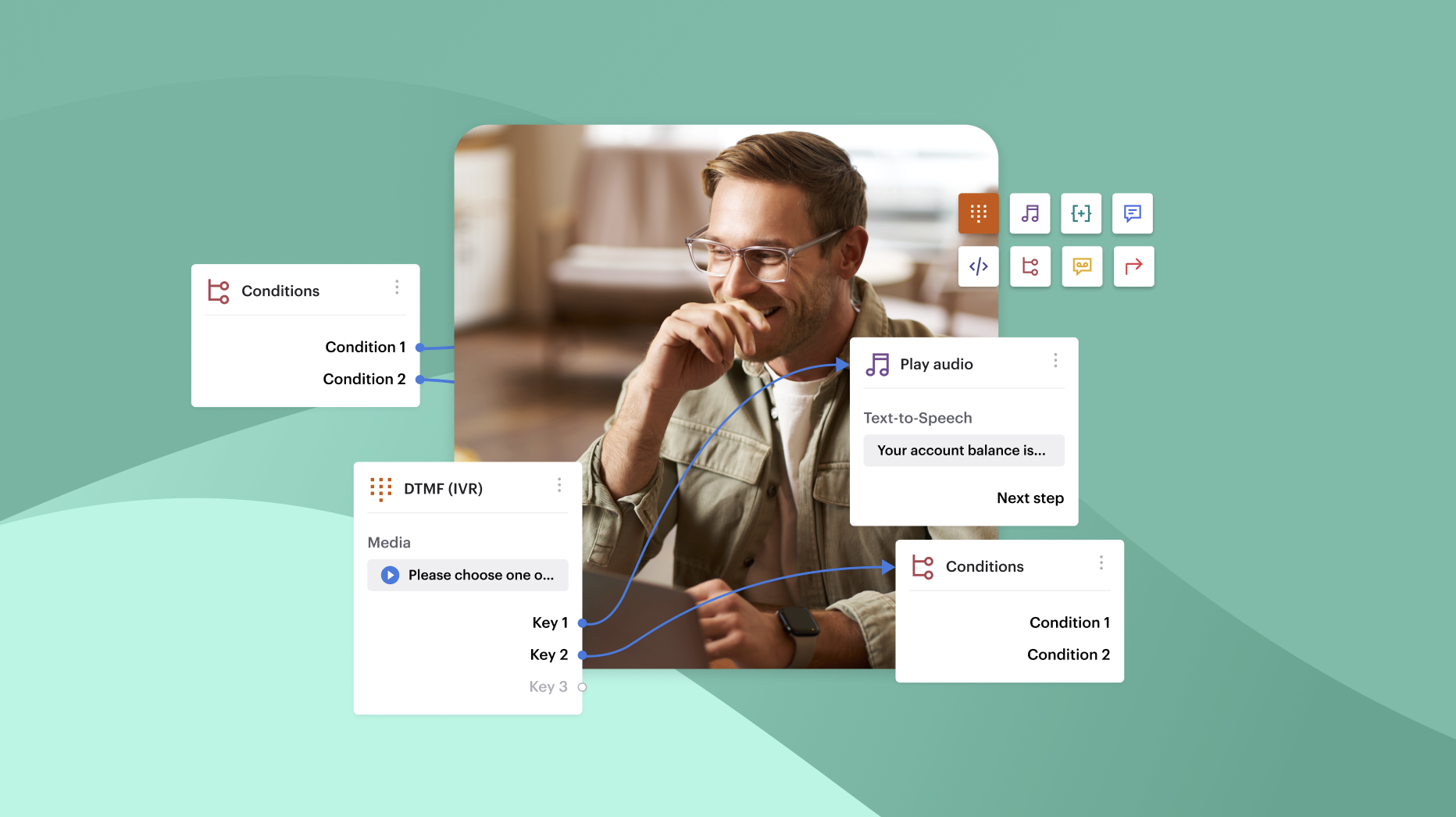
- A visual flow builder or IVR logic tool to manage routing, deflection, and self-service without dev involvement
- Real-time dashboards and reporting that eliminate manual exports
Less setup, more scale
Legacy platforms required heavy IT lift and multi-quarter deployments. Today’s leading teams take a different approach: launch fast, scale smart, stay flexible.
That starts with low-code and no-code tools. Drag-and-drop builders make it easy to create routing flows, set up new queues, or roll out changes without waiting on engineering.
This autonomy is what unlocks scale. New regions, products, or workflows don’t require new vendors or new hires.
Compliance, security, and global readiness built in
Simplified stacks in 2026 should have safeguards from day one, not bolted on later.
In regulated environments, teams should look for safeguards aligned with standards like GDPR and PCI DSS, such as secure call recording, role-based access, and controls to pause or redact sensitive moments.
For global operations, it also means localized caller ID to improve pickup rates and mobile-ready agent tools for distributed teams. Whether your agents sit in one office or ten time zones, the system stays consistent and compliant.
Signs your tech stack is holding you back
Most teams don’t realize how much their stack is costing them until something breaks or stalls growth. But the warning signs show up earlier. If any of these sound familiar, take a closer look:
- Agents use 5+ tools per call. Context lives in too many places, and conversations slow down.
- Reporting takes hours, not minutes. You rely on exports, manual workarounds, or BI tools just to answer basic questions.
- QA still feels manual. Supervisors spend more time reviewing random calls than spotting trends.
- IT ticket volume keeps growing. Each integration, update, or issue goes through a bottleneck.
- Adding a new tool feels like a major project. Even small changes require long timelines, vendor coordination, or downtime.
If more than one applies to you, your tech stack might be holding you back.
Moving from bloated to streamlined: how to get started
Simplifying your contact center stack doesn’t require a full rebuild. It starts with making smarter decisions about what stays, what goes, and what purpose each tool actually serves.
Step 1: Audit your stack
Map out every tool in use; not just what’s officially approved, but what agents actually rely on. Look for:
- Overlapping features (multiple systems logging the same call data)
- Tools with low adoption or unclear ownership
- Point solutions introduced as quick fixes that never scaled
Redundant tools often cluster around the same workflow bottlenecks. That’s where simplification will have the most impact.
Step 2: Define the jobs to be done
Before replacing anything, get clear on what each tool is supposed to achieve. Are you trying to shorten resolution times? Improve compliance visibility? Reduce IT dependence?
Start with outcomes, not features. Align every tool to a specific job: speeding up wrap-up time, improving coaching insights, unifying customer context across channels. This reframes the decision from “what tool are we missing?” to “what problem are we still solving manually?”
Step 3: Choose flexible, interoperable platforms
Once your goals are clear, prioritize platforms that connect easily with the rest of your stack and don’t require vendor hand-holding every time something changes. Look for:
- Native integrations with your existing CRM or ticketing tools
- Open APIs that let your systems talk to each other
- Self-service setup so teams can move without waiting on IT
Platforms built with this modular mindset (open architecture, prebuilt connectors) make it easier to evolve without overhauling. That flexibility keeps you in control as your needs shift.
Simplicity is the strategy
Complexity used to signal scale. In high-growth contact centers, it now signals friction: slower onboarding, harder decisions, rising costs hidden in plain sight.
Simplification isn’t about doing less. It’s about doing what matters with tools that support the work. Fewer handoffs, fewer delays, fewer chances for things to fall through the cracks.
If you’re rethinking your contact center stack, look for platforms that cut complexity, not add to it.