

For sales teams, brokers, collections units, and outsourced contact centers, the constraint is usually infrastructure. Low connection rates, time lost to voicemail, fragmented CRM workflows, and limited visibility into call outcomes often erode performance long before agent skill becomes the issue.
That’s why choosing the right tools for cold calling is all about operational control. Dialing logic, call routing, CRM synchronization, and post-call visibility all shape how efficiently teams work and how reliably performance can be evaluated.
This guide examines the tools and categories that materially impact outbound and business telecommunication performance. This includes predictive dialing systems, CRM calling integration, speech analytics, and mobile-enabled calling.
What impacts cold calling performance (beyond basic dialing)
The tools behind the calls determine how much time agents spend speaking to real people, how cleanly data flows into the CRM, and how well performance can be reviewed afterward.
Below are the categories that materially affect outcomes.
Predictive dialer software and Answering Machine Detection (AMD)
Manual dialing slows everything down. Agents wait through ringing, hit voicemail, hang up, and dial again. Over time, that lost time compounds.
Consider a simple scenario:
If a system makes 200 calls per day and 40% reach voicemail, that’s 80 interactions that may consume meaningful dialing time, depending on voicemail length and detection behavior.
That’s structural inefficiency.
This is where predictive dialer software combined with Answering Machine Detection (AMD) becomes operationally relevant. AMD can detect whether a human or voicemail answered with accuracy and route only live calls to agents.
The impact is measurable:
- Fintech brokers can maximize time spent speaking to prospects, which is critical when explaining complex financial products.
- Microlenders and collections teams can reduce time lost to unreachable contacts and focus on repayment conversations.
- BPOs can improve SLA adherence and agent utilization by reducing idle time.
CRM calling integration that eliminates workflow friction
Tab switching, manual call logging, and duplicate data entry create small inefficiencies that add up quickly. They also introduce errors. Missing call notes, incorrect statuses, and incomplete reporting affect pipeline visibility.
Strong CRM calling integration goes beyond syncing phone numbers.
Examples of deeper integration include:
- Native click-to-call directly inside Salesforce records
- Automatic call logging with call details such as time, duration, and disposition (where configured)
- Zoho screen pop with contact details and auto-updated call history
- Freshdesk automatic ticket creation for inbound and outbound calls
There is a meaningful difference between levels of integration:
- Basic integration: syncing contact data and logging calls after the fact
- Advanced integration: Can include embedded calling controls, automatic activity logging, linked recordings, and disposition/wrap-up fields. This depends on the CRM and integration setup.
For decision-makers:
- A CTO evaluates integration as system consolidation and architectural simplicity.
- A Head of Sales evaluates it as conversion visibility and reporting accuracy.
AI speech analytics for calls and revenue intelligence
Recording calls is storage. Analytics turns calls into usable data.
Modern AI speech analytics for calls can generate:
- Transcripts shortly after the call
- Conversation scores
- Topic grouping
- Keyword tracking
This supports:
- Faster QA reviews
- Structured review for QA and compliance processes
- Coaching based on talk-time ratios
- Identifying recurring topics, objections, or follow-up themes in conversations
Remember: This isn’t real-time AI guidance, but post-call insights that make performance review scalable.
VoIP calling solutions and global caller ID strategy
Call quality affects credibility immediately. Poor audio or dropped calls can undermine trust, especially in financial or high-value sales environments.
Well-designed VoIP calling solutions focus on stable routing and global number availability.
Using local caller IDs can significantly affect answer rates. In some cases, dynamic local caller IDs have been associated with pickup rate increases of up to 5x compared to unfamiliar numbers.
Reliable infrastructure typically includes distributed data centers and stable outbound routing.
This infrastructure becomes especially important in industries where cross-border communication is routine:
- BPOs — require stable international call routing to support clients in multiple regions.
- Fintech brokers — depend on consistent cross-border call quality to maintain credibility.
- OTAs — need reliable global number coverage to stay accessible to travelers worldwide.
Best tools for cold calling and telecommunication (by use case)
Some teams require deep CRM embedding; some prioritize outbound velocity; others need broader internal communications.
Below is a use-case view, focused on operational fit.
Voiso – advanced contact center platform for data-driven teams
Voiso is designed as a cloud contact center platform rather than a standalone dialer. Voiso combines outbound calling with rule-based routing/IVR, CRM integrations, and post-call visibility.
Voiso is best suited for fintech firms, BPOs, microlenders, travel companies, and mid-market outbound sales teams that rely heavily on structured call operations.
Core capabilities include:
- Predictive dialer with AI-based Answering Machine Detection
- AI speech analytics for post-call transcripts, scoring, keyword grouping, and sentiment labeling
- Embedded Salesforce integration with click-to-call and automatic call logging
- Native Zoho integration with screen pop and call history updates
- Freshdesk integration with automatic ticket creation
- SMS follow-up capabilities
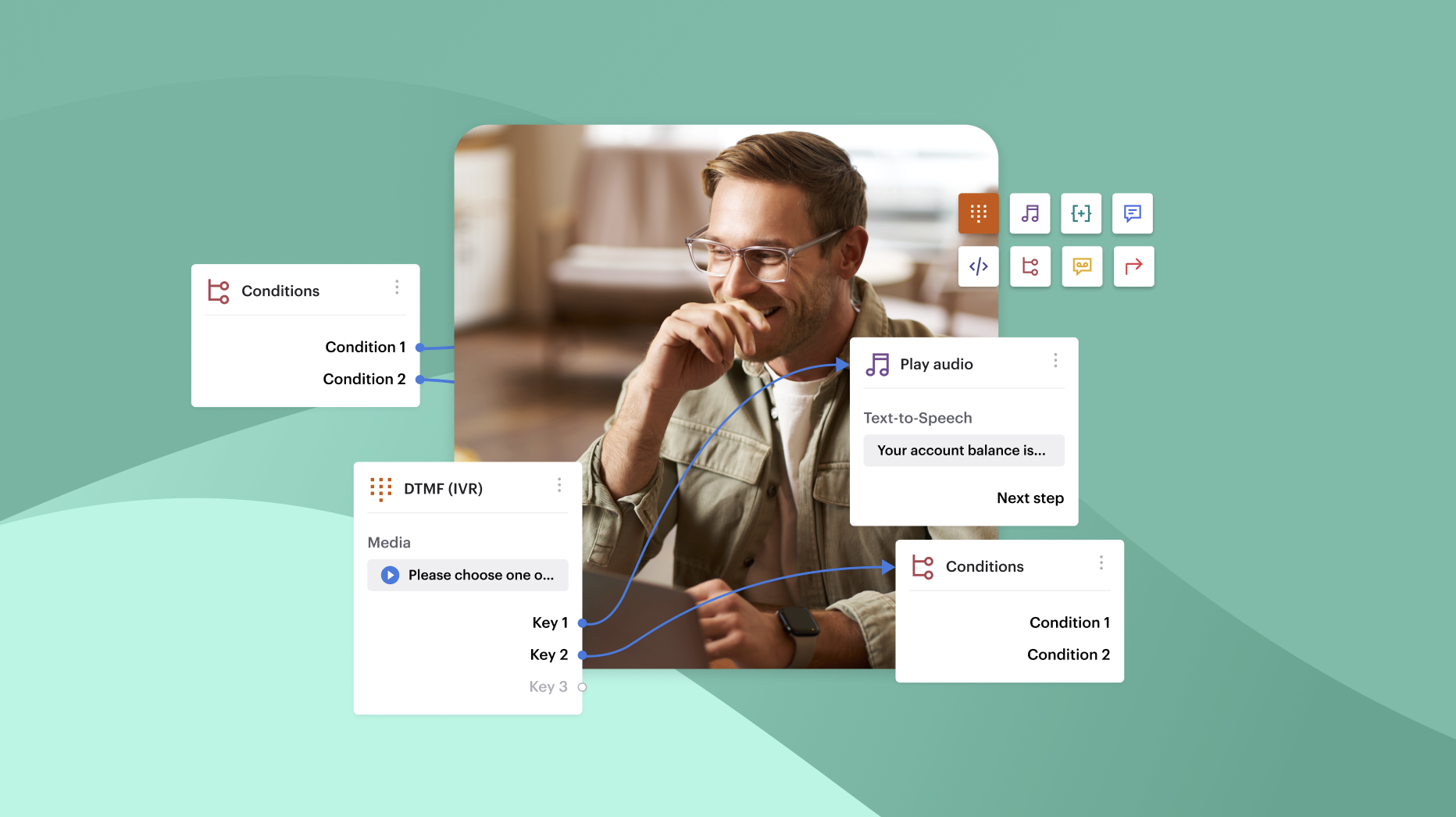
- Flow Builder for rule-based IVR and routing logic
- Mobile app for inbound/outbound calling
Voiso fits teams that want dialing, routing, visibility, and CRM context connected, rather than stitching separate tools together.
Salesforce + integrated dialers (enterprise-centric teams)
Salesforce is best for organizations deeply embedded in Salesforce as their operational system.
These teams typically want:
- Click-to-call directly inside Salesforce records
- Automatic call logging into contact or opportunity history
- Minimal switching between systems
The advantage here is native CRM depth. The tradeoff can be added complexity when layering external dialers, analytics tools, and routing systems on top of Salesforce.
For enterprises standardized on Salesforce, this approach keeps workflows centralized.
Zoho + telephony integrations (SMB to mid-market sales teams)
Zoho is a strong fit for cost-conscious sales teams already operating in Zoho CRM.
Marketplace-based telephony can integrations allow:
- Click-to-call from CRM records
- Automatic call logging
- Contact screen pop on inbound calls
Deployment is typically straightforward.
However, standalone telephony integrations may not provide the broader routing logic, analytics depth, or operational visibility found in full contact center platforms.
This setup works well for lean teams with structured but moderate outbound activity.
Aircall (ease-of-use first teams)
Aircall is often chosen for:
- Fast setup
- Clean interface
- Startup-friendly pricing models
It works well for smaller sales teams that need basic calling, CRM syncing, and lightweight reporting.
Teams requiring advanced predictive dialing, deeper speech analytics, or complex routing logic may need additional tooling.
Outreach.io / Salesloft (sales engagement first)
These platforms are designed primarily as sales engagement systems.
They are strong in:
- Multi-channel cadences (email, LinkedIn, calls)
- Sequencing and task automation
- SDR workflow management
Calling is typically one component within a broader outreach strategy.
They’re well suited for SDR teams focused on prospecting, but less aligned with large outbound contact centers that require structured queue management, routing control, and operational dashboards.
RingCentral / Dialpad (unified communications focus)
These platforms are broader UCaaS systems.
They are typically used for:
- Internal business communications
- Video conferencing
- Messaging and telephony under one umbrella
They can support outbound calling, but are often selected for company-wide communications rather than high-volume, data-driven outbound campaigns.
For organizations where voice is one part of overall internal communications, this approach can make sense. For outbound-heavy sales or collections operations, more specialized contact center infrastructure may be required.
Why mobile-first contact centers outperform static teams
A mobile-enabled contact center allows agents to operate with the same core tools they would use on desktop. For example, mobile-enabled access to core calling functions, call records, and selected monitoring/analytics views (depending on role and configuration).
This changes how teams scale.
Hiring across geographies
Mobile-first infrastructure removes the need to centralize talent in one location.
BPOs can recruit agents in different regions without building physical offices. Fintech firms can hire multilingual brokers closer to target markets. Sales teams can expand into new countries without duplicating infrastructure.
The platform becomes the workspace.
Business continuity
Static teams depend on office access. Mobile-enabled teams are more resilient.
If disruptions occur, whether operational, environmental, or logistical, agents can continue handling inbound and outbound calls from distributed locations while supervisors maintain visibility through live dashboards and reporting.
This can reduce single-point operational risk.
Remote sales force expansion
For outbound teams, mobility supports growth without proportional overhead.
Agents can:
- Place and receive calls using mobile click-to-call
- Access contact history
- View personal performance metrics
- Have calls logged automatically
- Be reviewed through post-call scoring and analytics
Supervisors retain access to centralized dashboards and call records, maintaining structured oversight.
For BPOs, this enables flexible staffing models across time zones.
For fintech firms, it supports international expansion while maintaining controlled call visibility.
Blending voice, SMS, and automation for higher conversion rates
Outbound performance extends beyond the end of the call. In many cases, the follow-up determines whether a conversation turns into revenue.
Structured use of voice, SMS, and routing logic can support higher response rates without increasing agent workload.
SMS follow-up as a revenue multiplier
SMS is an excellent reinforcement channel for voice communication. In fact, industry data shows that while average email open rates often sit around 20–25%, SMS open rates can reach as high as 98%, with 90% of messages read within three minutes.
That difference changes post-call follow-through.
SMS reduces friction after a conversation. Instead of asking a customer to remember details or search their inbox, agents can send follow-up links and details by SMS. For example, proposals, instructions, reminders, or confirmations, depending on your workflow.
Flow builder, IVR, and smart routing
Outbound conversion is also shaped by how inbound callbacks and follow-up interactions are handled.
Rule-based automation tools such as a drag-and-drop Flow Builder allow teams to structure:
- IVR paths
- Queue routing logic
- Predefined conditions for call handling
Additional capabilities may include:
- CRM data lookup via HTTP requests to retrieve attributes (e.g., VIP status) before routing
- Recording pause functionality to help protect sensitive information during payment capture (supporting PCI-related processes)
This enables:
- Self-service cost reduction — common inquiries can be handled through IVR before reaching an agent
- Intelligent routing based on predefined customer attributes — such as account type or priority tier
- Cross-channel handover — allowing a call to transition into messaging when appropriate
This is rule-based automation, not AI-driven decision-making. The value lies in structured logic that reduces friction and routes customers consistently.
When voice, SMS, and routing operate within the same system, teams gain control over both the conversation and the follow-up, without adding operational complexity.
How to choose the right cold calling tool for your industry
Regulatory exposure, call volume, international reach, and reporting requirements all shape what “the right tool” looks like.
Below is a practical lens by industry.
Fintech & trading platforms
Fintech and trading firms operate in high-trust, highly regulated environments. Calls often involve complex financial products, and oversight matters.
Key priorities typically include:
- Call recording and structured storage for audit visibility
- Answering Machine Detection (AMD) to maximize broker talk time
- Multilingual speech analytics for transcript generation and post-call review
- Conversation scoring and keyword grouping for QA and supervision
- Deep CRM integration so all activity is logged within the client record
These organizations often have high customer acquisition costs and low tolerance for compliance risk. The system must support visibility and structured call handling, in addition to dialing speed.
The focus is less on automation and more on controlled, reviewable communication.
BPOs & outsourced telemarketing
For BPOs, performance is measured in utilization, connection rates, and SLA adherence.
Core requirements often include:
- Local caller ID availability to improve pickup rates in target markets
- Predictive dialing and AMD to maximize agent talk time
- Live dashboards to monitor queues, agent states, and campaign output
- Flexible scaling to add or remove agents based on client demand
Because BPOs serve external clients, operational transparency is critical. Supervisors need visibility into call volume, outcomes, and agent activity across teams.
Here, efficiency and reporting clarity often outweigh advanced AI features.
Microlenders & collections
Collections environments combine high outbound volume with regulatory sensitivity.
Common priorities include:
- Predictive dialer with AMD to reduce time lost to voicemail
- Integrated SMS reminders for repayment follow-ups
- Call recording with controlled access to support structured compliance processes
- Post-call analytics and reporting to monitor outcomes and identify trends
In these environments, every conversation carries reputational and regulatory implications. Systems need to support consistent handling and documented interaction history.
Travel & OTAs
Travel and online aggregators manage complex, multi-step customer journeys.
Typical requirements include:
- Omnichannel capability (voice plus messaging channels)
- International number coverage to serve customers globally
- SLA monitoring through dashboards and reporting
- Rich media messaging features (such as files/images) on supported channels
Because bookings often involve multiple touchpoints, routing logic and historical visibility matter. When disruptions occur, such as schedule changes, structured communication becomes essential.
The right tool here supports coordination across channels while maintaining clear oversight.
Final checklist before you commit
Before selecting a cold calling or telecommunication platform, it helps to evaluate tools against structured operational criteria.
Below is a practical comparison framework you can use during vendor evaluation.
| Capability | Does the Platform Provide It? | Notes to Validate |
| Predictive Dialer | ☐ | Can it manage pacing and reduce idle time? |
| AI Analytics (Post-Call) | ☐ | Are transcripts, scoring, and keyword grouping available? |
| Native CRM Embedding | ☐ | Is dialing embedded in the CRM or handled externally? |
| SMS Capabilities | ☐ | Can agents send structured follow-ups during or after calls? |
| Local Caller ID | ☐ | Are local numbers available in your target regions? |
| Mobile App | ☐ | Can agents place/receive calls with visibility into metrics? |
| IVR / Flow Builder | ☐ | Is routing rule-based and configurable without code? |
| Compliance Controls | ☐ | Are recording controls and access permissions structured? |
| Live Dashboards | ☐ | Can supervisors monitor queues and agent states live? |
When reviewing vendors, avoid evaluating features in isolation. Instead, pressure-test the operational impact.
Ask:
- How much additional agent talk time could this realistically unlock?
- How much voicemail reduction can be achieved through predictive dialing and AMD?
- What is the projected ROI per rep, based on higher live connections and cleaner reporting?
Even small efficiency gains compound quickly at scale. A modest increase in live conversations per hour, multiplied across dozens or hundreds of agents, materially affects revenue and cost per acquisition.
Request a walkthrough to evaluate whether Voiso’s operational model aligns with your team’s performance goals.
FAQs
What’s the difference between a predictive dialer and a power dialer?
A power dialer typically calls numbers one at a time for each agent. A predictive dialer uses pacing logic to anticipate agent availability and place multiple calls accordingly. Predictive dialers are generally better suited for high-volume outbound environments where reducing idle time is a priority. The right choice depends on call volume, compliance requirements, and how much control you need over pacing.
Does AI speech analytics work in real time?
Most contact center platforms use speech analytics for post-call analysis. This typically includes transcripts, conversation scoring, and keyword grouping after the interaction ends. It doesn’t mean the system guides agents live or makes decisions during the call. The primary value is structured review, QA efficiency, and performance visibility at scale.
How important is CRM integration for cold calling?
CRM integration affects data accuracy and workflow efficiency. Without embedded calling and automatic logging, agents may switch between systems and manually enter outcomes. This increases reporting gaps and errors. Deeper integration keeps call records, durations, and outcomes aligned with contact or opportunity records, improving visibility for sales and operations leaders.
Can SMS improve cold calling conversion rates?
SMS does not replace voice, but it can reinforce it. Because SMS messages are typically read quickly and have high open rates compared to email, they are useful for sending links, confirmations, reminders, or follow-up details immediately after a call. When integrated into the calling workflow, SMS reduces friction and supports faster follow-through.
When should a company choose a full contact center platform instead of a standalone dialer?
A standalone dialer may work for small teams focused purely on outbound calls. A full contact center platform becomes more relevant when you need structured routing, CRM embedding, post-call analytics, dashboards, compliance controls, and multi-channel coordination. The decision depends on scale, reporting requirements, and operational complexity.