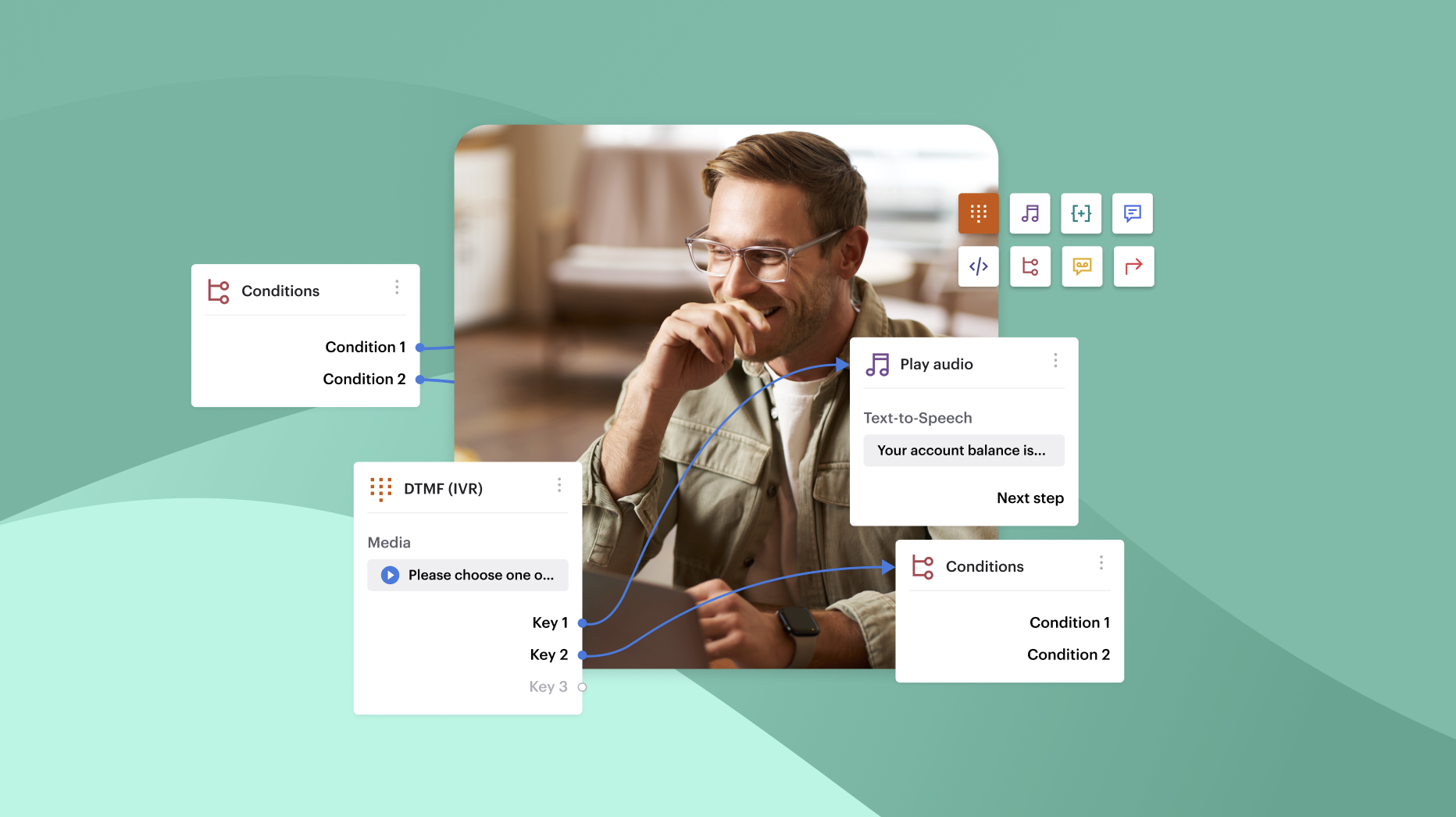


Today’s customers expect quick answers, help across multiple channels, and a seamless experience no matter how or when they reach out. That’s where contact center software comes in: giving small businesses the tools they need to compete with the big guys without breaking the bank.
Whether you’re handling calls, chats, or emails, the right solution can help your team stay organized, respond faster, and keep customers happy as you grow. Let’s dive into why small businesses need contact center software in 2026 and how it can transform your customer service game.
Key Takeaways
- Small businesses now require omnichannel contact center tools to meet rising customer expectations for 24/7, multi-platform support.
- Cloud-based platforms offer low-cost, scalable solutions with minimal technical setup, ideal for small teams and hybrid workforces.
- Key features include ACD and IVR systems, CRM integration for customer history access, and real-time dashboards for performance tracking.
- Top tools for 2026 include Voiso, Dialpad, Zendesk, Aircall, Freshdesk, and Nextiva, each catering to different needs and budgets.
- Modern systems are designed for non-technical teams, with drag-and-drop interfaces, simple onboarding, and optional advanced functionality.
- Even teams of 2–3 agents can benefit from automation, efficient call routing, and reduced missed inquiries without hiring additional staff.
- Robust security and compliance standards (GDPR, HIPAA, SOC 2) are standard in most reputable cloud-based contact center solutions.
- Integration with platforms like Shopify and WooCommerce allows real-time access to customer order data for seamless ecommerce support.
- Mobile apps ensure agents can support customers from anywhere, maintaining service continuity during travel or internet outages.
- Most small business setups are fully operational in under 2 weeks, especially with cloud tools offering preconfigured templates and guided onboarding.
Why Small Businesses Need Contact Center Software in 2026
Rising customer expectations
Customers today aren’t just looking for good service, they expect it instantly and everywhere. Even small businesses face pressure to provide support not just over the phone, but through email, chat, social media, and more. It’s no longer enough to answer only during business hours; customers want help whenever they need it.
On top of that, self-service options powered by automation and AI are becoming the norm. People want to find quick answers on their own time without waiting on hold or navigating confusing phone menus. Contact center software helps small businesses keep up with these rising expectations by enabling 24/7 support and easy access across channels, all without needing a huge team.
The role of contact center software in scaling
As your small business grows, so does the number of customer questions and issues. Without the right tools, it’s easy for calls and messages to get lost, frustrating customers and hurting your reputation.
Contact center software helps by making sure no inquiry gets missed. It routes calls to the right people, manages queues, and offers features like callback options so customers aren’t left hanging, so even a small team can handle high volumes efficiently while keeping wait times down.
Plus, by automating routine tasks and giving agents quick access to customer info, your support staff can work smarter, not harder. This kind of scalability lets your business grow without instantly needing to hire a large support department, saving you time and money while delivering better service.
Key Features to Look for in Contact Center Software for Small Business
Cloud-based architecture
For small businesses, flexibility and cost matter, and cloud-based contact center solutions check both boxes. Since everything runs online, there’s no need to invest in expensive hardware or hire IT experts to manage complicated systems, meaning your team can get up and running quickly as your business grows.
Plus, cloud systems offer the freedom to work from anywhere, which is perfect for small teams juggling remote or hybrid setups. You only pay for what you need, and updates happen behind the scenes without any downtime or hassle.
Automated Call Distribution (ACD) and IVR
Handling incoming calls efficiently is critical when your team is small but the demand is big. ACD smartly routes callers to the right agent or department based on their needs, skills, or availability, cutting down on long wait times and frustrating transfers.
Alongside ACD, Interactive Voice Response systems let customers help themselves for simple tasks like checking balances or store hours, giving your agents more time to focus on complex issues, making the whole operation run smoother.
CRM integration and customer profiles
One of the biggest boosts to small business support is having customer information at your agents’ fingertips. Integration with your CRM means every call or message brings up a customer’s history, preferences, and past interactions in real time.
This helps your team resolve issues faster and personalize each interaction, which builds trust and keeps customers coming back. No more “Can you repeat that?” moments; just smooth, informed conversations that feel natural.
Omnichannel communication
Today’s customers jump between calls, emails, chats, and social media, expecting a consistent experience no matter how they reach you. Contact center software with omnichannel support pulls every touchpoint into one place, so your team isn’t juggling multiple apps or missing messages.
A unified approach means customers don’t have to repeat themselves and your agents can deliver seamless support across every channel, boosting satisfaction and loyalty.
Real-time analytics and reporting
Knowing what’s working (and what’s not) is key to running a great contact center. Real-time dashboards show your team’s call volumes, how quickly issues get resolved, and individual agent performance at a glance.
Having readily available data helps you spot bottlenecks, understand peak times, and identify coaching opportunities. Armed with these insights, your small business can continuously improve its support and scale smarter.
Top Contact Center Software for Small Business in 2026
| Provider | Key features | Pricing | Pros | Cons |
| 1. Voiso | Omnichannel communication, intuitive workflow builder, AI-predictive dialer, speech analytics, real-time dashboards. | Starts at $49/user/month. | Cost-effective, strong outbound tools, powerful analytics, AI-driven insights. | Limited workforce management tools. |
| 2. Dialpad | AI-powered call transcription, integrations, and SMS capabilities. | Starts at $15/user/month for standard plans, or free for video meeting plans. | Excellent AI tools, user-friendly mobile app. | Limited international calling features. |
| 3. Zendesk | Seamless integration with Zendesk products, call management, and ticketing features. | Starts at $19/user/month. | Ideal for Zendesk users, excellent for customer support teams. | Lacks advanced telephony features for non-Zendesk use cases. |
| 4. Aircall | Cloud-based VoIP, user-friendly interface, and team collaboration features. | Starts at $30/user/month. | User-friendly, quick setup, strong integration options . | Limited scalability, higher cost per user. |
| 5. Freshdesk | Omnichannel ticketing, AI-powered automation, and self-service customer portals. | Starts at $15/user/month. | Easy to use, integrates with popular tools, scalable for businesses of all sizes. | Limited advanced analytics, higher-tier plans can be costly, less suited for complex workflows. |
| 6. Nextiva | VoIP, call management, CRM integration, video collaboration tools. | Starts at $20/user/month, all the way up to $199 for enterprise packages. | Intuitive interface, all-in-one business communication. | Limited advanced call center analytics. |
1. Voiso
Voiso is designed to handle both inbound and outbound call center needs, making it a flexible choice for businesses with diverse communication demands. It offers lightweight deployment, so you can get up and running quickly without a lot of technical hassle. Plus, its advanced routing capabilities ensure calls reach the right agents without overwhelming your team. As your business grows, Voiso scales smoothly, keeping operations efficient without overloading your agents.
2. Dialpad AI Contact Center
Dialpad’s AI Contact Center stands out with real-time AI-powered transcriptions and call summaries that help agents stay focused and improve accuracy. It integrates seamlessly with Google Workspace and Microsoft 365, so your team can work naturally within tools they already know and love. This native integration makes it easy to manage communication and collaboration in one place, boosting productivity.
3. Zendesk Talk
Zendesk Talk is an excellent choice if you’re already using Zendesk for ticketing and support as it integrates calls directly with your existing customer service workflow. You’ll get features like call recordings and detailed analytics to keep improving your team’s performance, while the call-back queue option helps reduce customer wait times by allowing callers to hold their place in line without staying on the phone.
4. Aircall
Aircall offers an intuitive interface designed for non-technical teams, so your staff can start using it quickly without extensive training. It includes handy built-in tools like call tagging and notes, making it easy to organize conversations and collaborate. With integrations to over 100 popular tools, Aircall fits well into most existing tech stacks, helping you keep everything connected.
5. Freshdesk Contact Center
Freshdesk Contact Center is a budget-friendly, feature-packed option especially great for early-stage businesses. It comes with voice bots to handle simple customer requests automatically, along with context-aware ticketing that helps agents pick up right where automated interactions leave off. It makes delivering smooth, efficient support easy, without stretching your resources.
6. Nextiva
Nextiva combines an easy-to-use dashboard with CRM and marketing automation features, giving you an all-in-one platform for customer engagement. It’s a solid choice if you want to manage calls, customer data, and marketing campaigns from a single place. Its simplicity helps small teams stay organized and deliver better customer experiences without juggling multiple systems.
How to Choose the Right Contact Center Software for Your Small Business
Assess your current and future needs
- Number of agents: Understand how many people will be using the system now and in the foreseeable future to ensure the software can scale with your growth.
- Expected call volume: Estimate your daily and peak call volumes to pick a system that can handle your workload without lag or dropped calls.
- Types of inquiries: Are your calls mainly support-focused, sales-related, or a mix? Different software may excel in inbound, outbound, or blended environments.
- Inbound-only vs blended: Decide if you need a system just for handling incoming calls or one that also supports outbound campaigns and proactive outreach.
Evaluate usability and onboarding time
- Intuitive design: Look for platforms with drag-and-drop workflow builders and clear dashboards that make it easy for agents and supervisors to navigate.
- Quick onboarding: The faster your team can learn the system, the sooner you’ll see a return on your investment, so minimize downtime with user-friendly tools.
- Ongoing training: Consider whether the vendor provides helpful training resources or if the platform supports self-learning features.
Pricing models and cost transparency
- Per-user pricing: Common for smaller teams; you pay a set fee for each active agent, enabling predictable budgeting.
- Usage-based pricing: Fees depend on call volume or minutes used, which can be cost-effective for variable or low call volumes, although slightly less predictable.
- Add-on costs: Watch out for extra charges related to integrations, additional communication channels (SMS, chat), or premium support packages.
- Trial periods: Take advantage of free trials or demos to get a feel for total cost and value.
Support and vendor reliability
- 24/7 tech support: Small businesses often need help outside regular hours, so choose a vendor with reliable round-the-clock support.
- Reputation: Check customer reviews, especially from other small businesses, to gauge real-world reliability and satisfaction.
- Vendor stability: Look for established providers with a proven track record, ensuring your system will be supported and updated long-term.
Implementation Tips for Small Businesses
Step 1: Start with a trial or freemium plan
Before committing to a full rollout, sign up for a trial or freemium version of the software that lets you test out the key features and see if the platform feels intuitive for your team. Make sure the trial limits match your team size and typical workflows so you can get an accurate picture of how it will perform day-to-day.
Step 2: Prepare your agents and internal systems
Once you’re confident in the software, connect it with your existing tools like CRM, helpdesk, or email platforms to keep everything synced. Train your agents on how to use the system, such as covering scripts, tagging calls, and managing interactions across different channels, to help everyone hit the ground running and reduce frustration.
Step 3: Monitor performance post-deployment
After going live, keep a close eye on your KPIs like average response time, call abandonment rates, and customer satisfaction scores. Review your metrics weekly to spot any issues early, and use what you learn to make small, continuous tweaks to call routing, IVR menus, or agent scripts, improving the experience bit by bit.
FAQs
What’s the difference between contact center and helpdesk software?
Contact center software and helpdesk platforms serve different but occasionally overlapping functions in customer service operations, though the distinction can blur with modern unified solutions. Contact center platforms excel at managing real-time, multi-channel customer interactions – handling phone calls, live chat sessions, social media messages, and video calls through a single interface that agents can navigate seamlessly.
Helpdesk software, by contrast, focuses primarily on ticket-based support workflows. These systems track issues from creation through resolution, maintain knowledge bases, and manage internal escalation processes. Think of helpdesk tools as project management for customer problems, while contact center software manages the actual conversations.
The operational differences become clearer during daily use. Contact center agents handle immediate customer interactions, switching between voice calls and chat messages as demand fluctuates. Helpdesk agents typically work through queued tickets at their own pace, researching solutions and collaborating with technical teams.
However, many modern platforms combine both capabilities, recognizing that customer issues often require both immediate communication and ongoing case management. Organizations frequently find that hybrid solutions reduce software costs while providing agents with complete customer context, whether they’re answering phones or resolving complex technical tickets.
Can a contact center solution help a small business with only 2–3 agents?
Small businesses often assume contact center software is designed exclusively for large operations, but many platforms specifically target smaller teams with simplified features and flexible pricing structures. Cloud-based solutions eliminate the infrastructure costs that once made contact center technology prohibitive for small businesses.
Perhaps surprisingly, small teams often benefit more from contact center automation than larger organizations. With only 2-3 agents, every missed call or delayed response significantly impacts customer experience. Intelligent call routing ensures customers reach available agents quickly, while voicemail-to-email features prevent important inquiries from getting overlooked.
The scalability factor becomes particularly valuable for growing businesses. Small teams can start with basic calling features and gradually add chat support, CRM integration, or analytics capabilities as their customer base expands. Many providers offer month-to-month pricing that adjusts with team size.
Training requirements remain manageable for small teams, though the learning curve varies between platforms. Some solutions offer guided setup processes and dedicated onboarding support specifically designed for businesses without dedicated IT staff. Smart small business owners often find that contact center software professionalized their customer service without requiring additional headcount, creating a competitive advantage against larger competitors with less responsive support.
Are there contact center platforms that don’t require technical setup?
Many modern contact center platforms prioritize ease of deployment, recognizing that small businesses and non-technical teams need immediate functionality without extensive configuration. Cloud-based solutions particularly excel in this area, offering pre-configured templates and guided setup wizards that can have basic calling functionality operational within hours.
Plug-and-play platforms typically include default call routing rules, pre-built IVR menus, and standard reporting dashboards that work effectively for most basic use cases. Users simply create accounts, assign phone numbers, and invite team members – the system handles technical details like server provisioning and network configuration automatically.
However, “no technical setup” often means limited customization options. Businesses with specific workflow requirements or complex integration needs might find themselves constrained by simplified platforms. The trade-off between ease of use and functionality flexibility requires careful evaluation.
Some providers offer hybrid approaches – simple initial setup with optional advanced configuration available later. This allows businesses to start quickly while preserving the ability to customize features as their needs evolve or technical capabilities grow.
Even with simplified platforms, basic training remains essential. While technical setup might be minimal, agents still need to understand call handling procedures, customer data access, and escalation protocols to deliver effective support.
How secure is cloud-based contact center software for storing customer data?
Cloud-based systems typically use strong encryption and comply with major security standards like GDPR and HIPAA to keep your customer data safe.
Security in cloud-based contact center platforms typically exceeds what most individual businesses could achieve with internal infrastructure, though security quality varies significantly between providers. Enterprise-grade platforms implement multiple layers of protection including end-to-end encryption for voice calls, secure data transmission protocols, and encrypted storage for customer information.
Compliance certifications provide measurable security benchmarks. Leading providers maintain SOC 2 Type II, ISO 27001, and industry-specific certifications like GDPR compliance for European customers or HIPAA adherence for healthcare organizations. These audits verify that stated security policies actually function in practice rather than just existing on paper.
Access control mechanisms typically include multi-factor authentication, role-based permissions, and detailed audit trails that track who accessed which customer records and when. Many platforms also offer geographic data residency options, allowing businesses to ensure customer information remains within specific regulatory jurisdictions.
However, security ultimately depends on proper implementation and user behavior. Even the most secure platform becomes vulnerable if employees share passwords, access systems from unsecured networks, or fail to follow data handling protocols. Organizations should establish clear security policies and provide regular training to maintain protection standards.
The shared responsibility model means providers handle infrastructure security while businesses remain responsible for user access management and policy compliance.
Is it possible to integrate contact center tools with ecommerce platforms like Shopify or WooCommerce?
Most modern contact center platforms offer either native integrations or robust API connections with popular ecommerce platforms, recognizing that customer support often requires immediate access to order history, shipping status, and purchase details. Shopify and WooCommerce integrations typically sync customer data bidirectionally, ensuring agents can view complete purchase histories during support calls.
Native integrations usually provide the smoothest experience, automatically populating customer information when calls come in and logging support interactions back to ecommerce platforms. This eliminates the manual data entry that often creates delays during customer conversations about orders, returns, or technical issues.
API-based connections offer more flexibility for businesses with customized workflows or unique data requirements. While these integrations might require more technical setup, they often provide deeper functionality and can accommodate specific business processes that standardized integrations cannot support.
The practical benefits extend beyond convenience. Agents who can instantly access order details, tracking information, and previous support interactions provide faster, more accurate assistance. Customers notice when they don’t need to repeat order numbers or explain previous conversations.
However, integration quality varies between providers. Some offer real-time synchronization that feels seamless, while others experience delays or require manual refresh steps. Organizations should test integration workflows during platform evaluation, particularly for complex scenarios involving returns, exchanges, or multi-order customer relationships.
What happens if my internet goes down, can I still use a cloud-based contact center?
Internet connectivity remains the fundamental dependency for cloud-based contact center operations, creating vulnerability that businesses must plan around carefully. When primary internet connections fail, most cloud platforms become inaccessible, leaving teams unable to handle customer calls or access support systems.
However, several backup strategies can maintain limited functionality during outages. Mobile apps offered by many providers allow agents to handle calls through cellular networks, though this typically supports voice-only interactions rather than full platform features. Some organizations establish cellular hotspot protocols or secondary internet connections specifically for emergency situations.
More sophisticated platforms provide call forwarding capabilities that automatically route incoming calls to predetermined mobile numbers when system connectivity drops. This preserves basic customer service capability, even if agents lose access to customer data and advanced features.
Business continuity planning becomes essential for organizations dependent on cloud contact centers. Smart companies maintain updated contact lists, establish offline procedures for critical issues, and train staff on manual processes that can bridge outage periods.
Perhaps most importantly, internet redundancy through multiple service providers or backup connections offers the most reliable protection. While this increases costs, the investment often proves worthwhile compared to lost business during extended outages.
Do contact center systems offer mobile app access for agents on the go?
Most modern contact center platforms recognize that remote work and field operations require mobile functionality, leading to comprehensive mobile applications that support core agent activities. These apps typically handle voice calls, SMS messaging, and chat interactions, allowing agents to maintain customer service standards regardless of location.
However, mobile app capabilities often represent scaled-down versions of desktop platforms. Complex features like advanced reporting, system administration, or detailed CRM integration might be limited or unavailable through mobile interfaces. Agents can handle customer interactions effectively, but supervisory functions usually require full desktop access.
The quality varies significantly between providers. Some offer robust mobile experiences that feel like native applications, while others provide basic web-based interfaces that struggle with connectivity issues or limited functionality. Battery consumption and data usage also differ substantially across platforms.
Security becomes particularly important for mobile deployments. Leading providers implement device encryption, remote wipe capabilities, and secure authentication to protect customer data on personal or company devices.
Perhaps most valuably, mobile access enables hybrid work models where agents can seamlessly transition between office, home, and mobile environments without disrupting customer service. This flexibility often improves agent satisfaction while maintaining operational consistency during unexpected situations or travel requirements.
How long does it usually take to set up a small business contact center?
Setup timelines for small business contact centers vary dramatically based on complexity requirements and existing infrastructure, though most basic deployments complete within 1-2 weeks. Simple cloud-based solutions with standard features like call routing and voicemail can often be operational within 2-3 days, especially when businesses accept default configurations rather than extensive customization.
Integration requirements typically drive longer implementation periods. Connecting contact center software with existing CRM systems, accounting platforms, or specialized business tools can extend setup to 3-4 weeks as data mapping and testing proceed. Perhaps surprisingly, training often takes longer than technical configuration.
Team size affects timelines less than expected. Whether onboarding 2 agents or 10, the core system setup remains similar. However, larger teams require more extensive testing and coordination, potentially adding several days to the process.
Businesses should expect some operational hiccups during the first week of live usage, even after successful testing. Phone number porting, if required, can add 5-10 business days to the timeline and often becomes the critical path item.
Smart organizations plan for soft launches with limited functionality before full deployment, allowing teams to adjust workflows and identify issues without disrupting customer service entirely. This phased approach often prevents costly mistakes while building user confidence.
Further Reading