


This gets harder as teams grow. New hires need time to ramp up. Call handling drifts without clear guardrails. And when agents rely on memory alone, speed and consistency suffer.
Agent scripting brings structure to live conversations. Rather than improvising or hunting for information mid-call, agents follow predefined paths that keep interactions moving. The result is more efficient calls and fewer “let me put you on hold while I check” moments.
This article covers what agent scripting is, how they work, and how they can actually make a difference (without turning your agents into robots reading from a screen).
What is agent scripting?
Agent scripting guides customer service reps through calls using structured prompts and predefined workflows. They help agents handle common scenarios (troubleshooting, account verification, billing questions, compliance disclosures) without relying on memory or making it up as they go.
Scripts show up in the agent interface during a call, so there’s no tab-switching or digging through documentation. Depending on how they’re set up, scripts can look like:
- Text-based prompts: Prewritten statements or questions that appear at specific points in a call
- Step-by-step workflows: Linear guides agents move through as the call progresses
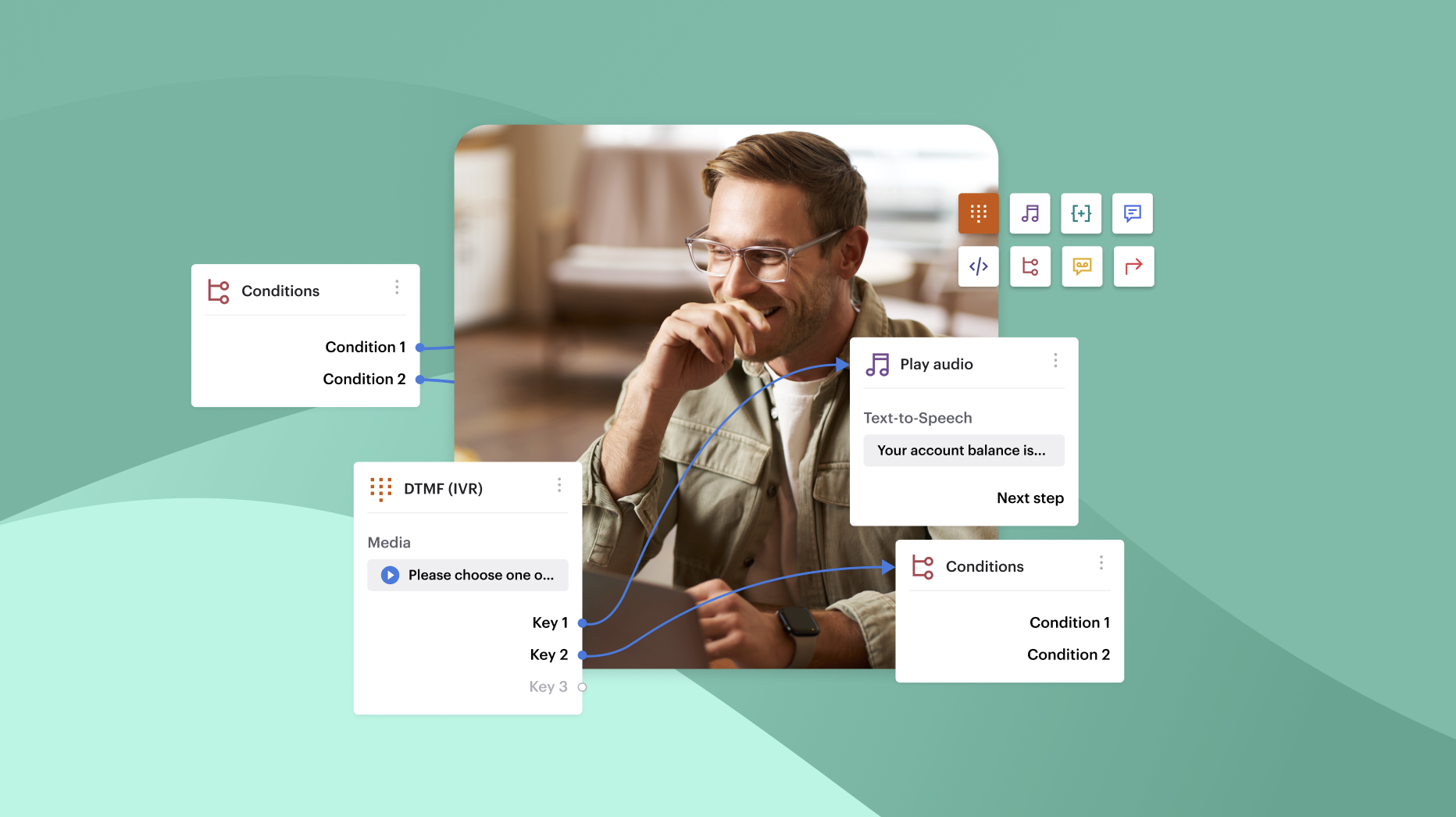
- Logic-driven scripts: Conditional paths that shift based on call inputs, selections, or customer data, typically presented directly to agents as prompts or guidance.
The point isn’t to replace agent judgment. It’s to add structure where structure can meaningfully improve outcomes.
Static vs. dynamic scripting
Scripts falls into two broad categories.
Static scripts are linear. Every agent follows the same sequence regardless of context. They’re easy to set up, but they fall apart in complex or varied scenarios where flexibility matters.
Dynamic scripts, on the other hand, use logic to adjust what agents see based on conditions like IVR selections, queue routing, or CRM data. A billing call follows a different path than a tech support call, and the agent isn’t left to figure out which process applies on their own.
Why scripting improves service efficiency
When done well, scripting removes the friction that slows agents down and causes inconsistency. Here’s how it can improve several key contact center metrics:
Reducing average handling time (AHT)
Calls drag on when agents pause to remember a procedure, search for information, or check with a colleague. Scripts cut that dead time by laying out a clear sequence from call opening to resolution.
Dynamic scripting goes further: it skips steps that don’t apply to the current call and walks agents through only what’s relevant. Fewer detours, smoother progression, and agents who aren’t locked into the kind of rigid phrasing that’s awkward to say and frustrating to hear.
Improving first call resolution (FCR)
A lot of repeat calls happen because an agent missed a diagnostic question or skipped a step in the resolution process. Scripts make sure those steps are in front of the agent when they need them, leading to fewer callbacks and escalations.
Scripting won’t guarantee higher FCR on its own. But it does reduce the variability in how common issues get handled, and that consistency pays off over time.
Shortening onboarding time
New agents in regulated or product-heavy environments can take weeks before they’re comfortable on live calls. Scripting shortens that curve by walking new hires through interactions step by step.
Instead of front-loading training with process memorization, agents learn on the job with structured support. That’s especially useful during growth spurts or periods of high turnover, when you can’t afford to have half the team still getting up to speed.
Benefits beyond speed
Faster calls are the obvious win, but scripting does more than that.
Consistency across teams and channels
Without scripts, you get drift. Different agents, different shifts, different locations, all giving customers slightly different information. Scripting standardizes how things are communicated, so the customer experience doesn’t depend on who picks up the phone.
This matters even more in omnichannel setups. When agents handle voice and digital interactions from the same workspace, scripting can help keep messaging aligned across channels.
Fewer errors and lower compliance risk
Scripts bake approved language directly into the workflow. That means fewer skipped disclosures and fewer “I think the policy is…” moments. For industries with regulatory requirements or strict internal policies, this is a big deal.
When paired with call recordings and interaction logs from the contact center platform, scripting also makes auditing easier. You can see how conversations were structured and whether the right steps were followed.
More confident agents
When agents aren’t second-guessing what to say next, they can actually listen to what the customer is saying. Well-designed scripts work like guardrails on a highway; they keep you on track without dictating every turn. The conversations sound more natural, not less.
For team leads, this is a coaching shift. Instead of correcting basics, you can focus on communication skills and judgment.
Best practices for implementing agent scripting
Scripting only works if you’re deliberate about how you roll it out. Here’s how to get it right the first time.
Match scripts to the use case
Not every call needs the same level of structure. A compliance disclosure needs tight scripting. A consultative sales call needs breathing room. Separating scripts by scenario keeps things manageable and lets agents sound like people, not machines.
Treat scripts as living documents
Scripts go stale. Customer issues evolve, products change, and what worked six months ago might not work now. Voiso’s Speech Analytics can surface post-call topics and outcomes that help teams identify where processes, guidance, or scripts may need updating.
Train agents to use scripts as guides
This is the one that makes or breaks the whole thing. If agents treat scripts like teleprompters, calls sound wooden and customers notice. Training should frame scripts as support tools; something to lean on, not something to read from word for word.
When scripts should take a back seat
Not every call benefits from rigid structure. A customer who just got charged twice might be frustrated. A customer dealing with a service failure might be angry. These conversations need flexibility and human judgment more than they need a flowchart.
In those moments, scripts should fade to the background; available as a reference, but not driving the conversation. Agents should feel comfortable going off-script when the situation calls for it, and picking the script back up when they need it for accuracy or next steps.
Structure without rigidity
Agent scripting works because they take the guesswork out of calls. When scripts are well-designed and actually kept up to date, teams can handle more interactions without consistency or empathy taking a hit.
That said, scripting on its own only goes so far. It works best on top of a solid contact center platform. Voiso handles the operational side (routing, queue logic, CRM context, analytics) while scripting guides what agents actually say. The combination is what lets contact centers grow without things getting sloppy.