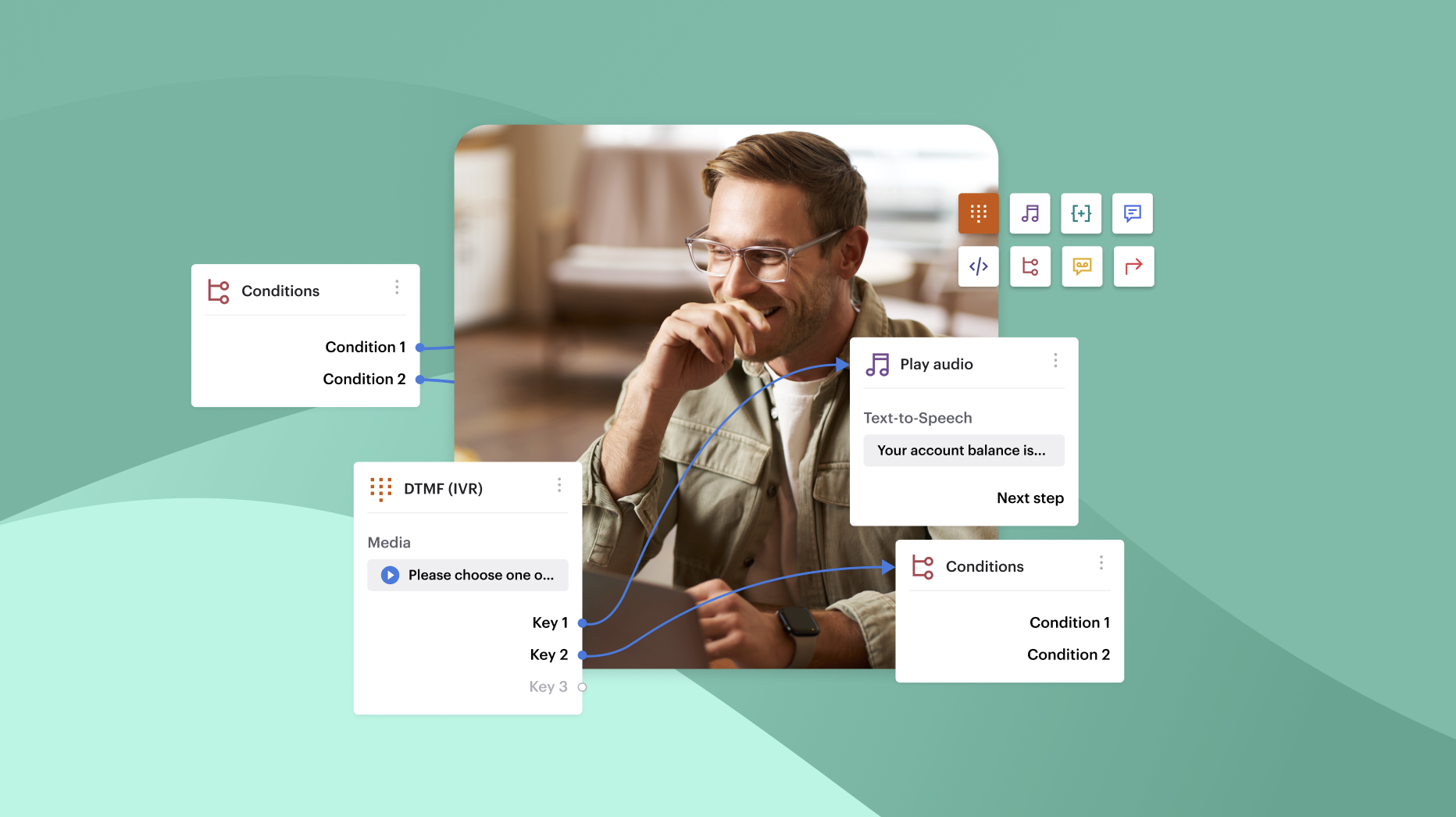


But thanks to cloud technology, businesses of all sizes can now deliver fast, personalized support without the need for expensive on-site infrastructure. That’s where Contact Center as a Service (CCaaS) comes in.
CCaaS is a cloud-based approach that allows you to handle customer calls, chats, emails, and social media interactions from one flexible platform, giving you the power to deliver seamless customer experiences while staying agile and cost-effective.
Smaller companies can sometimes feel overwhelmed when trying to compete with big brands in terms of customer service, or they can feel frustrated with legacy systems that can’t keep up with what their customers want. Exploring CCaaS might be the game-changer your business needs to improve support operations and serve customers efficiently without the headaches of traditional setups.
In this guide, we’ll break down what CCaaS is, how it works, its biggest benefits, and what to keep in mind if you’re thinking about making the switch.
Key Takeaways
- CCaaS (Contact Center as a Service) enables businesses to manage voice, chat, email, and social support from a single, cloud-based platform without on-premise infrastructure.
- Key benefits include rapid deployment, remote agent support, scalable capacity, built-in disaster recovery, and ongoing access to new features.
- Advanced capabilities such as AI-powered virtual assistants, omnichannel routing, sentiment analysis, and predictive analytics help personalize and streamline customer support.
- Implementation success depends on cross-team planning, agent onboarding, CRM integration, and phased rollout supported by super users and real-time training.
- Choosing the right provider requires evaluating scalability, compliance (e.g., HIPAA, GDPR), integration support, innovation roadmap, and total ownership costs beyond subscription fees.
Defining Cloud-Based Communication Platforms
When people talk about CCaaS (Contact Center as a Service), they’re talking about a cloud-based system that gives your business all the tools it needs to run customer support, without the headaches of maintaining expensive on-site hardware. Instead of big upfront costs, you pay a subscription, giving you access to enterprise-level support tools through the internet.
It’s a flexible, scalable way to deliver excellent customer service while keeping costs predictable and manageable.
Key components of modern support platforms
What makes up a strong cloud-based communication platform? Here’s what you’ll typically find:
- Omnichannel routing so customer inquiries are automatically sent to the right agent across phone, chat, email, or social channels.
- Interactive Voice Response (IVR) systems to handle initial customer interactions and direct them to the right place without manual sorting.
- Workforce management tools for forecasting demand and scheduling your team effectively.
- Analytics dashboards to track performance and trends in real time.
- Customer journey mapping to visualize how customers move across your touchpoints.
- Quality management features like call recording and scoring to help your team improve.
- Integrations with your CRM and business systems so your customer data and support channels work together seamlessly.
Taken together, these tools create a complete ecosystem for managing customer interactions across voice, chat, email, social media, and whatever channels come next.
How cloud communication differs from traditional models
Switching to a cloud-based platform isn’t just a tech upgrade, it’s a whole new way of handling customer service. Here’s a quick comparison:
| Aspect | Traditional Contact Centers | Cloud-Based Platforms |
| Deployment | On-site hardware | Accessed online |
| Investment | Big upfront costs | Pay-as-you-go subscription |
| Scalability | Limited by physical space | Easily scales as needed |
| Setup Time | Takes months to launch | Ready in days or weeks |
| Flexibility | Tied to office locations | Supports remote teams |
| Updates | Occasional major upgrades | Continuous improvements |
| Disaster Recovery | Costly backup systems | Built-in business continuity |
| IT Needs | Heavy internal support | Vendor-managed |
Cloud platforms let you scale up or down quickly, launch new features without downtime, and support a remote or hybrid workforce easily—something that’s become essential for many businesses.
Business Benefits of Cloud Communication Platforms
Switching to a subscription-based, cloud-powered customer engagement platform offers more than just cost savings. Understanding its true benefits can help you build a strong case for modernizing your contact center.
Financial advantages
Cloud platforms flip the traditional contact center cost structure on its head, making it easier to manage budgets while gaining enterprise-grade capabilities. Instead of investing heavily upfront, you pay a predictable monthly subscription aligned with your actual usage.
Since everything’s “in the cloud”, there’s no need for on-site server rooms, cooling, or specialized maintenance, allowing your IT team to focus on higher-value tasks instead of constant system upkeep. Plus, the pay-as-you-grow model means your costs scale with your business, not ahead of it, giving you flexibility without overcommitting resources.
Operational improvements
Beyond cost savings, cloud solutions enhance business performance with:
- Rapid deployment so you can roll out new features and capabilities in weeks, not months.
- Workforce flexibility, letting your agents work from anywhere while maintaining consistency.
- Scalability to handle seasonal peaks without stress or major reconfiguration.
- Built-in business continuity and disaster recovery, so you’re covered if issues arise.
- Ongoing access to the latest innovations without disruptive upgrade cycles.
Cloud platforms don’t just save money, they give your team the agility to adapt quickly as customer needs and business priorities evolve.
Customer experience enhancement
Modern cloud-based platforms are built for delivering better service. By unifying customer interaction history across channels, your agents can see the full picture and provide more personalized support without forcing customers to repeat themselves.
And it doesn’t matter whether they prefer phone, chat, email, or social–cloud platforms let you meet your customers where they are while maintaining a consistent brand experience.
Plus, with advanced automation and AI tools, you can empower customers to solve issues on their own with chatbots, freeing up your agents for higher-touch support.
The result? Happier customers who get faster, more personalized help on their terms.
Key Features of Modern Cloud Platforms
Today’s cloud-based communication systems are packed with advanced features that help businesses engage customers efficiently while maintaining a personalized touch. Here are some of the standout capabilities modern platforms offer:
Omnichannel communication management
Combining all communication channels under one roof makes life easier for both agents and customers, and can bring multiple benefits:
- Unified queuing to distribute customer inquiries evenly across channels.
- Seamless channel pivoting, allowing customers to switch from chat to phone without repeating themselves.
- Consistent conversation context, so agents can see the entire interaction history regardless of the channel.
- Blended agent models, enabling team members to handle calls, chats, and emails within a single workflow.
- Centralized reporting for a complete view of customer engagement across all channels.
These capabilities ensure customers get a smooth, frustration-free experience whether they reach out via phone, email, social media, or live chat.
Artificial intelligence integration
AI is changing the face of customer service, and it’s evolving every single day. Here’s how it’s revolutionizing how cloud platforms function:
- Virtual assistants that handle routine questions, freeing up agents for more complex issues.
- Sentiment analysis to gauge customer emotions in real time.
- Agent assistance with suggested replies and knowledge articles.
- Predictive routing to match customers with the best-suited agent automatically.
- Conversational analytics to extract deeper insights from customer interactions.
By weaving AI into your customer engagement strategy, you can provide quicker, more accurate responses while creating a support system that scales easily as your business grows.
Advanced analytics and business intelligence
Cloud platforms aren’t just about handling customer conversations; they give you the tools to understand and improve them too. Real-time dashboards let you monitor performance as it happens, while predictive analytics help you anticipate customer needs and adjust your strategy accordingly.
With AI speech analytics, you can uncover valuable insights from customer interactions, and customer journey visualization helps you map out and optimize every touchpoint. Quality management tools tie it all together by helping your team systematically refine the customer experience, ensuring each interaction is better than the last.
Implementation Best Practices
Rolling out a cloud communication platform isn’t just about flipping a switch and hoping for the best. A smooth transition requires thoughtful planning, alignment across teams, and the right technical groundwork to ensure you get the most out of your investment.
Let’s break down how to make your CCaaS implementation a success.
Start with a clear plan
Before you even think about launching, take time to understand where you’re starting and where you want to go. Analyze your current systems and workflows to see what’s working and what’s holding your team back.
From there, map out what “success” will look like with your new platform: is it faster response times, improved agent flexibility, better customer satisfaction? Once you’ve got your goals, plan your implementation in phases instead of all at once to make the process less overwhelming and help your team adapt gradually.
Mini-tip: Don’t keep the planning in a silo. Involve teams outside your contact center, like IT, sales, and marketing, to align goals and ensure seamless integration.
Focus on people, not just technology
Even the best platform will flop if your team isn’t ready to use it confidently. Get agents involved early in the process, asking for feedback on workflows and features so they feel invested in the change.
Build out training programs that go beyond “click here” tutorials to help agents understand how the platform will make their work easier. You can even identify and train a few “super users” who can champion the rollout internally and support their colleagues during and after the transition. Most importantly, keep everyone informed with regular updates so no one feels left in the dark as changes roll out.
Mini-tip: Leadership buy-in is key. When managers actively support the transition, your team is much more likely to embrace the new system.
Lay the technical groundwork
Your new cloud platform needs to fit into your existing tech ecosystem, not stand apart from it. Make sure it integrates with your CRM so agents have customer data at their fingertips, and connect it with your back-office systems to handle customer issues without bouncing between platforms.
Consolidate your knowledge base so your agents and customers can access consistent information, and ensure your authentication systems allow secure but straightforward access. Don’t skip planning your data migration either—bringing in historical data will give your team the context they need to assist customers from day one.
Mini-tip: Test integrations in a controlled environment before a full rollout to catch issues early without disrupting live operations.
A successful CCaaS platform rollout isn’t just about technology; it’s about aligning your processes, empowering your people, and ensuring your tools work together seamlessly. Take a thoughtful, phased approach, and your contact center will be ready to deliver flexible, high-quality support that meets your customers wherever they are.
Selecting the Right Cloud Partner
Choosing the right cloud contact center provider is one of the most important steps in your CCaaS journey. The partner you pick will shape your team’s day-to-day work and your customers’ experience, so it’s worth taking the time to evaluate options carefully.
Key evaluation criteria
Several factors should guide your selection process:
- Functional alignment: Does the platform have the features your team actually needs?
- Scalability capabilities: Can it grow with you as your business and customer demands increase?
- Integration flexibility: Will it connect smoothly with your CRM and other systems?
- Mobile capabilities: Does it support remote and hybrid work models easily?
- Compliance certifications: Is it aligned with your industry’s security and privacy standards?
- Implementation support: Will you get hands-on help during deployment?
- Innovation roadmap: Does the vendor have a clear plan for future improvements and updates?
Choosing a platform that aligns with your operational goals and growth plans will set your team up for long-term success.
Total cost considerations
Don’t just look at the subscription price. A thorough cost evaluation should include:
- Subscription framework: Base fees and per-user pricing.
- Implementation expenses: Setup, configuration, and integration costs.
- Training requirements: Time and resources needed to get your team up to speed.
- Integration expenses: Costs to connect with existing systems.
- Ongoing administration: Resources for managing and maintaining the platform.
- Customization costs: Any tailoring you need for your workflows.
A clear cost picture helps you avoid hidden fees and ensures you’re making a cost-effective choice that aligns with your budget and needs.
Security and compliance assessment
Your cloud partner should keep your customer data safe and ensure you meet compliance requirements:
- Data encryption standards: How your data is protected during storage and transfer.
- Access control frameworks: How user permissions and access are managed.
- Regulatory compliance: Certifications that match your industry needs (GDPR, HIPAA, PCI, etc.).
- Audit capabilities: Tools to track and review platform activities.
- Business continuity provisions: Disaster recovery and uptime commitments.
- Vulnerability management: Ongoing security updates and proactive threat protection.
A strong security posture isn’t optional, it’s essential for protecting your brand and your customers.
Future Trends in Cloud Communication
Cloud communication is evolving quickly, shaped by technology advances and customers’ growing expectations for seamless, personalized support. Here’s a look at where the future is headed:
Artificial Intelligence advancements
AI is moving far beyond basic chatbots and canned responses. We’re seeing conversational AI that feels more natural, letting customers handle simple requests easily while freeing agents for complex issues.
Predictive engagement will allow businesses to reach out proactively based on customer behavior, while emotion detection will help teams adjust conversations in real time. AI will also provide agents with real-time guidance during calls and chats, helping them find the right answers faster.
As these tools mature, expect broader self-service capabilities, empowering customers to solve their own issues without waiting for human help while still feeling supported.
Integration ecosystem expansion
The future of cloud platforms is all about connection. Digital experience platforms will merge support, sales, and customer engagement into unified systems, creating smoother customer journeys. We’ll also see support tied directly to IoT (Internet of Things) devices, allowing connected products to request help automatically when something goes wrong.
Service interactions will increasingly include payment processing and real-time order tracking, letting customers handle issues and purchases in one place. Even video-based support is becoming a standard option, giving customers the choice to connect visually when it’s helpful.
Work model transformation
Cloud communication is enabling new ways of working, too. Hybrid engagement centers will blend in-office and remote teams, providing flexibility while maintaining collaboration. Companies will tap into global talent pools, allowing them to find the right skills regardless of location.
Plus, skills-based routing will ensure customers are connected to the best person to help them, not just the next available agent, while virtual supervision tools will make it easier to manage and support distributed teams, keeping service quality high while offering employees greater flexibility and work-life balance.
These trends are transforming cloud communication from a tool into a strategic advantage, helping businesses deliver faster, more personalized support while empowering teams to work in new, effective ways.
Ready to Elevate Your Customer Engagement?
Moving to a cloud communication platform is more than a tech upgrade; it’s a chance to deliver better customer experiences while keeping operations lean and adaptable.
With the right planning, clear goals, and a people-first approach, your transition to CCaaS can drive meaningful improvements in customer service, team flexibility, and cost efficiency.
It’s about building a customer engagement strategy that’s ready for where your business, and your customers, are going next.
Speak to us today to find out how Voiso can elevate your engagement and change the way your business connects with your customers.
FAQs
What specific agent performance metrics should be tracked differently in CCaaS vs. traditional systems?
CCaaS environments require expanded metrics beyond traditional call center measurements due to their cloud-based nature and remote workforce capabilities. Connection stability becomes crucial – tracking agent disconnection rates, audio quality scores, and platform uptime helps identify technical issues that impact performance in ways traditional systems never faced.
Remote work productivity metrics gain importance, including login consistency, idle time patterns, and after-hours availability. Unlike office-based agents, virtual workers need monitoring for home environment distractions and technology proficiency levels that affect customer interactions.
Multi-channel efficiency requires different measurement approaches. Agents handling simultaneous chat, email, and voice interactions need blended productivity scores rather than single-channel metrics. Response time consistency across channels becomes more critical than individual channel speed.
Perhaps most importantly, self-service deflection rates and digital adoption metrics become key indicators. CCaaS platforms enable customers to resolve issues independently, so tracking how effectively agents guide customers toward self-service options while maintaining satisfaction provides insights unavailable in traditional systems.
Technical competency scores for platform navigation, integration usage, and troubleshooting capabilities help identify training needs specific to cloud-based tools that didn’t exist in legacy contact center environments.
How do you implement real-time coaching and performance feedback in virtual call center environments?
Real-time coaching in virtual environments requires technology-driven approaches that replicate the immediate guidance available in traditional office settings. Screen sharing and co-browsing tools allow supervisors to observe agent interactions without physical presence, enabling instant intervention during challenging customer conversations.
Instant messaging systems create discrete coaching channels where supervisors can provide suggestions during live calls without customer awareness. Some platforms offer “whisper coaching” features that let managers speak directly to agents through their headsets while customers remain unaware of the guidance.
AI-powered sentiment analysis provides automatic alerts when customer conversations require supervisor attention, triggering real-time coaching opportunities. These systems flag emotional escalation, compliance risks, or sales opportunities faster than human monitoring alone.
Virtual huddle rooms enable quick team coaching sessions between calls, maintaining the collaborative environment that office-based teams experience naturally. Gamification dashboards display performance metrics in real-time, creating friendly competition and immediate feedback loops.
Perhaps most effectively, recorded call libraries with searchable transcripts allow agents to access coaching examples instantly during similar customer situations. This self-directed learning approach supplements supervisor guidance while building confidence in remote workers who might otherwise feel isolated from team knowledge.
What’s the impact of network latency on CCaaS call routing and how do you minimize it?
Network latency significantly affects CCaaS call routing efficiency, creating delays that compound throughout the customer journey. High latency can cause misdirected calls, dropped connections during transfers, and frustrated customers who experience dead air while routing decisions process.
Geographic distribution of data centers plays a crucial role in minimization strategies. Choosing CCaaS providers with multiple regional servers reduces the physical distance data travels, cutting latency substantially. Edge computing implementations bring routing logic closer to customer locations, further improving response times.
Quality of Service (QoS) configuration prioritizes voice traffic over other data types on your network infrastructure. Dedicating bandwidth specifically for CCaaS operations prevents latency spikes during high internet usage periods that could disrupt routing algorithms.
Agent location optimization involves strategic placement of remote workers in areas with robust internet infrastructure. Some companies establish regional hubs or provide dedicated internet connections to ensure consistent performance.
Load balancing across multiple internet service providers creates redundancy that maintains routing speed even when individual connections experience issues. Real-time monitoring tools identify latency patterns and automatically adjust routing paths to maintain optimal performance.
Perhaps most importantly, regular network assessments help identify bottlenecks before they impact customer experience, enabling proactive optimization of routing infrastructure.
Further Reading
- What Is Omnichannel Contact Center?
- Contact Center Vs Call Center
- Contact Center Vs CRM
- What Is Contact Center Queue
- On Premise Vs Cloud Contact Center
- Change Management In Contact Centers
- How To Migrate Contact Center To Cloud
- Top Contact Center Challenges
- Digital Transformation In Contact Centers
- Building A Scalable Contact Center
- UCaaS and CCaaS compared