

Businesses aren’t just experimenting with internet-based calling anymore. The global VoIP market is projected to exceed $752.41 billion by 2034, reflecting steady enterprise migration away from legacy telephony. That growth signals more than a trend. It marks a structural shift in how companies build communication infrastructure.
Traditional phone systems relied on physical hardware, on-premise PBX cabinets, and fixed desk endpoints. Scaling meant new wiring, new devices, and heavy upfront costs. Software-defined communication replaces that rigidity with applications that run on existing devices and connect through the internet.
At the center of this shift sits the softphone. Instead of tying voice to a desk phone, businesses deploy software that handles calls through desktops, browsers, or mobile apps. No copper lines. No proprietary hardware. Just internet-based signaling and media transmission.
This guide explains how softphones work at a technical level, what powers them behind the scenes, and how they reshape operations across industries, from fintech sales floors to global BPO teams.
Key Takeaways: Softphones for Modern Contact Centers
- Softphone vs VoIP: VoIP is the technology that transmits voice over the internet. A softphone is the software interface that lets agents place, manage, and analyze those calls.
- No Hardware Dependency: Softphones replace desk phones and on-prem PBX systems with browser, desktop, or mobile apps, reducing CAPEX and enabling fast remote deployment.
- Built on SIP & RTP: SIP manages call setup and teardown, while RTP carries live audio. Call quality depends as much on network stability as on the software itself.
- More Than Just Calling: Modern softphones include CRM integrations, AI Speech Analytics, SMS follow-up, Answering Machine Detection (AMD), and omnichannel routing.
- CRM-Native Workflows Drive Efficiency: Click-to-call, automatic logging, and screen pop reduce manual work and shorten handle times without rushing conversations.
- AI Turns Calls into Data: Features like conversation scoring, sentiment tracking, topic tagging, and summaries enable full-call visibility, not just random QA sampling.
- Outbound Performance Improves with AMD: AI-powered Answering Machine Detection filters voicemail with over 95% accuracy, increasing talk time and campaign throughput.
- Voice + SMS Increases Resolution: SMS follow-up during or after calls improves clarity, boosts engagement, and reduces repeat contacts.
- Zero-Code Automation Matters: Tools like visual IVR builders and CRM-based routing allow operations teams to control call flows without developer support.
- Industry Fit Is Strategic: Fintech, BPOs, microlenders, OTAs, and D2C brands use softphones differently, but all depend on reliability, compliance, analytics, and scalability.
- Evaluate Beyond Basic Dialing: When choosing a provider, assess CRM depth, AI analytics, omnichannel capability, infrastructure reliability, and SLA-backed uptime.
- Bottom Line: A modern softphone is not just a call app, it’s a software-defined communication layer that combines voice, automation, analytics, and routing into one scalable contact center environment.
What Is a Softphone?
Before diving into technical architecture, we need a precise definition. A softphone isn’t just “calling from a laptop.” It’s a software-based endpoint built to replace physical desk phones inside modern phone systems.
Softphone Definition in Technical Terms
A softphone is communication software that allows users to place and receive audio or video calls over the internet. It connects to a virtual phone system using VoIP technology and operates as the user-facing interface of that system.
It runs in multiple formats:
- Desktop application installed on Windows or macOS
- Browser-based application using WebRTC
- Mobile app for iOS or Android
Instead of relying on physical circuits, it transmits voice and video through internet telephony infrastructure. Audio travels as data packets across IP networks rather than copper lines.
Clarity matters here.
VoIP and softphones aren’t the same thing.
- VoIP defines the transmission method. It moves voice data over the internet.
- A softphone acts as the interface layer. It gives users controls, dialing capability, call management, and integration access.
VoIP handles transport. The softphone handles interaction.
That distinction becomes critical when evaluating providers or comparing deployment models.
Softphone vs Desk Phone vs Hardphone
Understanding the difference between legacy hardware and software endpoints helps clarify the operational shift.
| Feature | Traditional PBX Phone | IP Desk Phone | Softphone |
| Hardware required | Yes | Yes | No |
| Mobility | No | Limited | Yes |
| CRM integration | Rare | Limited | Native |
| Multi-device access | No | No | Yes |
Traditional PBX phones require on-premise infrastructure and physical wiring. IP desk phones move signaling to the internet but still rely on dedicated hardware sitting on a desk.
A softphone removes that dependency entirely. It operates on devices teams already use. Agents can log in from different locations without provisioning new hardware.
The financial structure shifts as well.
- Hardware phones require upfront capital expenditure (CAPEX).
- Softphones operate on subscription-based operating expenditure (OPEX).
Provisioning time follows the same pattern. Deploying desk phones may take days across distributed teams. Activating a softphone account takes minutes once credentials are issued.
That difference changes how quickly organizations scale, onboard remote staff, or enter new markets.
How Does a Softphone Work?
A softphone turns voice into data, moves it across an IP network, then rebuilds it as audio. Each step happens fast enough to feel like a normal conversation.
The Core Technology Stack
A softphone follows a predictable path from microphone to speaker:
- Voice capture: Your microphone converts sound waves into a digital signal.
- Codec compression: The app encodes audio with a codec like G.711 or Opus.
- Packetization: Encoded audio gets split into small IP packets.
- Transmission: Packets travel across your network and the public internet.
- Signaling: SIP sets up the call session and keeps endpoints reachable.
- Media transport: RTP carries the live audio stream once the call starts.
- Routing: A cloud PBX (or hosted platform) decides where the call should go.
- De-packetization: The receiving side reorders packets and manages jitter.
- Playback: The codec decodes audio and outputs it through speakers or a headset.
Call flow diagram (simplified):
Caller mic
→ Codec encode (G.711 / Opus)
→ Packetize (IP)
→ SIP sets up session
→ RTP carries media
→ Cloud PBX routes
→ RTP arrives
→ De-jitter + reorder
→ Codec decode
→ Callee speaker
That chain explains why audio quality depends on network stability as much as software settings.
Role of SIP Protocol in Call Setup
SIP handles “who’s calling who” and “where to send the media.” It doesn’t carry the voice stream. It negotiates how the stream should run.
Here’s the typical sequence:
- Registration: The softphone signs in to the SIP server using its credentials.
- INVITE: When you dial, the softphone sends an INVITE to start a session.
- Negotiation: Both sides agree on codecs and media parameters (often via SDP).
- Teardown (BYE): When the call ends, BYE closes the session cleanly.
Think of SIP as the call coordinator. RTP does the talking.
WebRTC vs SIP-Based Softphones
Both approaches deliver softphone calling, but they fit different environments.
WebRTC softphones (browser-based)
They run inside a modern browser and don’t need plugins. They also handle many tricky network situations well.
- NAT and firewall traversal usually relies on ICE/STUN/TURN.
- Media encryption commonly uses SRTP.
- Signaling often runs over TLS.
SIP-based softphones (app-based or integrated clients)
They use SIP directly and often suit environments with dedicated voice networks.
- Broader device and PBX compatibility across vendors
- More control over provisioning, QoS policies, and endpoint configs
- Easy pairing with desk phones in mixed deployments
A practical rule: WebRTC suits fast rollout and browser-first teams. SIP apps suit stricter telephony control and hybrid estates.
What Infrastructure Is Required?
Softphones don’t demand much hardware, but they do demand stable connectivity.
Minimum checklist
- Stable internet connection with low jitter
- Headset (recommended for echo control and clearer audio)
- VoIP provider or cloud phone system
- SIP credentials (or a WebRTC login tied to the platform)
- A supported device: desktop, browser, or mobile
Bandwidth requirements per concurrent call (rule of thumb)
| Codec | Typical one-way payload | Practical planning range (two-way, incl. overhead) |
| G.711 | ~64 kbps | ~160–200 kbps per call |
| Opus | ~24–40 kbps (variable) | ~60–120 kbps per call |
Network quality matters as much as bandwidth. Packet loss and jitter will hurt audio even with plenty of throughput.
Core Features of a Modern Softphone
Core functionality defines whether a softphone supports simple calling or full contact center operations. Modern platforms go beyond dial and answer. They combine media quality, workflow integration, automation, and intelligence in a single environment.
Voice and Video Calls with Advanced Codecs
Call clarity starts with codec selection and media handling.
Modern softphones support HD voice through wideband codecs such as Opus. They transmit a broader frequency range than legacy telephony. Conversations sound more natural and less compressed.
Jitter buffering plays a critical role. Networks rarely deliver packets in perfect order. The softphone temporarily stores incoming packets, reorders them, and smooths playback. That process reduces robotic audio and clipped sentences.
Video calls rely on adaptive bitrate control. The software adjusts quality based on network conditions instead of dropping the call.
Clear audio improves comprehension. In regulated industries like fintech, clarity also reduces dispute risk and transcription errors.
Integrated Call Management
Modern softphones centralize call control inside a unified interface.
Agents can:
- Place calls on hold
- Transfer calls (blind or attended)
- Launch conference sessions
- Record conversations
- Apply call disposition codes
Call disposition tracking adds operational structure. Teams classify outcomes such as “successful deal,” “follow-up required,” or “compliance review.” Managers gain structured reporting instead of scattered notes.
Recording remains essential for compliance-heavy sectors like fintech and microlending. Supervisors can audit interactions without relying on memory or manual summaries.
Control inside the same workspace reduces friction between conversation and documentation.
CRM-Native Workflows
Modern softphones integrate directly into CRM and helpdesk systems. That integration reshapes daily workflows.
With Voiso integrations for Zoho, Salesforce, and Freshdesk, agents operate inside their CRM without switching tabs.
Key workflow elements include:
- Click-to-call from contact records
- Automatic call logging with timestamps and duration
- Screen pop with customer details on inbound calls
- Automatic ticket creation in helpdesk environments
Automatic logging prevents data gaps. Screen pop reduces handle time by presenting context before the agent speaks. Ticket automation keeps support records synchronized with voice interactions.
Instead of duplicating data across systems, the softphone writes directly into the CRM database.
AI-Powered Enhancements
AI Speech Analytics transforms calls into structured insight.
Each conversation can include:
- AI-generated summaries
- Conversation scores
- Sentiment tracking
- Topic identification
Supervisors review summaries instead of replaying entire recordings. Conversation scores highlight performance patterns across teams. Sentiment markers reveal emotional shifts during calls.
Topic tagging allows managers to filter calls by themes such as “service outage” or “account verification.” That capability accelerates compliance audits and quality assurance.
Faster QA cycles lead to earlier coaching interventions. Sales teams also identify objection patterns and refine scripts based on real conversations.
Outbound Optimization Tools
Outbound-heavy teams face a different challenge: wasted time on voicemail.
Voiso’s Answering Machine Detection (AMD) identifies whether a human or machine answers the call. The system reaches over 95% detection accuracy, according to internal AMD performance benchmarks.
When voicemail detection triggers automatically:
- Agents avoid listening to greeting messages
- Dialers move immediately to the next number
- Talk time increases significantly
BPOs and fintech sales floors rely on high connection rates. Reducing voicemail exposure protects campaign pacing and agent productivity.
SMS Follow-Up During and After Calls
Voice doesn’t always complete the interaction. SMS follow-up fills that gap.
Agents can send SMS messages during or after calls using predefined templates. Messages may include links, confirmations, or documentation.
Industry data shows SMS open rates reach 98%, with most messages read within minutes. That responsiveness supports faster resolution and confirmation.
Delivery tracking inside the call history ensures transparency. Agents see whether messages were delivered successfully.
Combining voice with SMS reduces repeat calls and clarifies next steps.
Omnichannel Communication Integration
Modern contact centers rarely rely on voice alone.
Omnichannel functionality brings voice, WhatsApp, Instagram, webchat, and other messaging channels into one workspace. Agents operate from a single pane of glass rather than switching platforms.
Blended agents can handle calls and digital conversations within the same interface. Supervisors monitor all channels through unified dashboards.
That structure supports consistent communication history across platforms. Customers move between channels without losing context.
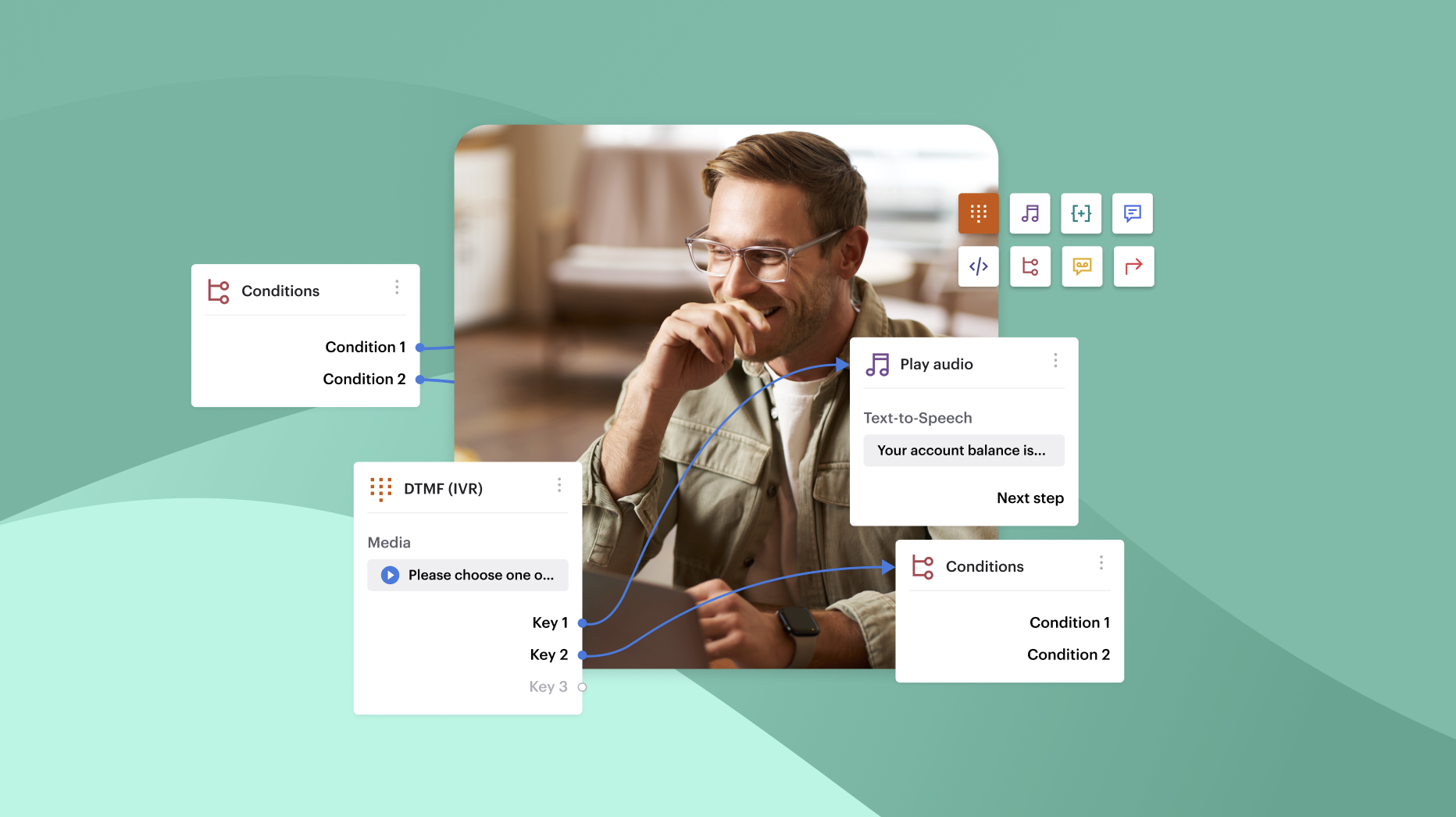
Flow Builder & Automation
Call routing logic defines customer experience before an agent answers.
Voiso’s Flow Builder allows teams to design zero-code IVR flows through drag-and-drop configuration. No development resources required.
Organizations can:
- Route calls based on CRM attributes
- Trigger HTTP requests to external systems
- Deflect IVR traffic to messaging channels
- Automate compliance steps
CRM-based routing directs VIP clients to specialized teams. Cross-channel deflection shifts routine inquiries from voice to messaging during peak hours.
Automation reduces manual routing decisions while preserving control over logic.
Together, these features transform a softphone from a calling app into a complete communication control layer.
Business Benefits of Using a Softphone
Technology matters, but outcomes matter more. A softphone reshapes cost structure, agent workflows, compliance control, and outbound performance. The following benefits show how operational impact follows technical design.
Reduced Infrastructure Costs
Traditional telephony requires physical PBX hardware, wiring, and desk phones. Each new hire often means another device purchase and manual provisioning.
A softphone removes that hardware layer.
Organizations no longer maintain on-prem PBX cabinets. They don’t install copper lines across office floors. They don’t ship desk phones to remote teams.
Cloud-based systems scale through user licenses instead of physical equipment. Adding an agent takes minutes, not installation cycles.
The financial model shifts from capital expenditure to predictable operating costs. That structure helps growing teams expand without heavy upfront investment.
Increased Agent Productivity
Agent time drives revenue in sales environments and resolution speed in support teams. Softphones directly influence both.
Click-to-call inside a CRM removes manual number dialing. Agents move from record to conversation without copying data.
CRM automation logs calls automatically. Teams avoid after-call data entry delays.
AI summaries shorten review cycles. Supervisors understand call context without replaying full recordings.
For outbound teams, Answering Machine Detection (AMD) filters voicemail before an agent engages. Agents spend more time speaking with real prospects instead of waiting through greetings.
Combined, those capabilities reduce idle time and compress task switching.
Improved Compliance and Monitoring
Regulated industries demand structured oversight.
Call recording stores every interaction for audit and dispute resolution. Secure cloud storage protects conversation history without local server maintenance.
SLA-backed uptime agreements reduce operational risk. Escalation channels ensure rapid response during critical incidents.
Advanced support models may include defined response times and dedicated escalation paths. That structure helps fintech firms and microlenders meet regulatory expectations without building internal telephony expertise.
Monitoring tools also provide detailed call metrics. Supervisors review performance trends and intervene early when quality declines.
Higher Conversion Rates for Outbound Teams
Outbound performance depends on connection rates and measurable insights.
Local caller ID increases answer probability in international campaigns. Prospects respond more often to familiar country codes.
Reducing voicemail exposure keeps dialing momentum high. AMD contributes directly to that pacing.
Data-driven dashboards reveal connection ratios, talk time, and campaign performance. Managers adjust dialing strategies based on measurable outcomes rather than assumptions.
Fintech trading desks and telemarketing BPOs rely heavily on phone-based acquisition. For them, every percentage point in connection rate translates into measurable revenue impact.
Softphone Use Cases Across Industries
A softphone fits almost any team that sells or supports by phone. What changes by industry is the mix of controls, routing, and oversight. Below are common patterns Voiso sees across key verticals.
| Industry | What calls look like | Softphone capabilities that matter most |
| Fintech & Trading Platforms | High-stakes sales plus regulated support | Recording, multilingual transcription, CRM-native workflows |
| Outsourced Telemarketing & BPO | High-volume outbound with strict pacing | Predictive dialing, AMD, talk-time controls, dashboards |
| Microlenders & Collections Teams | Blended outreach across channels | Voice + SMS strategy, compliance monitoring, risk workflows |
| Travel & OTAs | International calls tied to time-sensitive bookings | Global numbers, real-time dashboards, upsell tracking |
| D2C & E-Commerce | Service-heavy inbound with peak surges | “Call me back” flows, CRM integration, omnichannel support |
Fintech & Trading Platforms
Fintech teams sell complex products over the phone. Trust gets built in live conversations, not landing pages. Recording helps satisfy regulatory review needs and protects both parties.
Multilingual transcription supports teams selling across regions. Managers can review calls without sharing audio widely. CRM-native sales workflows keep every call tied to the right lead stage and broker notes.
Outsourced Telemarketing & BPO
BPO performance depends on list pacing, connection rate, and clean reporting. Predictive dialing keeps agents moving between live conversations with minimal dead time.
AMD removes long voicemail greetings from the agent’s day. Talk-time controls and campaign metrics dashboards help supervisors spot underperforming lists early. Clients also expect transparent reporting, so structured stats matter as much as call volume.
Microlenders & Collections Teams
Collections teams juggle repayment reminders, hardship discussions, and repeat outreach. A blended approach works best when voice and SMS run together.
Agents can follow up with payment links or confirmations by SMS after a call. Risk and compliance monitoring stays consistent when every interaction gets logged and recorded. Teams also benefit from routing that matches debtors to the right skill group.
Travel & OTAs
Travel calls often start with urgency. Booking changes, missed connections, and re-issues don’t wait for email threads. International numbers help teams support customers in multiple regions without friction.
Real-time dashboards help team leads react to sudden spikes. Upsell conversations work better when agents can pull prior trip context fast and document outcomes in the same workflow.
D2C & E-Commerce
D2C brands use phone support to protect premium margins. Customers call to confirm product details, delivery timing, or returns. “Call me back” workflows reduce abandons during peak periods.
CRM integration keeps order history and prior issues visible during the call. Omnichannel customer service helps when a conversation starts on webchat, then moves to voice for resolution.
How to Choose the Right Softphone Provider
Not every softphone delivers the same operational depth. Some focus on basic calling. Others operate as part of a unified contact center platform. The difference affects reporting, compliance, and long-term scalability.
Use the checklist below to evaluate providers beyond surface-level features.
1. Native CRM Integrations
Calling without CRM context slows teams down. Look for direct integrations with systems your teams already use.
Strong providers offer:
- Click-to-call inside CRM records
- Automatic call logging with full metadata
- Real-time screen pop on inbound calls
- Two-way data sync
Native integration reduces tab switching and prevents fragmented records. It also shortens onboarding time for new agents.
2. AI Analytics Built Into the Platform
Voice data contains performance insight. Without analytics, it stays unused.
Evaluate whether the provider includes:
- Conversation scoring
- Automatic call summaries
- Sentiment tracking
- Searchable transcripts
AI features should sit inside the call reporting layer. External plug-ins often create data silos and extra costs.
3. SIP Reliability and Call Stability
Audio quality affects revenue and reputation. Ask about:
- Global data center coverage
- Redundancy architecture
- Packet routing optimization
- Historical uptime metrics
SLA-backed uptime commitments matter. Reliable infrastructure protects outbound pacing and inbound service levels.
4. Multi-Channel Support
Modern communication rarely stays on one channel. Providers that support voice only may limit growth.
Look for built-in support for:
- Voice
- SMS
- Social messaging
- Webchat
A unified workspace prevents agents from switching between tools. It also keeps interaction history consistent across channels.
5. Scalability and User Management
Growth introduces complexity. A strong platform supports:
- Rapid user provisioning
- Role-based access control
- Flexible licensing models
- Campaign-level configuration
Scalability shouldn’t require infrastructure changes. It should rely on configuration, not hardware expansion.
6. Platform Scope: Softphone or Unified Contact Center?
Some vendors sell standalone dialers. Others provide a full contact center ecosystem.
A unified platform combines:
- Web-based softphone
- Automation tools
- CRM integrations
- Analytics dashboards
- Omnichannel routing
Choosing a broader system reduces the need for future migrations. It also centralizes reporting and administration under one environment.
How Voiso Elevates the Modern Softphone
Many platforms stop at providing a calling interface. Voiso approaches the softphone as part of a broader contact center architecture. That distinction shapes how teams operate daily.
Below is how Voiso strengthens each operational layer.
Built-In Web Softphone and Cross-Device Access
Voiso includes a browser-based softphone that runs without complex installation. Agents log in and start calling from a secure web environment.
Desktop and mobile applications extend that access beyond the browser. Remote teams can switch devices without losing call history or reporting continuity.
Because the interface connects directly to the broader Voiso platform, routing logic, analytics, and CRM integrations remain synchronized across devices.
AI Speech Analytics Embedded in Workflows
Voiso integrates AI Speech Analytics directly into the call lifecycle.
Supervisors gain:
Managers review structured insights instead of manually sampling recordings. Sales leaders identify objection trends faster. Compliance teams filter calls by risk indicators without listening to hours of audio.
Analytics don’t sit in a separate reporting silo. They connect to campaign data and agent performance metrics inside the same system.
AMD for Outbound Precision
Outbound teams depend on consistent pacing. Voiso’s built-in AMD detects answering machines before agents engage.
High detection accuracy reduces voicemail exposure. Agents spend more time in live conversations. Campaign throughput remains stable even during large dialing runs.
Because AMD connects with Voiso’s dialing engine, supervisors monitor detection performance alongside connection ratios and talk-time statistics.
SMS Follow-Up Inside the Call Flow
Voiso integrates SMS follow-up into the same interface agents use for voice.
Teams can:
- Send template-based SMS messages
- Include links or confirmations
- Track delivery status
Combining voice and SMS inside one workflow reduces fragmentation. Agents document follow-ups automatically in the same call record.
Omnichannel Routing from a Single Workspace
Voiso connects voice with messaging channels such as WhatsApp, Instagram, and webchat. Agents operate from one dashboard rather than switching between tools.
Routing rules distribute conversations across channels based on availability and skill groups. Supervisors view unified reporting across all interactions.
That structure supports blended teams handling both digital and voice engagement.
Flow Builder for Zero-Code Automation
Voiso’s Flow Builder allows teams to design IVR logic and routing flows visually.
Organizations can:
- Create multi-level IVR paths
- Route calls based on CRM data
- Trigger automated actions
- Deflect traffic to digital channels
Because configuration requires no code, operations teams adjust routing without development cycles.
SLA-Backed Infrastructure and Support
Reliable communication depends on stable infrastructure. Voiso provides SLA-backed uptime commitments and structured escalation channels.
Dedicated support processes reduce downtime risk. That reliability matters for sales floors and regulated environments where call disruption carries financial consequences.
The Future of SoftphonesA comprehensive guide to softphones that clarifies what they are, how they work (SIP, RTP, WebRTC, codecs), and what infrastructure businesses need to deploy them effectively. It breaks down core features such as CRM integrations, AI Speech Analytics, Answering Machine Detection, SMS follow-up, omnichannel routing, and zero-code IVR automation, showing how modern softphones extend beyond basic calling. The article also helps decision-makers evaluate providers, understand industry-specific use cases, and determine when a softphone can replace desk phones within a scalable, cloud-based contact center strategy.
Softphones are moving from “call endpoint” to “live decision layer.” The next wave won’t focus on more buttons. It’ll focus on guidance, automation, and smarter routing while conversations happen.
AI-Assisted Real-Time Coaching
Real-time coaching will shift from post-call reviews to in-call prompts. The system can surface playbooks when certain phrases appear. It can flag compliance risks as they emerge. Supervisors won’t need to monitor as many live calls.
Expect coaching cues such as:
- Missing verification steps
- Escalation triggers for high-risk topics
- Next-best question prompts during objections
Teams will spend less time searching for guidance mid-call.
Automated Call Scoring That Doesn’t Need Manual QA
Automated call scoring will become the default for large teams. Instead of sampling 2–5% of calls, managers can score every interaction. Scoring models will also become more transparent.
Look for scoring that ties directly to:
| Score input | What it measures | Who uses it |
| Talk-time balance | Agent control and listening ratio | Team leads |
| Keyword compliance | Required disclosures and banned phrases | Compliance teams |
| Topic outcomes | Resolution type and next steps | Ops managers |
That shift changes QA from “spot checks” to continuous performance signals.
Predictive Routing Based on Context, Not Just Availability
Routing logic will move beyond queue rules. Predictive routing will use conversation history, customer intent, and agent strengths. It’ll also consider channel behavior.
A practical example: a customer who abandoned webchat twice may route to a senior voice agent. A borrower with past disputes may route to a compliance-trained team.
Routing will feel less like traffic control and more like matchmaking.
Browser-Native Communications as the Default
Browser-native softphones will become the primary deployment for many teams. WebRTC keeps rollout simple and reduces IT overhead. That model also supports faster updates, since features ship server-side.
As browsers keep improving media handling, fewer teams will require installed clients.
Hardware-Free Contact Centers
Hardware-free doesn’t just mean “no desk phones.” It means no fixed workstations either. Teams will run voice, messaging, analytics, and workforce tools from cloud workspaces.
That shift supports:
- Rapid hiring across regions
- Faster disaster recovery plans
- Shorter onboarding for seasonal teams
Softphones will keep evolving, but the direction stays clear: more intelligence during the call, less manual work after it.
FAQs
Below are direct answers to common questions about softphones. Each response is concise and structured for quick reference.
What is a softphone used for?
A softphone allows users to make and receive voice or video calls over the internet using a computer or mobile device. Businesses use them for sales calls, customer support, internal communication, and remote work operations. Many platforms also include call recording, CRM integration, and analytics.
Is a softphone the same as VoIP?
No. A softphone and VoIP aren’t the same thing.
VoIP refers to the technology that transmits voice over the internet. A softphone is the software interface that lets users place and manage those calls. VoIP handles transmission. The softphone handles user interaction.
Do softphones require a headset?
A headset isn’t mandatory, but it’s strongly recommended.
Most laptops include built-in microphones and speakers. However, a dedicated USB or Bluetooth headset improves audio clarity and reduces background noise. In high-volume environments, headsets also prevent echo and feedback issues.
Are softphones secure for business use?
Softphones can be secure when configured properly.
Business-grade platforms use encryption protocols such as TLS for signaling and SRTP for media streams. Secure login controls and role-based access also reduce unauthorized access. Security depends on both provider infrastructure and internal IT policies.
Can a softphone replace a desk phone?
Yes, in most business environments.
A softphone can fully replace an IP desk phone when paired with a stable internet connection and headset. Many organizations now operate hardware-free call centers using browser-based softphones and cloud PBX systems.
What internet speed is required for a softphone?
A single HD voice call typically requires between 100 kbps and 150 kbps of stable bandwidth per direction.
Quality depends more on connection stability and latency than raw speed. Low jitter and packet loss matter more than high download rates. For teams handling multiple concurrent calls, network capacity should scale accordingly.