All Products

.svg)





At the same time, contact centers are under immense pressure to cut costs and do more with less. Enter AI: a tempting fix promising instant answers and lower overhead. But when used carelessly, AI does more harm than good. It can break conversations, frustrate agents, and chip away at customer trust.
Ultimately, AI should enhance conversations, not overtake them. It should quietly surface insights, not flood agents with noise. This is why the future of CX is about using smart systems to support the people customers trust.
In the sections ahead, we’ll unpack why voice is making a major comeback, how real-time AI can either help or hurt depending on how it’s deployed, and what contact centers need to get right to stay competitive. First, let’s explore why voice is surging, especially among the very customers who were once expected to avoid it.
Voice is surging back: here’s why
After years of automation hype, customers are showing signs of fatigue, especially with chat. Endless loops, generic replies, and frustrating delays have driven many to revert to what simply works: a real conversation.
A growing body of data backs this shift. A Five9 study revealed 67% of Gen Z and 70% of Millennials turn to voice support first, especially when facing time-sensitive or emotionally charged problems. It’s a reversal of expectations. These same digital natives, once thought to be firmly anchored to text-based support, now choose voice when they need real attention.
The reason is simple. The more complex the issue, the more valuable clarity becomes; and nothing delivers that faster than a conversation. A live call can communicate urgency, cut through confusion, and adapt to nuance in ways that scripted chat never can. When money’s on the line, when frustration’s already high, or when timing is critical, voice is seemingly the first choice.
That growing preference has major implications for contact centers. Voice interactions are increasing and they’re returning with new urgency, new expectations, and far less patience for friction. What’s changed isn’t just volume, it’s context.
The problem with blanket AI hype in CX
AI has become the go-to buzzword in customer experience, but too often, it’s been used as a shortcut instead of a solution. Companies raced to automate without fully understanding what their customers actually needed. The result? Glitchy chatbots, confusing menus, and “smart” systems that fail to grasp even the basics.
Many brands still treat AI as a replacement for human interaction, rather than a tool to enhance it. That mindset comes at a cost. Handing complex conversations to machines often does more harm than good. Customers lose confidence, agents fade into the background, and accuracy slips, slowly draining the trust that underpins every strong customer experience.
Voiso takes a different approach. We don’t believe in AI for AI’s sake. Instead, we design it to support the people at the center of the conversation — agents and customers alike. With clear, purpose-built features, Voiso helps agents perform better in real time and ensures every interaction stays human at its core.
In the next section, we’ll break down what real-time AI should do, and where it needs to stay out of the way.
What real-time AI should and shouldn’t do
Real-time AI transforms voice interactions when it’s designed to support agents in real-time. Used carelessly, it distracts, overwhelms, and interrupts. Used precisely, it enhances what humans already do best: listening, thinking, and responding.
Support agents, don’t overshadow them
The goal here is to make the call easier for the agent. When AI provides live sentiment cues, in-the-moment coaching, or automatic call summaries, it gives agents space to focus on the customer instead of scrambling to take notes or guess someone’s mood. Done right, real-time support acts more like a co-pilot than a backseat driver.
Never compromise on accuracy
A misread sentiment or incorrectly flagged keyword can derail a call, and shake customer trust. In voice, there’s no buffer for false positives. Voiso’s AI Speech Analytics is built for precision. Calls are transcribed in seconds, then analyzed for sentiment, topics, and custom keywords, all with context-aware accuracy. Instead of generic flags, supervisors get clear, structured insights backed by real conversation data.
Instant AI-generated summaries also offer a reliable snapshot of each call, removing the risk of manual error or bias.
Respect the flow of conversation
Interrupting an agent mid-sentence with a suggestion, or selecting the wrong prompt at the wrong time, instantly breaks rhythm. Real-time AI should operate quietly in the background, surfacing only what’s needed when it’s actually helpful.
In the next section, we’ll explore why voice remains the most critical CX channel heading into 2026, and why it continues to outperform digital alternatives when things get complex.
Everything your team needs in one platform
Why voice is the most critical CX channel for 2026
Voice is quietly becoming the backbone of high-stakes customer experience. As interactions grow more complex and expectations rise, the limitations of digital-only support are becoming clear.
Voice handles what other channels can’t
Urgent billing problems. Security issues. Emotional disputes. These aren’t handled well by chat scripts or endless FAQ links. According to TechRadar, up to 70% of high-stakes customer issues are still resolved by voice. Customers default to calling when they want clarity fast, when they don’t have time to explain themselves three times, or when they simply need to feel heard. And they’re right to. A recent study found that 58% of people feel better understood when speaking out loud rather than typing — a reminder that voice doesn’t just transmit information, it builds connection.
Accessibility also plays a role. Not everyone wants to type or navigate chatbot menus. Voice is more intuitive, especially for older customers, those with disabilities, or anyone who prefers a more natural interaction.
One voice interaction = richer insight
A single call can reveal tone, urgency, hesitations, emotional cues, and intent, none of which come through in chat. Voiso’s AI Speech Analytics captures and structures this data automatically, turning raw conversations into searchable insights: sentiment scores, call topics, agent performance, and more.
AI-powered voice can be more personal than humans alone
With local caller IDs, real-time coaching, and post-call summaries, voice becomes scalable and personal. Agents sound local even in global operations. They get in-the-moment help without being overwhelmed. Supervisors get full visibility without interrupting the flow. Voiso makes it possible to deliver more personal service without adding more pressure to already stretched teams.
Scaling smart AI: what contact centers must get right
AI works well in customer support when it’s precise, connected, and invisible when it needs to be. For contact centers looking to scale AI without compromising trust, three things matter most:
Trust-centered AI design
As mentioned above, AI should make agents more confident recalling customer context, focused on the issue at hand, and generally more informed about their process. Voiso’s real-time and post-call features are built to support that. AI-generated summaries remove the need for agents to take notes. Smart call scoring highlights coaching moments. Escalation alerts notify supervisors when a conversation starts to go sideways, before it’s too late.
It’s all designed to protect the agent’s attention and the customer’s experience without overengineering the process.
Integration is everything
An AI system that doesn’t speak to your CRM or helpdesk just creates more silos. Disconnected tools lead to disconnected conversations. When context gets lost, trust follows.
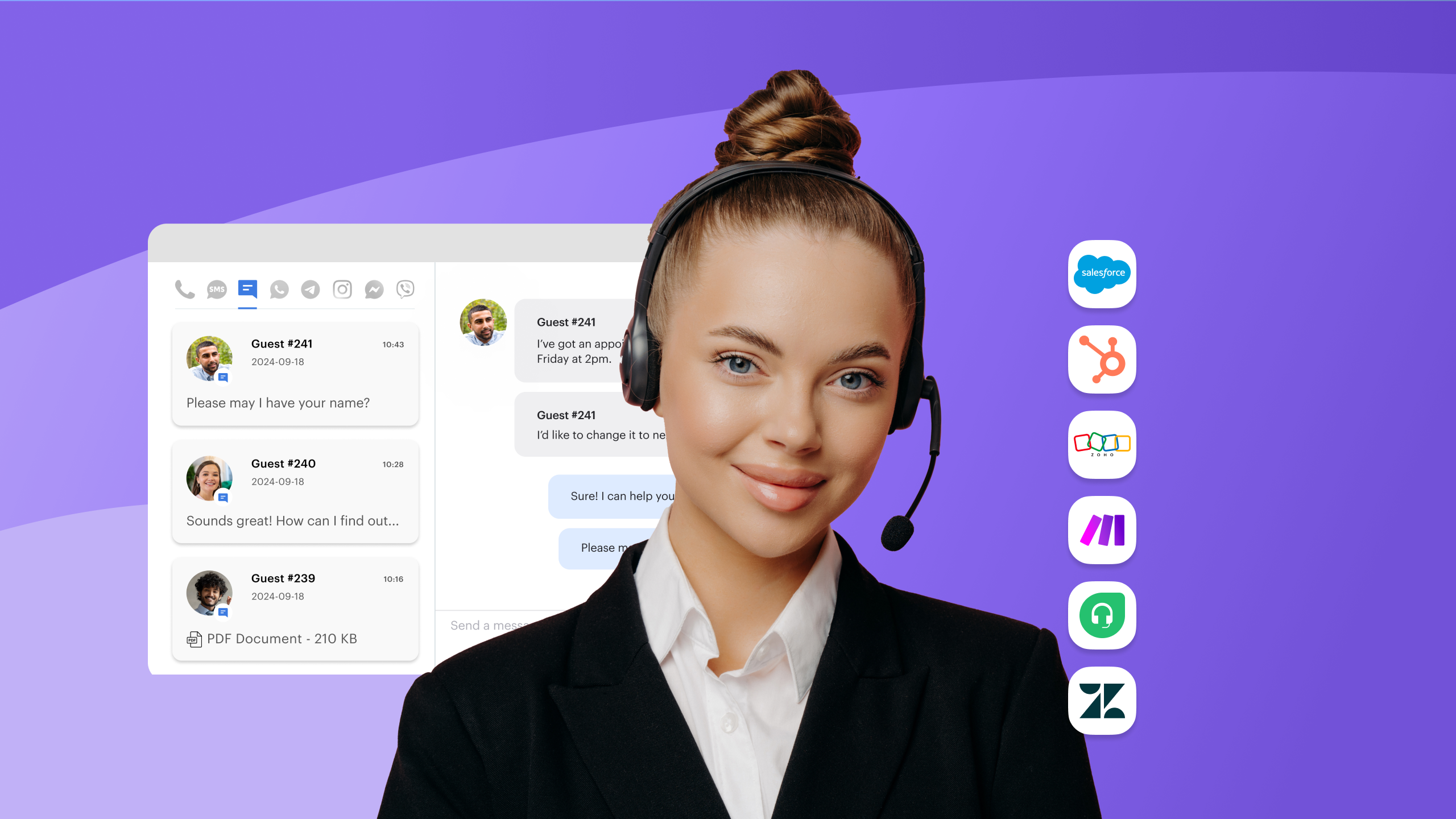
Voiso solves this by integrating directly with Salesforce, Freshdesk, Zoho, and more, so every call is logged, every insight is connected, and every decision is made with the full picture in view. Whether it’s surfacing past interactions or syncing call outcomes, Voiso keeps AI where it belongs: tied to real customer data.
Real-time AI is only valuable if it’s invisible
If AI interrupts, it fails. Voiso’s real-time transcription and quiet coaching tools are designed to stay in the background, delivering value without breaking flow. Agents get live support and contextual insights, but only when it helps.
Voiso’s take: AI as a force multiplier for voice
Voiso doesn’t chase hype. We don’t believe in automation for its own sake or AI that sounds impressive but adds friction. Our focus has always been clear: build tools that help humans do their best work, especially when it comes to voice.
Everything we design — Speech Analytics, Flow Builder, real-time monitoring — is built around that principle. Call summaries and sentiment detection help supervisors understand what’s happening without replaying hours of audio. Flow Builder gives teams the power to automate customer journeys without writing a single line of code, while keeping the customer journey intuitive. Real-time dashboards surface performance trends and issues while calls are still in progress, not hours later.
Where conversations lead, smart AI should follow
Customer experience is always evolving, and moving into 2026, it’s increasingly voice-led. Clarity, accuracy, and emotional intelligence combine to make voice the channel that drives real results. As chat fatigue grows and digital interactions flatten, voice is reasserting itself as the channel customers trust when it matters most.
But voice alone isn’t enough. The companies that lead in 2026 and beyond won’t be the ones that automated first. They’ll be the ones that combine human conversation with smart, precise AI that knows when to help and when to stay in the background.
Now’s the moment for CX leaders to rethink how AI fits into their strategy. Specifically, as purpose-built tools that fit the flow of conversation. The brands that get this balance right will shape what great CX looks like next.