All Products

.svg)




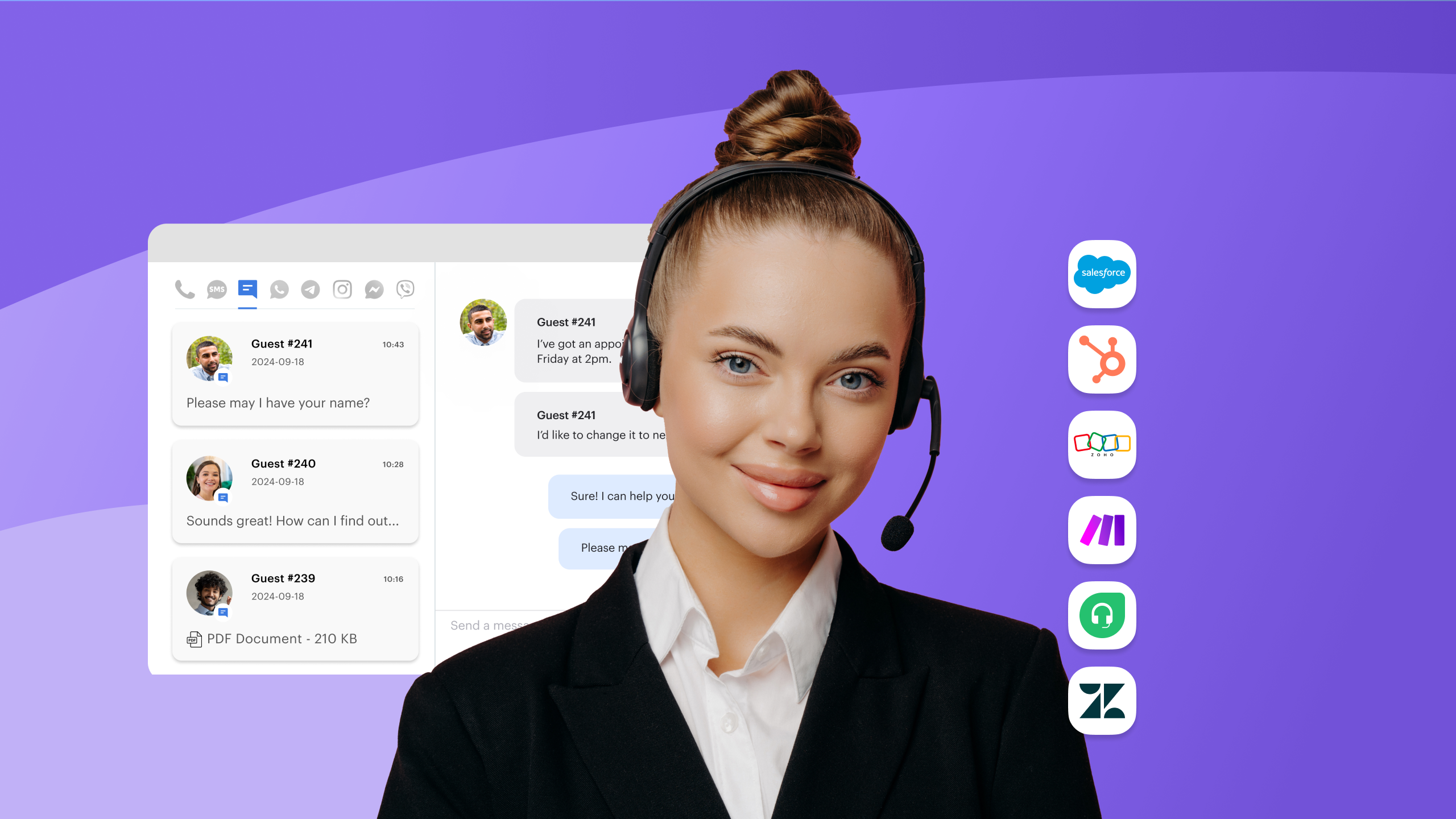
Travel and hospitality customers rarely stay on one communication channel. A guest might discover a hotel through social media, ask questions through live chat, receive booking confirmation by email, get arrival updates through SMS, and call support during their stay.
That behaviour has made omnichannel customer service in travel and hospitality a business priority. Hotels, airlines, travel agencies, online travel agencies, cruise operators, tour providers, and mobility services need connected communication experiences rather than isolated interactions.
True omnichannel service connects phone calls, emails, messaging apps, social media conversations, mobile applications, booking systems, guest portals, and support teams. Customers receive consistent help without repeating details each time they switch channels.
This guide explains how travel and hospitality brands can build seamless support experiences that improve customer experience, guest engagement, loyalty, direct bookings, and operational visibility.
Quick Answer: What Is Omnichannel Customer Service in Travel and Hospitality?
Omnichannel customer service in travel and hospitality connects support interactions across phone, email, SMS, live chat, social media, messaging apps, mobile applications, booking platforms, and guest portals.
Customers can begin a conversation on one channel and continue elsewhere without losing context.
A successful omnichannel strategy helps travel companies and hospitality brands improve customer experience, strengthen customer engagement, support service recovery, encourage direct bookings, and increase loyalty throughout the customer journey.
Definition: Omnichannel Customer Service in Travel and Hospitality
Omnichannel customer service in travel and hospitality is a connected support model where communication channels work together as one continuous customer experience.
Unlike multichannel support, omnichannel servicing strengthens continuity by preserving booking information, interaction history, customer preferences, and previous conversations across every touchpoint.
Omnichannel vs Multichannel Customer Service
| Model | Channel Availability | Customer Context | Example |
| Single-channel service | One channel | Limited | Hotel accepts requests only by phone |
| Multichannel service | Several channels | Separate records | Guest repeats information after switching channels |
| Omnichannel service | Connected channels | Shared history | Traveller moves between chat, SMS, and voice support seamlessly |
Multichannel support gives customers options.
Omnichannel support connects those options.
The difference becomes especially important during disruptions, cancellations, itinerary changes, refund requests, and service issues where context matters.
Everything your team needs in one platform
Why Omnichannel Customer Service Matters in Travel and Hospitality
Travel and hospitality customers often need support during time-sensitive situations.
Flight delays, missed transfers, booking changes, payment questions, room issues, loyalty concerns, and check-in problems create moments where quick access to accurate information becomes essential.
Disconnected communication channels create friction. Connected systems create continuity.
Travel and Hospitality Customers Use Multiple Channels
Modern travellers move between platforms throughout a journey.
A customer might:
- Discover a hotel on social media
- Compare rates on booking platforms
- Ask questions through chat
- Receive confirmation by email
- Get reminders through SMS
- Call support during travel
Strong omnichannel strategies make every interaction feel connected.
Customers Expect Fast and Consistent Answers
Support teams need visibility into previous conversations, booking status, preferences, and ongoing cases.
Consistency matters during:
- Delays
- Cancellations
- Refund requests
- Check-in problems
- Complaint handling
- Service recovery
Without shared context, customers receive conflicting information and frustration grows quickly.
Key Omnichannel Customer Service Use Cases in Travel and Hospitality
Different stages of the journey create different service needs.
Pre-Booking Questions
Customers frequently ask about:
- Availability
- Pricing
- Packages
- Amenities
- Accessibility
- Loyalty benefits
- Cancellation policies
Connected support across website chat, email, phone, social media, and booking platforms helps answer questions quickly.
Fast responses can support direct bookings alongside competitive pricing, availability, trust, and booking experience.
Booking Confirmation and Payment Support
After purchase, travellers may need assistance with:
- Failed payments
- Booking references
- Invoices
- Add-ons
- Deposit deadlines
Omnichannel workflows can combine email confirmations, SMS reminders, and agent assistance while preserving customer context.
Pre-Arrival and Pre-Travel Support
Travel companies and hospitality brands can proactively send:
- Check-in information
- Passport reminders
- Transfer details
- Weather updates
- Arrival instructions
- Local recommendations
Proactive communication reduces inbound enquiries and improves customer experience.
In-Stay and In-Trip Support
Examples include:
- Flight disruptions
- Room service requests
- Maintenance issues
- Itinerary changes
- Lost items
- Accessibility support
Urgent matters should receive priority routing and immediate access to appropriate teams.
Post-Stay and Post-Trip Follow-Up
Follow-up communication may include:
- Review requests
- Loyalty updates
- Refund status
- Complaint resolution
- Future travel offers
Post-trip engagement should focus on building long-term relationships rather than simply closing cases.
Channels Travel and Hospitality Brands Should Connect
An omnichannel strategy starts by understanding customer behaviour.
The goal isn’t adding every available channel.
The objective involves connecting the channels customers actually use.
Phone and Contact Center Support
Voice remains important for:
- Cancellations
- Complex changes
- Accessibility requests
- Complaints
- High-value bookings
Agents should have access to customer history before conversations begin.
Email and SMS
Email works well for:
- Confirmations
- Invoices
- Documentation
- Detailed updates
SMS supports:
- Alerts
- Reminders
- Check-in prompts
- Payment deadlines
- Callback confirmations
Live Chat and Messaging Apps
These channels help with:
- Booking assistance
- Quick questions
- Arrival requests
- Guest communication
When conversations move from bots to agents, context should remain intact.
Social Media and Review Platforms
Support teams should monitor public interactions carefully.
Customer complaints on social platforms should connect directly to case management systems.
Review data can reveal recurring service issues.
Mobile Apps, Portals, and Booking Platforms
These tools support:
- Itinerary management
- Loyalty programmes
- Digital check-in
- Guest preferences
- Booking changes
Customers should receive consistent information regardless of channel.
Channel Decision Table for Travel and Hospitality Support
| Customer Need | Best Channel | Reason |
| Travel disruption | Phone or chat | Immediate assistance |
| Booking confirmation | Email and SMS | Creates documentation |
| Arrival reminder | SMS or app | Easy visibility |
| General FAQ | Chatbot | Reduces routine enquiries |
| Complaint | Phone with email follow-up | Requires empathy and records |
| Guest request | App or messaging platform | Fast resolution |
| Loyalty offer | Email or portal | Supports personalisation |
| Accessibility request | Phone or support form | Requires accuracy |
| Itinerary update | Portal, phone, email | Needs confirmation |
How Omnichannel Service Supports the Travel and Hospitality Customer Journey
| Journey Stage | Customer Need | Best Channels | Omnichannel Action |
| Research | Compare options | Chat, social, phone | Track enquiry history |
| Booking | Confirm availability | Website, email, SMS | Preserve context |
| Pre-arrival | Prepare travel details | SMS, app, email | Send reminders |
| During stay | Resolve issues | Chat, messaging, phone | Prioritise urgent cases |
| Post-trip | Feedback and loyalty | Email, review platforms | Connect recovery workflows |
| Repeat booking | Personalised offers | App, portal, email | Use customer history |
Why Journey Context Matters
Customer needs change throughout the travel lifecycle.
A passport question before departure differs greatly from a passport problem at an airport.
Likewise, room preferences before arrival differ from maintenance concerns during a stay.
Journey context helps agents respond appropriately.
Why a Single Customer View Matters
A single customer view sits at the centre of omnichannel customer service.
Without one, businesses may offer many channels while still delivering fragmented experiences.
What Agents Should Be Able to See
A complete profile should include:
- Booking reference
- Travel dates
- Room or itinerary details
- Previous interactions
- Payment status
- Loyalty tier
- Customer preferences
- Complaint history
- Accessibility notes
- Open cases
How It Improves Customer Experience
Benefits include:
- Less repetition
- Faster resolution
- Smoother handoffs
- Better personalisation
- Stronger service recovery
Single Customer View vs Unified Agent Workspace
A single customer view contains customer information.
A unified agent workspace provides the interface where employees access and manage that information.
Combining both improves efficiency significantly.
Benefits of Omnichannel Customer Service for Travel and Hospitality
Better Customer Experience
Customers choose whichever channel suits their situation.
Support feels faster and more personalised when information follows them across touchpoints.
Stronger Customer Engagement
Brands can maintain meaningful communication before, during, and after travel.
Relevant engagement may include:
- Updates
- Offers
- Reminders
- Loyalty messages
- Feedback requests
More Direct Bookings
Connected support can help answer questions that prevent purchases.
Travelers often seek reassurance regarding:
- Rates
- Amenities
- Cancellation terms
- Special requests
Direct bookings depend on several factors, though effective support can contribute positively.
Better Service Recovery
When problems occur, agents can review prior interactions immediately.
Access to connected records improves complaint handling, refund management, and disruption support.
More Efficient Support Operations
Operational benefits include:
- Fewer duplicate tickets
- Better visibility
- Reduced repeat contact
- Improved reporting
- Smarter automation
How to Build an Omnichannel Strategy for Travel and Hospitality
Step 1: Map the Customer Journey
Identify every touchpoint from discovery through post-trip engagement.
Include:
- Websites
- OTA platforms
- Social media
- Phone
- SMS
- Mobile apps
- Review platforms
Step 2: Identify the Most Important Channels
Focus on channels customers actively use.
Avoid launching services that teams cannot support effectively.
Step 3: Create a Single Customer View
Connect:
- Booking history
- Preferences
- Loyalty information
- Previous conversations
- Open cases
Agents should access critical information immediately.
Step 4: Set Channel Rules
Define clear purposes for each channel.
For example:
- Phone for urgent situations
- SMS for reminders
- Email for documentation
- Chat for simple enquiries
Step 5: Connect Automation With Human Support
Automation should handle routine tasks.
Humans should manage emotional, urgent, or complex situations.
Every handoff must preserve context.
Step 6: Measure and Improve
Monitor:
- Response times
- Repeat contact
- Resolution rates
- Customer satisfaction
- Channel switching
Continuous improvement depends on regular analysis.
Omnichannel Maturity Model for Travel and Hospitality
| Level | Description |
| Level 1 | Channels exist but remain separate |
| Level 2 | Shared customer records available |
| Level 3 | Connected workflows across channels |
| Level 4 | Proactive communication and updates |
| Level 5 | Optimised service using analytics and automation |
How to Use the Maturity Model
Determine current capabilities first.
Improve data visibility and workflow continuity before introducing advanced automation.
Strong foundations create better long-term results.
Omnichannel Service Examples in Travel and Hospitality
Travel Agency Example
A customer begins with website chat.
Package details arrive through email.
Questions about payment are handled by phone.
Balance reminders arrive through SMS.
Every interaction remains connected.
Hotel Example
A guest books online.
Confirmation arrives through email.
Arrival preferences are submitted digitally.
Messaging support assists before check-in.
Service requests are handled during the stay.
Post-checkout feedback connects directly to loyalty communication.
Airline Example
A traveller receives a delay notification by SMS.
Alternative options appear in the mobile application.
Support agents handle rebooking through voice channels while viewing previous interactions.
OTA Example
A booking is confirmed through email.
Supplier questions are managed through chat.
Refund updates appear through portal notifications.
Customer history remains visible throughout the process.
Tour Operator Example
An enquiry begins on social media.
Communication moves into a private channel.
Support continues through email and phone during the trip.
Interaction records remain connected for follow-up.
Omnichannel Priorities by Business Type
| Business Type | Priorities |
| Travel agency | Booking support, itinerary changes |
| Hotel | Guest preferences, service requests |
| Airline | Delay alerts, rebooking |
| OTA | Supplier coordination, refunds |
| Tour operator | Emergency support, itinerary updates |
| Mobility provider | Route changes, live updates |
Omnichannel Service Recovery
Travel and hospitality businesses face service failures during emotional moments.
Connected service recovery helps protect trust.
Connect Complaints Across Channels
Link complaints from:
- Phone
- Chat
- Social media
- Review platforms
Agents should see previous promises and actions.
Use Written Follow-Up After Important Conversations
Email or SMS summaries should confirm:
- What happened
- Agreed actions
- Next steps
- Expected timelines
Written records reduce confusion.
Route Unresolved Cases to Senior Support
Escalate issues involving:
- Safety concerns
- Accessibility needs
- Refund disputes
- Service failures
- High-value bookings
Clear ownership improves outcomes.
Omnichannel Customer Service Challenges to Avoid
Disconnected Channels
Repeated explanations frustrate customers.
Connect communication systems through shared profiles and case records.
Inconsistent Information
Conflicting answers damage trust.
Maintain a central knowledge base and update content regularly.
Poor Handoff From Bots to Agents
Context should transfer automatically.
Urgent issues require immediate escalation.
Too Many Channels Without Enough Staff
Offer only channels that teams can support effectively.
Quality matters more than quantity.
Weak Data Privacy Controls
Protect booking information, payment data, loyalty records, and personal details using role-based permissions.
Data Privacy and Consent in Omnichannel Travel and Hospitality Service
Protect Sensitive Customer Data
Support teams should safeguard:
- Payment information
- Passport details
- Identity records
- Loyalty profiles
- Accessibility notes
Access should match job responsibilities.
Manage Communication Consent
Maintain accurate preferences for:
- SMS
- Messaging applications
- Email updates
- Recorded calls
Respect customer choices across every channel.
Omnichannel Communication Templates
Pre-Arrival SMS
“Your stay at [Hotel] begins on [Date]. Check-in starts at [Time]. Update arrival preferences here: [Link]. For urgent assistance, reply or call [Number].”
Travel Disruption Update
“We’re aware of disruption affecting [Route/Booking]. Our team is reviewing options and will provide an update by [Time].”
Booking Confirmation Follow-Up
“Your booking for [Destination/Hotel] is confirmed for [Date]. View details here: [Link].”
In-Stay Guest Request Confirmation
“Thank you. We’ve received your request for [Request] and will provide an update shortly.”
Post-Stay Follow-Up
“Thank you for staying with us. We’d appreciate your feedback here: [Link].”
Service Recovery Follow-Up
“Thank you for discussing [Issue] with us. The next agreed step is [Action].”
Omnichannel Customer Service Metrics to Track
| Metric | What It Shows |
| First response time | Channel responsiveness |
| Resolution time | Speed of issue resolution |
| Repeat contact rate | Need for follow-up |
| Channel switch rate | Handoff effectiveness |
| First contact resolution | Resolution quality |
| Customer satisfaction | Experience quality |
| Direct booking conversion | Booking support effectiveness |
| Complaint escalation rate | Recovery performance |
| Bot-to-agent handoff rate | Automation effectiveness |
| Abandoned call rate | Voice channel pressure |
How to Use These Metrics
Review results by channel.
Identify recurring service gaps.
Track customer behaviour patterns.
Use findings to improve staffing, workflows, training, and automation.
Omnichannel Customer Service Checklist for Travel and Hospitality Teams
Before implementation, confirm:
- Customer journey mapped
- Priority channels identified
- Channel purposes defined
- Customer context connected
- Single customer view available
- Escalation rules documented
- Knowledge base maintained
- Privacy controls reviewed
- Satisfaction metrics tracked
- Service recovery processes established
How Better Contact Center Software Supports Omnichannel Travel and Hospitality Service
Omnichannel service becomes difficult when phone calls, emails, SMS messages, customer notes, booking records, and follow-up tasks remain spread across different systems.
Travel and hospitality teams should look for:
- Voice and digital channel support
- Call routing
- IVR
- Callback queues
- CRM integration
- Customer history visibility
- Real-time dashboards
- Analytics
- Escalation workflows
A platform such as Voiso can help organise customer conversations, support outbound communication, connect CRM workflows, route interactions efficiently, and improve visibility across service operations.
FAQs
What Is Omnichannel Customer Service in Travel and Hospitality?
Omnichannel customer service in travel and hospitality connects phone, email, SMS, chat, messaging applications, mobile apps, social media, guest portals, and booking platforms into one continuous support experience. Travellers and guests can move between channels while keeping conversation history, booking details, and service context intact.
Why Is Omnichannel Customer Service Important for Travel Companies?
Travel customers often switch communication methods depending on urgency, location, and circumstances. Connected support helps travel companies maintain visibility into previous interactions, booking information, and ongoing issues. Consistent service becomes easier to deliver before departure, during trips, and after travel concludes.
How Does Omnichannel Service Improve Hospitality Guest Experience?
Guests can receive arrival reminders, submit requests through digital channels, contact support during their stay, and receive follow-up communication afterwards without repeating information. Connected interactions create smoother service experiences while helping hospitality brands provide faster assistance and more personalised engagement.
What Channels Should Travel and Hospitality Brands Connect?
Most organisations benefit from connecting phone, email, SMS, live chat, WhatsApp, social media, mobile applications, guest portals, booking systems, and review platforms. Channel selection should reflect customer behaviour, business objectives, staffing resources, and the complexity of support requirements.
What Is the Difference Between Multichannel and Omnichannel Service?
Multichannel service offers several communication options but often keeps them separate. Omnichannel service connects interactions across those options, preserving customer context throughout the journey. The key distinction involves continuity, allowing agents to see previous conversations and support history.
Can Omnichannel Customer Service Increase Direct Bookings?
Connected support can help customers receive answers quickly before purchasing. Questions regarding cancellation policies, room types, amenities, packages, and loyalty benefits can be addressed efficiently. Direct bookings also depend on pricing, availability, brand reputation, and overall booking experience.
How Can Automation Support Omnichannel Travel Service?
Automation can manage booking confirmations, reminders, disruption notifications, chatbot triage, common questions, and feedback requests. Human representatives should remain responsible for emotional, urgent, or complicated situations involving cancellations, complaints, refunds, accessibility support, and major travel disruptions.
What Is a Single Customer View in Hospitality?
A single customer view combines booking history, preferences, loyalty information, payment status, previous conversations, support cases, and follow-up commitments into one profile. Agents gain immediate access to relevant context, helping them deliver faster and more consistent service across channels.
What Metrics Show Whether Omnichannel Customer Service Is Working?
Useful measurements include first response time, resolution duration, repeat contact frequency, channel switch rate, customer satisfaction, first contact resolution, bot-to-agent handoffs, abandoned calls, direct booking conversion, and review sentiment. Together, these indicators reveal service quality and operational effectiveness.
Conclusion
Omnichannel customer service in travel and hospitality involves much more than offering multiple communication channels.
Success comes from connecting those channels into a consistent, context-rich experience that follows travellers and guests throughout their journey.
When implemented effectively, omnichannel support improves customer experience, customer engagement, loyalty, service recovery, and operational efficiency. Technology plays an important role, but the ultimate objective remains helping agents deliver faster, more informed, and more empathetic service.
For travel companies and hospitality brands managing phone calls, SMS updates, customer follow-ups, routing workflows, and service interactions, a platform such as Voiso can help organise communication processes and improve visibility across customer conversations.