All Products

.svg)





Lead response time is the time between a prospect raising their hand, by submitting a form, requesting a demo or starting a chat, and your team’s first meaningful reply. Most sales teams aim for under five minutes on high-intent inquiries, because the best-known research on the subject shows the odds of reaching and qualifying a lead falling sharply within the first half hour. Reality lags well behind: when Harvard Business Review audited 2,241 US companies in 2011, the average reply among firms that responded at all was 42 hours.
For a single lead it is simply the gap between two timestamps. Across a team, the median and the share of inquiries answered inside your target say far more than any single average, and the sections below show how to calculate both.
Key Takeaways
- Lead response time measures how long a prospect waits between inquiring and hearing back from sales in a way that moves the conversation forward.
- The widely quoted five-minute rule traces to Dr. James Oldroyd’s 2007 Lead Response Management Study, which linked calling within five minutes, rather than 30, with far higher contact and qualification odds.
- Harvard Business Review’s 2011 audit found an average reply time of 42 hours, and nearly a quarter of companies never responded.
- Most delays begin before a rep sees the lead: slow CRM sync, unclear ownership, manual assignment and after-hours gaps.
- Track the median, the 90th percentile and the percentage of leads answered within your SLA, split by source and rep.
How to calculate lead response time
For a single lead, lead response time is the gap between two timestamps:
Lead response time = time of first meaningful sales response minus time the lead was created
Suppose a demo request lands at 10:00, an automatic confirmation email goes out a second later, and a rep calls at 10:12. If your team does not count automated acknowledgments, that lead’s response time is 12 minutes.
Across a team, one average hides too much, because a handful of leads left overnight can drag it up while most prospects were answered quickly. Track these measures together:
| Metric | What it shows | How to work it out |
| Median response time | What a typical lead experiences | Sort all response times and take the middle value |
| 90th percentile (P90) | How long your slowest tenth of leads wait | The time within which 90% of leads received a reply |
| SLA attainment | Whether the team meets its own target | Share of leads answered inside the target window |
| Average response time | Long-term trend, skewed by outliers | Total response time divided by leads responded to |
| Never-contacted rate | Leads that slipped through entirely | Leads with no response as a share of all leads |
Where possible, split the clock into two parts. Processing time runs from lead creation until a named rep is assigned and notified, while rep response time runs from that alert to the first contact. If most of the delay sits in the first half, the fix lies in routing and CRM configuration rather than in coaching, and breaking both figures down by lead source, rep and hour of day shows exactly where inbound leads stall.
What counts as a response?
Decide this before you report anything. A meaningful response moves the conversation forward: a call that reaches the prospect, a personalized email or SMS answering their question, or a live chat reply from a person or an assistant that can actually help. A generic “we received your request” message is useful for reassurance, but counting it will make your numbers look better than the buyer’s experience, so track it as a separate metric.
Lead response time vs speed to lead and first response time
These terms overlap, and teams often use them interchangeably, but they measure slightly different stretches of the buying process. Getting them straight matters when sales, marketing and support each report their own version of “response time”.
| Term | What it measures | Usually owned by |
| Lead response time | Inquiry to the first meaningful sales reply | Sales and sales operations |
| Speed to lead | The same interval, framed as a team goal | Sales leadership |
| First response time | Time to the first reply on any inbound conversation, including support tickets | Support or CX |
| Lead processing time | Lead creation to assignment, before a rep is notified | Revenue operations |
| Time to qualify | First contact to a sales-ready decision | SDR teams |
Everything your team needs in one platform
Why Lead Response Time Matters
The speed at which businesses respond to leads has a direct impact on sales outcomes. Here’s what the research actually shows:
- Leads go cold within the hour. In a study of 1.25 million leads at 42 US companies, Harvard Business Review found that firms attempting contact within an hour of an inquiry were nearly seven times as likely to qualify the lead as firms that tried an hour later, and more than 60 times as likely as those waiting 24 hours or more (Oldroyd, McElheran and Elkington, Harvard Business Review, March 2011). The authors counted a lead as qualified once there had been a meaningful conversation with a key decision maker.
- Five minutes beats thirty by a wide margin. The Lead Response Management Study, led by Dr. James Oldroyd and published in 2007, analyzed more than 15,000 leads across six companies and found that the odds of reaching a lead called within five minutes were 100 times higher than at 30 minutes, while the odds of qualifying it were 21 times higher. Those multipliers describe contact and qualification rather than closed revenue, and they come from industry-sponsored research rather than from HBR, which is often credited for them.
- Many inquiries are never answered. The same HBR audit of 2,241 US companies found that 37% replied within an hour, 24% took more than a day and 23% never responded at all.
How response speed shows up in the pipeline
Effective sales pipeline management ensures that leads move through the funnel efficiently, reducing response delays and maximizing conversion opportunities. When businesses optimize their lead response processes, they see measurable improvements in engagement and sales performance.
- Faster responses drive engagement. Leads are most receptive when contacted immediately. A delay can result in lost interest, making timely follow-ups critical.
- Faster first touches protect conversion further down the funnel. A lead that is reached and qualified early enters the pipeline with its intent intact, which is why teams that shorten response times usually see the benefit in lead-to-opportunity rates before they see it in revenue.
Why prospects go cold so quickly
A prospect who fills in a form is usually in the middle of a task: comparing options, building a shortlist or trying to fix a problem that week. Buyers often approach more than one vendor at the same time, so the first useful reply tends to frame the rest of the decision, and every hour of silence gives a competitor room to do that instead.
Delay also changes how your company is perceived. Think about the last time you had a pressing question for a business: if the answer took a day, did you wait, or did you move on? A slow first reply reads as a preview of slow service, while a prompt, relevant one suggests an organized team that values the buyer’s time.
Much of the delay is self-inflicted. The HBR authors noted that some companies retrieved leads from their CRM databases once a day rather than as they arrived, which guarantees that inquiries sit for hours before anyone sees them.
What is a good lead response time?
A good lead response time is under five minutes for demo requests, pricing questions and live conversations, and the same business day for lower-intent actions such as content downloads. Industry-by-industry averages circulate widely, but we have not found a current, primary source that supports them, so it is more honest to set targets by how close each lead is to buying and then test them against your own conversion data.
| Lead type | Suggested starting target | Reasoning |
| Demo or pricing request | Under 5 minutes | The buyer is actively evaluating |
| Missed inbound sales call | Call back within 5 minutes | The prospect was trying to talk now |
| Live chat or messaging inquiry | Reply while the visitor is still on the page | The conversation is happening in real time |
| Contact-sales form | Under 15 minutes | Strong intent, slightly less time-bound |
| Webinar registration | Within 24 hours | Warm interest, not urgent |
| Content download | Same business day | Better suited to nurturing than an immediate call |
Treat these as starting points rather than benchmarks. If leads contacted within your target convert no better than those reached later, the target is probably tighter than it needs to be; if they convert far better, tighten it further.
What causes slow lead response times?
Speed matters, but many businesses unknowingly slow themselves down. Here’s what holds teams back, and how to fix it.
1. Manual lead routing creates delays
If leads aren’t automatically assigned, they sit untouched for too long. The longer they wait, the colder they get.
Solution: Automate lead distribution so the right rep gets notified instantly: no manual sorting, no delays.
2. Unclear ownership lets leads slip through
Without a structured process, follow-ups get delayed or forgotten. Leads end up lost in the shuffle, and potential deals vanish.
Solution: Standardize workflows with clear follow-up steps and marketing automation to ensure every lead gets timely attention.
3. Limited sales rep availability slows response times
Leads don’t wait for business hours. If reps are only responding from their desks, prospects will move on.
Solution: Give reps mobile access to lead alerts and calling so they can respond away from their desks, and set rules for who covers leads that arrive while the owner is offline.
4. CRM sync and messy data slow routing
Leads that wait for a marketing automation sync, arrive as duplicates or lack a territory field can sit unassigned before anyone is alerted.
Solution: Create leads directly in the CRM where possible, merge duplicates on entry and treat a missing routing field as an alert rather than a reason to hold the record.
5. After-hours and time-zone gaps
Inquiries submitted in the evening, at weekends or from another region can wait until the next shift without anyone noticing, because they rarely show up in daytime reporting.
Solution: Route by working hours and time zone, and use chat, SMS or an AI voice agent to capture details and schedule the follow-up outside them.
6. No SLA or escalation path
Without an agreed target by lead type, nobody knows when a lead is late.
Solution: Set a response SLA for each lead source and escalate automatically to a manager or a shared queue when it is breached.
How to reduce lead response time
Automate lead routing and prioritization
Inefficient lead distribution is one of the biggest culprits behind slow response times. When leads pile up without clear ownership, they go unnoticed, and opportunities slip away. To keep response times fast and ensure no lead is left waiting, businesses need a smarter system for managing inbound prospects.
Here’s how to streamline lead routing and prioritization:
- Assign and notify in the same step. Use your CRM’s assignment rules, or a routing tool connected through CRM integrations, to give every new lead an owner the moment it is created, then push an alert to that rep by desktop notification, mobile app or SMS rather than waiting for them to refresh a queue. Salesforce, HubSpot and Zoho all support rule-based assignment; the part teams forget is a fallback owner when the first choice is offline, so a lead never waits for someone who is on leave or asleep.
- Prioritize hot leads with lead scoring. Not all leads require the same level of urgency. Lead scoring ranks prospects based on behavior and intent, so sales teams can engage high-potential leads right away while lower-priority ones enter nurturing sequences.
Why this works: Manual assignment adds a human step to every lead, and by the time a rep follows up, the prospect’s interest may have faded. Automated routing gets each inquiry to an owner while the buyer is still engaged.
Respond automatically when reps are unavailable
An AI voice agent or chatbot can pick up an inbound call or chat the moment it arrives, capture the details a rep needs and arrange the next conversation, which keeps the clock from running while the team is busy or offline. Treat that first automated exchange honestly in your reporting: it shortens the wait, but decide in advance whether it counts toward your KPI.
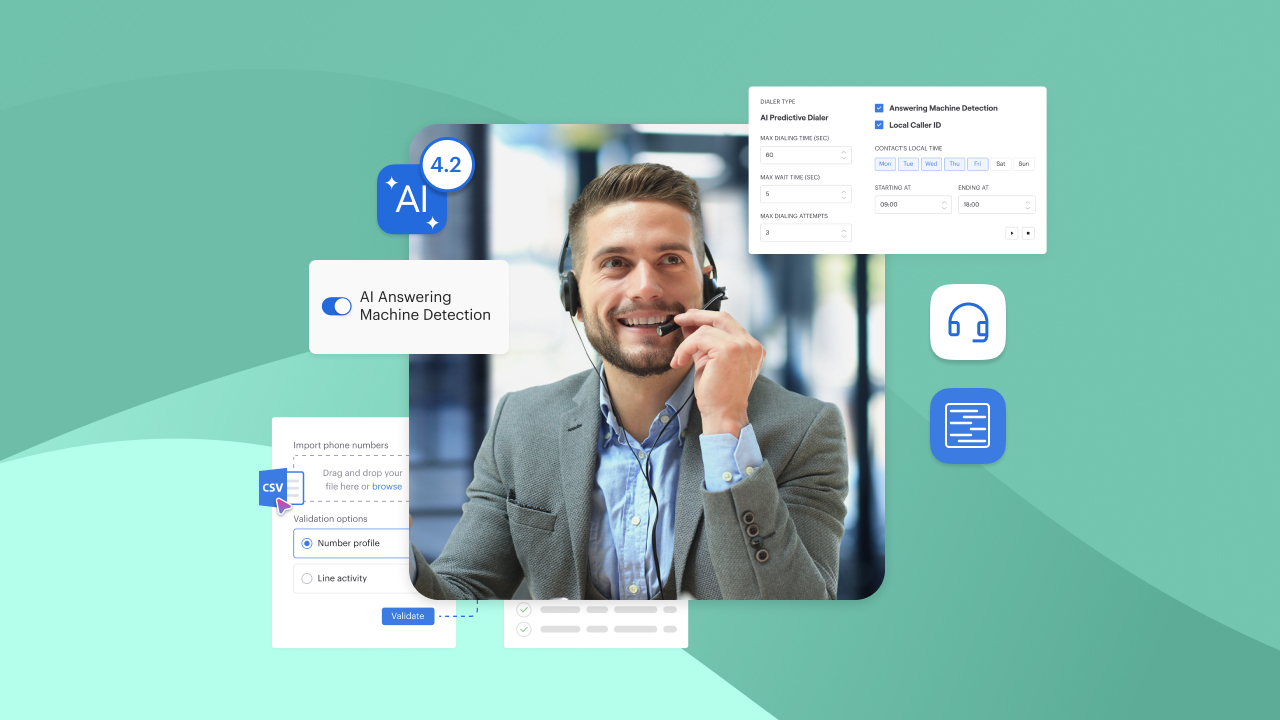
On outbound follow-up, answering machine detection separates live answers from voicemail, so reps spend their dials on real conversations rather than recorded greetings.
Use SMS follow-ups for instant engagement
If your calls keep going unanswered, text instead. Text messages tend to be seen quickly because phones stay within reach, which makes SMS a practical second touch when a call goes unanswered, provided the lead has agreed to receive texts; in the US, consent rules under the TCPA apply to automated messages.
Instead of waiting on callbacks or hoping an email gets opened, sales reps can use SMS to keep the conversation alive. Pre-built templates make it even easier: personalize, send, and keep moving.
Why this works: A quick text bridges the gap between capturing a lead and actually engaging with them. While calls can be ignored and emails buried, an SMS puts your business right in front of them.
Reduce Wait Time With an Omnichannel Approach
Leads expect businesses to meet them on their preferred platform. If your response strategy relies on a single channel, you’re missing opportunities.
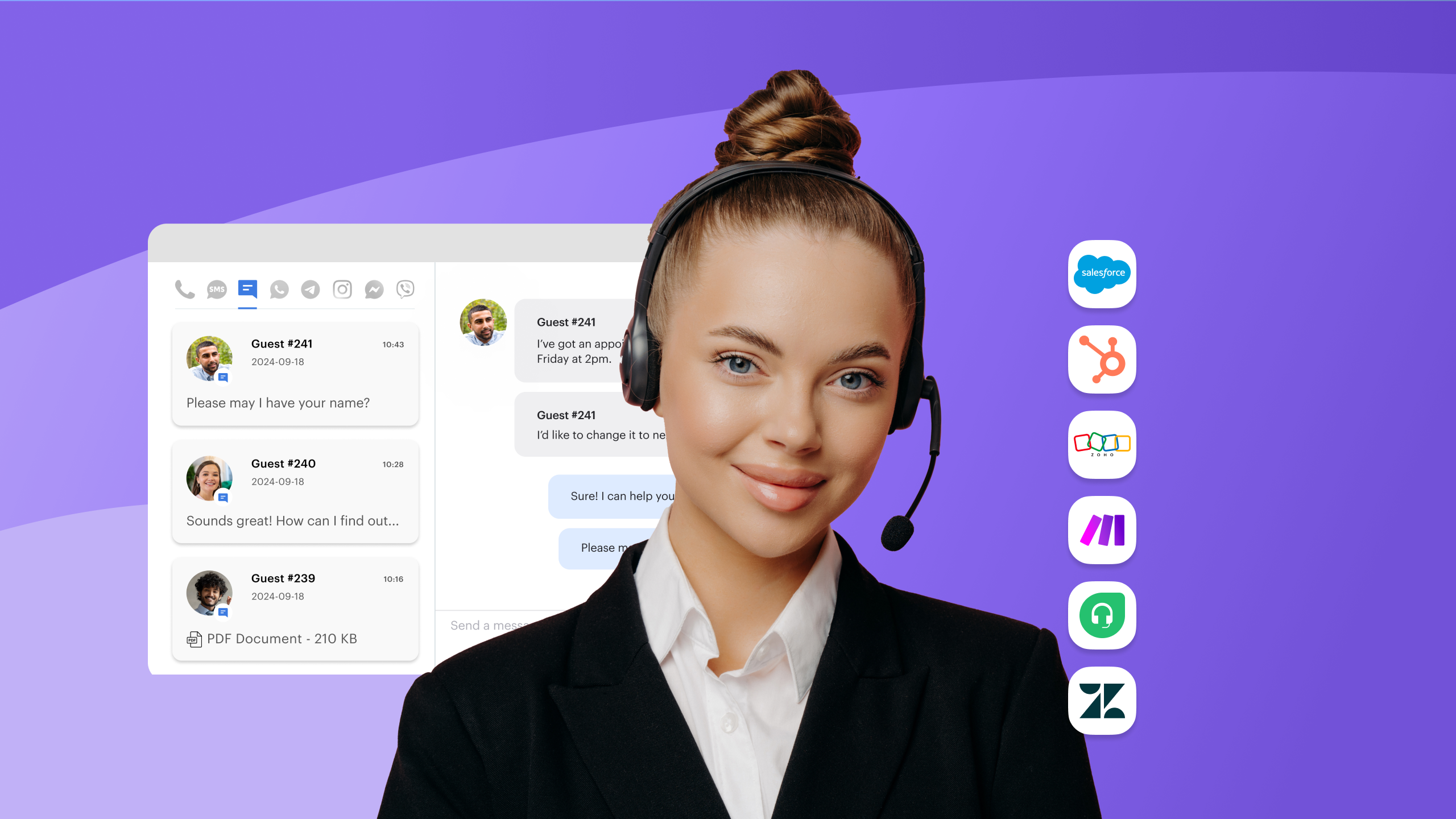
- Enable multi-channel communication: Some prospects prefer WhatsApp, Facebook, webchat, or SMS over phone calls. A unified platform ensures reps can respond wherever the lead reaches out.
- Use live chat to cut drop-off rates: Adding a chat widget to your website allows prospects to get answers instantly, reducing the chance they’ll move on to a competitor.
Why it matters: Answering on the channel the lead chose removes a step, because nobody has to switch from chat to phone before the conversation can start.
How Voiso helps teams respond to leads faster
Voiso is a cloud contact center platform, so it covers the part of lead response that happens by phone and in messaging channels rather than in lead scoring or marketing automation. Reps can handle voice, SMS, web chat and messaging apps from one omnichannel workspace, and CRM integrations with platforms such as Salesforce, HubSpot and Zoho keep call and message activity attached to the lead record.
For inbound demand, Flow Builder lets teams design IVR menus, intelligent routing and call queues, so sales calls reach an available rep instead of a general line. For follow-up, the AI predictive dialer automates outbound dialing with answering machine detection, and real-time dashboards track more than 60 performance metrics as calls happen.
[Place the existing “Everything your team needs in one platform” CTA block here]
FAQs
What’s the best way to handle leads outside of business hours?
Use chatbots, AI voice agents or SMS so out-of-hours inquiries are acknowledged and their details captured straight away, then route each lead to the first available rep when the team is back. A mobile-friendly CRM also lets reps respond remotely when a high-intent lead arrives late in the evening.
How many follow-up attempts should my sales team make?
There is no universal number, so set a sequence and measure it. A reasonable starting point spreads several attempts over a week or two, mixing calls, emails and SMS at different times of day, and ends with a clear closing message. Review which attempt produces most conversations and trim or extend the cadence from there, since the right number depends on lead source, deal size and how the prospect first got in touch.
Does lead response time impact long-term customer retention?
Yes. A fast response builds trust from the start, setting the tone for a strong customer relationship. Slow responses can signal poor service, increasing churn rates even if the deal initially closes.
How does lead response time affect sales forecasting?
Faster responses improve pipeline predictability by ensuring more leads convert into qualified opportunities. Long response times can make forecasts unreliable due to drop-off rates.
What role does personalization play in fast lead responses?
Even a fast response loses impact if it feels robotic. Using CRM data to reference the lead’s name, company, and inquiry type makes the response more effective and increases engagement.
What’s the best channel for initial lead responses?
It depends on the lead’s preferred communication style. Phone calls work best for high-intent leads, while SMS and email provide instant engagement for lower-priority leads.
How do you track lead response time in Salesforce?
Salesforce does not record lead response time as a standard lead field, so most teams build it. A common approach uses Flow to stamp the date and time of the first logged call, email or task on the lead record, then a formula field subtracts the lead’s created date to give minutes elapsed. Report on that field by owner, lead source and hour of day, and add a flag for leads that pass your SLA without any activity.
How does lead response time apply to inbound sales calls?
For a live call, the response happens when someone answers, so the useful measures shift to speed of answer, abandonment and how quickly missed calls are returned. A prospect who rings your sales line and reaches voicemail after hours is effectively an unanswered lead, and the clock should start at the moment of that missed call. Our guide to average speed of answer explains how to measure and improve the live-call side.
Is the five-minute rule still relevant in 2026?
Yes, as a direction, though the numbers deserve context. The best-known evidence dates from 2007 and 2011 and was based largely on phone follow-up to web forms, before chat, SMS and AI assistants changed how buyers expect to be answered. Those channels have made instant acknowledgment easy, so the bar for a genuinely useful reply has arguably risen. The most reliable guide is your own CRM data: compare conversion rates for leads reached inside and outside your target window.
If leads are waiting too long between the form fill and the first conversation, Voiso can show you how routing, dialing and messaging would work for your team’s volumes and channels. Book a demo and bring your current response-time numbers.