

A multichannel communication strategy doesn’t mean being present on multiple platforms. It’s actually structuring how conversations enter the system, how they’re routed, how context is preserved, and how performance is measured across channels.
Without that structure, multichannel customer support becomes reactive rather than coordinated.
This article outlines practical, operational steps to strengthen your multichannel communication strategy; focusing on routing logic, agent workflows, visibility, and system integration.
What a multichannel communication strategy actually requires
Adding new communication channels is easy. Making them operate as one coordinated system isn’t. The result is a lack of structural alignment between them.
Multichannel vs omnichannel: why the distinction affects operations
Multichannel means customers can reach your business through several communication channels like voice, SMS, chat, or messaging platforms. Those channels may be active simultaneously, but they don’t automatically share context.
Omnichannel refers to a model where interaction history is connected across channels so that context carries forward.
The operational impact becomes clear in routine scenarios. A customer calls about a billing issue and later sends a follow-up message on another channel. If interaction data isn’t synchronized, the second agent works without full visibility. The customer repeats details, handling time increases, and resolution slows.
A structured multichannel communication strategy addresses this risk deliberately. Even without full omnichannel continuity, the system must be intentionally designed.
At minimum, that structure rests on four layers:
Channel layer: The communication entry points your contact center platform supports (for example, inbound/outbound voice and any enabled digital channels).
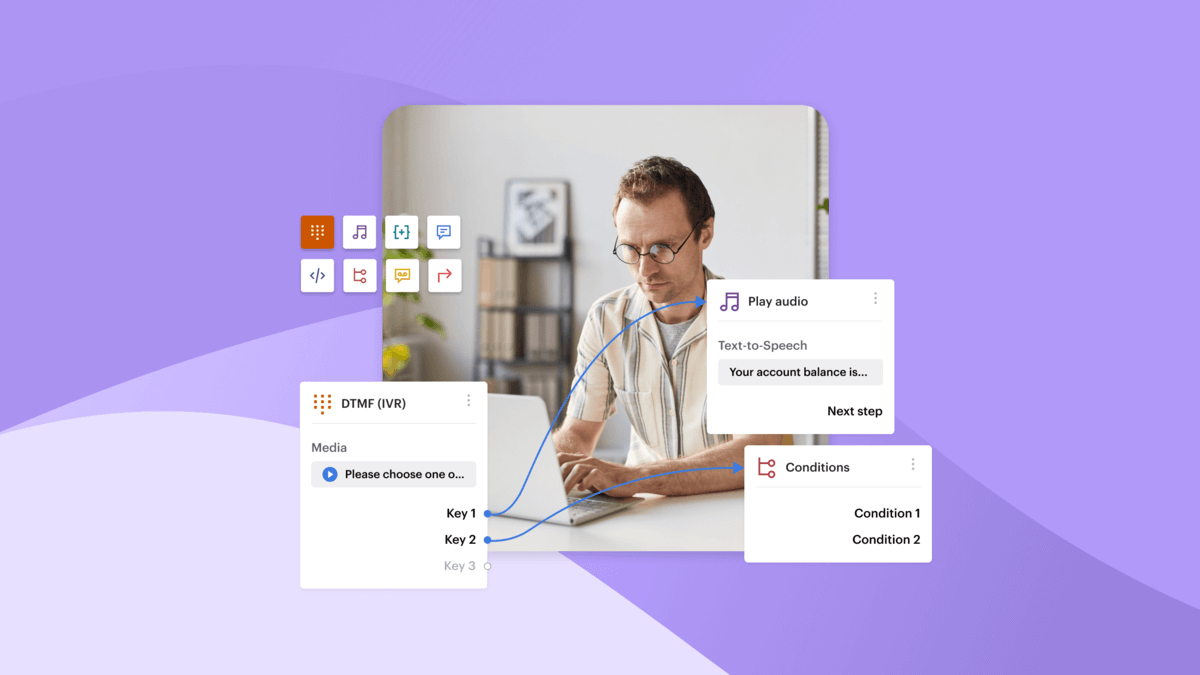
Routing layer: Rule-based logic such as IVR paths, queue definitions, and predefined distribution rules that determine how interactions are prioritized and assigned.
Agent workspace layer: The interface where agents manage conversations. Consolidating channels into a single workspace can reduce some manual switching and support more consistent handling.
Data and analytics layer: Call logs, recordings, CRM synchronization, wrap-up codes, and operational dashboards that provide visibility into configured queues and interactions.
When these layers are intentionally aligned, multichannel customer support becomes manageable and measurable. Without that alignment, every added channel introduces additional coordination overhead.
Why most multichannel customer support strategies underperform
Multichannel customer support often looks comprehensive on paper: multiple entry points, expanded availability, and broader reach. Yet performance metrics tell a different story. Average handling time increases, first contact resolution declines, and repeat contacts rise.
1. Channel expansion without workflow redesign
New channels are frequently layered onto existing voice operations without adjusting routing logic, staffing models, or service level expectations. For example, adding live chat or messaging support without redefining concurrency rules or queue priorities creates hidden strain. Agents shift between interaction types with no structured coordination.
A common outcome is longer handling times and inconsistent response patterns across channels.
2. Fragmented data reduces agent productivity
When interaction history, call logs, or CRM context aren’t consistently visible across channels, agents spend time reconstructing conversations manually. Customers repeat information, and post-call work often increases.
This fragmentation can directly affect performance indicators such as AHT and FCR. Even small inefficiencies compound across high interaction volumes.
3. Measuring channels instead of journeys
Many teams track performance per channel: voice SLAs, chat response time, and SMS open rates, without examining the full customer journey. A case that begins on chat and resolves on a call may be counted as two interactions rather than one unresolved process.
This measurement gap inflates contact volume and obscures the true repeat contact rate. Without journey-level visibility, optimization efforts focus on isolated queues rather than systemic friction.
When these breakdowns coexist, multichannel support becomes reactive rather than coordinated. Improving performance requires addressing structural design.
Seven high-impact ways to improve your multichannel communication strategy
Improving multichannel performance means tightening how your system operates. Here’s how.
Unify all channels into a single agent workspace
Frequent tab switching reduces focus and slows resolution. In contact centers, that loss shows up as longer handling times and inconsistent responses.
When voice and digital interactions live in separate systems, agents manually reconstruct context. A unified workspace can help agents keep better context within the tools and records they have access to.
It’s crucial to invest in a single workspace where agents handle voice and any enabled digital channels in one place (where supported).
Implement intelligent routing based on intent and context
Routing directly affects cost and resolution rates.
Basic queue distribution is rarely enough. Structured routing should reflect inquiry type, agent capability, and channel priority. With poor routing, teams often see AHT rise, FCR fall, and repeat contacts increase.
Rule-based IVR paths and flow configuration allow teams to define clear routing logic. Well-designed routing reduces operational friction and can support first-contact resolution goals by reducing avoidable transfers.
Design channel-specific communication frameworks
Each channel has different constraints.
Voice allows immediate clarification. Messaging requires concise, structured responses. Live chat typically demands faster replies than email.
Define tone standards, response time targets, and escalation rules per channel. Without these guidelines, service becomes inconsistent, even when individual agents perform well.
Clear channel frameworks can reduce avoidable repeat contacts and improve experience consistency.
Turn conversations into structured performance data
Unstructured conversations are difficult to improve at scale.
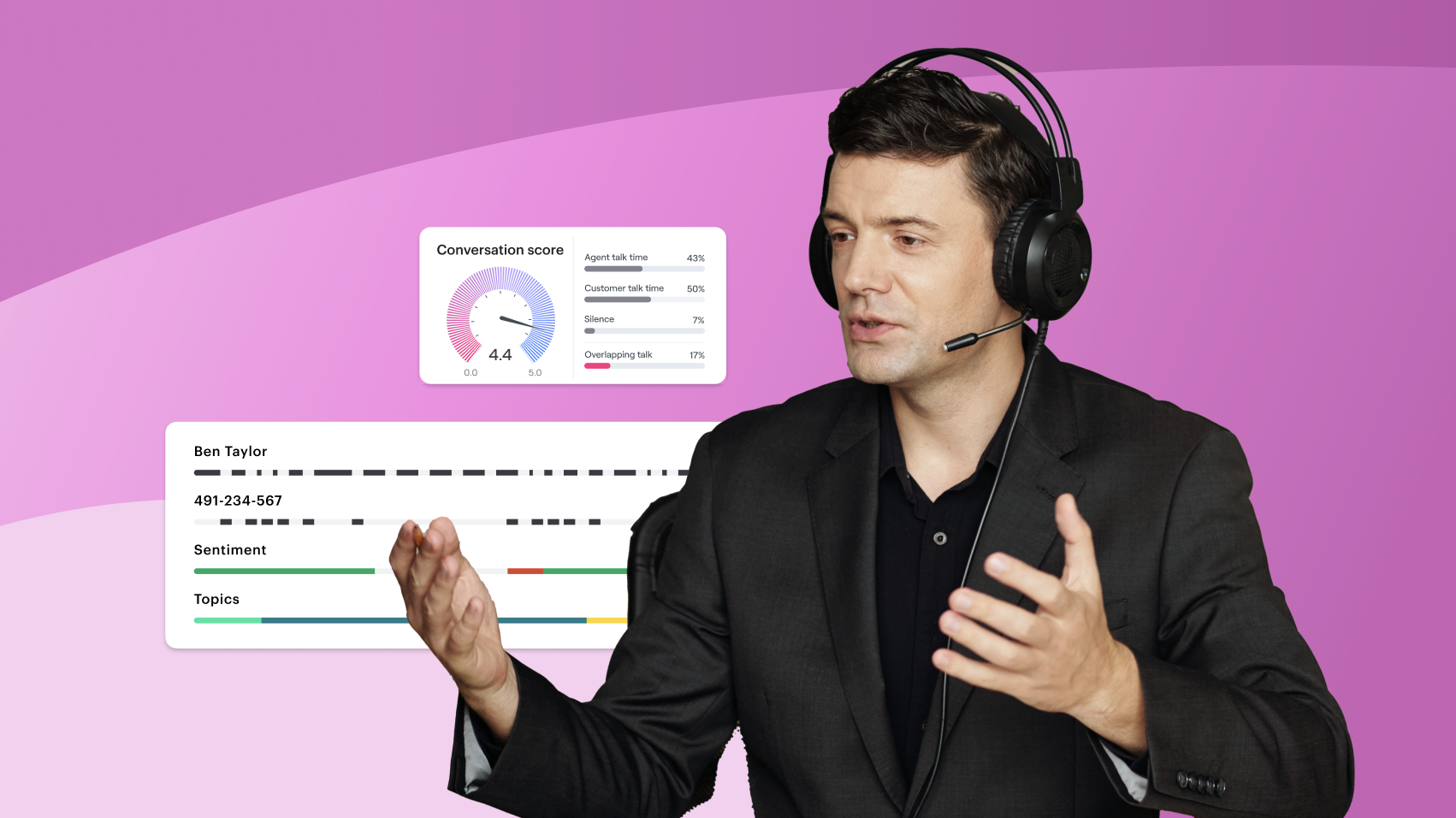
Post-call transcripts, keyword grouping, and scoring tools help identify patterns across large volumes of interactions. Supervisors can review trends and coach more consistently.
Voiso’s Speech Analytics provides post-call transcripts and structured insights. This supports quality assurance and performance review without implying real-time AI intervention.
Structured analysis can reduce manual QA effort and improves coaching clarity.
Integrate your communication tools with CRM and helpdesk systems
Manual data entry increases after-contact work and reduces accuracy.
CRM and helpdesk integrations: such as Salesforce, Zoho, and Freshdesk, help synchronize call activity, display matching records, and log interaction details automatically.
Build real-time visibility across channels
Supervisors need operational awareness across all active channels.
Live dashboards can show queue status, active calls, and agent activity for configured queues.
Engineer the system for hybrid and distributed teams
Distributed teams require secure, centralized communication infrastructure.
Cloud-based access allows agents to work from different locations within the same routing configuration and operational reporting available in the platform.
The KPIs that actually measure multichannel success
The number of channels you support isn’t a performance metric. Resolution efficiency and cost control across those channels are.
Metrics that reveal structural strength, or weakness
Cost per contact by channel: This shows the operational expense of handling interactions in voice versus messaging or other digital channels. Large cost gaps are normal. The risk appears when high-cost channels are used for simple issues that could be resolved elsewhere.
Deflection rate: The share of interactions handled in a lower-cost channel without moving to a higher-cost channel, based on how you define and track escalation.
Cross-channel resolution rate: Indicates whether issues that begin on one channel are resolved without unnecessary switching. Low cross-channel resolution often signals context gaps or routing friction.
Repeat contact rate: Tracks how often customers return about the same issue. Rising repeat contacts typically point to incomplete resolution or inconsistent communication standards.
Channel switching frequency: Measures how often customers move between channels during a single journey. Some switching is expected. High switching rates may indicate friction, long response times, or lack of context continuity.
Customer effort score (CES): Reflects how easy customers perceive the interaction process to be. Even if internal metrics look strong, a poor effort score suggests structural complexity that customers feel directly.
Agent occupancy across channels: Shows how effectively agent time is distributed between voice and digital interactions. Imbalance can indicate poor concurrency rules or uneven routing design.
Individually, these metrics provide partial insight. Together, they reveal whether your multichannel communication strategy is structurally aligned, or simply operating as parallel queues with shared branding.
How to build a scalable multichannel communication architecture
Done right, scalability involves building a structure that can absorb growth without increasing friction, cost, or risk.
A resilient multichannel architecture rests on three foundations:
- Structured automation at entry points: Use rule-based IVR paths and predefined routing logic to handle predictable interactions before they reach an agent. For example, improving routing and self-service entry points can help manage demand.
- Centralized customer data: A CRM-first model ensures that interaction history is recorded in one system of record. Call activity logging and contact lookup should be configured to flow into your CRM/helpdesk where supported. Without centralized records, adding channels increases fragmentation instead of improving visibility.
- Compliance built into system design: As communication volume scales, structured call-handling controls (such as masking where available and required) and defined data visibility rules become infrastructure requirements. The platform can support secure configuration, but governance remains an operational responsibility.
Voiso provides a contact center layer: routing configuration, call logging, CRM integrations (where available), and access controls, to support this structure. However, long-term scalability depends on how intentionally those components are designed and maintained.
FAQs
How do you measure whether a multichannel strategy is actually working?
Channel availability is not a performance metric. More meaningful indicators include:
- Cross-channel resolution rate
- Repeat contact rate
- Cost per contact by channel
- Channel switching frequency
- Agent occupancy across interaction types
If resolution efficiency declines as channels expand, the issue is usually structural: routing design, data visibility gaps, or unclear handling standards.
Does adding more channels automatically improve customer experience?
Not necessarily.
Additional channels increase accessibility, but they also introduce operational complexity. Without unified visibility, structured routing, and consistent communication standards, customers may experience longer resolution times and repeated information requests.
How can routing improve first contact resolution (FCR)?
Routing determines whether the right agent handles the right inquiry at the right time.
Well-defined IVR paths, queue rules, and skill-based routing reduce unnecessary transfers. Each avoidable transfer increases handling time and lowers the probability of resolving the issue in one interaction.
Improving FCR often starts with refining routing logic rather than increasing staffing.
What role does analytics play in multichannel customer support?
Analytics can provide visibility into patterns that are difficult to detect manually.
Post-interaction transcripts, keyword grouping, call outcomes, and performance dashboards help teams identify recurring issues, coaching opportunities, and structural bottlenecks. This supports more consistent quality assurance and informed operational adjustments.