All Products

.svg)





The issue usually isn’t the phone system. It’s the gap between conversations and the customer data teams rely on in HubSpot. Reps jump between tools, log calls manually, or miss details entirely. That friction erodes data quality over time and makes the CRM less useful for everyone.
That’s why many HubSpot teams look for VoIP integrations, which can help make sure calls get handled and logged, and that details show up where the rest of the customer journey already lives.
This guide covers what a HubSpot VoIP integration should actually deliver and where HubSpot’s native tools fall short. It also walks through how to evaluate providers without overbuying or assuming capabilities that aren’t there.
Why HubSpot teams look for VoIP integrations
HubSpot is designed to centralize customer activity across marketing, sales, and service. But voice interactions often break that model.
When calling happens outside the CRM, teams deal with:
- Incomplete or inconsistent call logs
- Lost context during conversations
- Manual data entry that rarely holds up over time
As call volume increases, these gaps compound. Sales teams lose track of deal progression. Support teams repeat questions customers already answered. Reporting becomes unreliable because call activity isn’t consistently captured.
A VoIP integration won’t solve attribution or analytics by itself. What it can solve is execution: making sure calls actually show up in HubSpot with enough structure to be useful.
What “VoIP integration” should actually mean
Not every tool that “connects with HubSpot” is truly integrated.
A practical HubSpot VoIP integration should do three things:
- Calling from inside HubSpot: Agents should be able to place calls directly from contact, company, or deal records without switching tools.
- Consistent call logging: Inbound calls and click-to-call activity should appear reliably in HubSpot’s call records with standard details like duration, direction, and outcomes.
- Context during conversations: When a call connects, agents should see the relevant CRM record so they’re not starting cold.
Anything beyond that (campaign attribution, advanced analytics, AI scoring) belongs to other categories of tools and should be evaluated separately.
What HubSpot’s native calling tools can and can’t do
HubSpot includes built-in calling features that work for basic use cases.
What you get out of the box
With HubSpot’s native dialer, teams can place outbound calls directly from the browser, log call outcomes and notes, and view call activity on contact and deal timelines. For low-volume teams or simple workflows, this may be enough to get started.
Where native calling falls short
As teams scale, limitations show up:
- Call quality depends heavily on browser and connection conditions
- Logging relies on user behavior and consistency
- There’s no built-in way to improve call handling workflows
HubSpot’s native tools focus on activity tracking, not on managing calls as a core operational channel.
Everything your team needs in one platform
How third-party VoIP tools extend HubSpot
Many teams turn to external VoIP platforms to improve reliability and workflows. These tools typically add click-to-call integrations, automatic call logging and basic workflow triggers, but of course there are tradeoffs.
For instance, agents may need to work in separate interfaces, rely on browser extensions, or manage multiple dashboards to see a full picture.
The question isn’t whether a provider integrates with HubSpot. It’s how cleanly call activity is displayed inside the CRM.
Improving call visibility and CRM hygiene with Voiso
Voiso is a calling and call-logging layer for HubSpot, not a call attribution or analytics platform.
Its role is to make sure phone interactions are handled consistently and reflected accurately in HubSpot, without relying on manual input from agents.
Click-to-call and inbound call logging
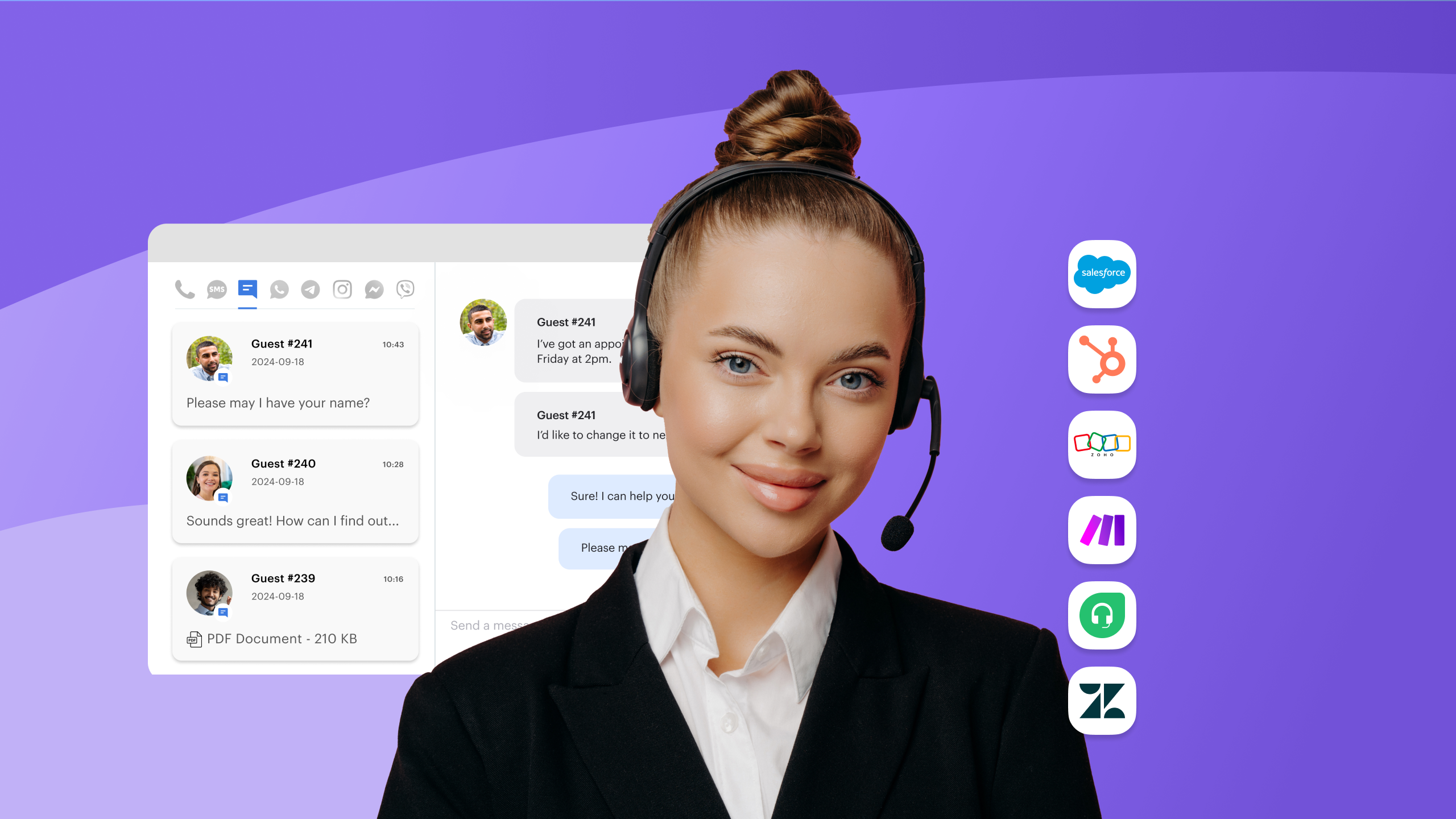
Voiso lets agents place calls directly from HubSpot using click-to-call on Contacts, Companies, and Deals. Inbound calls are also logged automatically.
Completed calls appear in HubSpot’s Calls table with:
- Call direction
- Duration
- Status
- Wrap-up outcomes and notes
This reduces missed activity and improves CRM data reliability over time.
Screen pop and contact context
For voice calls, Voiso supports screen pop in HubSpot. When a call is answered and a matching contact is found, the HubSpot contact record appears automatically. Agents see contact details and interaction history right away.
For inbound digital interactions, Voiso offers CRM Contact Lookup in the Omnichannel Workspace. This pulls HubSpot contact information without storing CRM data in Voiso. HubSpot stays the system of record, and agents get the context they need without switching tools.
Optional call summaries
For teams using Speech Analytics, Voiso can include call summaries in HubSpot call records. These summaries surface the main discussion points and help managers or account owners review conversations without replaying full recordings. This makes handoffs and reviews faster without changing how teams work in HubSpot.
Compliance and data protection
Voiso supports contact masking in HubSpot. Real phone numbers can be hidden from agents while click-to-call remains functional. Voiso retrieves the real number only for dialing, which helps teams meet privacy or compliance requirements without disrupting workflows.
Where Voiso fits and where it doesn’t
Voiso improves how calls are handled and logged inside HubSpot. It helps teams keep call activity complete and consistent within the CRM.
It doesn’t replace call attribution platforms, dynamic number insertion tools, or campaign-level tracking systems. Those sit outside the scope of a calling integration.
Voiso complements those tools by making sure that once a call reaches your team, it’s properly handled and shows up in HubSpot.
Choosing the right HubSpot VoIP integration
A good HubSpot VoIP integration doesn’t promise to do everything. It focuses on doing a few things well:
- Letting agents call from where they already work
- Making sure calls are logged reliably
- Preserving context during conversations
When those basics are handled correctly, teams spend less time fixing data and more time acting on it.
For HubSpot users who rely on phone conversations to move deals forward or resolve issues, that operational reliability is what makes a VoIP integration worth the investment.