


For contact centers, resolving these conflicts is operational work as much as emotional labor. The agent needs to figure out what actually went wrong, fix it (or explain what happens next), and log enough detail that the same problem doesn’t keep recurring.
That takes more than a calm tone. It takes workflows that route complaints to the right people, scripts that give agents something concrete to say, and systems that pull up a customer’s history without making them repeat themselves.
This guide covers why escalations happen, how agents work through them, and what contact centers do with that data afterward.
Why customer conflicts escalate in service environments
Most customer conflicts begin as routine service requests that gradually escalate when expectations, communication, or processes break down.
By the time a customer expresses frustration, the issue has often already passed through several points of friction. Understanding where escalation begins helps support teams resolve conflicts earlier and prevent similar situations in the future.
Expectation gaps between customers and service processes
Many service conflicts emerge from a gap between what customers expect and how the service actually operates.
Customers may assume a refund will be immediate, a delivery delay will be automatically communicated, or a technical issue will be resolved during the first interaction. When the process differs from those expectations, frustration can build quickly.
These gaps are especially common in industries with complex policies or regulatory constraints. Financial services, travel bookings, and subscription services often involve procedures that aren’t immediately visible to customers. Without clear explanations, routine policies can appear arbitrary or unfair.
Support teams that proactively clarify timelines, policies, and next steps often prevent minor complaints from turning into escalated disputes.
Operational breakdowns that trigger customer complaints
Some conflicts aren’t caused by the issue itself but by the experience of trying to resolve it.
Common operational friction points include:
- Long routing paths before reaching the correct team
- Repeating the same information to multiple agents
- Limited access to previous interaction history
- Slow follow-ups after a support request
When customers feel they must repeat their story or chase updates, frustration grows even if the underlying issue is relatively small.
Reducing these operational gaps through well-defined routing rules, access to previous interaction history, and consistent follow-up can help lower the number of escalated complaints.
Emotional escalation during support interactions
Customers usually contact support when something has already gone wrong. This means many conversations begin with heightened emotions.
Small signals during the interaction can influence whether the situation stabilizes or escalates. Long silences, unclear explanations, or responses that sound scripted can make customers feel unheard.
In contrast, clear acknowledgement of the issue and a structured explanation of the next steps often helps stabilize the conversation. When customers understand what will happen next, the interaction tends to shift from confrontation toward resolution.
The conflict resolution framework used by high-performing support teams
Customer service conflicts are easier to manage when agents follow a consistent structure. Without a framework, responses often become reactive, which can prolong the interaction or create additional misunderstandings.
Many support teams train agents to follow a repeatable resolution process. The goal is to make sure each interaction moves toward a clear outcome. A structured approach also helps teams document issues accurately and improve processes over time.
Step 1: Identify the root cause behind the complaint
Customers often describe the immediate problem rather than the underlying cause.
For example, a customer might say a product “doesn’t work” or a charge “should not appear.” In practice, the issue could stem from a billing policy, a configuration setting, or a misunderstanding about how a feature works.
Agents typically begin by clarifying the situation with targeted questions. This helps confirm the context of the issue and prevents incorrect assumptions about what went wrong.
Accurate diagnosis early in the interaction reduces the risk of offering solutions that do not address the actual problem.
Step 2: Acknowledge the issue and stabilise the conversation
Before moving directly to problem-solving, agents often acknowledge the customer’s experience. This signals that the concern has been understood and taken seriously.
Acknowledgement doesn’t necessarily mean admitting fault. Instead, it demonstrates that the agent recognises the customer’s frustration and is focused on resolving the issue.
When customers feel their concern has been heard, the interaction typically becomes easier to manage. The conversation can then move toward practical next steps.
Step 3: Provide a clear path to resolution
Customers want to understand what will happen next.
Effective responses usually include three elements:
- What action will be taken
- Who is responsible for the next step
- When the customer can expect an update or resolution
Providing clear timelines and expectations helps prevent further frustration. It also reduces the likelihood of repeated follow-up requests.
Step 4: Confirm the outcome and document the interaction
Once the issue has been addressed, agents typically summarise the resolution and confirm that the customer understands the outcome.
Documenting the interaction is also important. Recording the reason for the complaint, the actions taken, and the final outcome helps teams track recurring issues and review patterns in customer feedback.
Over time, these records help support teams improve processes, refine training, and address operational problems that trigger repeated conflicts.
Common customer service conflict scenarios and how teams resolve them
Customer service conflicts usually follow predictable patterns. While the details vary by industry, most escalations fall into a small number of recurring categories.
Understanding these scenarios helps support teams prepare structured responses instead of reacting to each case from scratch. Well-documented handling processes also make training easier and improve consistency across teams.
Billing and payment disputes
Billing questions are one of the most common sources of customer complaints. These situations often arise when customers do not fully understand pricing structures, subscription renewals, or transaction timing.
Agents typically begin by verifying the relevant details, such as the transaction history, billing cycle, or service agreement. Once the information is confirmed, the agent can explain how the charge occurred and whether any adjustments are possible.
Clear explanations are often the most important part of resolving billing disputes. When customers understand how a charge was applied, the conversation often shifts from confrontation to clarification.
Service delays or unmet delivery expectations
Delays can quickly create frustration, particularly when customers feel they haven’t received updates about the issue.
In these situations, support teams focus on two priorities: explaining what caused the delay and providing an updated timeline. Even when the issue cannot be resolved immediately, transparent communication often reduces tension.
Many teams also document these incidents to identify recurring operational bottlenecks, such as delays in fulfilment, onboarding, or technical troubleshooting.
Miscommunication about product features or service limitations
Some conflicts occur when customers believe a product or service should function differently than it actually does.
This may happen when product documentation is unclear, marketing descriptions create unrealistic expectations, or customers misinterpret how a feature works.
In these cases, agents typically walk the customer through the intended functionality and clarify any limitations. When necessary, they may provide workarounds or suggest alternative approaches that better fit the customer’s needs.
Clear explanations and examples often resolve these conflicts without requiring escalation.
Interactions with highly frustrated or aggressive customers
Occasionally, support teams encounter situations where emotions run high. These interactions can escalate quickly if the conversation becomes confrontational.
Many organisations train agents to slow the pace of the conversation, acknowledge the concern, and keep responses focused on the issue rather than the tone of the interaction.
If the situation continues to escalate, supervisors may step in to review the case or provide additional support. Structured escalation paths help protect both the customer experience and the wellbeing of support staff.
Metrics that reveal how effectively customer service conflicts are resolved
Contact centers need clear indicators to understand whether customer conflicts are being handled effectively. Operational metrics help teams identify friction in the support process and improve how issues are resolved.
| Metric | What it measures | Why it matters |
| First contact resolution (FCR) | Whether an issue is resolved during the first interaction | Reduces repeated contacts and customer frustration |
| Customer effort score (CES) | How easy it was for the customer to resolve their issue | Identifies friction in support processes |
| Call reviews and transcripts | How interactions unfold during real conversations | Helps supervisors identify patterns and improve agent training |
First contact resolution (FCR)
First contact resolution measures how often a customer’s issue is solved during the first interaction.
Higher FCR usually indicates that agents have the information and authority needed to resolve problems without additional follow-ups. When customers must contact support multiple times, frustration often increases.
Tracking FCR helps teams identify recurring issues that require escalation or additional investigation.
Customer effort score (CES)
Customer effort score measures how easy it was for a customer to resolve their issue.
Even when a problem is resolved, a complicated process can leave customers dissatisfied. Monitoring effort helps teams identify friction points such as long wait times, complex procedures, or unclear instructions.
Reviewing call recordings and transcripts
Reviewing past interactions helps teams understand how conflicts develop during real conversations.
Call recordings, transcripts, and interaction logs allow supervisors to review how agents handled the situation after the interaction and how the resolution was communicated.
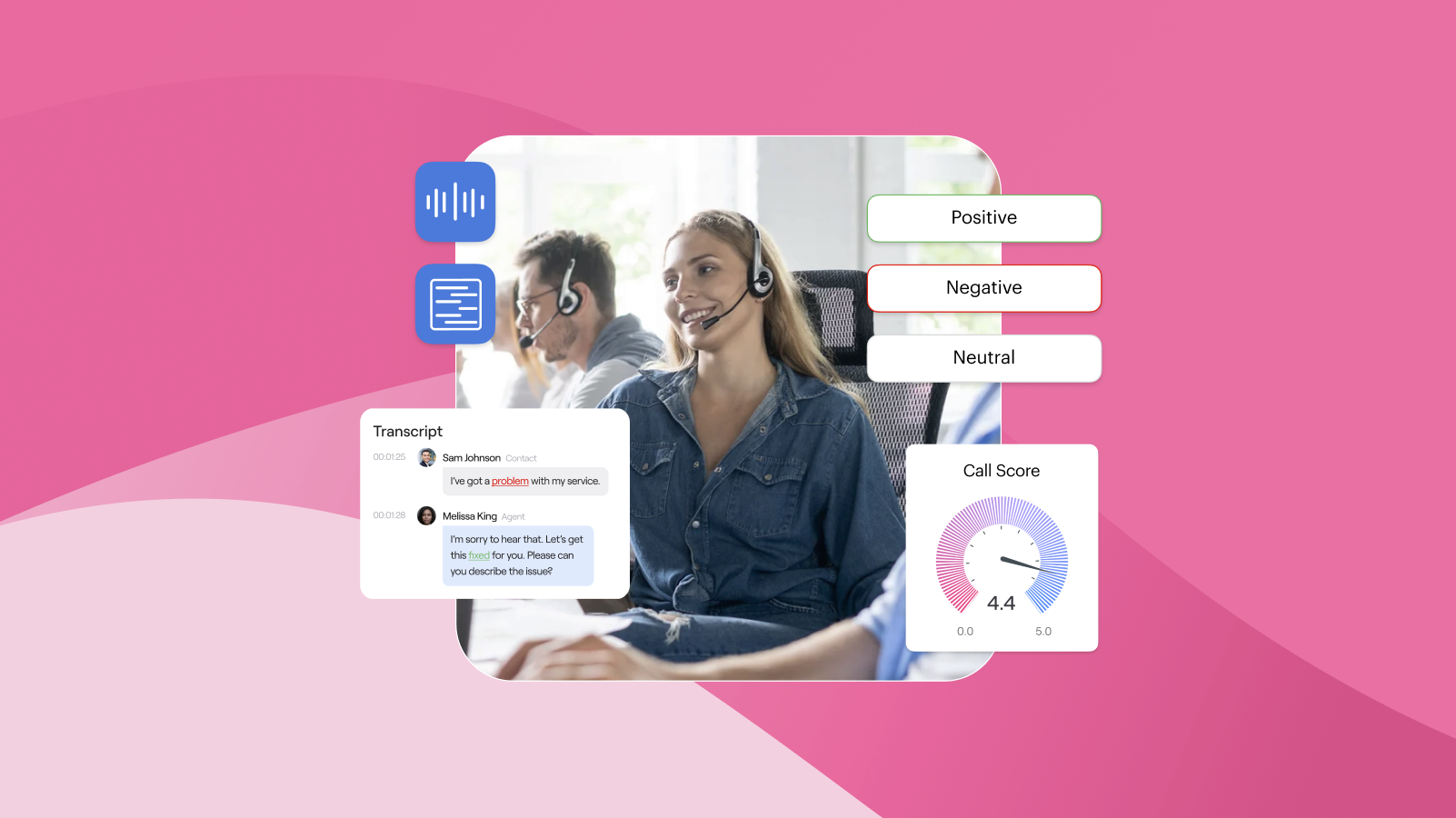
Some contact center platforms generate call post-call transcripts and summaries that supervisors can review after an interaction. This can help supervisors review calls more efficiently and identify recurring themes.
Training customer service teams to handle difficult interactions
Even with clear processes, conflict resolution depends heavily on how well agents are trained to manage complex conversations.
Support teams typically combine structured training with ongoing interaction reviews. This helps agents develop practical communication skills while ensuring resolution practices remain consistent across the organization.
Scenario-based training for common conflict situations
Many contact centers use scenario exercises to prepare agents for difficult conversations.
These exercises simulate situations such as billing disputes, service delays, or frustrated customers. Agents practice diagnosing the issue, explaining the next steps, and guiding the interaction toward a resolution.
Scenario-based training helps agents become more comfortable handling escalation without relying on rigid scripts.
Reviewing real interactions for coaching
Coaching often relies on reviewing past customer interactions.
Call recordings, transcripts, and interaction logs can help supervisors examine how conversations developed and how the resolution was explained to the customer. These reviews can highlight communication gaps or situations where additional clarification would have helped the interaction.
Supervisors can use these insights to provide targeted feedback and reinforce effective resolution practices.
Using interaction insights to improve training
Over time, reviewing customer conversations can reveal patterns in how conflicts arise.
Repeated complaints about a specific process, unclear explanations, or recurring misunderstandings may indicate gaps in training or documentation. Identifying these patterns helps teams refine guidance for agents and adjust workflows where necessary.
Some contact center platforms also generate transcripts and summaries of calls, which can help supervisors review interactions more efficiently and identify common themes across conversations.
Turning customer conflicts into opportunities to improve service
Customer conflicts are often treated as isolated incidents. In reality, they can provide valuable insight into how service processes, communication, or expectations are working in practice.
When support teams document and review complaints consistently, recurring issues become easier to identify. Patterns in billing questions, delivery delays, or product misunderstandings can reveal gaps in documentation, policies, or operational workflows.
These insights allow organizations to refine policies, improve communication, and address recurring friction points before they escalate into larger problems. Over time, treating conflicts as operational feedback helps contact centers strengthen service processes while building more consistent and transparent relationships with customers.
Explore how Voiso helps teams monitor interactions and improve service operations.
FAQs
What is customer service conflict resolution?
Customer service conflict resolution refers to the process of addressing customer complaints or disputes during support interactions. It typically involves identifying the cause of the issue, explaining the available resolution options, and confirming the outcome with the customer.
What are the most common causes of customer service conflicts?
Conflicts often arise from expectation gaps, billing misunderstandings, service delays, or unclear product information. Operational issues such as long wait times or repeated transfers can also increase frustration during support interactions.
How can contact centers reduce customer complaints?
Support teams can reduce complaints by improving communication, providing clear resolution timelines, and ensuring agents have access to relevant customer information. Reviewing past interactions and identifying recurring issues also helps teams address root causes.
Why is first contact resolution important?
First contact resolution measures whether a customer’s issue is resolved during the first interaction. Higher first contact resolution often leads to better customer experiences because customers do not need to contact support multiple times for the same problem.
How do contact centers review customer interactions?
Contact centers often review call recordings, transcripts, and interaction logs to understand how issues were handled. These reviews help supervisors identify communication gaps, improve agent training, and refine support processes over time.
Further Reading
- Customer Service Principles
- How To Reduce Customer Service Costs
- De-Escalation Techniques In Customer Service
- Customer Experience Vs Customer Service
- How To Master Customer Service
- How To Build A Winning Customer Service Strategy
- A Guide To Customer Service Automation