


But most cold calls in automotive sales fall flat. The scripts are rigid, they ignore what the buyer actually wants, and they sound like every other dealership call. People hang up within seconds when they can tell you’re reading from a sheet.
This guide works differently. You’ll find scripts built around real scenarios, with the reasoning behind each one. The focus is on steering conversations, working through objections, and getting to a concrete next step.
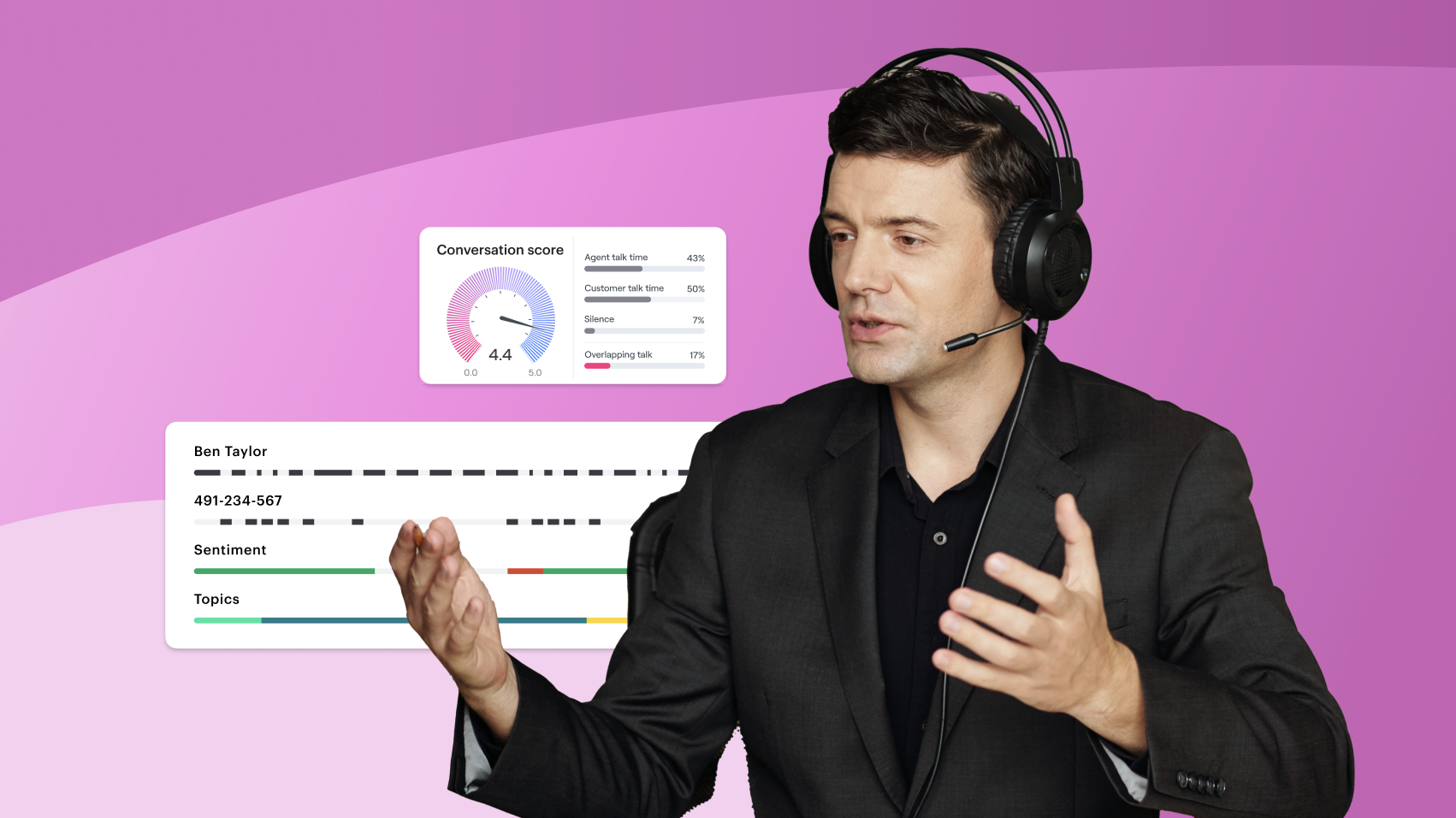
You’ll also see how teams that consistently hit their numbers use call data, CRM notes, and AI analysis to sharpen their approach. Voiso provides post-call recordings, transcripts, sentiment analysis, summaries, and logged outcomes such as dispositions or wrap-up codes, which teams can use in coaching and process reviews.
The goal: cold calling that you can measure, adjust, and actually get results from.
What separates cold calls that convert from the ones that don’t
They respond to buyer intent instead of pushing inventory
The best sales calls open with context, not a pitch. The difference plays out in the first few seconds.
Someone who requested a trade-in valuation wants a completely different conversation than someone who browsed SUVs at midnight. Lumping them together creates friction immediately. Reps who convert consistently adjust based on where the prospect actually is in the buying process.
A website inquiry needs fast, specific follow-up. A cold database lead needs you to establish relevance before mentioning any vehicle. A returning prospect expects you to remember what you talked about last time.
This comes down to figuring out why the customer engaged in the first place. That question matters more than any feature list, and it opens the door to real qualification.
They nail the first 15 seconds
The opening seconds decide whether the call lives or dies. The structure that works is simple: context, reason, permission.
Weak opening:
“Hi, this is John from ABC Motors. I wanted to talk to you about our latest offers.”
Better opening:
“Hi Sarah, you checked the 2022 BMW X3 on our site yesterday. I’m calling to see if you’re still considering something in that range.”
The second version works because there’s no guessing about why you’re calling. It’s timely, it’s specific, and it invites a response instead of broadcasting a message.
They treat objection handling as a system
Objections in car sales are predictable. Timing worries, price pushback, general hesitation. They show up in almost every call. The teams that convert well don’t wing it. They have a repeatable approach:
- Acknowledge the concern without arguing
- Reframe with relevant information
- Redirect toward the next step
Example:
“I’m just looking right now.”
Response:
“That makes sense. Most people start there. Out of curiosity, are you comparing a few models or focusing on one type?”
No pressure, but the conversation keeps moving. And the rep walks away with new information to work with.
When this pairs with solid negotiation tactics and clear closing techniques, objections become stepping stones instead of dead ends.
The cold call framework (step by step)
Step 1: Open with context
Every good cold call starts with a reason the prospect will recognize. Drop the generic intro and anchor in something real: a vehicle they viewed online, a finance request, a previous conversation.
“Hi Daniel, you requested details about the Audi Q5 earlier this week. I wanted to follow up while it’s still available.”
This works because the call feels expected. The prospect immediately knows this conversation will be relevant.
Step 2: Hook value to a real trigger
Once you’ve established context, connect value to something the buyer cares about: a price change, limited stock, a trade-in window, or new financing terms.
“We’ve just had a price adjustment on that model, and a few similar vehicles sold this week.”
Urgency without the hard sell. The value is specific and tied to something they already showed interest in.
Step 3: Qualify through layered questions
Don’t ask broad questions. Guide the conversation through layers, where each answer shapes the next question.
Intent: “Are you looking to make a move soon or still exploring options?”
Constraints: “Will you be trading in your current vehicle?”
Decision context: “Have you narrowed it down to a couple of models?”
Each question builds on the last. You end up with a clearer picture and can adjust in real time.
Step 4: Handle objections without breaking flow
Objections usually surface during qualification. The trick is addressing them without derailing the conversation. Acknowledge, clarify, guide.
“I’m not ready yet.”
“Understood. Are you waiting for a specific timeline or still deciding between options?”
The call stays alive, you learn something useful, and you avoid the premature hang-up.
Step 5: Close for the next action
The point of a cold call is to secure a next step: a test drive, a tailored offer, a follow-up call.
“I can reserve the car for a quick test drive tomorrow. Would morning or afternoon work better?”
A simple choice that keeps things moving.
Step 6: Set a follow-up trigger
Every call should end with a plan for what happens next, even if the prospect isn’t ready to move forward.
CRM systems handle the heavy lifting here: logging outcomes, scheduling reminders, tracking where each deal stands. With Voiso, agents can automatically log call details and notes in connected systems after each interaction, so follow-up context is easier to keep track of.
Follow-ups land better when they reference the last conversation. People notice when you remember what they told you.
8 cold call scripts for car sales (with context and reasoning)
Script 1: Website lead follow-up (high intent)
Use when: A prospect viewed a vehicle or submitted an online inquiry.
“Hi Alex, you were checking out the Toyota RAV4 on our site earlier today. I wanted to follow up while it’s still available. Are you comparing a few options or focusing on something similar to that model?”
This anchors the call in a recent action and invites a real response. The most common mistake here is waiting too long. Speed matters more than perfect wording.
Script 2: Trade-in opportunity outreach
Use when: You have data on the prospect’s current vehicle or past purchase.
“Hi Maria, I’m reaching out from [Dealership]. We’re currently seeing strong demand for your model, and some owners are getting higher trade-in values than expected. Would you be open to a quick valuation to see where you stand?”
The financial angle hooks attention. The common mistake is jumping straight to selling a new car before exploring the trade-in.
Script 3: New model arrival
Use when: A new version of a popular model hits the lot.
“Hi James, I remember you were interested in the previous version of the BMW 3 Series. The new model just arrived this week with updated features. Would you like a quick overview or prefer to see it in person?”
Reconnects with past interest and introduces something new. Resist the urge to list features before confirming interest.
Script 4: Used car inventory match
Use when: You identify a vehicle that fits a prospect’s earlier criteria.
“Hi Laura, we just received a pre-owned Honda CR-V that matches what you were looking for. It has a full service history and low mileage. Are you still considering something in that range?”
Shows you were paying attention. Vague descriptions kill credibility here, so be specific.
Script 5: Lease renewal conversion
Use when: A customer’s lease is approaching its end.
“Hi Daniel, your lease on the Audi A4 is coming up for renewal soon. Many customers in your position are upgrading to newer models with similar monthly payments. Have you started exploring your next option?”
Frames the expiration as an opportunity, not administrative paperwork. Don’t treat it as a routine reminder.
Script 6: Missed showroom visit follow-up
Use when: A prospect booked or considered a visit but didn’t show.
“Hi Sophie, you were planning to visit us to see the Nissan Qashqai. I wanted to check if your plans changed or if you’d like me to reserve the car for another time.”
Neutral, convenience-focused. The worst thing you can do here is sound accusatory.
Script 7: Financing-driven outreach
Use when: New financing options or promotions become available.
“Hi Mark, we’ve recently introduced new financing options on SUVs, and some customers are qualifying for lower monthly payments than before. Would you like me to check what that could look like for you?”
Affordability is often the real decision factor. Avoid vague phrases like “great deals” and give people something concrete.
Script 8: Dormant lead reactivation
Use when: A prospect hasn’t engaged for weeks or months.
“Hi Emma, we spoke a while ago about the Ford Focus. I wanted to check if you’ve already found something or if you’re still considering your options.”
Low-pressure, gives them an easy out or an easy re-entry. Always reference the past conversation. Starting from scratch wastes the goodwill you already built.
Objection handling: real scenarios and responses
Price objections (“I found something cheaper”)
Price concerns usually reflect uncertainty about value or an incomplete comparison.
“I understand. When you say cheaper, is that for a similar spec and condition, or a different version?”
This shifts the conversation. Instead of competing on price, you’re creating space to talk about warranty, service history, financing terms, and total cost of ownership.
Timing objections (“Not ready yet”)
Most people who say this aren’t uninterested. They’re unclear.
“Got it. Are you waiting for a specific date, or still narrowing down your options?”
This keeps the door open and helps you figure out where they actually are. Schedule a follow-up with context and you’ll have a much better shot at re-engaging.
Trust objections (“Just browsing” or general hesitation)
This usually means someone doesn’t want to feel sold to.
“That’s helpful to know. What caught your attention so far?”
Lower the pressure. Invite them to talk. Tone matters more than words here. A calm, consultative approach keeps people on the line longer and gives you better information to work with.
Competitive scenario (comparing dealerships)
Buyers shop around, so the instinct to match or beat a competitor’s price is usually the wrong move. Try this instead:
“That makes sense. What’s most important to you when choosing between options?”
This shifts focus from price to priorities. Maybe it’s availability, maybe it’s the financing package, maybe it’s post-sale support. You won’t know unless you ask, and knowing lets you position your offer around what actually matters to them.
How top dealerships scale cold calling without losing quality
Scaling outbound calls almost always leads to worse conversations. As call volume increases, conversations become rushed, follow-ups get missed, and messaging loses consistency. The dealerships that avoid this combine structured workflows with real-time data.
Smart dialing increases contact rates
Manual dialing wastes time. Agents sit through unanswered calls and voicemails when they should be talking to people.
Modern dialers automate call sequences, filter unanswered calls, and connect agents only when someone actually picks up. AI-powered answering machine detection can tell whether a human or voicemail answered within seconds. Up to 78% of outbound calls hit voicemail, so filtering those out has a real impact on how many live conversations agents have per shift.
Call data sharpens scripts over time
Strong teams treat every call as data. Instead of guessing what works, they analyze actual conversations.
AI speech analytics can provide transcripts, sentiment analysis, summaries, topics, and keyword tracking that teams can compare with CRM outcomes. In other words, scripts can evolve based on evidence instead of gut feeling.
Automated follow-ups through SMS and CRM
Follow-up timing often makes or breaks a deal. Delays and missed callbacks cost conversions.
Automation can help by logging supported call activity in the CRM, while agents can send follow-up messages during or after a call. SMS is especially effective here, with open rates around 98%, often within minutes. CRM integrations can keep supported call activity and notes accessible for the next conversation.
Voice plus omnichannel outreach
Buyers don’t stick to one channel. They move between calls, messaging apps, and online research before deciding.
Many buyers prefer to explore options through messaging channels, which is why combining voice with SMS, WhatsApp, or web chat helps you stay connected across the entire buying process.
Metrics that actually improve cold calling performance
Call volume alone tells you very little. The metrics that matter reveal where conversations work, where they stall, and what needs fixing.
Contact rate vs. connection rate: These measure different things. Contact rate is the percentage of calls that reach a person. Connection rate is the percentage that continue past the opening. If your contact rate is high but your connection rate is low, your openings need work.
Call-to-appointment conversion rate: How effectively do calls turn into test drives, follow-ups, or offer discussions? When this number drops, the problem usually sits in weak value framing, poor objection handling, or missing a clear next step.
Objection-to-conversion ratio: How often do objections lead to progress instead of hang-ups? If most calls die after a pricing objection, the issue is probably positioning, not lead quality.
Follow-up conversion window: How fast are your follow-ups, and how many touches does it take to convert? Speed is usually a difference maker. Teams that respond quickly and stay consistent convert more over time.
Common cold calling mistakes in car sales
| Mistake | Why it hurts | What to do instead |
| Talking about the car too early | The prospect hasn’t shared intent yet, so features feel irrelevant | Start with context and qualification first |
| Sounding scripted | Prospects recognize the pattern and check out | Use flexible phrasing while keeping structure |
| No clear next step | Conversations end without progress even when interest exists | Always guide toward a specific action |
| Overloading with information | Too many details create confusion | Focus on one or two points that match the prospect’s needs |
| Ignoring CRM data | Missed context leads to repetitive or irrelevant calls | Use past interactions and notes to personalize |
| Weak objection handling | Calls end early when objections aren’t explored | Ask follow-up questions to find the real concern |
| Delayed follow-ups | Interest fades without timely engagement | Schedule follow-ups with clear timing and context |
| Focusing only on price | Price discussions without context reduce perceived value | Shift toward total value: condition, warranty, support |
Scripts are a starting point, not a strategy
Cold call scripts give you structure. Results come from how you use them in real conversations. The reps and teams that perform best treat scripts as flexible guides, not rigid checklists. They refine their approach based on real interactions, recognize objection patterns, and adjust using data from every call.
This is where tools start to matter. Voiso lets sales teams analyze conversations at scale, compare call patterns with booked appointments when CRM data is available, and feed those insights back into training and scripts. Automated logging and recorded follow-up activity mean each call can contribute more data for improvement.
Over time, that creates a loop: calls produce insights, insights refine scripts, better scripts produce better calls. For dealerships focused on improving conversion rates, the priority should be continuous improvement backed by real data.
Want to see how Voiso helps automotive sales teams get more from every call? Talk to our team.
FAQs
What’s the best cold call opening line for car sales?
Be specific and reference a recent action. Generic intros kill engagement.
“Hi Chris, you were looking at the Ford Explorer on our site yesterday. I wanted to follow up while it’s still available.”
Context plus an invitation to respond. That’s it.
How do I handle price objections?
Figure out what they’re actually comparing. Price objections usually reflect uncertainty, not a hard no.
“Is that for a similar model and condition, or something slightly different?”
This opens the door to talk about differences in warranty, mileage, and financing.
How often should I follow up?
First follow-up within 24 hours. After that, space them based on the prospect’s timeline and always reference your previous conversation. CRM automation helps keep this consistent and reduces the chance of missed follow-ups.
How can AI tools improve cold calling?
AI can provide post-call transcripts, sentiment analysis, summaries, topics, and keyword tracking for review. Teams can see which approaches lead to conversions and adjust accordingly, instead of relying on hunches.
Why use predictive dialers?
They cut idle time between calls, filter out voicemails, and connect agents with live prospects. Combined with answering machine detection, agents spend more of their day in actual conversations.