

The good news is that inbound call center tools have come a long way. In 2026, it’s not just about answering calls anymore; the best systems help your team resolve issues faster, track customer interactions without missing a beat, and even boost agent morale by taking repetitive tasks off their plate.
Whether you’re a growing startup looking to build a reliable support line, or an established team aiming to level up your customer experience, the right software can be a game-changer.
Which is why we’ve broken down the top inbound call center software options worth your attention this year. Let’s dive in and find the best fit for your business.
Key Takeaways
- Inbound call center software streamlines support by routing calls intelligently, reducing wait times, and giving agents real-time access to customer data.
- Voiso leads with AI-powered routing, real-time analytics, CRM sync, and low-latency cloud infrastructure, ideal for fast-growing teams needing global coverage.
- Top alternatives include Talkdesk with built-in workforce engagement tools, Five9 for blended teams, and Freshcaller for small businesses on a budget.
- Must-have features include IVR and ACD, omnichannel support, call transcription, and live coaching tools like whisper and barge-in for real-time training and QA.
- Cloud-based systems offer fast onboarding, remote team access, and cost savings, while maintaining compliance with HIPAA, PCI-DSS, and GDPR standards.
- AI is reshaping inbound support through real-time assistance, proactive outreach, and unified CX platforms that centralize all communication channels in one interface.
What is Inbound Call Center Software?
Definition and purpose
Inbound call center software is designed to help your team handle incoming calls from customers who need support, have questions, or want to get something sorted out quickly. Unlike outbound systems, which focus on making sales calls or reaching out to leads, inbound software is all about being there when your customers reach out to you first.
It keeps your support operations organized by routing calls to the right agents, tracking customer history, and providing tools to solve issues on the spot.
In short, it’s the backbone of your customer service, making sure no call falls through the cracks.
Why businesses rely on inbound solutions
Customers expect fast answers, not endless hold music or repeated explanations. With the right inbound system, you can resolve customer questions on the first call, which goes a long way in building trust and keeping people coming back to your business.
It also helps your team stay efficient by using automation to handle repetitive tasks, freeing up agents to focus on more complex customer issues. Ultimately, inbound solutions aren’t just about answering calls; they’re about creating better experiences that turn one-time callers into loyal customers.
Must-Have Features of Inbound Call Center Software
Automated call routing & IVR
A good inbound call center system takes the chaos out of handling calls with intelligent routing that gets customers to the right person. Whether it’s skill-based routing to match customers to agents with specific expertise, or priority-based to handle urgent cases quickly, your callers don’t waste time bouncing between departments.
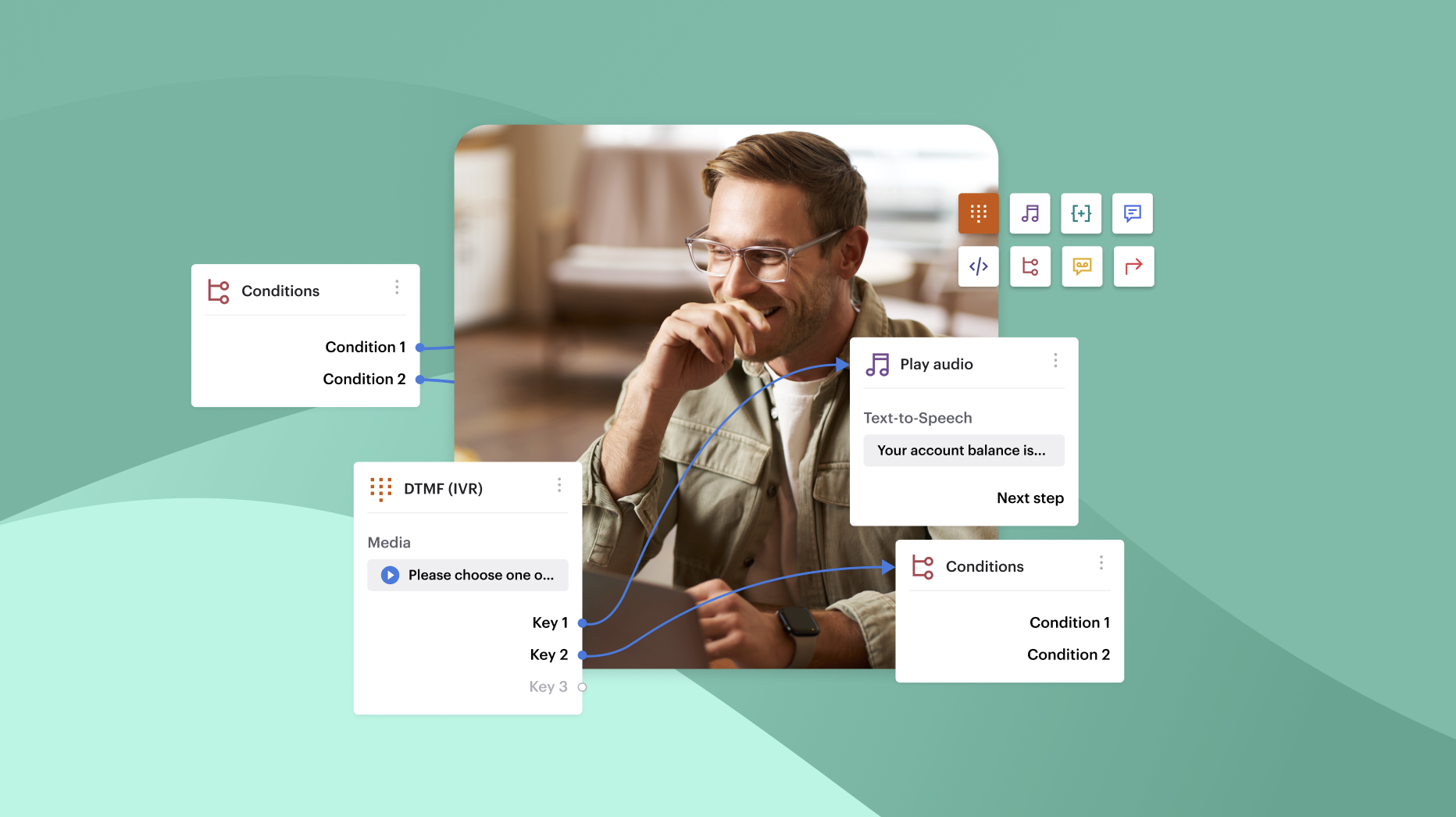
Pair that with self-service options through IVR menus, and customers can get simple questions answered or reach the right queue without having to speak to a live agent, keeping your team free to focus on more complex issues.
CRM integration
Nothing frustrates customers more than repeating their information over and over, but with CRM integrations, they don’t have to.
CRM integration gives your agents real-time access to customer data as soon as the call comes in, pulling up details like past interactions and preferences to help them personalize the conversation. With unified customer profiles at their fingertips, agents can skip the small talk and get straight to resolving the issue, creating a smoother, friendlier experience that feels human and efficient.
Call monitoring and coaching tools
You can’t improve what you don’t measure, and live call monitoring is a must for teams that want to keep leveling up their support game. Features like live listening enable supervisors to hear calls without interrupting, while whispering lets them guide agents in real-time without the customer knowing.
If a situation escalates, barging allows a manager to join the call directly to assist. Together, these tools help with quality assurance and continuous performance improvement, turning every call into a learning opportunity.
Omnichannel communication
Your customers aren’t just calling; they’re emailing, chatting, and messaging on social media, too. Omnichannel capabilities let your team manage all of your communication channels from one place, making it easier to keep conversations organized and avoid missed follow-ups.
This means customers get a consistent, seamless experience no matter how they choose to reach out, and your agents can maintain context across channels without having to dig through scattered tools or tabs.
Real-time analytics and dashboards
If you want to run a high-performing support team, you need visibility into what’s happening day-to-day. Inbound call center software should offer real-time metrics like First Call Resolution, CSAT, and Average Handle Time, so you know where your team is crushing it and where improvements are needed. Plus, visual dashboards make it easy for supervisors and QA teams to spot trends and take action quickly, helping your operation stay agile and responsive.
AI-powered support and call transcription
AI isn’t just a buzzword—it’s a practical tool for making your call center smarter. With sentiment analysis and keyword tracking, your system can flag calls that need extra attention or spot emerging issues before they become widespread problems.
Automatic call transcription makes it easier to review interactions for compliance and coaching, while AI-driven automation can handle repetitive tasks and deliver insights that help agents provide better support, faster.
Top Inbound Call Center Software Solutions in 2026
| Provider | Key features | Pricing | Pros | Cons |
| 1. Voiso | Omnichannel communication, intuitive workflow builder, AI-predictive dialer, speech analytics, real-time dashboards. | Starts at $24/user/month. | Cost-effective, strong outbound tools, powerful analytics, AI-driven insights. | Limited workforce management tools. |
| 2. Talkdesk | AI-powered automation, seamless integrations, and omnichannel capabilities. | Starts at $85/user/month. | User-friendly interface, seamless CRM integrations, scalability to accommodate growing businesses. | Pricing can be steep, support quality varies depending on the service tier. |
| 3. Five9 | AI-driven automation, predictive dialing, and omnichannel contact center solutions. | Starts at $119/user/month with a 36-month contract. | Powerful call center tools, seamless CRM integrations, excellent scalability for growing teams. | Steep learning curve, premium features can be expensive, limited flexibility for small businesses. |
| 4. Aircall | Cloud-based VoIP, user-friendly interface, and team collaboration features. | Starts at $30/user/month. | User-friendly, quick setup, strong integration options . | Limited scalability, higher cost per user. |
| 5. Zendesk | Seamless integration with Zendesk products, call management, and ticketing features. | Starts at $19/user/month. | Ideal for Zendesk users, excellent for customer support teams. | Lacks advanced telephony features for non-Zendesk use cases. |
| 6. Freshcaller | Smart call routing, call masking, IVR, and real-time monitoring. | Starts at $15/user/month. | Affordable and easy to use, great for small teams. | Limited advanced features compared to bigger competitors. |
1. Voiso
Core strengths
Voiso packs a solid set of tools that make handling inbound calls smooth and data-driven. Its high-quality VoIP ensures customers get clear, uninterrupted calls, while ACD (Automatic Call Distribution) routes calls to the best available agent without wasting customer time.
CRM sync pulls in customer history and notes directly into the call interface, so your agents have full context before they even pick up the phone, while advanced call analytics let you track call volumes, resolution rates, and agent performance, helping you spot trends and improve processes without guesswork.
Ideal for
Voiso is a strong match for teams that are growing fast and need a system that can grow with them. Whether you’re scaling up your inbound support, handling high call volumes across multiple countries, or adding new agents regularly, Voiso’s flexible architecture and intuitive management tools let you adjust quickly without complicated IT involvement.
Key features
The AI-powered routing system ensures callers get to the right agent quickly, factoring in language, skills, and customer priority, while avoiding long hold times.
And its low-latency cloud infrastructure ensures calls remain stable and clear, even during your busiest periods, so your team can maintain a high-quality customer experience without technical hiccups.
2. Talkdesk
Ideal for enterprises
Talkdesk offers a highly flexible inbound platform, allowing you to design and tweak call flows to fit your operational needs. You can build specific routing paths based on skills, departments, or customer status, and adjust workflows without waiting on developers, making it easier to adapt to new campaigns, products, or customer service strategies.
WEM and CX tools
What sets Talkdesk apart is its integrated Workforce Engagement Management and Customer Experience tools that offer quality management, agent coaching, and real-time feedback that help your team stay aligned with performance goals. For inbound teams, this means you can monitor live calls, give instant coaching, and maintain high service levels while also keeping agent satisfaction high.
3. Five9
Predictive and inbound call handling
Five9 delivers a strong inbound calling experience with features like smart call queuing, IVR, and skill-based routing to connect customers with the right agents efficiently. For teams handling blended environments, Five9 allows seamless switching between inbound and outbound modes without disrupting workflows.
Cloud agility and workforce management focus
Five9’s cloud-based structure lets you adapt quickly to spikes in inbound traffic without worrying about on-premise limitations. Paired with built-in workforce management tools, it gives supervisors visibility into agent availability, adherence, and performance in real time, making it easier to manage large inbound teams effectively.
4. Aircall
Easy onboarding for SMBs
Aircall is designed for smaller and mid-sized teams that need an easy-to-deploy-and-manage system. Inbound lines can be up and running in a day, with the possibility to add new numbers as you grow and integrate without IT headaches, making it a great choice for startups and growing businesses ready to improve their customer service quickly.
Plug-and-play CRM and helpdesk integration
Aircall integrates directly with popular CRMs like HubSpot, Salesforce, and helpdesk platforms like Zendesk and Freshdesk. This means agents have customer details and ticket history right in front of them during inbound calls, reducing repetitive questioning and creating a smoother, more personalised experience for callers.
5. Zendesk Talk
Ideal for support teams already using Zendesk
If your team already uses Zendesk for ticketing, adding Zendesk Talk is a no-brainer. It allows you to handle inbound calls directly from your existing Zendesk environment, turning phone conversations into tickets automatically, so your team can manage calls, emails, and chats in a single workflow.
Seamless connection between tickets and calls
Zendesk Talk ties call logs, recordings, and customer details directly to your tickets, providing agents with complete context and a single source of truth. The integration streamlines follow-ups, makes it easier to track customer history, and improves resolution times for inbound support teams.
6. Freshcaller by Freshworks
Budget-friendly VoIP platform
Freshcaller provides a cost-effective solution for teams looking to modernise their inbound call handling without heavy upfront investment. It offers competitive pricing while still delivering VoIP clarity, call routing, and performance monitoring that small to medium businesses need to maintain high customer service standards.
Smart escalations, call masking, and supervisor monitoring
Freshcaller supports smart escalation rules to ensure urgent calls reach the right agents quickly, call masking to protect agent privacy, and supervisor monitoring tools for quality assurance. It helps inbound teams handle calls more efficiently, ensuring issues are addressed promptly while maintaining control and oversight.
How to Choose the Right Inbound Call Center Software
Before diving head first into a new software, it’s important to consider a variety of factors that could make all the difference for your business:
Business size and call volume considerations
Before you pick an inbound call center platform, take a good look at your team size and how many calls you handle daily. A startup with a small support team and moderate call volume will need something lightweight, easy to manage, and budget-friendly, while an enterprise with hundreds of agents will need a platform that can handle heavy call traffic without dropping quality or speed. Check how many concurrent agents the software supports, as this directly affects your ability to scale during busy periods without paying for features you don’t need.
Compliance, security, and uptime
Your customers trust you with their information, so your call center software needs to keep it safe. Look for platforms that meet compliance standards like HIPAA, GDPR, and PCI-DSS if you handle healthcare data, customer personal details, or payment information.
Beyond compliance, your software should have a reliable uptime track record and failover systems to keep calls running smoothly even during maintenance or outages, so you never leave customers hanging when they need you most.
Support, onboarding, and training
Switching to a new call center platform can feel overwhelming, especially if you need to get agents up and running quickly. Check what kind of onboarding support the vendor offers, including training resources and hands-on assistance for setup.
Strong vendor SLAs for support are also key, ensuring you can get help fast if something breaks or if your team needs guidance. The smoother the onboarding process, the faster your agents can focus on serving customers instead of wrestling with tech headaches.
Pricing models and cost comparison
Pricing can vary a lot between platforms, so it’s worth digging into the details before committing. Some platforms charge a flat monthly fee per agent, while others use a usage-based billing model, which may be more cost-effective if your call volume fluctuates. Look out for hidden costs, like fees for advanced features, call recording storage, or international calling rates, so you can budget realistically and avoid unpleasant surprises down the road.
Benefits and Challenges of Cloud-Based Inbound Call Solutions
| Benefits | Challenges |
| Scalability and flexibility
-Adjust capacity on demand -Support hybrid and remote teams |
Latency and call quality
-Ensure low jitter and prevent dropped calls -Consider regions and server proximity for better performance |
| Lower maintenance and operational costs
-No hardware requirements -Vendor-managed updates and troubleshooting |
Integration complexity
-Prioritize native CRM/helpdesk compatibility -Use APIs and webhooks effectively to reduce friction |
| Agent burnout and overload
-Use auto-assignment and AI to balance workloads -Implement coaching and gamification to support agents |
Use Cases by Industry
E-commerce & retail
In the world of online shopping and retail, inbound call centers play a vital role in handling order inquiries, returns, and shipping questions. Customers expect quick answers about where their packages are, how to return items hassle-free, or whether a product is in stock. Call center software that integrates well with inventory and order management systems can make these interactions smoother and more efficient, boosting customer satisfaction and repeat business.
Healthcare & insurance
Healthcare and insurance call centers manage sensitive, often urgent customer needs like appointment scheduling, patient support, and claim tracking. Accuracy and privacy are paramount, so inbound systems must support compliance standards like HIPAA. Being able to quickly route callers to the right specialist or provide self-service options for claim status updates not only improves patient experience but also eases the workload on busy agents.
Financial services
For banks, credit unions, and insurance providers, inbound call centers are the frontline for identity verification, account assistance, and fraud response. Customers need fast, secure help to resolve issues or verify their identity without frustrating delays. Advanced call routing and strong CRM integrations help agents access customer info instantly, ensuring conversations are efficient and secure, building trust in an industry where every call counts.
Inbound vs Outbound Call Center Software
Key functional differences
Inbound and outbound call center software serve different but complementary roles:
Inbound software focuses on managing incoming customer calls, prioritizing quick routing, self-service options, and efficient issue resolution. It’s designed to handle unpredictable call volumes and emphasizes customer experience.
Outbound software, on the other hand, is built for initiating calls; think sales outreach, collections, or surveys. It includes features like predictive dialing, automated scripting, and campaign management to maximize agent productivity and contact rates.
Performance metrics differ too: inbound systems track things like average wait time and first call resolution, while outbound solutions focus on dial rates, conversion rates, and campaign effectiveness.
Hybrid solutions
Many businesses require a mix of inbound and outbound capabilities, especially those juggling customer support alongside proactive outreach or sales efforts.
Hybrid call center platforms combine the best of both worlds, allowing teams to seamlessly switch between answering incoming calls and making outbound contacts. They’re especially valuable for companies looking to optimize resource allocation, reduce downtime, and maintain consistent customer engagement across channels.
When choosing software for blended operations, it’s essential to pick platforms that offer smooth workflow integration, powerful reporting across both call types, and flexible agent management to handle shifting priorities effortlessly.
The Future of Inbound Call Center Software
Greater AI involvement
The role of AI in inbound call centers is only going to grow. Intelligent agent assist tools will become more common, helping reps handle calls more efficiently by suggesting real-time responses, pulling up relevant information instantly, or even automating routine tasks during the conversation, which will ultimately reduce agent workload and improve the quality of customer interactions.
Beyond just assisting agents, AI will enable proactive support; systems will be able to predict customer needs and intent before the call even happens, using data and behavior patterns to flag potential issues or offer solutions ahead of time. Predictive intent detection will shift call centers from reactive problem solvers to proactive partners in the customer journey.
Unified CX platforms
Inbound call center software is evolving from standalone telephony tools into part of larger, unified customer experience platforms. Instead of juggling multiple systems, agents and supervisors will use a single interface that manages all customer interaction channels across phone, chat, email, social media, and more.
The unification of communication channels ensures conversations flow smoothly without losing context, giving customers a seamless experience no matter how they choose to connect. The shift toward full engagement suites means companies can deliver consistent, personalized service at scale, breaking down traditional communication silos and putting the customer relationship front and center in every interaction.
FAQs
How is inbound call center software different from a virtual receptionist service?
Inbound call center software manages and routes large volumes of customer calls with advanced features like reporting and agent management, while virtual receptionist services primarily handle basic call answering and simple routing.
Can inbound call center platforms support international customer bases?
Yes, many inbound call center platforms are designed to handle international calls and support multiple languages, making them suitable for global customer service.
What kind of training is typically required for agents using new inbound systems?
Training usually covers system navigation, call handling features, and any CRM integration, with many platforms offering easy-to-use interfaces that minimize the learning curve.
Are inbound call center tools suitable for small businesses?
Absolutely—there are scalable inbound call center solutions tailored for small businesses, offering essential features without overwhelming complexity or cost.
How can I test or trial inbound call center software before committing?
Most providers offer free trials or demo versions so you can explore features, test usability, and see how it fits your team’s needs before making a decision.
What kind of hardware or internet speed do I need for optimal VoIP performance?
A stable, high-speed internet connection is key, generally at least 100 kbps per call, and a good quality headset or VoIP-enabled device; no special hardware is usually required beyond this.
Do inbound call systems work with mobile agents or remote teams?
Yes, cloud-based inbound call center solutions are built to support remote and mobile agents, allowing them to connect and manage calls from anywhere with internet access.
How often should call routing rules be reviewed and updated?
It’s best to review routing rules regularly—at least quarterly—to ensure they align with changing business needs, call patterns, and customer expectations.
Further Reading
- Top Contact Center Software For Small Business
- Top Contact Center Software For Travel Agencies
- Top Contact Center Software For Healthcare
- Top Virtual Call Center Software
- Top Open Source Call Center Software
- Top Outbound Call Center Software
- Top Omnichannel Contact Center Solutions