

Dialer software can reduce much of that friction. Many dialers automate outbound dialing and can route answered calls to available agents, but logging behavior varies by platform and configuration. As a result, agents spend less time navigating systems and more time speaking with prospects.
In this guide, we’ll explain how cold calling dialers work, the different types available, and how to choose the best dialer software for your sales team.
Why manual dialing breaks modern outbound sales
Outbound sales teams need to process large lead lists while maintaining meaningful conversations with prospects. When dialing is done manually, this process becomes slow and fragmented.
Agents repeatedly switch between systems to find contact details, dial numbers, log outcomes, and update records. Each step introduces small delays that accumulate throughout the day.
These inefficiencies reduce the number of conversations agents can have and limit the overall output of outbound teams. As sales organizations scale, manual dialing becomes increasingly difficult to manage.
Dialer software addresses this by automating the mechanical parts of calling. Instead of entering numbers manually, agents can be connected to the next call automatically, while activity logging and lead assignment can be handled based on platform and configuration.
The hidden productivity loss in manual outbound calling
Manual dialing creates multiple points of wasted time during the calling workflow.
Agents typically spend time:
- Dialing phone numbers
- Navigating CRM records
- Waiting for unanswered calls
- Leaving voicemails
- Logging call outcomes
These tasks are necessary, but they don’t directly generate revenue. When repeated across hundreds of calls, they significantly reduce productive talk time.
Some teams report low double-digit live conversations per day with manual dialing, depending on list quality and pick-up rates. Automated dialers can increase the number of live conversations by reducing manual steps and idle time, depending on campaign conditions.
The result is a higher proportion of the day spent speaking with prospects rather than managing the mechanics of dialing.
How dialing technology increases connect rates and agent utilization
Modern dialer systems remove many of the delays that slow down manual outbound calling. Instead of waiting between calls, agents are connected to the next available conversation as soon as the system detects an answer.
Several mechanisms make this possible.
- Predictive dialing algorithms estimate when agents will become available and place multiple calls in parallel. When a live person answers, the system routes the call to an available agent. This reduces idle time and keeps agents consistently engaged in conversations.
- Call pacing controls how quickly numbers are dialed based on campaign performance and agent availability. If more agents become free, the system increases dialing speed. If fewer agents are available, pacing slows to prevent excess unanswered calls.
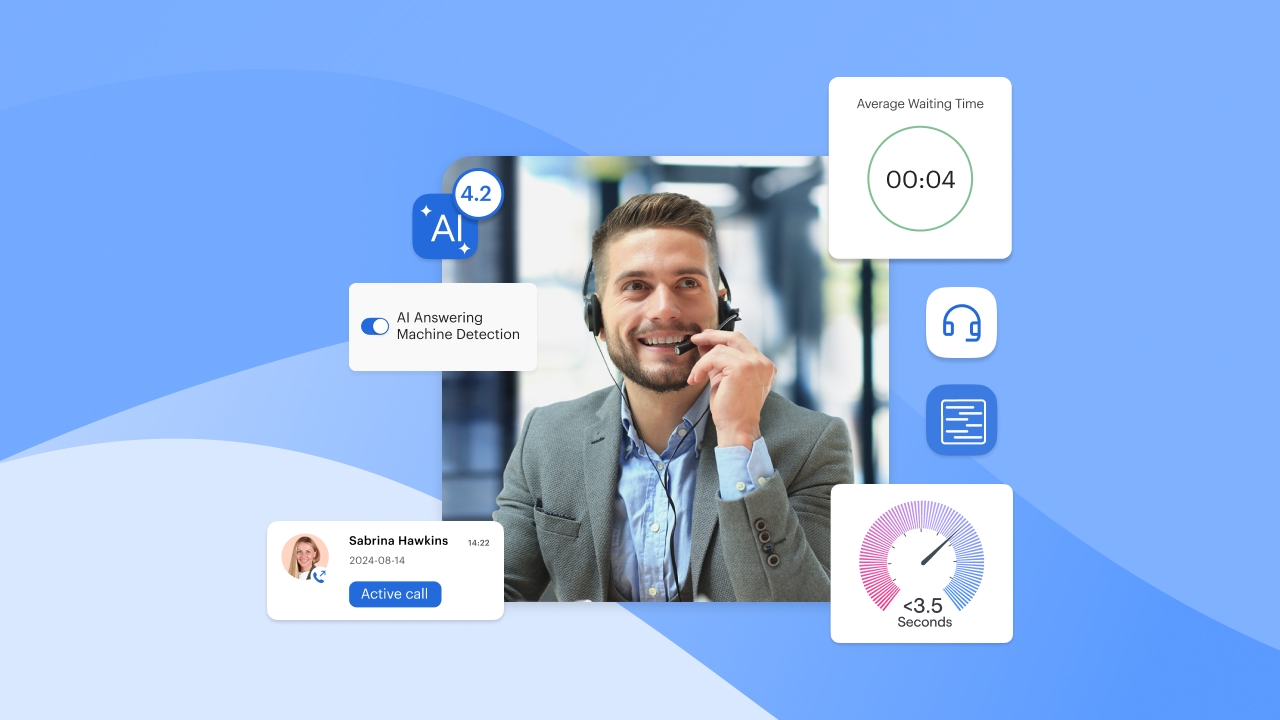
- Answering machine detection (AMD) helps identify whether a human or voicemail answered the call. When voicemail is detected, the system can skip the call and move to the next number, allowing agents to focus on real conversations rather than listening to recordings.
- Local caller ID (often called local presence) displays a phone number with a regional area code that matches the recipient’s location. This can increase the likelihood that prospects answer unfamiliar calls.
These capabilities can improve operational metrics like talk time and connection handling. Conversion outcomes depend on offer, list quality, and agent execution.
By reducing idle time and routing answered calls immediately, dialer platforms allow outbound teams to process lead lists faster while keeping agents focused on active conversations.
The four types of dialers used in outbound sales
Different dialing models are designed for different sales workflows, campaign volumes, and levels of agent involvement.
Understanding the main types of dialers helps teams choose the right approach for their outbound strategy. Some prioritize speed and call volume, while others focus on giving agents more context before each conversation.
The four most common dialer types used in outbound sales are power dialers, predictive dialers, progressive dialers, and preview dialers.
| Dialer Type | How It Works | Best For |
| Power Dialer | Dials numbers sequentially for agents | SDR teams and B2B sales |
| Predictive Dialer | Dials multiple numbers using pacing algorithms | High-volume call centers |
| Progressive Dialer | Automatically dials the next number after each call | Balanced outbound teams |
| Preview Dialer | Allows agents to review lead information before dialing | Enterprise or high-value sales |
Power dialers
Power dialers automatically dial numbers from a lead list one at a time for each agent. After a call ends, the system immediately dials the next contact.
Agents still handle each call individually, but they no longer need to manually enter phone numbers or search for the next lead. This reduces downtime between calls while maintaining control over each conversation.
Power dialers are commonly used in:
- B2B sales teams
- SDR prospecting teams
- Account-based outreach campaigns
They work well when agents need to maintain a personal approach while still increasing calling efficiency.
Predictive dialers
Predictive dialers are designed for high-volume outbound campaigns. The system places multiple calls simultaneously using algorithms that estimate when agents will become available.
When a live person answers, the dialer routes the call to an available agent. If the call reaches voicemail or remains unanswered, the system moves on to the next number.
This model helps maximize agent talk time and allows teams to process large lead lists quickly.
Predictive dialers are commonly used in:
- Telemarketing campaigns
- Large outbound call centers
- Collections teams
- Lead generation operations
Because predictive dialing can sometimes connect calls when no agent is immediately available, many regions regulate acceptable call abandonment rates. Organizations running predictive campaigns must configure dialing speeds carefully to remain within local regulations.
Progressive dialers
Progressive dialers offer a balance between automation and control.
The system automatically dials the next contact as soon as an agent finishes a call. However, unlike predictive dialers, progressive dialers typically place only one call per available agent.
This prevents calls from being answered when no agent is ready to handle them.
Progressive dialers are often used by teams that want to increase efficiency without introducing the complexity of predictive dialing. They are common in:
- Mid-size sales teams
- Customer outreach campaigns
- Account management teams
Preview dialers
Preview dialers give agents the opportunity to review contact information before placing a call.
When the next lead appears, the agent can examine CRM details, previous interactions, or notes before initiating the call manually. This approach prioritizes preparation and personalization over speed.
Preview dialers are often used in sales environments where each conversation requires research or careful positioning.
Common use cases include:
- Enterprise sales
- Real estate outreach
- Financial services
- High-value B2B deals
Although preview dialing reduces call volume compared to predictive or power dialing, it can improve conversation quality when each prospect requires a more tailored approach.
Key capabilities that separate average dialers from high-performance platforms
Basic tools simply automate number dialing, while more advanced systems support campaign management, performance analysis, and workflow integration.
When evaluating dialer software, outbound teams should focus on capabilities that directly affect productivity, visibility, and operational control.
The following features typically distinguish high-performance dialer platforms from basic calling tools.
Dialing modes and campaign flexibility
Outbound teams rarely run a single type of campaign. Sales development teams, telemarketing groups, and account executives often require different dialing approaches.
Platforms that support multiple dialing modes allow teams to adapt to different outreach strategies.
For example:
- Predictive dialing can support high-volume campaigns where maximizing agent talk time is the priority.
- Power dialing works well for SDR teams handling structured lead lists.
- Preview dialing allows agents to prepare before contacting high-value prospects.
Having access to multiple dialing modes allows organizations to run different campaign types within the same platform rather than switching tools.
Post-call analytics and reporting
Outbound operations rely on clear visibility into campaign performance. Dialer platforms typically provide dashboards and historical reports that track key calling metrics.
Common metrics include:
- Connection rate
- Calls per agent
- Average handle time
- Campaign conversion rates
Live dashboards can help managers monitor activity during campaigns. Operational adjustments depend on platform controls and campaign configuration. If performance changes during the day, supervisors can adjust pacing, lead distribution, or campaign settings.
Historical reports provide a broader view of trends across days, weeks, or months. These insights help teams refine targeting strategies and improve campaign performance over time.
Speech analytics and conversation insights
Many modern dialer platforms include tools that analyze call recordings after a conversation ends.
These systems can generate transcripts, identify keywords within conversations, and group calls by topics discussed during the interaction. Supervisors can review these insights to better understand how agents handle objections or explain products.
Some platforms also generate summaries of calls and conversation scores, helping managers quickly review large volumes of interactions without listening to every recording.
These insights are commonly used for:
- Quality assurance reviews
- Sales coaching
- Identifying recurring objections
- Monitoring compliance language
CRM and workflow integrations
Dialer platforms typically integrate with CRM and helpdesk systems so that call activity is logged automatically.
When integrated with CRM platforms such as Salesforce, HubSpot, or Zoho, agents can often initiate calls directly from contact records while call details can be logged automatically, and outcomes can be captured based on configuration and agent workflows.
This integration can reduce manual data entry and ensures that sales teams maintain accurate interaction histories across their lead database.
Compliance and outbound calling regulations
Outbound calling campaigns often operate under strict regulatory requirements that vary by region.
These rules may cover areas such as:
- Consent requirements before calling
- Restrictions on automated dialing
- Limits on call abandonment rates
- Call recording disclosure requirements
Dialer platforms can support compliance efforts through structured logging and recording management. Opt-out handling varies by vendor and should be validated during evaluation. However, organizations running outbound campaigns remain responsible for configuring their campaigns in accordance with applicable regulations.
Best dialer software for cold calling in 2026
The dialer software market includes tools designed for different outbound workflows. Some platforms focus on high-volume contact center operations, while others are built for smaller sales teams working directly inside CRM systems.
Below are several widely used dialer platforms and the types of teams they typically support.
Voiso
Voiso is a cloud-based contact center platform designed for teams running structured inbound and outbound calling operations. Voiso supports outbound calling campaigns with reporting, CRM integrations, and post-call speech analytics.
Key features
- Automated dialing modes (availability depends on plan and configuration)
- Operational dashboards and historical reporting
- Call recordings and call logs
- Speech analytics with transcripts, call summaries, topic identification, and conversation scoring (or post-call QA and coaching)
- CRM integrations including Salesforce and Zoho with click-to-call and automatic call logging
Best for
- Mid-size and enterprise outbound sales teams
- Contact centers running large outbound campaigns
- Organizations that require detailed call reporting and CRM integration
CloudTalk
CloudTalk is a cloud-based business phone system that includes outbound calling capabilities and CRM integrations. It is often adopted by smaller teams that want a flexible cloud calling solution without complex implementation.
Key features
- Power dialer functionality
- CRM and helpdesk integrations
- Call monitoring and analytics dashboards
- International calling support
Best for
- Small to mid-size sales teams
- Companies looking for a simple cloud phone system
- Organizations prioritizing integrations over advanced dialing automation
Kixie
Kixie is a CRM-focused dialer that integrates tightly with sales platforms. It allows agents to make calls directly from CRM records while automatically logging activity.
Key features
- Click-to-call inside CRM systems
- Automated call logging
- Call tracking and reporting
- SMS messaging tools
Best for
- Small sales teams working primarily inside a CRM
- Sales development teams running structured outreach lists
- Organizations that prioritize CRM-centric workflows
RingCentral
RingCentral is a unified communications platform that combines voice calling, messaging, and video collaboration. Dialing capabilities are included as part of its broader communication suite.
Key features
- Business phone system with inbound and outbound calling
- Messaging and video conferencing tools
- Integrations with business software platforms
- Call analytics and reporting
Best for
- Companies seeking an all-in-one communication platform
- Organizations that prioritize internal communication tools alongside calling
- Teams with moderate outbound calling needs
PhoneBurner
PhoneBurner focuses on power dialing for outbound sales outreach. It allows agents to move through lead lists quickly while maintaining control over each call.
Key features
- Power dialer automation
- Lead management tools
- Call tracking and reporting
- CRM integrations
Best for
- Small and mid-size outbound sales teams
- SDR teams making large numbers of daily calls
- Organizations seeking a straightforward dialing workflow
Aircall
Aircall is a cloud phone system designed for sales and support teams. It integrates with many CRM and helpdesk platforms and is known for its relatively fast deployment.
Key features
- Inbound and outbound cloud calling
- CRM and helpdesk integrations
- Call routing and call monitoring
- Analytics dashboards
Best for
- Support and sales teams needing a flexible cloud phone system
- Organizations prioritizing ease of setup
- Small to mid-size teams
Five9
Five9 is an enterprise contact center platform used by large organizations running inbound and outbound operations. It includes advanced dialing and workforce management capabilities.
Key features
- Predictive dialing for large campaigns
- Contact center reporting tools
- Workforce management capabilities
- CRM integrations
Best for
- Large contact centers
- Enterprise outbound campaigns
- Organizations running complex call center operations
Salesloft Dialer
Salesloft is a sales engagement platform that combines call functionality with email sequencing and outreach automation. The dialer is integrated directly into these outreach workflows.
Key features
- Dialer integrated with outreach sequences
- Email and multi-touch sales cadences
- Activity tracking and analytics
- CRM integrations
Best for
- SDR teams running multi-channel outreach
- Sales teams combining email and phone prospecting
- Organizations already using sales engagement platforms
HubSpot Sales Hub
HubSpot Sales Hub includes a dialer built directly into the HubSpot CRM. Sales representatives can place calls from contact records while automatically logging activity in the CRM.
Key features
- Dialer built into HubSpot CRM
- Automatic call logging
- Contact record integration
- Sales activity tracking
Best for
- Teams already using HubSpot as their primary CRM
- Small to mid-size sales teams
- Organizations wanting simple calling inside the CRM environment
JustCall
JustCall is a cloud phone and dialer platform designed for startups and growing sales teams. It includes outbound calling features along with messaging capabilities.
Key features
- Outbound dialer functionality
- SMS messaging tools
- CRM integrations
- Call tracking and analytics
Best for
- Startups and early-stage companies
- Small outbound sales teams
- Teams needing calling and messaging in one platform
Comparison of the top cold calling dialers
Outbound teams often evaluate dialer software based on a few practical criteria: dialing automation, integration with CRM systems, reporting capabilities, and how well the platform scales with team size.
The comparison below highlights key differences between commonly used cold calling dialers.
| Platform | Dialing Modes | CRM Integrations | Call Analytics | Compliance / Call Management | Best Team Size |
| Voiso | Predictive, Power, Preview | Salesforce, Zoho, others | Speech analytics, transcripts, call summaries, dashboards | Call recordings, call logs, campaign reporting | Mid-size to enterprise |
| CloudTalk | Power dialer | HubSpot, Salesforce, Pipedrive | Call analytics dashboards | Call recording and monitoring | Small to mid-size |
| Kixie | Power dialer | Salesforce, HubSpot, others | Basic call tracking | Call logging and tracking | Small teams |
| RingCentral | Standard outbound dialing | Salesforce, HubSpot, others | Call analytics and reporting | Call management features | Mid-size to enterprise |
| PhoneBurner | Power dialer | Salesforce, HubSpot | Call tracking and reporting | Call logging tools | Small to mid-size |
| Aircall | Standard outbound dialing | HubSpot, Salesforce, Zendesk | Analytics dashboards | Call routing and recording | Small to mid-size |
| Five9 | Predictive dialer | Salesforce and others | Advanced reporting and contact center analytics | Call recording and management tools | Enterprise |
| Salesloft Dialer | Sequential dialing within sales workflows | Salesforce and others | Sales activity tracking | Call logging and tracking | SDR teams |
| HubSpot Sales Hub | Basic CRM dialer | Native HubSpot CRM | Call tracking inside CRM | Call logging and recordings | Small to mid-size |
| JustCall | Power dialer | HubSpot, Salesforce, others | Call analytics dashboards | Call tracking and logging | Startups and small teams |
This comparison illustrates how different tools are designed for different operational environments. Some platforms prioritize large-scale outbound automation, while others focus on simpler CRM-based calling workflows.
For teams running high-volume outbound campaigns, platforms that support predictive dialing and advanced reporting tend to offer greater operational control. Smaller sales teams, on the other hand, may prioritize simplicity and tight CRM integration over dialing complexity.
How to choose the best dialer for your sales team
Selecting a dialer platform depends largely on how your sales organization runs outbound campaigns. The right tool should match your calling volume, workflow complexity, and reporting requirements.
Rather than focusing on feature lists alone, teams should evaluate how the dialer fits into their daily sales operations.
Match dialer technology to your outbound strategy
High-volume campaigns often benefit from predictive dialing, which automatically places multiple calls and connects agents when a live person answers. This approach is commonly used in telemarketing, collections, and large outbound contact centers.
Sales development teams often prefer power dialers, which automate dialing while allowing agents to handle each call individually. This model balances efficiency with conversational control.
For more complex deals, preview dialers allow agents to review lead information before initiating the call. This approach is useful in industries where research and personalization are important before contacting a prospect.
Choosing the right dialing model ensures that automation supports the team’s sales process rather than disrupting it.
Evaluate scalability and infrastructure
As outbound operations grow, dialing infrastructure becomes increasingly important. Cloud-based dialer platforms allow organizations to scale agent capacity without deploying additional hardware.
Teams operating internationally should also evaluate global calling capabilities, number management, and system reliability. Outbound campaigns often involve thousands of daily calls, so consistent platform uptime and stable call quality are critical.
A scalable architecture allows companies to add agents, expand campaigns, and manage multiple regions from a single system.
Prioritize analytics and coaching capabilities
Outbound teams generate large volumes of call data. Without clear reporting, it becomes difficult to identify performance trends or improve sales conversations.
Dialer platforms typically provide dashboards showing metrics such as connection rates, call outcomes, and agent activity levels. These insights help managers monitor campaign performance and adjust strategies when needed.
Many platforms also provide post-call analysis tools such as call recordings, transcripts, and keyword detection. These insights help supervisors review interactions, identify common objections, and support agent coaching initiatives.
Test usability and onboarding
Even powerful dialing platforms lose value if agents struggle to adopt them. Sales teams should evaluate how quickly new agents can learn the system and begin placing calls.
User interface design, workflow simplicity, and onboarding support all influence how quickly teams can become productive. Platforms that integrate directly with CRM systems can also reduce training time by allowing agents to work within familiar environments.
Before committing to a platform, many organizations run pilot campaigns or trials to confirm that the dialer fits their operational workflow.
See how Voiso helps teams run structured outbound calling at scale.
FAQs
What is a cold calling dialer?
A cold calling dialer is software that automates outbound phone calls from a lead list. Instead of manually entering numbers, the system places calls automatically and connects agents when a call is answered. Most dialers also track call attempts, log outcomes, and integrate with CRM systems to store interaction history. This allows sales teams to process lead lists faster and spend more time speaking with prospects instead of dialing numbers.
How do cold calling dialers actually work?
Cold calling dialers operate through structured outbound campaigns. Sales teams upload a lead list or connect the dialer to their CRM, and the system automatically places calls based on predefined rules. When a prospect answers, the dialer routes the call to an available agent. The platform records call details, logs outcomes, and updates contact records. Many dialers also include features such as call pacing, answering machine detection, and reporting dashboards to monitor campaign performance.
Do cold calling dialers increase connection rates?
Cold calling dialers can improve connection rates by reducing idle time between calls and managing call pacing automatically. Features such as answering machine detection and local caller ID help agents focus on conversations with real prospects rather than voicemails. By automatically dialing the next number and routing answered calls to available agents, dialers allow teams to process larger lead lists and increase the number of live conversations each day.
What’s the difference between predictive and power dialers?
Predictive dialers place multiple outbound calls simultaneously and connect agents only when a live person answers. This approach is designed for high-volume campaigns where maximizing agent talk time is the priority. Power dialers, on the other hand, dial one number at a time for each agent and automatically move to the next contact after a call ends. Power dialing offers more control over each conversation while still reducing manual dialing work.
Which dialer is best for small sales teams?
Small sales teams often prefer dialers that are simple to deploy and integrate directly with CRM systems. Power dialers are commonly used in these environments because they increase call efficiency without requiring complex campaign configuration. Teams with fewer agents typically prioritize ease of use, CRM integration, and basic call reporting rather than the advanced automation used in large contact center environments.