

Reducing Average Handle Time (AHT) by just 30 seconds can save a contact center over $250,000 annually, highlighting why AHT remains a key focus for contact center managers. But optimizing it without sacrificing service quality is anything but simple.
AHT isn’t just a measure of how quickly an agent wraps up a call. It’s a critical indicator of efficiency, customer experience, and resource allocation. A low AHT might seem great at first glance, but if it’s achieved by rushing calls and leaving issues unresolved, it can lead to repeat contacts and lower customer satisfaction. On the other hand, spending too long on calls means higher operational costs and fewer handled queries.
Balancing speed and quality requires more than just quick fixes. It involves thoughtful strategies, smart use of technology, and training that empowers agents to resolve issues efficiently. Understanding what really drives AHT – and how to manage it effectively – can transform a contact center’s performance. Let’s dive into what makes AHT optimization both challenging and rewarding.
Key Takeaways
- Reducing Average Handle Time (AHT) by just 30 seconds can save contact centers over $250,000 annually, but lowering it without hurting service quality requires smart strategy.
- AHT = (talk time + hold time + after-call work) ÷ total calls, but many centers underreport by excluding short or multichannel interactions.
- Voiso’s platform ensures accurate AHT tracking by capturing all interaction components across channels and surfacing gaps via unified dashboards.
- To reduce AHT sustainably, use real-time AI tools, smart routing with Flow Builder, and scenario-based agent training that emphasizes call control and resolution.
- Balancing AHT with CSAT, FCR, and sentiment data helps avoid efficiency at the expense of customer satisfaction.
Breaking Down AHT
AHT isn’t just the time an agent spends talking to a customer. It covers the entire interaction cycle, including talk time, hold time, and after-call work. Every second spent updating records or waiting for a customer to find information counts. And yet, not all seconds are treated equally when it comes to strategy.
That’s where many contact centers stumble: in chasing lower AHT without considering its impact. Prioritizing speed often leads agents to rush through calls, leaving issues unresolved. Customers end up calling back, frustrated by incomplete answers or poor problem resolution.
Calculating AHT accurately
Calculating AHT might seem straightforward, but it often involves more than just measuring how long an agent spends talking. The formula itself is simple:
AHT = (talk time + hold time + after-call work) ÷ total number of calls
While the formula appears simple, applying it accurately is where many contact centers run into trouble. Key components, like hold time and after-call work, often go unnoticed, which can distort AHT and make it appear shorter than it actually is. Talk time is usually tracked correctly, but incomplete data from the rest of the interaction leads to misleading metrics.
Common pitfalls in AHT calculation
1. Overlooking hold time in multi-channel interactions
Multi-channel setups often complicate AHT measurement. When agents switch from voice to chat or email mid-call, hold times can be miscounted or missed entirely, usually because the underlying systems aren’t properly integrated, leading to gaps in data tracking.
2. Miscounting abandoned or short calls
Another common mistake involves abandoned or very short calls. Some systems automatically exclude calls under a specific duration, like five seconds, assuming they don’t reflect actual interactions. However, excluding too many can skew AHT calculations.
| Pitfall | Cause | Impact on AHT |
|---|---|---|
| Overlooking hold time in multi-channel setups | Channel switching (e.g. voice to chat/email) without integration | Missing data leads to underreported handle times |
| Excluding short or abandoned calls | Automatic filtering of calls under a certain threshold (e.g. 5 secs) | Skewed metrics that make AHT appear lower than it actually is |
Solution: unified reporting for accurate data
Managing multi-channel interactions and abandoned calls becomes far easier with a unified reporting system. Voiso’s platform tracks every call component, talk time, hold time, and wrap-up, across channels, eliminating gaps and ensuring that AHT calculations accurately reflect real-world operations.
By using Voiso’s comprehensive data tracking, contact centers can make informed decisions without the risk of underestimating handling times. It’s not just about collecting data – it’s about collecting the right data.
Strategies to Reduce AHT Without Losing Quality
1. Agent training
Training agents to handle calls efficiently doesn’t mean pushing them to rush. The goal is to build confidence, reduce hesitation, and maintain a natural flow during interactions. Skilled agents can handle queries faster while still meeting quality standards.
Techniques like active listening and effective call control don’t just shave seconds off a call, they prevent unnecessary back-and-forth by helping agents extract the right information the first time. Instead of rephrasing the same question or repeating steps, trained agents learn to listen for cues and guide the conversation with intention. Scripts can support this effort, but only when used flexibly; a rigid script read line by line slows things down and frustrates customers. The best agents treat scripts as a framework, adapting their language in real time to match the customer’s needs, tone, and pace.
2. Process optimization
When agents waste time navigating broken workflows, repeating questions, transferring calls unnecessarily, or switching between disconnected systems, it’s not just inefficient; it erodes customer trust and inflates AHT. These delays often stem from a lack of structure at the very first point of contact. Streamlining processes early in the customer journey prevents these breakdowns and ensures agents can resolve issues quickly, without detours or duplication.
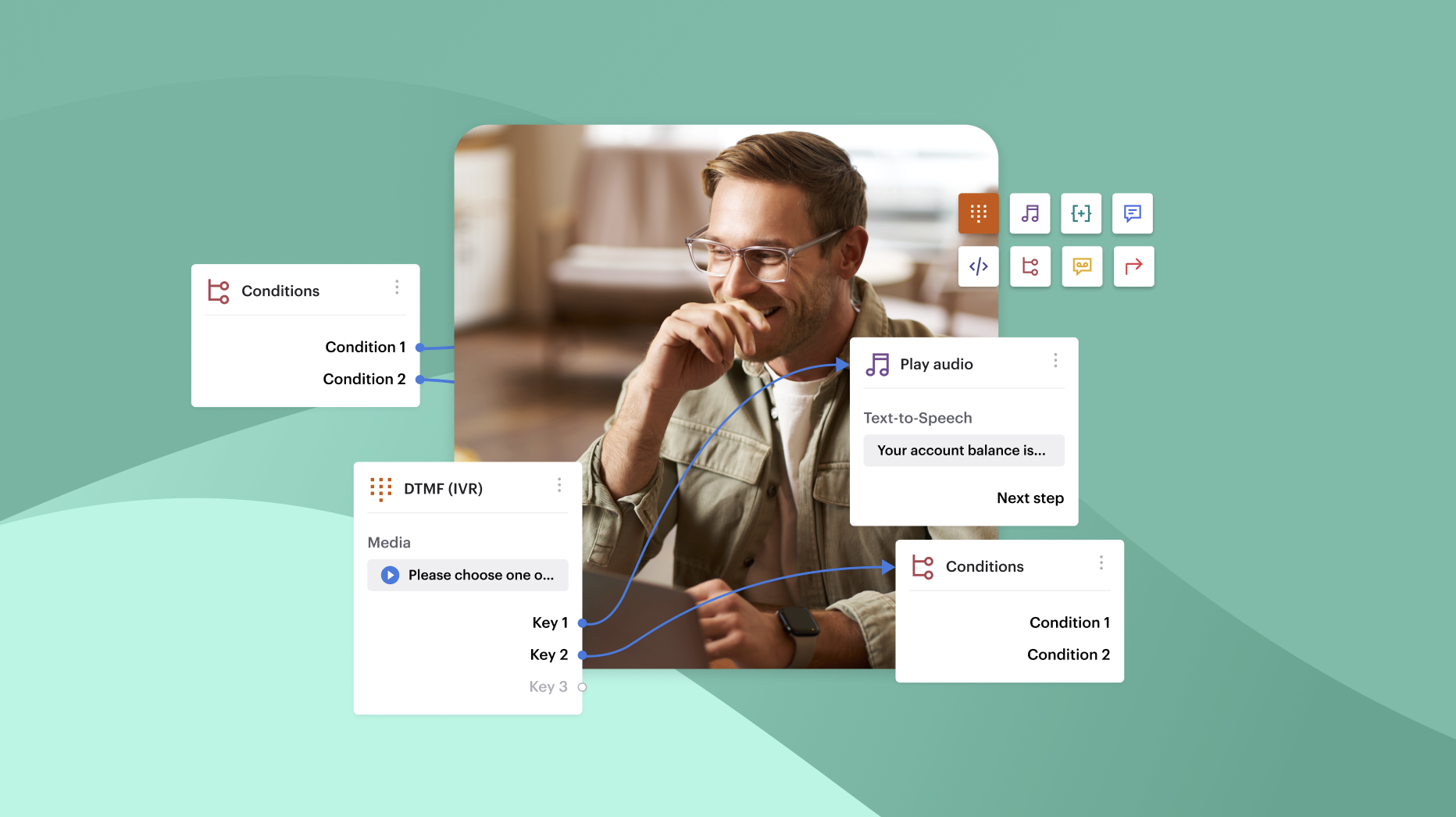
Voiso’s Flow Builder is the best way to optimize your processes with customer, intuitive IVR menu design. Clear pathways ensure customers reach the right agent the first time, instead of getting passed around to different departments., Agents can address issues directly, save time and maintain a professional tone.
3. Tech Support
In technical support environments, even a few extra seconds spent switching between systems or searching for customer data can add up, especially when calls involve troubleshooting or guided configurations. Unified Agent Desktops address this directly by consolidating everything agents need into a single interface: call controls, customer records, interaction history, and notes. But access alone isn’t enough.
To truly accelerate resolution times, contact centers are turning to real-time support tools like AI-driven insights. By analyzing conversation context as it unfolds, these tools can surface relevant knowledge articles or next-step suggestions before the agent even asks, bridging the gap between data access and decision-making.
Integrating real-time speech analytics adds a smarter layer to every live interaction. By analyzing customer sentiment, keywords, and intent as the conversation unfolds, it can prompt agents with tailored suggestions, such as relevant knowledge base articles or upsell opportunities, without interrupting the call flow. This not only reduces hesitation but also helps agents resolve issues more confidently, especially in complex or emotionally charged situations.
Balancing Speed and Quality
Complementary metrics: FCR, CSAT, and more
Lowering AHT without considering quality can backfire. That’s why contact centers often balance AHT with other performance metrics like First Contact Resolution (FCR) and Customer Satisfaction (CSAT). Focusing on FCR, in particular, ensures agents don’t rush calls just to hit lower handling times. Resolving issues on the first try naturally reduces repeat calls, keeping AHT down without compromising service.
Agent performance
Evaluating agents solely by AHT doesn’t tell the whole story. A low AHT might look good on paper, but if it’s paired with poor customer satisfaction, the strategy clearly missed the mark. Instead, combining AHT with sentiment analysis and Customer Effort Score (CES) gives a more balanced view of performance.
Voiso’s AI-powered dashboards make it easier to track these complementary metrics. Supervisors can view not only how quickly agents complete calls, but also how those interactions are perceived by customers. In some cases, a pattern of low sentiment in shorter calls has been observed, suggesting that efficiency gains may have come at the cost of resolution quality. When this happens, retraining agents to prioritize thorough problem-solving over speed often leads to a measurable improvement in satisfaction scores.
Sector-Specific Strategies: What Works Best?
Financial services
Balancing AHT with accuracy is crucial. Financial contact centers often handle complex processes like identity verification or regulatory checks, which require time and focus to avoid compliance failures.
In financial contact centers, time-saving shortcuts can’t come at the expense of accuracy or compliance, especially when agents are verifying identities, handling sensitive data, or navigating regulatory scripts. That’s where AI assistance becomes more than just a convenience. By guiding agents through complex workflows with real-time prompts and auto-filled data fields, AI reduces the need to toggle between systems or second-guess procedures. The result: faster call handling without the risk of skipped steps or non-compliance. Customers get a smoother, more confident interaction, and agents stay focused on resolution, not logistics.
Technical support
Tech support teams often deal with issues that can’t be resolved in a few minutes. Calls might involve diagnosing software glitches, guiding through configurations, or walking users through updates. Cutting AHT in these scenarios is neither realistic nor helpful.
Using Voiso’s Flow Builder, a tech support center can create guided scripts for common problems. Instead of improvising, agents follow structured troubleshooting paths that reduce unnecessary back-and-forth, shortening resolution time, and maintaining quality.
E-commerce
In e-commerce contact centers, where most calls involve order tracking, returns, or product questions, reducing AHT depends less on speed and more on routing customers to the right agent and delivering clear answers from the outset.
During seasonal sales, e-commerce companies often see longer calls as customers confirm delivery details, but by using Voiso’s dynamic local caller ID to increase pickup rates and reduce missed calls, agents can stay focused on resolving issues efficiently and bring AHT back to normal.
Measuring and Monitoring for Continuous Improvement
Establishing effective performance measurement systems enables ongoing optimization of interaction efficiency. Contact centers should implement structured approaches to data collection, analysis, and improvement.
Key Measurement Approaches
Effective monitoring combines several complementary methods:
- Real-Time Dashboards: Provide immediate visibility into current performance
- Historical Trend Analysis: Identify patterns and anomalies over time
- Agent-Level Reporting: Pinpoint individual training opportunities
- Team Comparisons: Benchmark performance across different groups
- Channel-Specific Metrics: Account for different handling requirements across communication methods
Setting Appropriate Targets
Establishing realistic processing duration goals requires thoughtful consideration of:
- Industry Benchmarks: Typical performance standards for your sector
- Interaction Complexity: Nature of common customer inquiries
- Business Objectives: Strategic priorities regarding efficiency and experience
- Current Performance: Realistic improvement increments from baseline
- Customer Expectations: Acceptable waiting and resolution timeframes
Rather than applying uniform targets across all interaction types, sophisticated contact centers implement segmented goals based on inquiry complexity, customer value, and resolution requirements.
Complementary Metrics for Comprehensive Evaluation
Effective contact centers evaluate AHT alongside these related indicators:
| Metric | Description | Relationship to AHT |
| First Contact Resolution (FCR) | Percentage of issues resolved without follow-up | Lower FCR often correlates with shorter handling times but more repeat contacts |
| Customer Satisfaction (CSAT) | Measurement of customer happiness with service | Excessively brief interactions may negatively impact satisfaction |
| Net Promoter Score (NPS) | Likelihood customers will recommend your service | Quality interactions, regardless of duration, typically boost advocacy |
| Quality Assurance Scores | Evaluation of agent performance against standards | Balanced approach to efficiency and thoroughness |
| Customer Effort Score (CES) | Ease of resolving issues from customer perspective | Efficient but thorough interactions minimize customer effort |
Organizations must carefully review these interconnected metrics when establishing performance targets. A telecommunications provider discovered that allowing slightly longer conversation durations actually improved their first-contact resolution rate by 12%, subsequently reducing overall contact volume and operational costs.
Common Factors Influencing Handle Time
Numerous variables impact typical processing duration in contact centers, ranging from technological infrastructure to agent experience levels. Understanding these influencing elements helps organizations develop targeted strategies for optimization.
Agent-Related Factors
Representative capabilities significantly affect interaction efficiency:
- Experience Level: Seasoned agents typically navigate conversations more efficiently
- Technical Knowledge: Comprehensive understanding of products reduces research time
- Communication Skills: Clear articulation minimizes repetition and misunderstandings
- System Proficiency: Comfort with contact center software accelerates information retrieval
- Workflow Management: Ability to multitask while maintaining conversation flow
System and Process Influences
Technological infrastructure and operational workflows play crucial roles:
- Software Integration: Disjointed systems requiring multiple logins increase processing time
- Knowledge Base Accessibility: Easily searchable information reduces research minutes
- Approval Hierarchies: Complex authorization requirements extend interaction durations
- Script Complexity: Overly rigid conversation guidelines may impede natural dialogue
- Call Routing Efficiency: Appropriate initial assignment reduces transfer frequency
Customer-Related Influences
Customer characteristics also impact conversation efficiency:
- Issue Complexity: Straightforward questions require less resolution time
- Emotional State: Agitated customers often need additional conversation minutes
- Preparedness: Well-prepared callers with relevant information facilitate faster resolution
- Technical Proficiency: Customer comfort with technology affects troubleshooting duration
- Language Barriers: Communication challenges may extend interaction times
Think Holistically About AHT
AHT isn’t just a number – it’s a reflection of how well your contact center balances speed and quality. Focusing on AHT alone can backfire, but integrating technology, training, and smarter metrics makes sustainable improvements possible.
Want to see how Voiso’s advanced analytics and AI tools can transform your AHT strategy? Explore our solutions today.
FAQs
What’s the ideal ratio between talk time, hold time, and wrap-up time in AHT?
The ideal AHT ratio typically follows a 70-15-15 distribution: 70% talk time, 15% hold time, and 15% wrap-up time, though this varies by industry and call complexity.
Talk time should dominate at 65-75% of total AHT, representing active problem-solving and customer interaction. This is where value is created through resolution and relationship building.
Hold time should be minimized to 10-20% maximum. Excessive hold time often indicates system inefficiencies, lack of agent knowledge, or poor call routing. Well-trained agents with integrated systems can often keep hold time under 15%.
Wrap-up time typically ranges from 10-20%, depending on documentation requirements. Simple inquiries might need only 5-10%, while complex cases requiring detailed notes could justify 20-25%.
Industries like financial services or healthcare may require longer wrap-up times due to compliance documentation, shifting the ratio to 65-15-20. Technical support might see higher talk time ratios (75-10-15) due to extended troubleshooting needs.
The key is monitoring these ratios alongside quality metrics to ensure efficiency doesn’t compromise thoroughness. Significant deviations from these benchmarks often signal training opportunities or process improvements.
What are the warning signs that AHT optimization is hurting service quality?
Several key indicators signal when AHT reduction efforts are compromising service quality:
Rising repeat contact rates are the clearest warning sign. If customers call back within 24-48 hours about the same issue, agents are likely rushing to close calls without fully resolving problems.
Declining customer satisfaction (CSAT) scores paired with lower AHT suggests agents are prioritizing speed over thoroughness. Similarly, dropping Net Promoter Scores indicate customer loyalty erosion.
Increased escalation rates often mean frontline agents are passing complex issues upward rather than taking time to resolve them properly.
Agent behavioral changes include rushed speech patterns, cutting customers off mid-sentence, or skipping verification steps. Quality assurance scores typically decline alongside these behaviors.
First Contact Resolution (FCR) dropping while AHT improves is a major red flag, indicating issues aren’t being resolved completely.
Customer complaints about feeling rushed or unheard increase, and agents report higher stress levels or frustration with unrealistic time pressures. These patterns suggest AHT targets need rebalancing with quality metrics.
Further Reading