




Call Quality Toolkit
HD VOICE
FOR GLOBAL CALLING
Deliver crystal-clear conversations anywhere in the world. Voiso combines advanced call diagnostics, adaptive routing, and geo-redundant infrastructure to keep every connection stable, secure, and high quality.
Trusted by 1000s of users

The foundation of reliable calls
Hear and be heard with HD clarity
Voiso supports the codecs that matter most for call clarity and resilience.
Opus powers our WebRTC experience with features like FEC and DTX for unstable networks, while G.722 enables wideband HD voice where supported.
For carrier and PSTN interoperability we use G.711 μ-law and A-law, and iLBC provides added stability on higher-loss connections.
See issues before they surface
Call telemetry & root-cause visibility
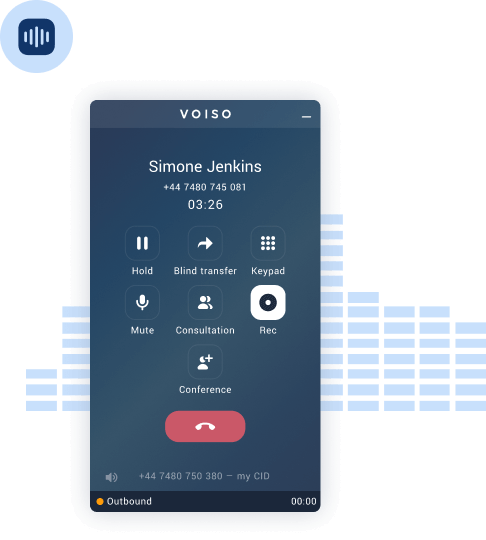
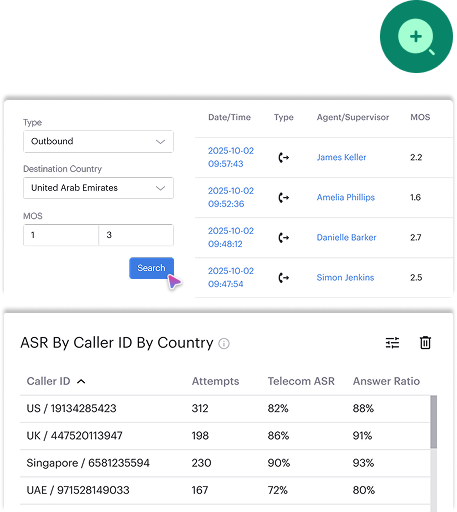
Voiso captures detailed telemetry for every call, including MOS scores and five-second WebRTC metrics such as RTT, jitter, and packet loss.
Connection states are logged for troubleshooting, and failed-call data is retained for seven days to support fast, accurate root-cause analysis.
Dashboards & historical reporting
Supervisors get real-time dashboards for agents, queues, campaigns, and numbers, along with historical reports like ASR by country by hour to separate telecom behavior from platform performance.
Coaching widgets, keyword counters, and wrap-up trends make it easy to spot issues early and confirm improvements with measurable KPIs.
Resilience built into every call route
Adaptive routing & automatic failover
Voiso keeps calls stable with intelligent routing that selects the best path in real time and automatically fails over when carrier quality drops.
Teams can bring their own carrier, set country and prefix-based routing rules, and rely on mandatory fallback paths to maintain continuity during unexpected changes.
Geo-redundancy & high availability
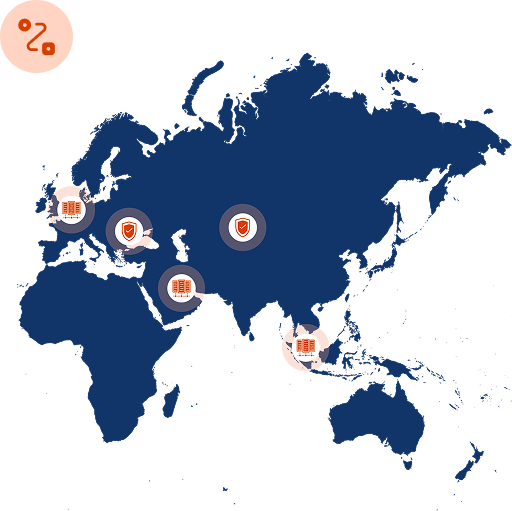
Platform reliability is reinforced by multiple, geo-distributed infrastructure across Europe, Asia and North America, operating at a 99.99% uptime level.
Clusters use a dual–data center hot-standby model designed to restore core inbound, outbound, and dialer functions within minutes, ensuring uninterrupted voice delivery for always-on operations.
Elastic capacity for unpredictable traffic
Voiso scales effortlessly during peaks and seasonal surges, helping teams stay responsive without compromising quality.
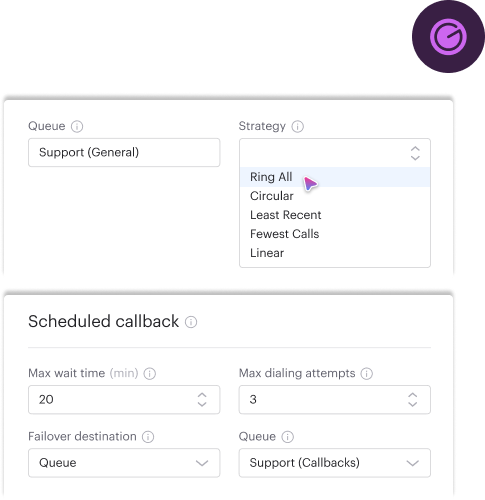
Scheduled callbacks include configurable attempts, retry intervals, and automatic failover to a queue, while flexible queue strategies support fair distribution and faster answer times.
Adjustable timers for agent pickup, IVR steps, and in-queue limits help protect SLAs even when volumes spike.

APAC lead-gen and service across borders
Mae Igot, Supervisor

HD quality and visibility at global scale
David M Scheckter, COO
Every conversation
deserves great quality
Voiso Call Quality
Toolkit FAQ
What codecs deliver HD voice on Voiso?
Opus for WebRTC, G.722 for wideband on supported trunks, and G.711 μ-law or A-law for PSTN compatibility. iLBC is available for higher loss environments.
How does Voiso detect and diagnose poor quality?
Each call has MOS, RTT, jitter, and packet-loss telemetry. Quality data is sampled every 5 seconds on WebRTC, stored in the CDR, and retained for 7 days when calls fail. You can deep-dive with VoIPmonitor.
Does Voiso support automatic route failover?
Yes. You can define country and prefix rules, use BYOC, and rely on a mandatory fallback route if no rule matches. Routing can shift when a carrier degrades.
What uptime can we expect?
Voiso targets 99.99% uptime, with a dual-DC hot standby model in the EU designed to restore core voice functions in 5 to 15 minutes after a data center outage.