





Call Center Scheduling And Forecasting Software
Smarter staffing. Better service. Zero guesswork.
Get ahead of demand with intelligent forecasting and precision scheduling that adapts to real-time conditions. Voiso helps your contact center run lean without compromising coverage, so agents stay balanced, customers aren’t left waiting, and managers aren’t stuck in spreadsheets.


Smarter Planning. Better Coverage. Fewer Surprises.
Real-Time Forecasting Models
Voiso’s forecasting engine blends historical data with real-time traffic trends to generate up-to-the-minute demand predictions.
It recalibrates throughout the day to respond to sudden shifts, so your team’s never overstaffed or left scrambling.
Forecast by channel, campaign, or queue, all from one dashboard.
Automated Shift Scheduling
Create optimal schedules in minutes, not hours.
Voiso matches agent skills, availability, time zones, and labor rules to generate balanced, compliant shift plans that work for everyone.
Manual overrides are always an option, but the heavy lifting is done for you.
Intraday Alerts and Adjustments
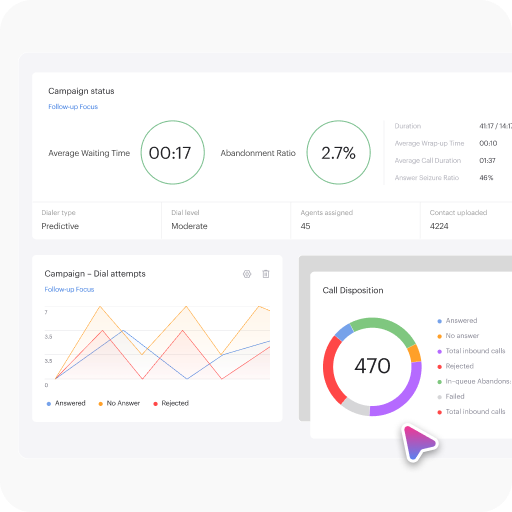
When reality doesn’t follow the plan, Voiso flags the gaps, before they become missed SLAs or stressed teams.
Managers get real-time alerts for under- or overstaffing and can reallocate agents instantly with drag-and-drop tools.
No spreadsheets. No guesswork.
Performance that speaks for itself

customers




Get started in less than 24 hours
FAQ
What’s the difference between forecasting and scheduling, and do I really need both?
That’s a common point of confusion. Forecasting is all about predicting, how many calls or chats will come in, and when. Scheduling is about responding, placing the right number of people on the clock at the right time. You might think forecasting is just a nice bonus, but honestly, without it, scheduling turns into guesswork. The two are deeply linked. You need a solid forecast to build a sensible schedule, and once the day starts, your schedule should be flexible enough to respond if the forecast was off by 10–15%. Voiso ties these together. You’re not toggling between tools or spreadsheets. Forecasts can automatically trigger scheduling suggestions, or even update shift alerts when call volume changes mid-day. So yes, you need both, but more importantly, you need them to work together.
How accurate are call volume forecasts really, and what happens if they’re wrong?
It’s a fair question. Forecasting isn’t fortune-telling, it’s modelling based on patterns. And no system, not even Voiso’s, can see a power outage, news event, or viral TikTok coming. But Voiso does something that static forecasts can’t: it recalculates. Constantly. If Monday at noon doesn’t look like last Monday, the system adapts. You’ll see updated predictions before your agents start getting slammed. And if you miss the mark entirely, Voiso doesn’t just shrug. It flags the risk and suggests ways to fix it, whether that’s moving a break, calling someone in, or shifting agents to another queue. You won’t prevent every surprise, but you’ll deal with them faster. That’s what separates intelligent software from glorified spreadsheets.
How does Voiso handle agent preferences and availability?
One of the quiet frustrations in contact centers is when people feel their time isn’t respected. Voiso addresses that by allowing agents to submit their preferred shifts, availability windows, or block-out dates directly in the platform. The system doesn’t treat preferences as gospel, but it does try to honour them when building schedules. Managers still have final say, but they’re not starting from scratch or flipping through last month’s calendar notes. The scheduling engine also flags when preferences might cause undercoverage, so you’re not caught off guard. It’s about balance. You want agents to feel heard without letting staffing fall apart. And honestly, when people see their preferences being respected, at least most of the time, they’re more likely to pick up that Friday night shift when you really need help.
What Is Call Center Scheduling and Forecasting Software?
Call center scheduling and forecasting software predicts future call volumes and creates optimal agent schedules to meet anticipated demand efficiently. The technology analyzes historical data, seasonal patterns, and business trends to forecast when customers will contact your organization and how many agents you’ll need during specific time periods.
The importance of balancing staffing levels with anticipated demand cannot be overstated. Too few agents create long wait times, frustrated customers, and potential revenue loss. Too many agents during quiet periods drive up labor costs unnecessarily while reducing profitability. Finding that sweet spot requires sophisticated analysis that goes beyond gut feelings or simple averages.
Reactive staffing approaches rely on responding to problems after they occur – perhaps calling in extra agents when queues get long or sending people home when call volume drops unexpectedly. Proactive, data-informed planning anticipates these fluctuations before they happen, enabling smooth operations that maintain service levels consistently.
Voiso fits into this landscape as a predictive, real-time, and adaptable solution that adjusts forecasts automatically as new data becomes available. Rather than static schedules created weeks in advance, the system responds to changing conditions while maintaining optimal coverage. This flexibility becomes crucial during unexpected events that traditional forecasting might miss completely.
Why Forecasting and Scheduling Software Actually Matters?
Controls Labour Costs Without Sacrificing Service
Labor typically represents the largest expense in call center operations, often accounting for 60-80% of total operational costs. Forecasting software prevents overstaffing during predictably low volume periods by identifying exactly when fewer agents are needed without compromising service quality. The precision eliminates guesswork that often leads to expensive scheduling mistakes.
Understaffing situations create their own costly problems through agent burnout, increased turnover, and poor customer experiences that damage long-term relationships. When agents consistently face overwhelming workloads, they become stressed, make more mistakes, and eventually leave for less demanding positions. The recruitment and training costs for replacing experienced agents often exceed the savings from reduced staffing.
Budget justification becomes much easier when decisions are backed by concrete data rather than management intuition. Finance teams appreciate forecasting reports that show exactly why specific staffing levels are necessary during different periods. This transparency helps secure appropriate budgets while demonstrating that contact center management takes cost control seriously. The data also reveals optimization opportunities that might not be obvious through casual observation.
Improves Customer Experience
Predictable wait times create better customer experiences because people can set realistic expectations about their interactions. When forecasting accurately predicts busy periods, organizations can staff appropriately to maintain consistent service levels rather than subjecting customers to wildly variable experiences depending on when they happen to call.
Campaign launches and seasonal peaks often catch organizations unprepared without proper forecasting. Product launches, holiday shopping periods, or marketing campaigns can generate sudden volume spikes that overwhelm unprepared teams. Forecasting software helps identify these patterns in advance, enabling proactive staffing adjustments that prevent service degradation during crucial business periods.
Meeting SLAs becomes achievable without constant firefighting when staffing aligns with actual demand patterns. Rather than scrambling to address service level failures after they occur, teams can maintain consistent performance that builds customer confidence. This proactive approach also reduces stress on management teams who no longer spend their time responding to daily operational crises that proper planning could have prevented.
Makes Manager Decisions Easier
Spreadsheet planning consumes enormous amounts of management time while producing results that are often outdated before implementation begins. Manual forecasting requires gathering data from multiple sources, performing complex calculations, and updating schedules constantly as conditions change. Automated forecasting eliminates this administrative burden while producing more accurate results.
Replacing instinct with measurable, visible data improves decision quality while building confidence in operational choices. Rather than relying on experience and gut feelings, managers can point to specific metrics that support their staffing decisions. This objectivity becomes particularly valuable when explaining choices to senior leadership or when training new managers who lack extensive experience.
Shift swaps and approval processes become faster when software provides clear visibility into coverage impacts. Managers can quickly assess whether proposed changes maintain adequate staffing levels without manually calculating coverage gaps. This efficiency improves agent satisfaction by enabling faster responses to schedule change requests while ensuring operational requirements are met consistently.
What are The Main Use Cases for Call Centers of All Sizes?
Small Teams with Variable Volume
Small teams often struggle with part-time coverage decisions because individual agent absences create disproportionate impacts on service levels. Forecasting software helps identify when part-time agents should be scheduled to provide optimal coverage without creating expensive overstaffing situations. This precision becomes particularly valuable when labor budgets are tight and every scheduling decision matters financially.
Panic-scheduling for high-volume days creates stress and often results in poor coverage decisions made under pressure. Perhaps there’s a product launch coming up, or historical data shows that certain days consistently generate higher call volumes. Forecasting software identifies these patterns in advance, enabling calm, thoughtful planning rather than last-minute scrambling that might not produce optimal results.
Resource optimization takes on special importance for smaller operations because there’s less room for error. A scheduling mistake that might be absorbed easily by a large team can significantly impact a small operation’s ability to serve customers effectively. Forecasting helps small teams punch above their weight by maximizing the efficiency of limited resources through better planning and anticipation.
Enterprise-Level Support Centers
Managing hundreds of agents across global time zones requires sophisticated coordination that becomes impossible through manual methods. Forecasting software handles complex scenarios involving multiple locations, different skill sets, and varying local regulations while maintaining optimal coverage across all operational areas. This complexity management enables consistent service delivery regardless of geographic distribution.
Standardizing processes for team leads and operations managers ensures consistent decision-making across large organizations. Rather than each location developing its own approach to scheduling and forecasting, enterprise software provides unified methodologies that can be applied consistently. This standardization improves efficiency while enabling better performance comparisons across different operational units.
Global operations benefit from centralized visibility that enables resource sharing between locations when unexpected demand occurs. If one region experiences higher than expected volume, the system can identify available capacity in other time zones that might be able to assist. This flexibility maximizes the value of global operations while ensuring customers receive consistent service regardless of when or where they initiate contact.
Outsourced or BPO Partners
Client-specific forecasting becomes essential when managing multiple customer accounts with different volume patterns, seasonality, and service level requirements. Each client may have unique busy periods, product launch schedules, or campaign timing that affects their contact volume differently. Forecasting software helps BPO partners provide accurate staffing for each client while optimizing overall resource utilization.
Accountability and resource tracking provide the transparency that client relationships require. Detailed forecasting reports demonstrate that staffing decisions are based on data analysis rather than guesswork, building confidence in the BPO’s operational capabilities. Clients can see exactly how their forecasts are developed and why specific staffing levels are recommended for their accounts.
Queue-specific forecasting enables precise resource allocation when handling multiple service types or client accounts simultaneously. Different queues may require different skill sets, have varying complexity levels, or experience different demand patterns. This granular forecasting helps ensure that each queue receives appropriate attention while maximizing agent utilization across the entire operation.