




Call Center Agent Monitoring Software
See what’s happening as it happens
Track agent performance in real time with live dashboards, sentiment alerts, and whisper/barge-in tools. Voiso brings together voice, chat, and messaging data so you can monitor, coach, and improve — all in one view.


Monitor smarter, coach faster
Real-time visibility into every interaction
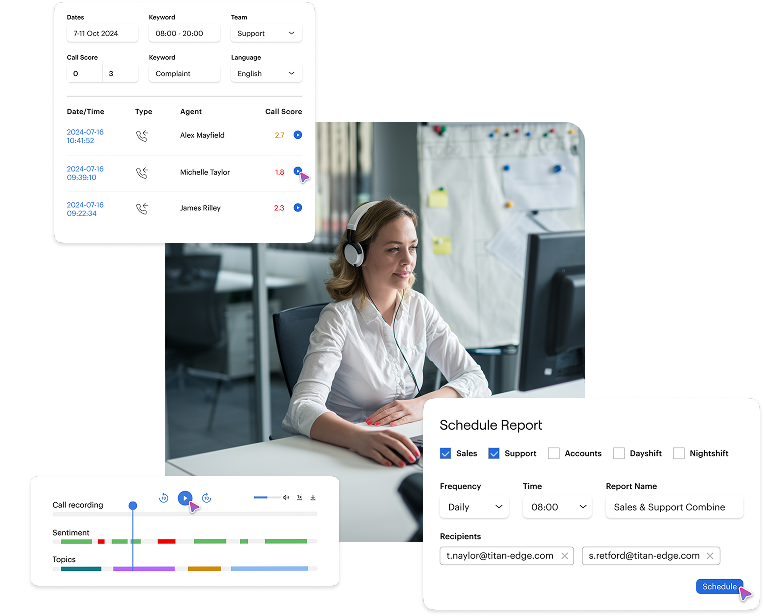
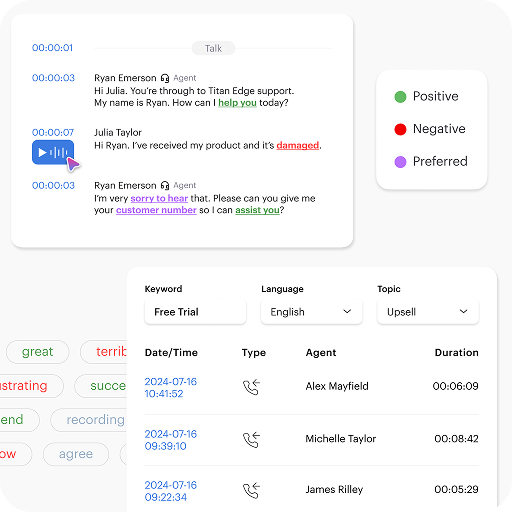
Gain a live view into every customer interaction with real-time agent status, call metrics, and transcription.
Supervisors can whisper guidance, barge in when necessary, or flag calls for follow-up without interrupting the conversation flow.
Alerts and monitoring, your way
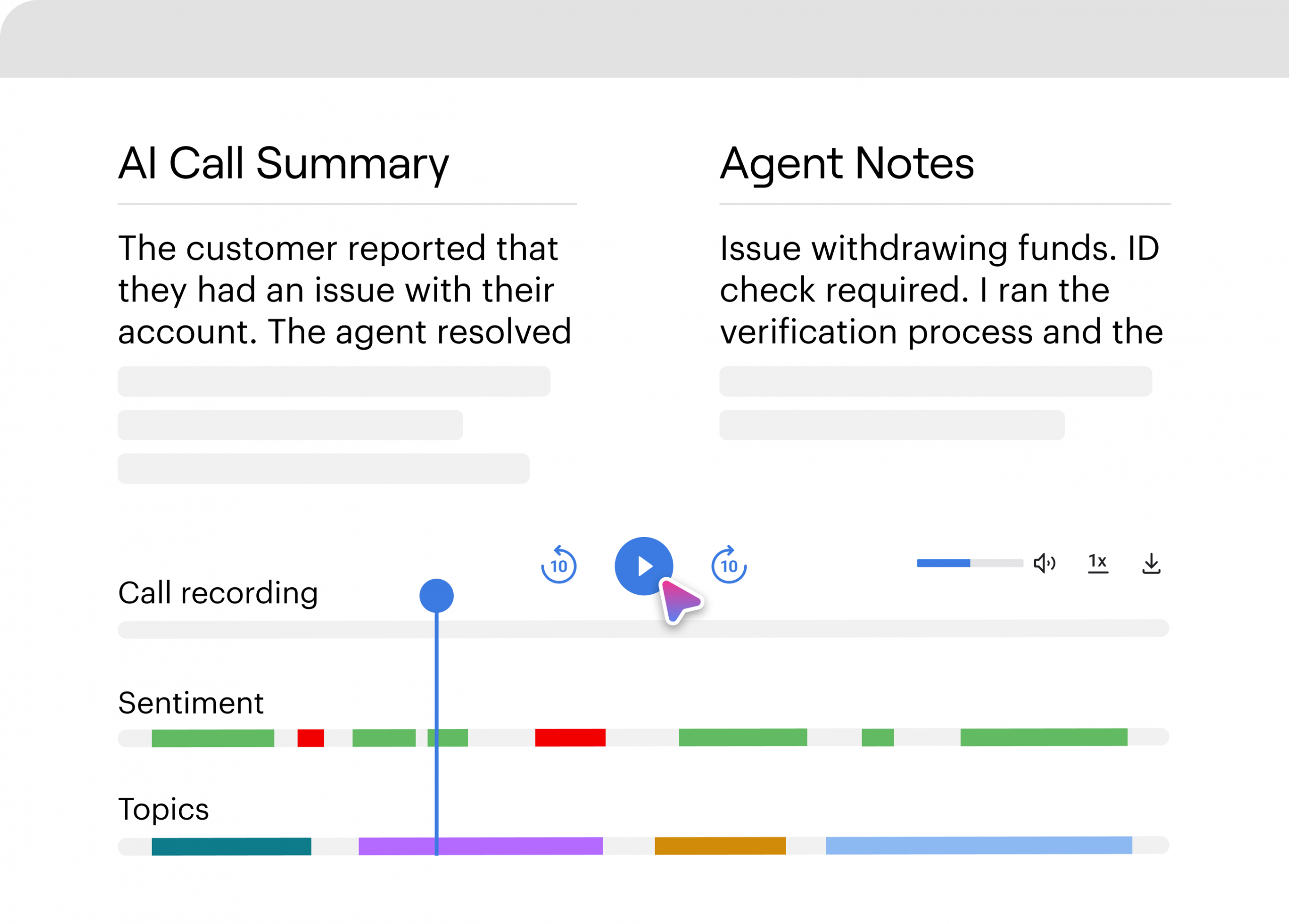
Customize alerts to detect long silences, compliance risks, or emotional shifts, setting thresholds that fit each team or role.
Stay proactive with notifications that help supervisors act quickly and maintain consistent service quality.
QA and coaching in one system
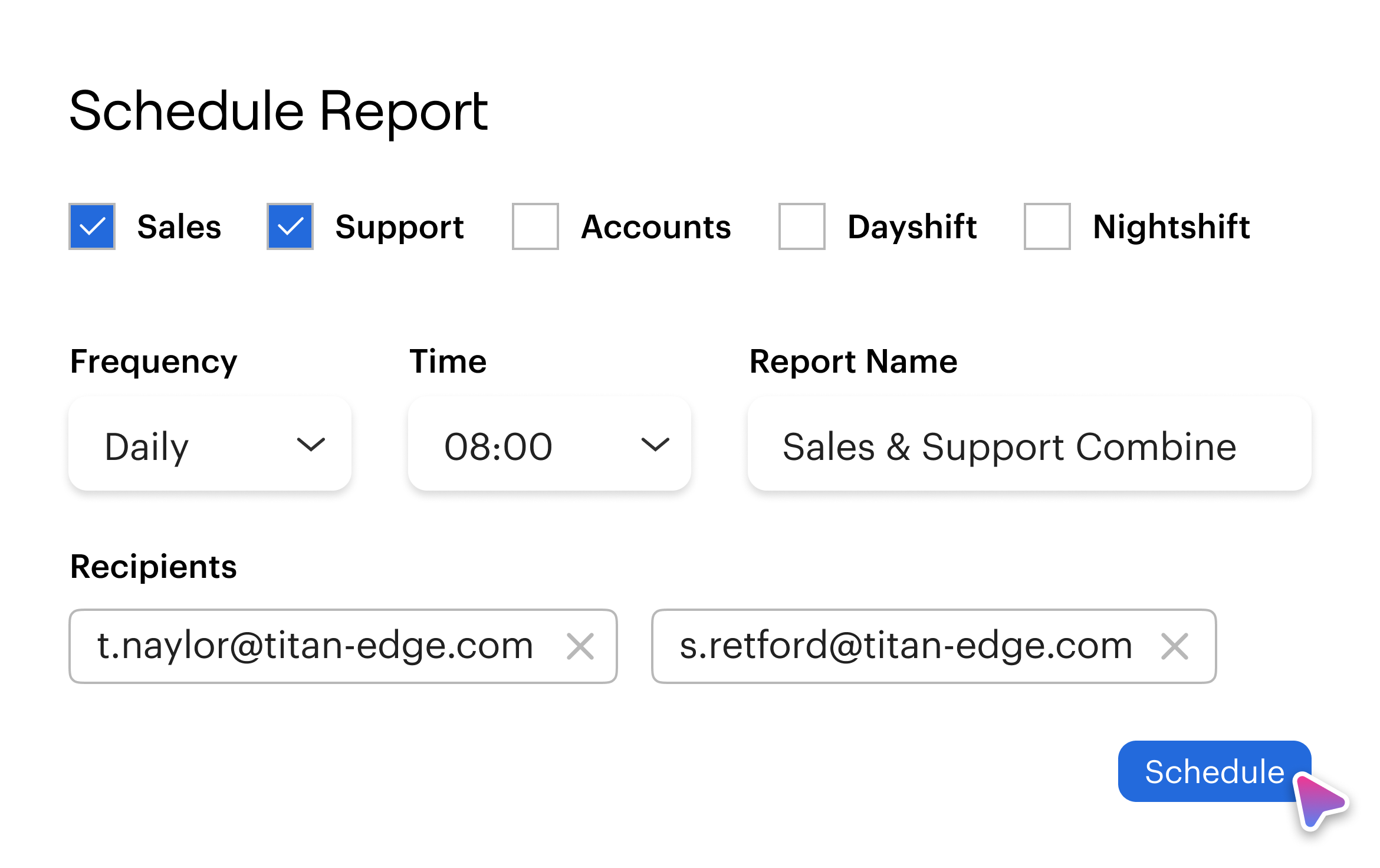
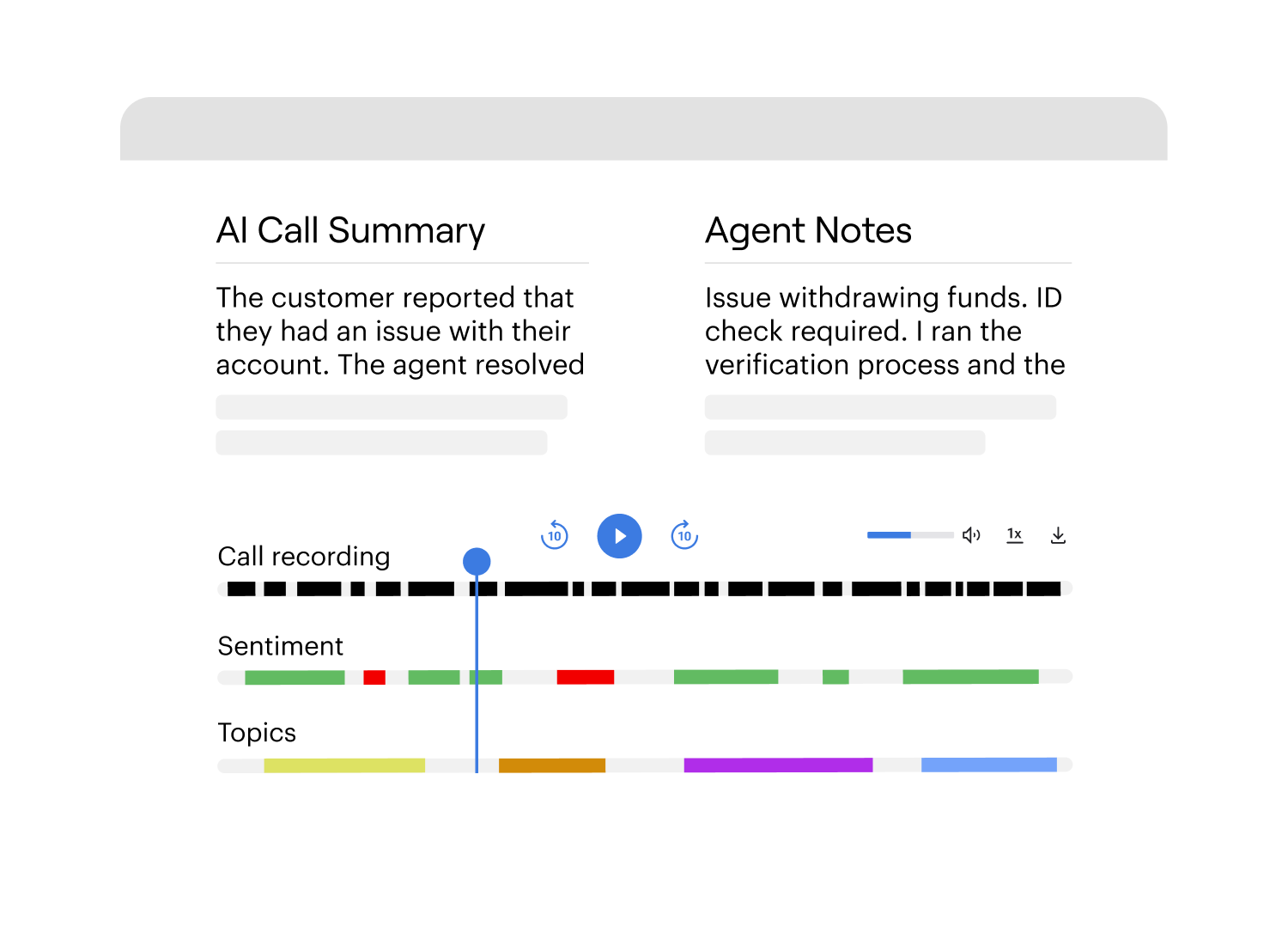
Eliminate disjointed workflows by unifying call recordings, transcripts, and QA scorecards in a single platform.
Connect performance insights directly to coaching actions and track measurable improvement over time.
Actionable insights, instantly

customers




Get started in less than 24 hours
FAQ
What kinds of metrics should I track when monitoring agents?
When monitoring call center agents, it helps to think beyond the usual suspects like resolution rate or talk time. Of course, those matter, but other indicators might reveal deeper issues or opportunities. For example, silence percentage can show where agents are struggling to fill gaps in conversation or lack confidence in delivering information. Call abandonment rate, often overlooked in QA discussions, might point to wider team workload problems or a misalignment between script flow and customer patience.
You could also track escalation frequency. If agents regularly pass calls up the chain, is it a training gap or a sign that policies aren’t customer-friendly? Another useful one is first response accuracy, not speed, but whether the initial answer or action addressed the customer’s reason for calling.
None of these metrics work in isolation. The real value comes when you connect them, spot the patterns, and use them to support, not punish, your team. Because that’s what real monitoring should be about: insight, not oversight.
Is agent monitoring software legal and ethical?
The legality and ethics of agent monitoring depend largely on how the system is implemented and where your call center operates. Most jurisdictions allow monitoring as long as employees are aware it’s happening. In some regions, you may need their explicit consent, while in others, simply notifying them is enough.
Ethically speaking, the intent behind monitoring matters. If it’s being used secretly to punish or shame agents, it’s likely to backfire, both morally and operationally. But when teams are transparent, use the data to offer support, and frame it as a tool for growth, it tends to be well-received.
Think about it this way: would you want someone listening to your calls without context or feedback? Probably not. That’s why it’s important to communicate the purpose of monitoring, show how it helps the team, and give agents access to their own metrics. That approach keeps things both lawful and fair, and builds trust instead of resentment.
How much training does Voiso’s platform require?
Honestly, not much. The platform is built with usability in mind, so the layout feels familiar, even if you’ve never touched monitoring software before. Most users can navigate it confidently within the first day, sometimes within the first hour. During onboarding, Voiso provides a quick-start guide, short how-to videos, and real-time setup support if needed.
The training tends to be lighter for supervisors than you’d expect. Features like agent dashboards, playback tools, and performance alerts are all accessible in just a few clicks. For agents, there’s nothing to install or learn unless they’re involved in reviewing their own metrics. Even then, it’s all clearly laid out and easy to digest.
What surprises most teams is that Voiso doesn’t overcomplicate things. You won’t need a manual the size of a textbook. And if you ever feel stuck? The support team doesn’t send you to a bot or forum, they just help. Simple as that.
Is Voiso’s QA software suitable for small call centers?
Absolutely. A lot of smaller teams think QA tools are overkill, something only big operations need. But that’s not really the case anymore. Modern platforms like Voiso don’t require a big IT department or huge budgets. And small teams often benefit even more from QA tools because there’s usually less room for error and fewer managers to spot issues manually. Plus, tools that help you coach without micromanaging? That’s gold for lean teams.
Can Voiso’s system work with remote or hybrid call centers?
Yes, that’s one of the areas where Voiso actually thrives. The platform is designed from the ground up to support remote, hybrid, and multi-location teams. Since it’s cloud-based, it doesn’t rely on an in-house server or VPN. Agents can log in securely from anywhere, home, satellite office, or overseas, and their calls, metrics, and coaching feedback are still captured and connected.
The system also supports real-time monitoring without adding heavy loads on individual devices, which matters when agents are working on mixed or lower-spec equipment. Supervisors can see what’s happening live, schedule performance reviews, or provide coaching without needing to be in the same room, or even the same country.
Security-wise, Voiso applies encryption protocols and access controls so only authorised users can view sensitive data. Role-based permissions keep everything tight. And because remote setups vary so much, the platform includes flexible configuration options so you can align it with whatever workflow you already have.
Does this software monitor chats and messages, or just voice calls?
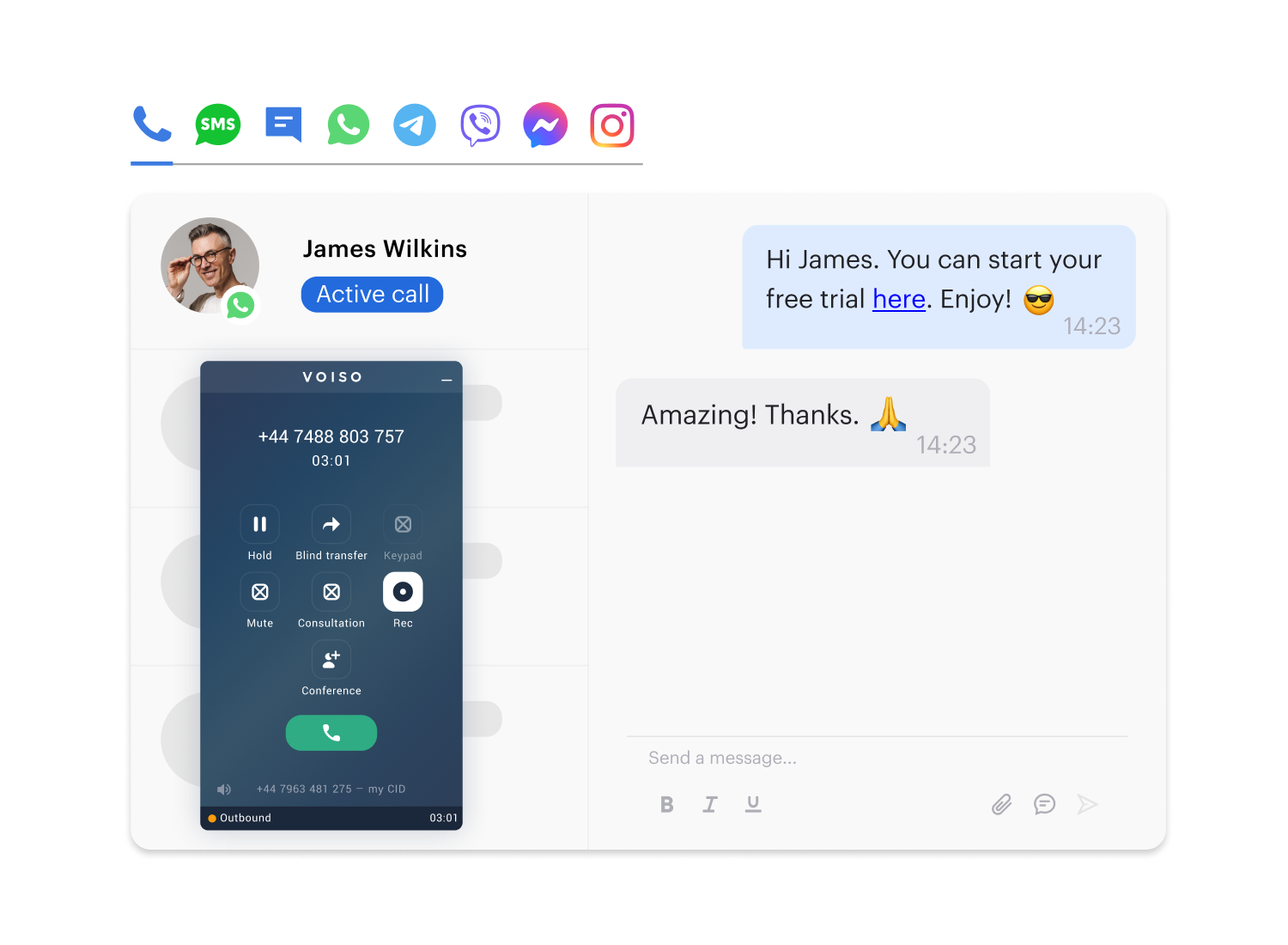
Voiso’s agent monitoring capabilities extend far beyond traditional voice channels. Yes, live calls are tracked, but that’s just the beginning. The platform also captures and analyses written interactions across various digital touchpoints. That includes live chat, SMS, and messaging apps like WhatsApp or Facebook Messenger (assuming integration is enabled).
Each channel gets its own layer of attention. For instance, Voiso can measure response time, sentiment, and even grammar clarity in written communication. It identifies repeated queries or emotional keywords that might indicate frustration, all without sounding robotic or disconnected. This means you’re not just listening to voices, you’re reading conversations, recognising patterns, and responding with context.
Voice calls will always carry nuance, tone, inflection, pacing, but chat leaves a traceable text trail. Voiso gives you both. So whether your customer starts the conversation in a chatbot and ends it on the phone, the data stays linked. That’s what keeps service consistent across the entire support experience.
What Is Agent Monitoring in Call Centers?
Agent monitoring software tracks and analyzes how your team handles customer interactions. It’s not about watching over people’s shoulders like some kind of digital supervisor – though I know that’s what comes to mind first. Think of it more like having a smart assistant that notices patterns, flags potential issues, and helps everyone get better at their jobs.
The software captures conversation data, measures key performance indicators, and provides insights about agent behavior. Whether that’s tracking call duration, monitoring compliance with scripts, or identifying when customers sound frustrated. It’s less about surveillance and more about understanding what works and what doesn’t.
Common misconceptions really do center around the “Big Brother” aspect. People hear “monitoring” and immediately think about being watched constantly. But modern agent monitoring focuses on quality improvement rather than punishment. The goal is helping agents perform better, not catching them doing something wrong.
The role it plays in ensuring quality and compliance is pretty significant. Consistent service delivery becomes much easier when you can spot deviations early. Compliance monitoring helps avoid regulatory issues before they become expensive problems. And accountability works both ways – it protects agents from unfair criticism while identifying genuine areas for improvement.
Why It’s Become Critical in 2025
Call complexity has increased dramatically over the past few years. Customers expect faster resolutions, more personalized service, and seamless experiences across multiple channels. Agents need better support tools to meet these expectations consistently. Monitoring software provides that support by identifying what successful interactions look like and helping replicate them.
Hybrid teams present new challenges that didn’t exist when everyone worked in the same office. Remote agents might struggle with certain processes or miss nuances in customer communication. Monitoring tools help maintain consistency regardless of where people are working from.
Growing expectations from both customers and businesses put pressure on call center performance. Customer satisfaction scores directly impact business outcomes now more than ever. The connection between monitoring, coaching, and improved CSAT scores is well-documented. Teams that use monitoring effectively typically see productivity improvements within months of implementation.
What Are the Key Features of Voiso’s Monitoring Software?
Voiso’s monitoring platform captures comprehensive interaction data across voice, chat, and email channels. The software records conversations automatically while analyzing sentiment, tone, and compliance markers in real-time. Custom scoring criteria let you define what good performance looks like for your specific business needs.
Real-time alerts notify supervisors when certain conditions are met – maybe a customer expresses strong frustration, or an agent deviates from required compliance language. These alerts help managers intervene proactively rather than discovering problems during post-call reviews.
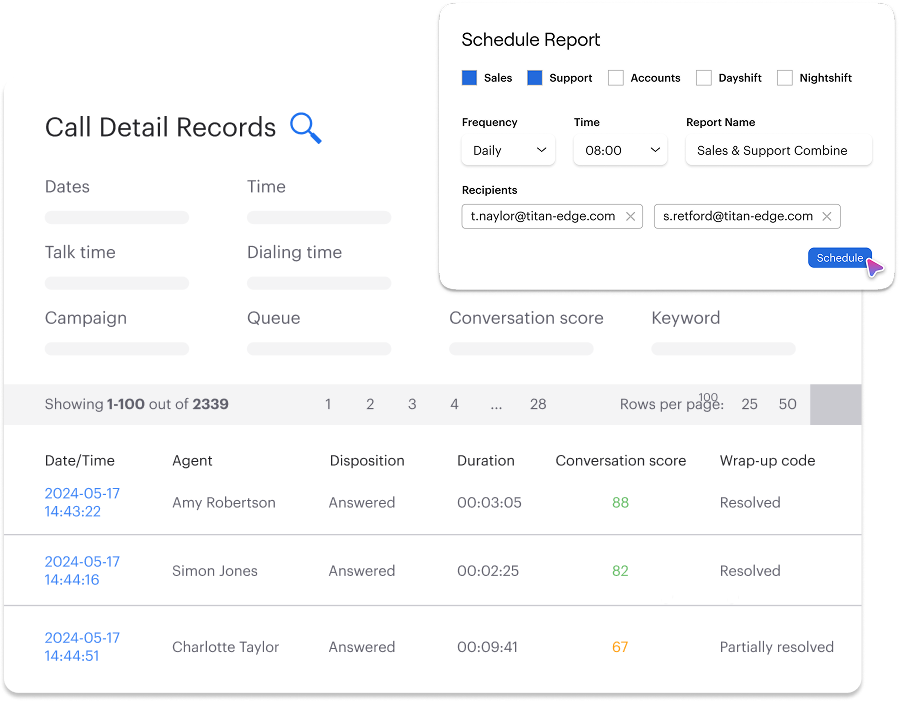
Dashboard analytics provide both individual agent performance data and team-wide trends. Managers can spot patterns across multiple interactions, identify training opportunities, and track improvement over time. The reporting features let you drill down from high-level metrics to specific conversation details.
Integration capabilities connect with existing CRM systems, workforce management tools, and learning platforms. This creates a connected ecosystem where monitoring insights feed directly into coaching programs and training modules. Rather than isolated data points, you get actionable intelligence that improves overall operations.
What Are the Benefits of Using Voiso for Agent Monitoring?
Improve Service Without Micromanaging
The coaching-over-control approach really makes a difference in team morale. Instead of constantly watching for mistakes, supervisors can focus on development opportunities. Agents respond much better to feedback when it feels supportive rather than punitive.
Custom alerts help managers focus on what actually matters. Rather than reviewing every single call, they get notified about interactions that need attention. This might be calls where customer satisfaction scores drop, compliance issues arise, or exceptional performance occurs. Targeted attention is more effective than blanket oversight.
Performance trends become visible over time rather than just individual call reviews. Maybe an agent struggles with a particular type of customer inquiry, or consistently performs well during certain times of day. These patterns help create personalized coaching plans that address specific needs rather than generic training.
Data-Driven Coaching and Upskilling
Connecting insights to training modules creates targeted development programs. When monitoring reveals that an agent struggles with objection handling, supervisors can assign specific training resources that address that skill. The connection between performance data and learning opportunities becomes direct and immediate.
Tracking score changes after coaching sessions shows whether development efforts actually work. Some coaching approaches that sound good in theory don’t translate to measurable improvement. The data keeps everyone honest about what methods produce results and which ones need adjustment.
Skill gap identification happens automatically rather than through guesswork. The software can analyze hundreds of conversations to determine which techniques lead to better outcomes. Agents can learn from top performers in their own organization rather than relying on generic best practices that might not fit your customer base.
Audit Trail for Compliance
Data-backed evidence becomes crucial when disputes arise or regulatory audits occur. Having detailed records of what was said, when it was said, and whether proper procedures were followed protects both the organization and individual agents. Documentation prevents he-said-she-said situations.
Industry-specific compliance monitoring addresses the unique requirements of finance, healthcare, and other regulated sectors. The software can flag specific language that might create legal exposure or identify when required disclosures weren’t provided. Automated compliance checking reduces human error in these critical areas.
Dispute resolution becomes much more straightforward when you have complete interaction records. Whether that’s a customer complaint about service quality or a regulatory question about proper procedures, the evidence is readily available. This transparency actually builds trust with both customers and regulators.
What Are the Best Practices for Monitoring Call Center Agents?
Monitor for Patterns, Not Perfection
Looking for consistent gaps rather than individual mistakes creates a more constructive monitoring environment. Every agent will have an off day or challenging call. The patterns over multiple interactions tell you much more about actual performance levels and development needs.
Avoiding overreactions to single-call anomalies prevents unfair criticism and maintains team confidence. One difficult customer interaction doesn’t indicate systemic problems. But if an agent consistently struggles with the same issue across multiple calls, that’s worth addressing through coaching.
Trend analysis over time reveals whether performance issues are temporary or persistent. Sometimes external factors – new product launches, policy changes, seasonal volume spikes – affect performance temporarily. Understanding context helps managers respond appropriately rather than jumping to conclusions.
Share Metrics Transparently
Letting agents see their own dashboards creates ownership of performance improvement. When people can track their progress in real-time, they become more engaged in their development. Hidden scorecards often breed suspicion and resistance to feedback.
Involving agents in defining what “good” looks like builds buy-in for monitoring programs. Top performers can explain their techniques, while struggling agents can identify specific areas where they want support. This collaborative approach makes monitoring feel less like judgment and more like mutual improvement.
Regular performance discussions based on data prevent surprises during formal reviews. Monthly or weekly check-ins using monitoring insights help agents course-correct before problems become serious. Continuous feedback loops work better than annual performance evaluations alone.
Mix Quantitative Data with Human Context
Using recordings in coaching sessions provides concrete examples rather than abstract feedback. Agents can hear exactly what happened and understand specific suggestions for improvement. The combination of scores and actual conversation content creates more effective development conversations.
Inviting feedback from agents about flagged calls adds important context that data alone can’t provide. Maybe a customer was already upset before the call started, or the agent was dealing with a system outage that affected their usual process. Agent input helps interpret the data more accurately.
Balancing metrics with qualitative observations prevents over-reliance on numbers alone. Customer satisfaction involves nuances that automated scoring might miss. Human judgment combined with data analysis provides the most complete picture of agent performance.
What Are the Use Cases for Voiso’s Monitoring Tools Across Teams?
Support Teams
Spotting empathy gaps helps identify when agents sound too mechanical or fail to acknowledge customer frustration appropriately. The software can analyze tone and sentiment to flag conversations where emotional intelligence could be improved. This soft skill development often has the biggest impact on customer satisfaction.
Process confusion becomes visible when multiple agents ask similar questions or struggle with the same procedures. Rather than assuming everyone understands new processes, monitoring data can reveal where additional training or clearer documentation is needed. Early identification prevents widespread adoption problems.
Shortening average resolution time often comes from identifying efficient troubleshooting patterns used by top performers. Some agents naturally guide customers through solutions more effectively than others. Sharing these techniques across the team improves overall efficiency without adding pressure.
Sales Teams
Optimizing pitch timing reveals when prospects are most engaged and receptive to offers. The software can identify patterns in successful sales calls – maybe certain times of day produce better results, or specific conversation flows lead to more closes. This intelligence helps refine sales processes based on actual performance data.
Objection handling techniques become more effective when based on real examples rather than theoretical training. Monitoring can identify how top performers address common customer concerns and turn resistance into opportunities. These proven approaches can be taught to other team members.
Identifying tone changes that lead to conversions helps agents understand the emotional dynamics of successful sales calls. Sometimes subtle shifts in energy or confidence make the difference between a close and a lost opportunity. Audio analysis can help agents recognize and replicate these effective patterns.
Outsourced BPOs
Ensuring brand voice consistency becomes critical when external teams represent your company. Monitoring helps identify when outsourced agents drift from approved messaging or fail to maintain the right tone for your brand. Consistent oversight maintains quality standards regardless of who employs the agents.
Faster onboarding with feedback-driven training accelerates new agent productivity. Rather than generic training programs, monitoring insights can identify specific areas where new hires typically struggle. Training can be customized based on actual performance data rather than assumptions about what new agents need to learn.
Quality standardization across multiple locations or teams becomes manageable through centralized monitoring. Whether you have agents in different countries or different outsourcing partners, consistent measurement criteria help maintain uniform service quality. The data provides objective standards that everyone can understand and work toward.
How to Start Monitoring with Voiso?
Deployment in Less Than a Day
Plug-and-play integrations connect with most existing phone systems and CRM platforms without extensive technical setup. The software is designed to work with common call center infrastructure rather than requiring complete system overhauls. Most organizations can begin capturing data within hours of setup.
Onboarding guided by real people provides support during initial implementation. Rather than just documentation and tutorials, you get actual human assistance to configure the system for your specific needs. This personal touch helps avoid common setup mistakes and ensures you’re getting value from day one.
Configuration options let you customize monitoring criteria based on your business requirements. Whether you need specific compliance checks, custom scoring rubrics, or particular alert conditions, the system adapts to your needs rather than forcing you to change your processes.
Scaling Across Teams and Locations
Built to grow with remote, hybrid, or global teams means the software handles distributed workforces effectively. Whether agents work from home, satellite offices, or different countries, monitoring capabilities remain consistent. This flexibility supports modern workforce arrangements without sacrificing oversight quality.
Central dashboard with role-based access gives different stakeholders the information they need while maintaining appropriate privacy boundaries. Agents see their individual performance data, team leads get their group metrics, and executives access high-level analytics. Everyone gets relevant insights without information overload.
Multi-site deployment capabilities support organizations with complex operational structures. Whether you have multiple call centers, outsourced components, or international locations, centralized monitoring provides unified visibility while allowing local customization where needed.
Why Monitor Agents in Real-Time?
Differences between live and post-call evaluation center on intervention opportunities. Real-time monitoring lets supervisors coach agents during actual customer interactions when the feedback is most relevant. Post-call reviews are valuable for training, but they can’t prevent customer dissatisfaction that’s happening right now.
Preventing small issues from becoming customer churn drivers requires immediate action sometimes. When monitoring detects that a customer is becoming frustrated, a supervisor can step in to help resolve the situation before it escalates. These proactive interventions often save relationships that would otherwise be lost.
Learning acceleration happens when feedback connects directly to specific situations. Agents can adjust their approach immediately rather than trying to remember coaching advice from days or weeks ago. Real-time guidance creates muscle memory more effectively than delayed feedback.
Human + Machine = Smart Oversight
AI supports rather than replaces team leads by handling routine monitoring tasks and flagging situations that need human attention. Supervisors can focus their expertise on coaching and development rather than listening to every call for compliance issues. The technology amplifies human judgment rather than replacing it.
Avoiding false flags requires sophisticated algorithms that understand context rather than just keywords. Good monitoring software recognizes the difference between a customer saying “this is terrible” about their problem versus about your service. Human oversight ensures that automated alerts make sense in context.
Maintaining context means understanding that customer interactions exist within broader business situations. Maybe call volume is unusually high due to a product issue, or agents are dealing with new processes they’re still learning. Effective monitoring combines automated insights with human understanding of these situational factors.
The balance between automation and human judgment evolves as teams become more comfortable with monitoring tools. Initially, supervisors might review more alerts manually to understand what the system considers important. Over time, they can trust automated insights more while focusing their attention on complex situations that require human intervention.