All Products

.svg)






Everything I do as a demand marketer rests on one thing: how well I actually understand the person I’m trying to reach. Get that right, and the targeting, the messaging and the cost per lead I get judged on all fall into place. Get it wrong, and no amount of clever execution saves you.
But this isn’t just a marketing problem. It’s the quiet foundation under almost every function. Sales, product, support, the contact centre. None of it lands unless you understand the person on the other end. Knowing your customer isn’t one team’s job. It’s the thing everything else is built on.
Which is exactly why, this year, I got slightly obsessed with a single question: how do I make AI actually work in my favour to understand my buyer better? Not the version everyone posts about: automate the busywork, ship more, faster. I wanted the unglamorous version: help me know the person I’m selling to, at a depth and scale I could never reach on my own.
And the biggest unlock didn’t come from anything in my ad account. It came from realising that the richest, most honest, most specific customer intelligence in almost any company is already being collected every single day, and marketing never touches it. It’s sitting in the contact centre, with the people who talk to your customers all day, every day.
And when that goes unrecognised, when nobody treats those conversations as intelligence, it doesn’t just quietly disappear. You keep building campaigns, positioning and even product decisions on what you assume your buyer thinks, while the evidence of what they actually think goes unheard, call after call after call. The gap between the story you’re telling and the one your customers are living widens, and you can’t understand why the messaging isn’t landing. You’re guessing in a room where the answers are being spoken out loud.
We guess at the thing we most need to know
Here’s the uncomfortable truth about how most of us build messaging. We want to know the real language our buyers use: their actual objections, the words they reach for when they hesitate, the specific problem that made them pick up the phone. That’s the raw material of every good ad, landing page and email.
So how do we get it? We run a survey a couple of times a year. We scrape review sites. We pull a few quotes from a win/loss call if we’re lucky. And then we fill the rest of the gap with our own assumptions, dressed up as “positioning.”
Meanwhile, in the same building, or the same Slack, or the same org chart, there is a team having thousands of unfiltered conversations with those exact people, every week. Real objections. Real confusion. The precise phrasing a prospect uses right before they say no. And in most companies, no one in marketing has ever listened to a single one of those calls.
We are guessing at the one thing that is being recorded in full, in high fidelity, a few doors down.
The reason we ignored it: voice wasn’t data
There’s a good reason this went unused for so long. Voice wasn’t data. It was audio. Unsearchable, unstructured, impossible to analyse at any useful scale.
Quality teams have always known this. Traditionally, a human QA reviewer listens to something like one or two percent of calls. Everyone accepts it, because a person physically cannot listen to more. So 98% of what your buyers actually said, the patterns, the recurring friction, the shifts in how they talk about your category, evaporated the moment the call ended.
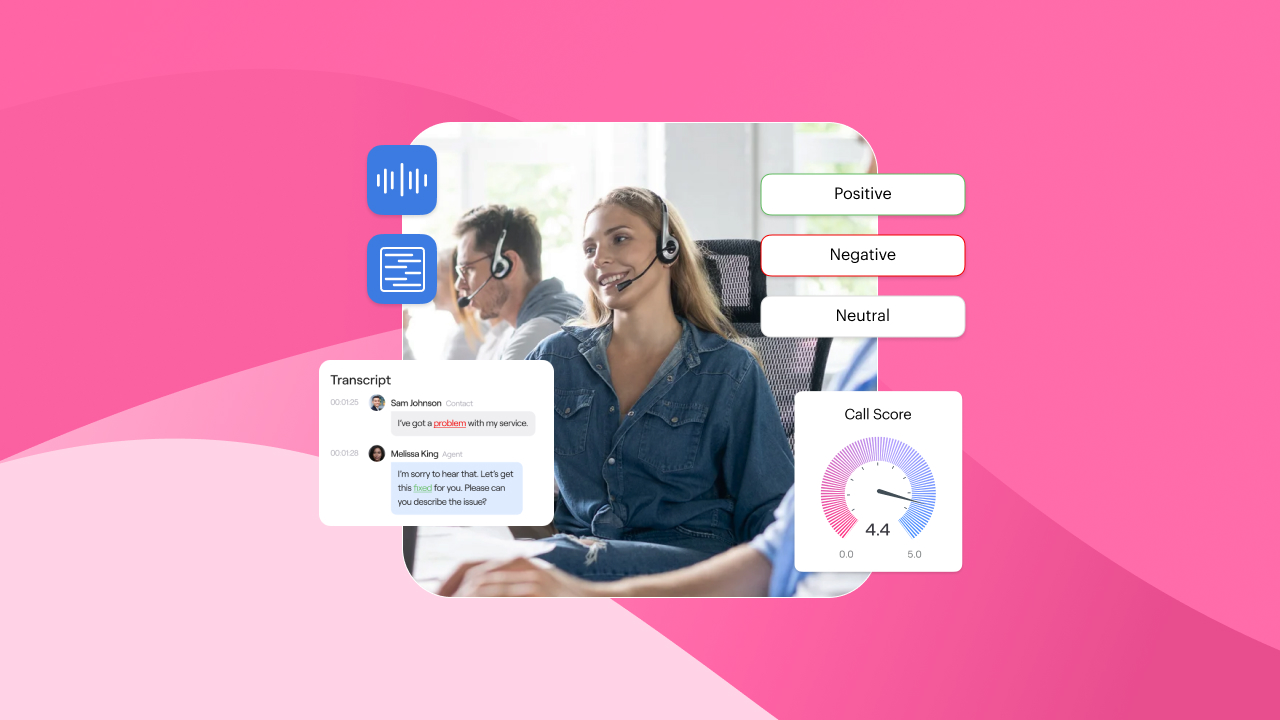
That’s the part AI genuinely changes, and it’s the part I got obsessed with. Speech analytics turns conversation into structured, searchable, minable data. Instead of sampling one in fifty calls, you can analyse all of them. Every objection becomes countable. Every recurring phrase becomes a signal. The stuff that used to be a vague anecdote from the sales floor becomes something you can actually query.
What I keep seeing customers do with it
I work in the contact centre software world, so I get to watch how teams put this into practice. And the pattern I keep seeing with Voiso customers is the interesting bit. The smart ones aren’t using speech analytics only to score agents or check compliance boxes. They’re using it as a listening system for the whole business.
What I see them doing, again and again:
- Hearing the objection before they lose the deal. When the same hesitation shows up across hundreds of calls, it stops being an anecdote and becomes a messaging problem you can fix: on the page, in the script, in the ad.
- Adjusting their communication to match how buyers actually talk. Not the language the marketing team wishes people used, but the words customers reach for themselves. That’s gold for copy.
- Spotting the real problem underneath the stated one. The reason someone calls is rarely the reason they’re frustrated. Patterns across conversations surface the actual friction, which is usually where the solution, and the better message, lives.
- Feeding that back into how they position and sell. The best teams close the loop: what the contact centre hears changes what marketing and sales say next.
None of that requires a marketer to sit and listen to thousands of hours of calls. That’s the point. AI does the listening at scale; the humans do the judgment and the deciding. The contact centre stops being a cost centre and starts being the most underrated research function in the company.
Everything your team needs in one platform
Why this matters for demand generation
This is where it starts to matter for my day to day. A lot of what we do in demand generation, the ads, the landing pages, the subject lines, rests on our read of what the buyer cares about and how they talk about it. When that read leans too heavily on assumption, it tends to show up in the numbers I watch most closely: cost per lead, and further down the funnel, cost per qualified opportunity. When it’s grounded in what customers actually say on calls, the message tends to land faster and the funnel gets a little more efficient.
Speech analytics turns the contact centre into a voice of customer engine I can feed straight into campaigns. The objection that keeps surfacing becomes the hook I test next. The phrase customers reach for becomes the headline, in their language rather than mine. The problem underneath the stated problem becomes the angle that finally makes a cold audience stop scrolling. Instead of running a survey twice a year and hoping, I get a continuous read on what my market is really asking for, and I can adjust positioning, messaging and targeting while it still matters. It even tells me which audiences to pursue and which competitors keep coming up, often before the numbers show me anything is off.
Why this matters for anyone running a contact centre, or a BPO
If you lead a contact centre, this is the reframe worth sitting with: your team is generating the single best stream of real customer voice your organisation has, and most of that value is currently leaking out the back. The conversations are happening either way. The only question is whether you’re capturing what they’re telling you.
For BPOs it goes a step further. The old pitch was volume: handle more interactions, cheaper. The pitch that increasingly wins is insight: not just running the conversations, but mining them and handing structured intelligence back to the client. When you can tell a client what their customers are actually saying and where they’re getting stuck, you stop being a vendor and start being a partner they can’t easily replace. Interaction data is quietly becoming the product.
What the obsession actually taught me
I went looking for ways to make AI do my job faster. What I found was more useful than that.
The most overlooked use of AI in my world isn’t producing more: more copy, more variants, more output. It’s finally being able to understand the person I’m marketing to, using evidence that was always there and always out of reach. The winning message was never going to come from a cleverer brainstorm. It was sitting in the calls the whole time.
Knowing your buyer has always been the job. For the first time, we can actually do it at the scale the job requires, as long as we’re willing to go listen where the conversations already are.