All Products

.svg)




BPOs sit in one of the most demanding parts of the customer experience world.
They are expected to scale fast, control costs, represent multiple brands, support different markets, manage large agent teams, handle high volumes, improve performance, and still keep every customer interaction personal.
That is not easy.
From the outside, people often look at BPOs as volume businesses. More agents. More calls. More queues. More campaigns. More output.
But anyone who has worked closely with BPO teams knows the reality is much more complex.
A good BPO is not simply answering calls or managing tickets. It is protecting the reputation of every brand it represents. It is turning training, process, technology, and human judgment into a consistent customer experience across hundreds or thousands of daily conversations.
That is why the technology a BPO chooses matters so much.
Not because technology replaces people.
Because the right technology helps good teams perform at the level their clients expect.
The BPO Market Has Changed
For a long time, many BPO buying decisions were driven by cost.
Companies wanted support capacity at a lower price. They wanted more agents without increasing internal headcount. They wanted outsourced teams that could handle volume quickly and efficiently.
Cost still matters.
But today, cost alone is not enough.
Customer expectations are higher. Brands are more sensitive to the quality of every interaction. A bad support experience can damage trust. A slow sales response can lose revenue. A poorly handled escalation can affect retention.
This has changed what clients expect from BPOs.
They do not just want cheaper operations. They want better outcomes.
They want agents who understand the product. They want faster response times. They want clearer reporting. They want higher conversion. They want better quality assurance. They want consistency across channels. They want a partner that can represent their brand properly.
That shift has also changed what BPOs need from their technology providers.
They need tools that support scale, but they also need tools that protect quality.
The Best BPOs Compete on Quality, Not Only Price
In my work with customer-facing teams, one thing is clear: the strongest BPOs are not trying to win only by being the cheapest option.
They are trying to win by being the most reliable extension of their client’s business.
That means their agents need to sound informed. Their supervisors need visibility. Their leaders need clear performance data. Their clients need confidence that customer conversations are being handled properly.
This is where the old view of BPO operations starts to break down.
If a BPO is measured only by call volume or average handle time, the full picture is missing. A short call is not always a good call. A high number of outbound attempts does not always mean strong performance. A closed ticket does not always mean the customer was satisfied.
The real question is whether the interaction achieved the right outcome.
Did the customer get the answer they needed?
Did the agent have the right context?
Was the lead contacted at the right time?
Was the conversation handled in a way that protected the client’s brand?
Was the supervisor able to see what happened and improve the process?
This is the level where BPOs create real value.
Technology Should Amplify Agents, Not Work Around Them
There is a lot of conversation about AI in customer experience.
Some of it is useful. Some of it is exaggerated.
At Voiso, we believe the most practical use of AI is not to remove the human from every interaction. It is to help the human perform better when the interaction matters.
This is especially important for BPOs.
Agents are often the first real human connection between a company and its customer. They carry the tone of the brand. They handle objections, frustration, urgency, confusion, and opportunity. They need to make decisions quickly while following the right process.
AI should support that work.
It should help agents understand the conversation faster. It should reduce repetitive tasks. It should surface useful context. It should help supervisors identify coaching opportunities. It should give leaders better visibility into what is happening across teams, campaigns, and clients.
The goal is not to make customer experience less human.
The goal is to make the human interaction more informed, more consistent, and more effective.
Everything your team needs in one platform
What BPOs Need From a Contact Center Platform
BPOs have a specific reality.
They often work across multiple clients, teams, regions, languages, products, and service lines. They may handle inbound support for one client, outbound sales for another, lead generation for a third, and multilingual customer care for another.
Because of that, a generic contact center setup is rarely enough.
BPOs need flexibility.
They need to create and adjust campaigns quickly. They need strong routing logic. They need reliable voice performance. They need omnichannel communication. They need real-time dashboards. They need clear reporting across clients and teams. They need integrations with CRMs and business tools. They need quality assurance that can scale beyond a small sample of calls.
And most importantly, they need a partner that understands how fast their world moves.
When something breaks, the impact is immediate. When reporting is unclear, client conversations become harder. When agents lack context, quality drops. When supervisors cannot see what is happening live, performance becomes reactive.
For BPOs, speed and visibility are not “nice to have” features.
They are operational requirements.
How Voiso Supports BPO Teams
Voiso is built for contact center teams that need to move quickly without losing control.
For BPOs, that means giving leaders, supervisors, and agents the tools they need to manage volume, improve performance, and keep conversations connected.
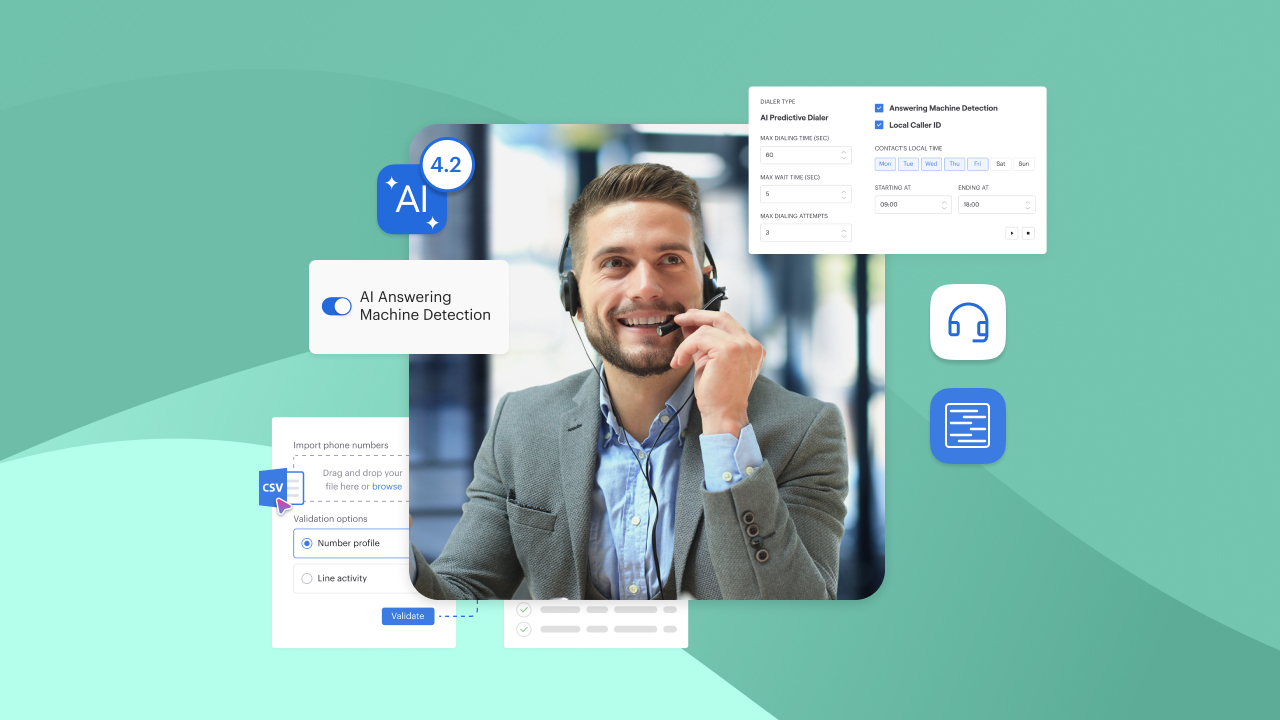
With Voiso’s AI Predictive Dialer, outbound teams can increase agent productivity by reducing idle time and connecting agents with more live conversations. For BPOs running sales, lead generation, or recovery campaigns, this can make a major difference in how efficiently teams operate.
With Local Caller ID and global reach, BPOs can improve contact rates by making outbound communication feel more familiar and local to the customer. That matters when teams are operating across different countries and markets.
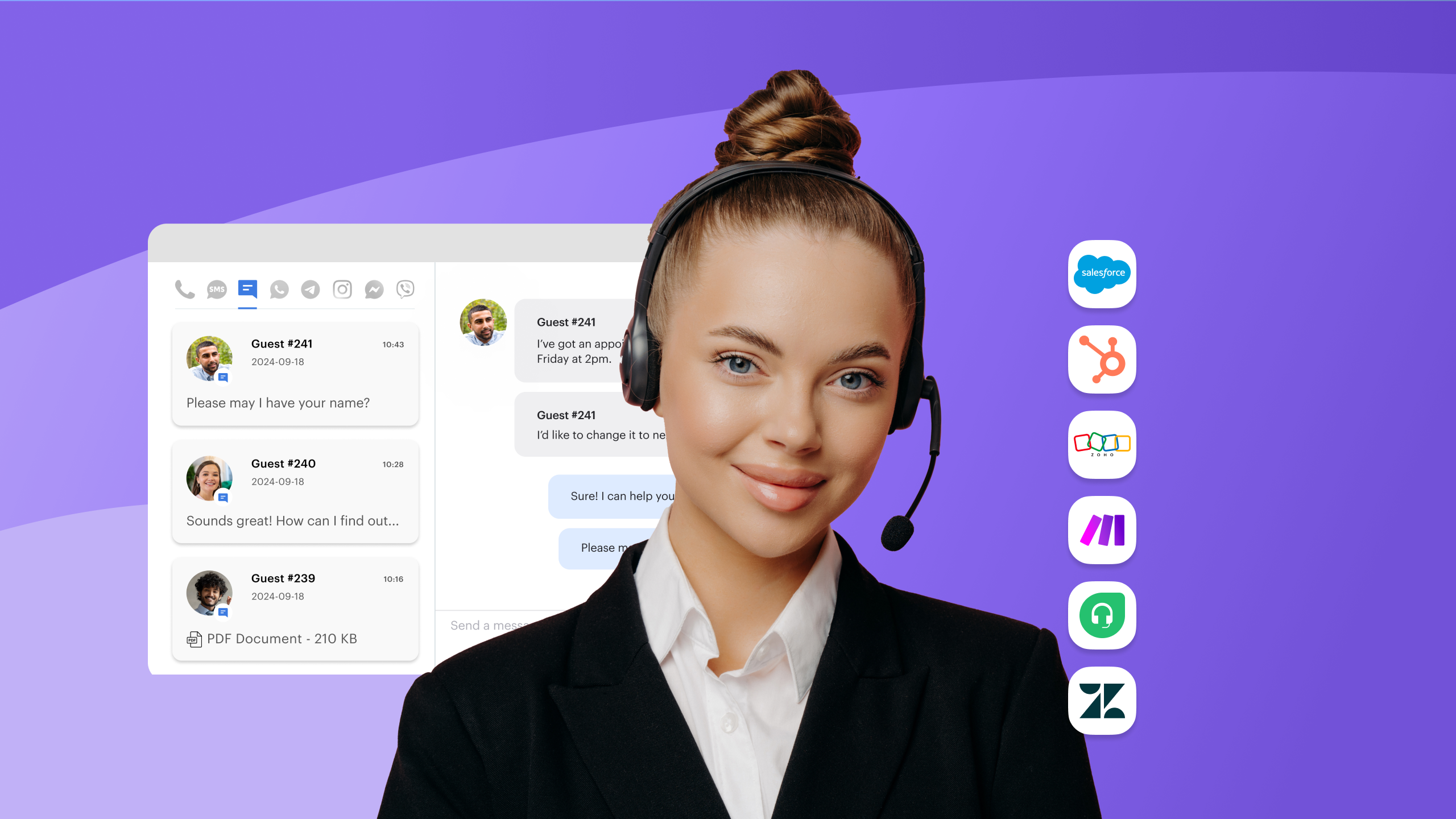
With Omnichannel communication, teams can manage customer conversations across voice, SMS, web chat, WhatsApp, Facebook Messenger, Instagram DM, Telegram, and Viber from a more unified workspace. This helps agents keep context and reduces the friction of switching between disconnected tools.
With AI Speech Analytics, call transcription, sentiment analysis, summaries, and keyword tracking, supervisors can move beyond manual call sampling and gain better visibility into performance patterns. This helps teams identify coaching opportunities, track quality, understand customer sentiment, and improve conversations at scale.
With Flow Builder, BPOs can create smarter routing, IVR flows, self-service options, and automation that reduce repetitive manual work and help customers reach the right place faster.
And with real-time dashboards, managers can monitor the metrics that matter while the operation is still live, not only after the day is over.
This combination matters because BPOs do not need isolated features.
They need an operating layer that helps them deliver for their clients every day.
The Customer Success Approach Matters
Technology alone is not enough.
For BPOs, the relationship with a platform provider has to be practical, responsive, and honest. These teams do not have time for vague promises or slow support. They need a partner that understands their priorities, listens to their feedback, and helps them turn the platform into a real operational advantage.
That is how we approach Customer Success at Voiso.
We do not see onboarding as a one-time setup. We see it as the start of an ongoing partnership.
We work with teams to understand their workflows, their client requirements, their campaign goals, their reporting needs, and the way their agents actually operate. Then we help them configure the platform in a way that supports those realities.
Sometimes that means helping a team improve outbound campaign performance.
Sometimes it means improving visibility for supervisors.
Sometimes it means helping leadership understand which metrics matter most.
Sometimes it means helping teams connect tools, simplify workflows, or use analytics more effectively.
The goal is always the same: make the platform useful in the real day-to-day operation, not just impressive in a demo.
BPOs Need Partners Who Can Challenge and Listen
The best partnerships are not built on everyone agreeing all the time.
They are built on honest conversations.
BPO leaders know their operations deeply. They know where agents struggle. They know where clients are demanding more. They know where the customer experience is fragile. They know which features look good on paper but do not always solve the real problem.
A strong technology partner should listen to that.
At Voiso, we value this kind of feedback because it helps us build in the right direction. When BPO teams challenge us, they are not creating friction. They are showing us where the market is moving and what operational teams actually need.
That feedback loop is important.
It allows us to improve the product, support more relevant workflows, and help customers turn ideas into measurable performance gains.
The Future of BPO Is Human, Supported by AI
The future of BPO is not about choosing between people and technology.
It is about combining them better.
AI can help with speed, visibility, analysis, automation, and scale. But the human still matters in the moments where trust, tone, judgment, and empathy are required.
The strongest BPOs understand this.
They are not trying to remove the human from customer experience. They are trying to make every agent more prepared, every supervisor more informed, and every client more confident in the service being delivered.
That is the direction the market is moving.
BPOs that can prove quality, not just promise capacity, will be in a stronger position. They will win clients who care about brand reputation, customer loyalty, and long-term outcomes. They will be able to show not only how many interactions they handled, but how well they handled them.
Final Thought
BPOs carry a responsibility that is often underestimated.
They do not only manage calls, messages, and tickets. They represent the brands that trust them. They shape customer perception. They influence sales, retention, support quality, and loyalty.
That responsibility deserves technology built for the reality of BPO work.
At Voiso, our role is to help BPO teams operate with more clarity, more speed, more intelligence, and more confidence.
Because when the right people have the right tools, customer experience becomes more than a process.
It becomes a competitive advantage.
Every interaction, a human connection.