

Non-fixed VoIP numbers are often described as “flexible” or “location-independent.” That’s accurate, but incomplete. The more important distinction is that these numbers aren’t tied to a verified physical address, which changes how they’re provisioned, regulated, and handled by telecom networks.
For operations teams, this has practical implications. It can affect how quickly teams provision numbers for new markets, how call routing is configured across regions, and how carriers treat outbound traffic in terms of trust and filtering.
This article breaks down how non-fixed VoIP numbers actually work, where they create operational advantages, and where they introduce constraints that need to be managed.
What a non-fixed voip number actually means in practice
A non-fixed VoIP number isn’t tied to a verified physical address. Instead, it’s provisioned through a provider and managed primarily through cloud infrastructure.
In practice, that means:
- The number isn’t tied to a verified service address, even if it may use a local area or country code
- Calls are routed over the internet, not traditional phone lines
- The same number can often be used across different regions, subject to provider support and local regulations
For operations teams, this changes how communication is structured. The number acts as a routing point rather than a fixed line. Calls can be directed to different agents, queues, or locations based on predefined rules, without changing the number itself.
It can also help businesses support customers across multiple markets without building full in-country operations for every location, subject to local telecom requirements. A company can use local numbers in multiple countries while centralizing operations elsewhere.
One important distinction:
- Non-fixed refers to how the number is provisioned (not tied to an address)
- Non-geographic refers to whether the number is associated with a specific region
The two often overlap, but they aren’t the same. A non-fixed number can still appear local to a specific country or area code.
How non-fixed voip call routing works behind the scenes
At a high level, non-fixed VoIP shifts call control from fixed-location telephony to software-based routing logic over IP networks. Instead of sending calls to a fixed line, the system applies routing rules at call time to determine where the call should go.
SIP, RTP, and cloud-based call routing
When a call is made, it’s initiated using SIP (Session Initiation Protocol). This sets up the connection between the caller and the VoIP system.
Once the call is established, audio is transmitted using RTP (Real-time Transport Protocol). This is what carries the actual voice data over the internet.
Because this happens over IP networks, not local exchanges, the call can be routed to supported connected devices or endpoints.
Number assignment and virtual presence
Non-fixed numbers are less constrained by physical office infrastructure than fixed numbers.
This allows businesses to:
- Use local or international numbers in markets where the provider and local rules allow it, even when operations are managed elsewhere
- Route calls to teams in different countries
- Present a consistent outbound number strategy across regions
The “presence” of the number is therefore virtual. It reflects the number’s format (country or area code) rather than necessarily indicating the business’s operating location.
Latency, call quality, and infrastructure dependencies
Call quality depends on network conditions rather than distance from a physical exchange.
Key factors include:
- Latency (delay in audio transmission)
- Jitter (variation in packet timing)
- Packet loss (missing audio data)
For operations teams, this means quality is influenced by:
- Internet stability
- Provider infrastructure
- Routing efficiency between endpoints
Poor network conditions can impact call clarity, regardless of where the number is registered.
Fixed vs non-fixed voip: differences that impact business decisions
The difference between fixed and non-fixed VoIP is more than technical. It affects compliance, scalability, and how calls are treated by telecom networks.
Regulatory and compliance differences
Fixed VoIP numbers are tied to a verified physical address. This makes them easier to register in regulated markets and often a requirement for use cases that depend on verified address information, such as emergency calling in some jurisdictions.
Non-fixed numbers typically have fewer address requirements, but that flexibility comes with variation across countries. Some regions require documentation or restrict how non-fixed numbers can be used.
For businesses operating internationally, this means provisioning timelines and requirements can differ significantly by market.
Emergency services and legal implications
Because fixed VoIP numbers are linked to a physical address, they can support emergency services (such as E911 in the US).
Non-fixed numbers generally cannot provide accurate location data in the same way. As a result, they may not be suitable for use cases where emergency calling is required or regulated.
This is less relevant for outbound sales or support teams, but important for any environment with duty-of-care obligations.
Fraud exposure and number reputation
Non-fixed VoIP numbers are easier to provision, which makes them often quicker to provision in markets where documentation requirements are lighter, but also more exposed to misuse.
Telecom carriers may apply stricter filtering to traffic from non-fixed numbers, especially in outbound scenarios. This can affect:
- Call answer rates
- Caller ID trust
- Likelihood of being flagged as spam
Managing number reputation becomes an operational consideration, not just a technical one.
Scalability vs traceability trade-off
Fixed VoIP prioritizes traceability. The number is typically linked to a location and entity, which can support carrier validation and caller trust. It can also simplify certain registration or verification requirements.
Non-fixed VoIP prioritizes scalability. Numbers can often be deployed quickly across regions without physical constraints.
In practice, most businesses choose based on use case:
- Fixed VoIP for regulated or location-dependent operations
- Non-fixed VoIP for distributed teams, outbound activity, and rapid expansion
Where non-fixed voip creates measurable business advantage
Non-fixed VoIP numbers are most effective when flexibility directly supports how teams operate. The advantage here is the ability to structure communication around the business, not a location.
Global sales teams and local presence dialing
Sales teams often rely on local numbers to improve answer rates. Calls from unfamiliar or international numbers are more likely to be ignored or filtered.
Non-fixed VoIP allows teams to use numbers that match the prospect’s region, regardless of where the agent is located.
In practice, this enables:
- Local presence dialing across multiple markets
- Consistent outbound identity without regional infrastructure
- Faster expansion into new regions
Many teams report improved pickup rates when switching from international to localized numbers, though results vary by market and industry.
Distributed support and follow-the-sun routing
Support operations often span multiple time zones. Non-fixed numbers allow calls to be routed based on availability rather than location.
With predefined routing logic, businesses can:
- Direct calls to active teams in different regions
- Maintain coverage outside a single office’s working hours
- Balance workload across distributed teams
This supports “follow-the-sun” models without requiring separate regional phone systems.
Campaign tracking with dedicated numbers
Non-fixed VoIP numbers can be assigned to specific campaigns, regions, or channels.
This allows teams to:
- Track which numbers receive inbound calls
- Associate call volume with specific campaigns
- Review call outcomes using logs and wrap-up codes
This isn’t the same as full marketing attribution, but it provides a clear operational view of which campaigns are generating calls.
Rapid market entry without telecom setup delays
Launching in a new market traditionally requires telecom setup, local presence, and regulatory approval.
Non-fixed VoIP reduces this dependency in some regions by allowing businesses to provision numbers without physical infrastructure.
This enables:
- Faster go-to-market timelines
- Testing new regions before committing resources
- Centralized operations across multiple countries
However, availability and requirements vary by country, so provisioning isn’t always immediate.
Limitations most businesses overlook
Non-fixed VoIP numbers offer flexibility, but they also introduce constraints that are often missed during initial evaluation. These tend to surface later, when scaling outbound activity, entering new markets, or dealing with carrier restrictions.
Number trust and carrier filtering
Because non-fixed numbers are easier to provision, they’re more closely monitored by telecom carriers.
Outbound calls from these numbers are more likely to be:
- Flagged as spam
- Blocked or filtered
- Ignored by recipients due to unfamiliar caller ID
This is influenced by factors such as call patterns, number usage, and carrier-level trust frameworks (such as STIR/SHAKEN in the US).
For outbound teams, this makes number reputation an ongoing operational concern, not a one-time setup.
Compliance complexity across regions
Non-fixed VoIP regulations aren’t standardized globally. Requirements vary by country and can include:
- Business registration documents
- End-user identification
- Restrictions on number types or usage
In some markets, non-fixed numbers are limited or not permitted for certain use cases.
This means provisioning isn’t always instant, and scaling into new regions may require additional validation steps.
Dependency on internet stability and routing paths
Call quality in non-fixed VoIP environments depends entirely on network performance.
Issues such as:
- Unstable internet connections
- Poor routing between regions
- Congested networks
can affect call clarity and reliability.
Unlike traditional telephony, there is no fallback to a physical line; so redundancy and infrastructure quality become important considerations.
Portability and provider constraints
While VoIP numbers are generally more flexible than traditional numbers, portability isn’t always straightforward.
In some regions:
- Numbers cannot be easily transferred between providers
- Porting processes are slow or restricted
- Number ownership remains with the provider
This can create friction if a business needs to switch platforms or consolidate providers.
How to choose a non-fixed voip provider
Choosing a non-fixed VoIP provider is about how well the platform supports your operating model. The differences in features tend to show up in call quality, provisioning speed, and how much control you have over routing and visibility.
Coverage vs call quality
Many providers advertise broad country coverage, but availability alone doesn’t guarantee reliable calling.
What matters in practice:
- Quality of carrier connections in each region
- Consistency of call routing
- Stability under higher call volumes
It’s worth validating performance in your target markets rather than relying on coverage claims.
Number provisioning and regional requirements
Provisioning timelines can vary significantly depending on the country.
Some providers offer:
- Instant activation in less regulated markets
- Delayed provisioning where documentation is required
You should expect differences in:
- Required business verification
- Number availability by type (local, mobile, toll-free)
- Approval timelines
A provider should be able to clearly explain these constraints upfront.
Routing control and operational flexibility
For most teams, the value of non-fixed VoIP comes from how calls are routed once they enter the system.
Look for:
- Clear, rule-based routing configuration
- Control over queues and call flows
- Ability to adapt routing as teams scale or shift
This is especially important for distributed teams or multi-region operations.
Visibility into call activity
Operational visibility is often overlooked during selection.
At minimum, teams should be able to:
- Access call logs and recordings
- Track call outcomes (e.g., via wrap-up codes)
- Monitor activity through live and historical dashboards
This supports ongoing optimisation rather than treating telephony as a static setup.
Pricing structure and cost predictability
Pricing models vary and can affect cost control at scale.
Common structures include:
- Per-minute billing
- Bundled usage
- Concurrent call pricing
It’s important to understand:
- International call rates
- Costs for scaling users or numbers
- Any additional charges tied to specific regions
Clarity here prevents unexpected cost increases as usage grows.
How voiso supports non-fixed voip operations
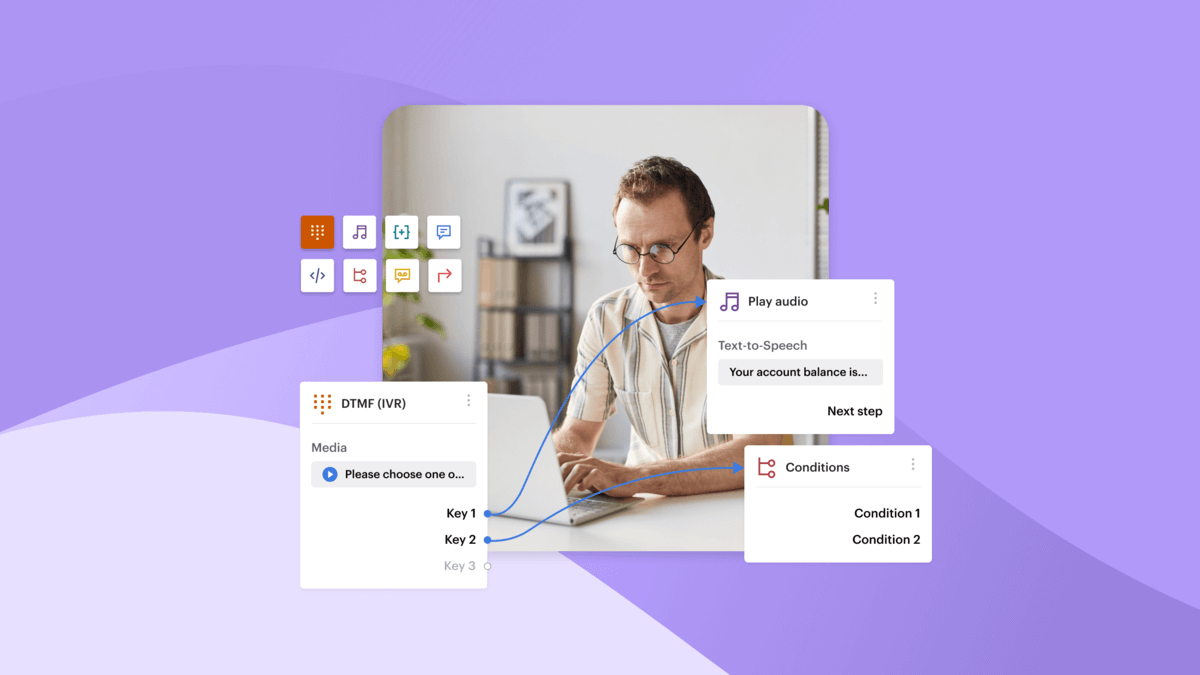
Voiso provides a cloud-based contact center platform designed to support businesses operating with non-fixed VoIP numbers across inbound and outbound workflows. Teams can configure rule-based routing through IVR and queues, manage call handling across distributed agents, and maintain visibility through call logs, recordings, and operational dashboards. Speech analytics supports post-call review with transcripts and keyword grouping, while CRM integrations help align call activity with customer records. The platform is structured to give teams control over how calls are routed, handled, and reviewed, without relying on fixed locations or infrastructure.
See how Voiso supports distributed teams without relying on fixed infrastructure.
FAQs
What is the difference between fixed and non-fixed voip numbers?
Fixed VoIP numbers are linked to a verified physical address, while non-fixed numbers are provisioned without location binding and routed through cloud infrastructure.
Are non-fixed voip numbers allowed in all countries?
No. Regulations vary by country, and some regions require documentation or restrict how non-fixed numbers can be used. Availability depends on local telecom rules.
Why do calls from non-fixed voip numbers get flagged as spam?
Because these numbers are easier to provision, carriers may apply stricter filtering based on call patterns, number reputation, and verification frameworks.
Can you port a non-fixed voip number between providers?
In some regions, yes. But portability depends on local regulations and provider agreements. In certain cases, numbers cannot be transferred easily.
When should a business avoid using non-fixed voip numbers?
They may not be suitable for use cases that require a verified physical address, such as emergency services support or highly regulated environments.