




BPO Call Center Software
POWER EVERY PROJECT WITH A SMART SOLUTION
Voiso helps BPOs handle multiple campaigns with less effort — from inbound and outbound calls to omnichannel support. Boost agent productivity, streamline workflows, and deliver high-quality service at scale.

Efficency at scale,
performance on demand
Unify every channel, every project
Equip your BPO with a single platform that manages phone, messaging apps, and chat — across all your clients.
Improve productivity and customer satisfaction by giving agents a consistent, easy-to-use interface.

Smarter routing, smoother calls
Customize call handling for every campaign.
Use Flow Builder to design IVR menus, route calls by language or queue logic, and integrate chatbots to improve resolution and experience — no dev work needed.

Supercharge outbound performance
Boost agent productivity with predictive dialing that auto-skips voicemails and detects answering machines.
Use Local Caller ID to improve pickup rates and accelerate calling across time zones or verticals.

Easier QA and compliance
Track agent sentiment, script adherence, and campaign-specific keywords with Voiso’s real-time AI.
Our Speech Analytics engine helps teams reduce errors, improve training, and elevate quality assurance at scale.

Data that drives better service
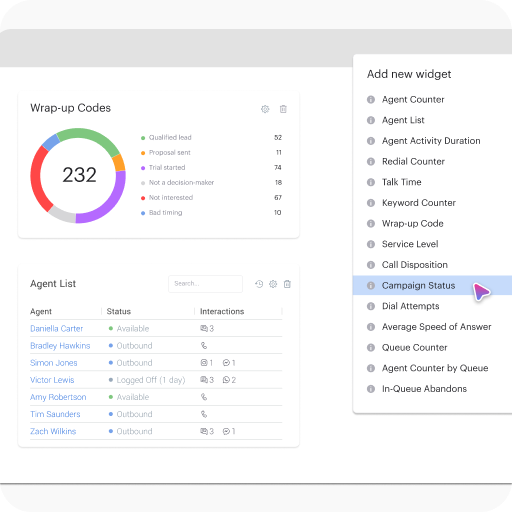
Track call volume, wait times, satisfaction metrics, and more — by project, team, or campaign.
Voiso’s dashboards give you actionable insights to make better staffing and service decisions fast.


customers




Get started in less than 24 hours
FAQ
What is a BPO call center?
A BPO call center, short for Business Process Outsourcing call center, is essentially a third-party service provider that takes over voice-based or multichannel communication tasks for another organization. It sounds simple at first, outsource the calls, get support, but there’s more depth to it. These contact centers handle inbound and outbound calls, customer service, technical support, appointment scheduling, collections, sometimes even upselling or surveys. It depends on what the client needs.
But what makes them valuable isn’t just volume; it’s the structure. A well-run BPO invests in its own technology stack, call routing systems, CRM integrations, reporting dashboards, so your business doesn’t have to. Some work purely through voice. Others span email, chat, social media, and messaging apps. It’s a way to add scalable interaction capabilities without stretching your internal resources. And for many organizations, especially ones growing fast, it’s not just a cost play, it’s a way to improve service quality with the right partner.
How do BPO call centers work?
At first glance, a BPO call center might seem like an external team operating in isolation, but when it’s done right, it feels more like a remote extension of your company. The process usually begins with a discovery phase, your business outlines goals, expectations, and must-haves. Do you want voice support only? Or something broader across digital channels? From there, the BPO builds a plan: hiring agents, setting up virtual phone systems, and aligning software like help desk platforms and CRMs.
Once everything’s in motion, these agents manage interactions on your behalf. But it’s not just about answering calls. They use advanced call distribution systems, call monitoring tools, and real-time analytics to optimize performance. There’s usually a shared dashboard or reporting suite, so you’re never blind to what’s going on. And good BPOs schedule regular reviews, weekly, monthly, whatever works, to keep everything aligned. In other words, it’s structured, but flexible. Not robotic. Just… cooperative.
What is a key to the BPO call center success?
There’s no single key, success tends to depend on how well the pieces fit together. But one major factor is how smoothly a BPO can balance efficiency with personalization. That sounds like a cliché, but think about it: you’re trying to serve hundreds, maybe thousands of customers, without letting the interaction feel cold or scripted. It’s not easy. Especially when voice interactions still dominate in many sectors, and customers expect empathy, speed, and clarity all at once.
Another challenge? Systems integration. If the BPO can’t sync with your CRM or help desk software, or worse, if agents are toggling between disconnected platforms, the experience breaks down quickly. And then there’s the human element: training. BPO agents need to understand your tone, your audience, your workflows. Reputable providers invest in onboarding, shadowing, and QA to get that right. So yes, tech matters. But consistency, culture, and communication are what help it all hold together.
What are the three pillars of BPO?
Most successful BPO operations tend to rest on three interconnected pillars, and while the wording might vary slightly depending on who you ask, the core ideas stay the same: quality, efficiency, and empathy.
First, there’s Quality Assurance and Consistency. This is where things like real-time monitoring, AI-driven speech analytics, and call recording come into play. But it’s not just about catching errors, it’s about making sure every interaction feels aligned with your brand, no matter who picks up the phone or responds to the chat. Consistency breeds trust. And that’s hard to earn back once it slips.
Then we have Operational Efficiency. Without it, even the best teams can get buried. Features like intelligent call routing, AI-powered dialers, and multi-campaign management don’t just sound technical, they’re how BPOs stay cost-effective while scaling. It’s about doing more, with less friction.
Finally, and perhaps most crucially, is Empathy and Personalization. Customers don’t want robotic answers, they want to feel heard. That means giving agents the right tools (think omnichannel dashboards, CRM context, real-time support prompts) to respond in a way that’s relevant, even warm. Not every customer will remember what you said, but they will remember how you made them feel.
And when all three pillars are in place? That’s when a BPO moves from “vendor” to “true partner.”
How do BPOs use AI effectively?
BPOs use AI for efficiency, accuracy, and customer experience across various operations:
- Automating Repetitive Tasks: AI-powered tools like predictive dialers and chatbots handle routine inquiries and outbound calls, freeing up agents for more complex tasks.
- Improving Customer Insights: AI speech analytics evaluate customer sentiment and identify trends from interactions, enabling proactive decision-making.
- Optimizing Call Routing: Intelligent routing powered by AI ensures customers are directed to the most qualified agent based on skillsets and historical data.
- Boosting Campaign Efficiency: AI adjusts dialing rates, filters low-quality leads, and reduces abandonment rates for outbound campaigns.
- Enhancing Quality Assurance: Automated monitoring of calls using AI-driven keyword spotting and sentiment analysis ensures consistent performance and compliance.
What are common challenges for BPOs?
BPOs often face several operational and strategic challenges, including:
- High Agent Turnover: Retaining skilled agents can be difficult due to the demanding nature of call center roles.
- Meeting Diverse Client Expectations: Managing multiple clients with unique KPIs and SLAs requires careful balancing and adaptability.
- Maintaining Data Security: Ensuring compliance with stringent data protection regulations across different regions is critical.
- Scalability Concerns: Rapid scaling during seasonal demand or new client onboarding can strain resources and infrastructure.
- Technology Integration: Seamlessly connecting new tools or platforms with existing systems to maintain efficiency can be a challenge.
- Ensuring Consistent Quality: Monitoring and maintaining high service levels across campaigns and agents requires robust processes.
- Managing Costs: Striking a balance between operational efficiency and cost-effectiveness is a constant struggle for many BPOs.
What strategies solve BPO challenges?
BPOs can address common challenges by implementing the following strategies:
- Comprehensive Training Programs: Equip agents with the skills and knowledge they need to excel, reducing turnover and improving performance.
- Robust Data Security Measures: Adopt advanced encryption, compliance audits, and secure access protocols to protect sensitive information.
- Flexible Scaling Plans: Utilize cloud-based platforms and remote-ready solutions to quickly scale operations during peak demand.
- Technology Integration: Choose interoperable tools and systems, ensuring seamless connections between CRMs, dialers, and other platforms.
- AI-Powered Analytics: Use AI to monitor agent performance, predict call outcomes, and enhance quality assurance processes.
- Engaging Work Environments: Foster a positive workplace culture with gamification, recognition programs, and career growth opportunities to retain talent.
- Cost Optimization: Streamline workflows with automation and ensure cost-efficiency through detailed resource planning and real-time reporting.
- Personalized Client Solutions: Work closely with clients to define tailored KPIs, providing flexibility to meet their unique needs.
Where can I learn more about BPO call center operations and best practices?
If you want to better understand how outsourced contact centers operate, this BPO call center explained guide breaks down how BPOs work, what services they provide, and how businesses use them to scale customer support and sales operations.
When deciding between outsourcing and building an internal team, it’s important to understand the trade-offs. This article on the BPOs vs in-house call centers explains the advantages, limitations, and when each model makes the most sense for a growing business.
Workforce management is another major part of BPO operations. High agent turnover can impact service quality and costs, which is why understanding call center staff turnover and learning how to reduce call center shrinkage reducing is essential for maintaining performance and meeting SLAs.
Agent wellbeing and motivation also play a major role in long-term success. Strategies to prevent burnout boost morale help BPOs maintain productivity, improve retention, and create a more stable workforce.
Finally, recruitment is what keeps BPO operations running and scaling. This guide on the top 7 best call center recruiting strategies explains how to hire and retain agents more effectively in a competitive hiring market.