




Contact Center Text-To-Speech
Real-time, natural-sounding responses to customer queries
Automate your query handling in over 20 different languages for greater call flow efficiency.


Transform call flows with Text-to-Speech
TTS in Flow Builder
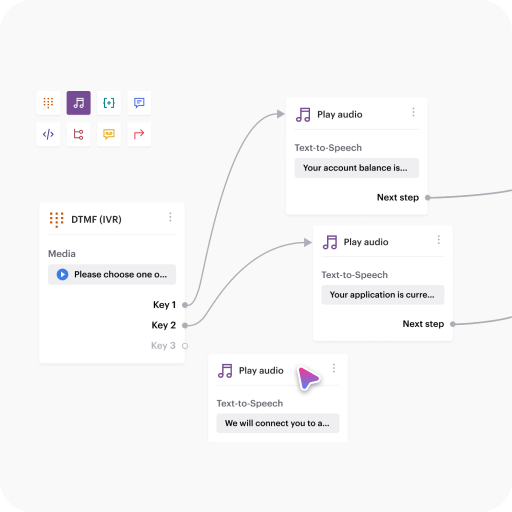
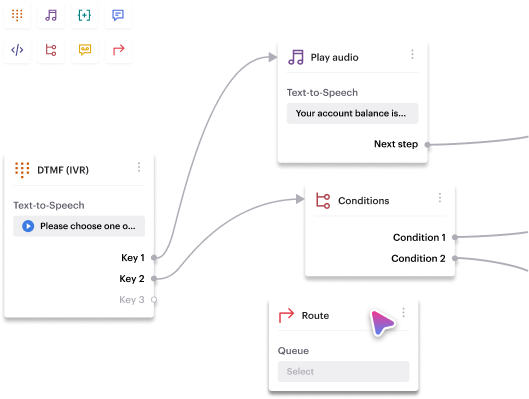
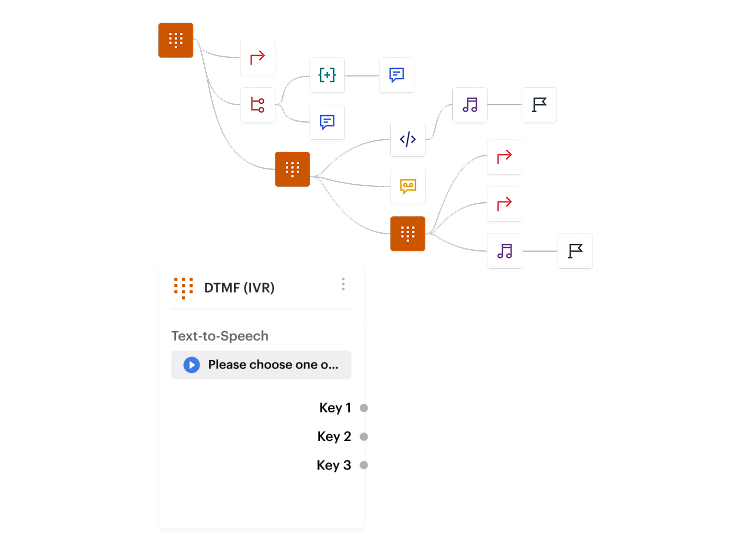
Voiso’s Text-to-Speech (TTS) in Flow Builder enables personalized, automated call flows—enhancing service at scale without agent involvement.
Together, they create seamless experiences and drive higher resolution rates.
Next-gen self-service
67% of customers prefer self-service over speaking with an agent.
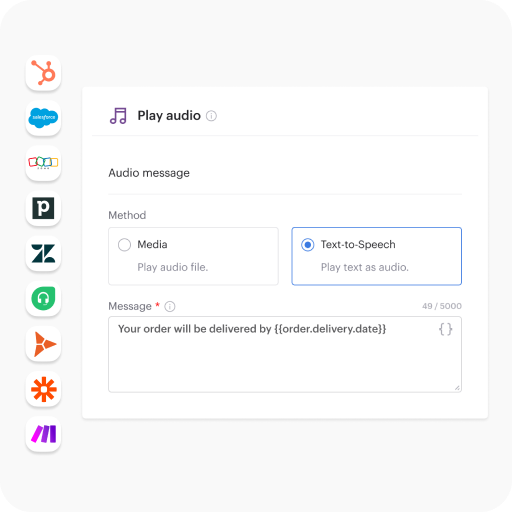
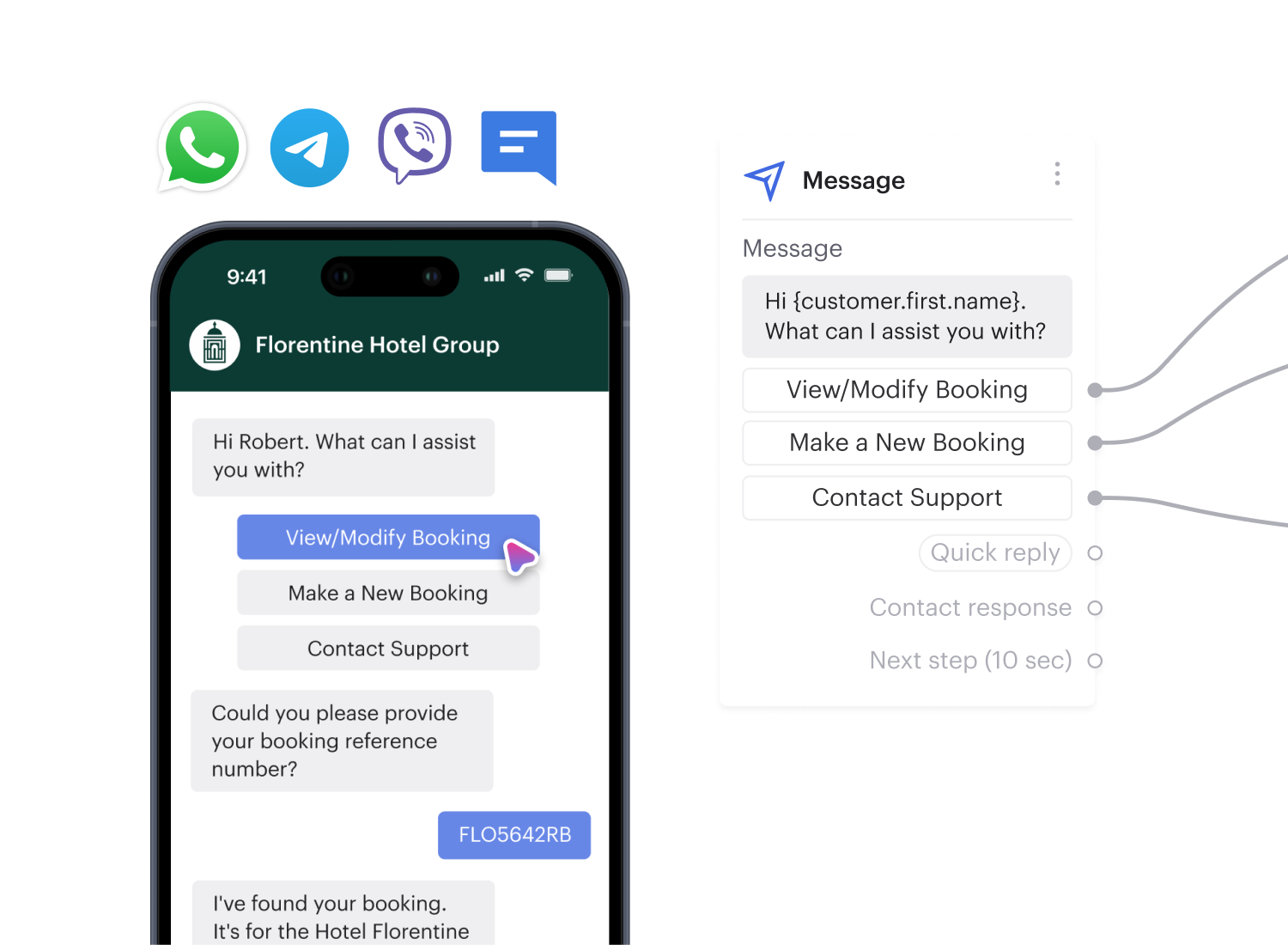
With Flow Builder, create dynamic TTS messages using CRM data to quickly resolve inquiries, from checking orders and account balances to booking appointments and troubleshooting.
A global solution
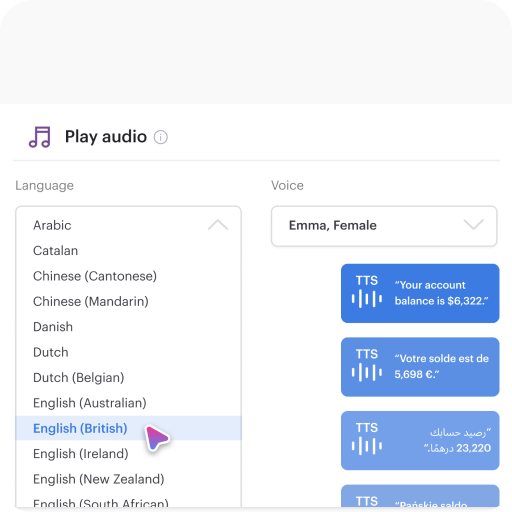
Enhance CX with TTS in 20+ languages, including English, French, Spanish, and Arabic.
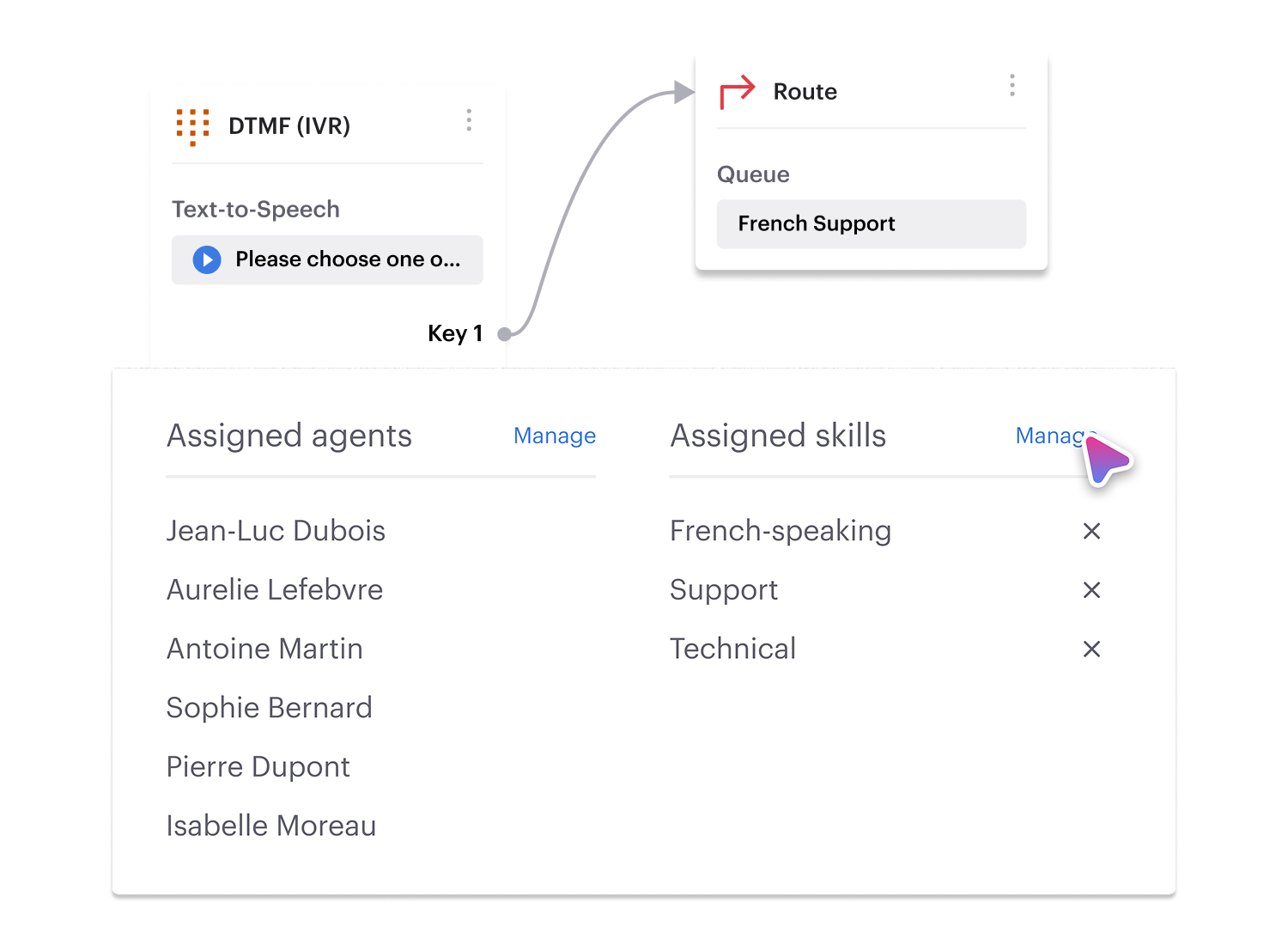
Choose natural-sounding voices with dialect options. Use Flow Builder to create multilingual call flows tailored to your key markets.
Flow Builder
customers




Get started in less than 24 hours
FAQs on Voiso's Text-to-Speech (TTS) Software
What is TTS?
TTS stands for Text-to-Speech. It’s a technology that converts written text into spoken words. In the context of Voiso’s contact center software, TTS allows businesses to automate responses to customer queries in a natural-sounding voice. This can be used to provide information, assist with self-service tasks, or route calls to the appropriate agent.
How does TTS work?
Voiso’s TTS functionality is integrated into Flow Builder, a visual tool for designing call flows. You can use TTS to create dynamic and personalized messages that are triggered by different events in the call flow. For example, you could use TTS to:
- Greet callers with a welcome message
- Provide account balances or order statuses
- Offer self-service options
- Route calls to different departments
- Play hold music or announcements
What are the benefits of TTS?
TTS offers several benefits for businesses, including:
- Improved customer experience: TTS can help you provide faster and more efficient service, while also freeing up agents to handle more complex issues.
- Increased accessibility: TTS can make your services more accessible to people with visual impairments or other disabilities.
- Cost savings: TTS can help you reduce costs by automating tasks that would otherwise require human agents.
- Multilingual support: Voiso’s TTS supports over 20 languages, so you can provide service to customers around the world.
- Personalization: TTS can be used to create personalized messages that address customers by name or provide specific information about their accounts.
- Scalability: TTS can easily handle high volumes of calls, making it a valuable tool for businesses of all sizes.
Can I use TTS for both inbound and outbound calls?
Yes, Voiso’s Text-to-Speech (TTS) can be used for both inbound and outbound calls. For inbound calls, TTS can generate automated responses in IVR menus. For outbound calls, it can deliver personalized messages, appointment reminders, or notifications without requiring a live agent.
Is there a limit to the amount of text that can be converted to speech?
There is no strict limit on the amount of text that can be converted to speech, but longer messages may impact call flow and customer experience. It’s best to keep messages concise for clarity and engagement. If a longer script is needed, it can be split into multiple TTS prompts within the call flow.
Can TTS handle complex vocabulary and industry-specific terms?
Yes, TTS can handle complex vocabulary and industry-specific terms. It supports custom pronunciation rules, phonetic adjustments, and multiple languages to ensure clarity. For highly specialized terms, fine-tuning options like custom lexicons and SSML (Speech Synthesis Markup Language) can improve accuracy.
What are the core features of TTS software?
- Multiple Languages & Voices
– Provide diverse language coverage and voice options (e.g., male, female, accent variations). - Customization Options
– Let users adjust speech rate, pitch, and volume to optimize clarity and tone. - SSML (Speech Synthesis Markup Language) Support
– Allow developers to fine-tune how text is spoken (e.g., pauses, emphasis, pronunciation). - APIs & Integrations
– Offer easy integration into apps, IVR systems, or websites via REST APIs, SDKs, or plugins. - Real-Time & Batch Processing
– Synthesize speech on the fly for live interactions, or convert large amounts of text at once. - Natural-Sounding Voices
– Use deep learning and AI to produce human-like intonation and prosody. - Personalization & Custom Lexicons
– Enable pronunciation overrides and custom dictionaries for brand names, acronyms, or jargon.
Text-to-speech software streamlines content delivery and improves accessibility by automatically converting written text into spoken language. Its effectiveness hinges on language coverage, voice quality, customization, and integration, making it invaluable across industries—from customer support in contact centers to assistive technologies in healthcare.
When does adding a TTS to your contact center make sense and why?
- High Volume of Routine Announcements
– If agents or IVR systems frequently repeat the same messages—like account balances or store hours—TTS automates these prompts, saving time and reducing costs. - Multilingual Customer Base
– TTS can quickly switch between languages and dialects, delivering a more inclusive experience without hiring specialized agents for every language. - Accessibility and Compliance
– Provide equal service to visually impaired or elderly customers. TTS solutions can also help comply with regulations around accessibility (e.g., ADA in the U.S.). - Rapid Content Updates
– Quickly modify IVR menus or announcements without re-recording new audio files. TTS updates can go live in seconds. - Scalability & Consistency
– Maintain consistent messaging across large-scale campaigns or seasonal spikes. TTS ensures each caller receives the same, clear information.
Key Use Cases
- Automated IVR Prompts: Turn text-based info (like FAQs or account details) into spoken menus.
- Outbound Notifications: Deliver appointment reminders, payment alerts, or service updates without manual intervention.
- Self-Service Solutions: Integrate with chatbots or knowledge bases so callers can hear answers to common queries.
Industries That Benefit
- Banking & Finance: Automated balance checks, transaction updates, fraud alerts.
- Healthcare: Appointment confirmations, prescription reminders, lab result notifications.
- Travel & Hospitality: Flight or booking updates, loyalty program info, emergency announcements.
- Utilities & Telecom: Billing reminders, outage alerts, plan details.
- Government Services: Citizen hotlines for info on public programs, deadlines, or emergency broadcasts.
- E-Commerce & Retail: Order tracking, delivery updates, loyalty rewards notifications.
By integrating text-to-speech into a contact center, organizations streamline routine communications, enhance accessibility, and adapt quickly to changing customer needs—all while delivering consistent, on-demand information at scale.